
Concrete Sealing Cost in Kalispell: What Actually Sets the Price
Concrete sealing cost is project-based—priced by the size and condition of your specific surface, not by a flat rate.
Why sealing is priced by project, not by a menu
Concrete sealing cost in Kalispell is project-based — priced by the size and condition of your specific surface, not by a flat rate — and any company that quotes you a firm number without seeing the concrete is guessing. That is not evasion; it is how honest sealing pricing works, and this guide shows you exactly why. Below you will find every factor that moves a sealing quote in the Flathead Valley, how penetrating and film-forming sealers price differently, and how to compare bids so the cheap one doesn't cost you a driveway.
Sealing looks simple from the curb — clean the surface, apply the product — which is exactly why menu pricing misleads. The visible spraying is the smallest part of the job. The real work, and the real cost, sits in what the surface needs before sealer can bond and cure: cleaning, stain treatment, crack attention, drying time, and product selection matched to the concrete's porosity and exposure.
Two driveways of identical size can be entirely different projects. A five-year-old broom-finished driveway in Kalispell that has been kept clean needs modest prep and drinks a predictable amount of sealer. A twenty-year-old driveway in Columbia Falls with oil spots, surface scaling from road salt, and open hairline cracks needs stain treatment, more thorough cleaning, and often more product per square foot because weathered concrete is thirstier. Same square footage; honestly different prices.
That is why Streamline Solutions quotes sealing from an on-site inspection with a written fixed scope — measurements, condition notes, the product system, and the total price — consistent with everything on our cost hub at /cost/. The number you sign is the number you pay.
What drives concrete sealing cost in the Flathead Valley
Every sealing quote in the Kalispell area is built from the same short list of drivers. Knowing them lets you read any bid intelligently.
Square footage sets the baseline — more surface means more cleaning time and more product. But footage alone is the least interesting driver, which is why per-square-foot teaser rates tell you so little.
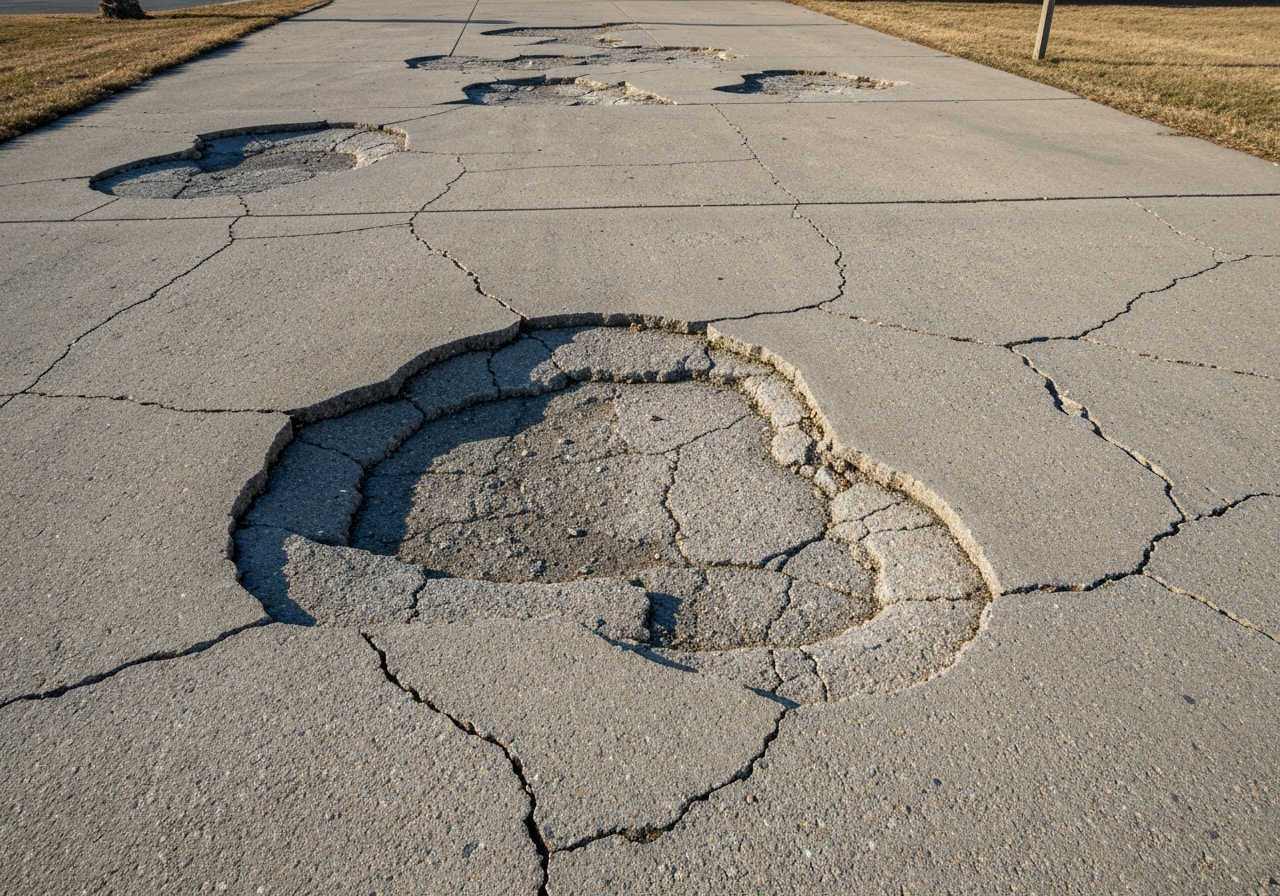
Surface condition moves the quote more than size. Scaling, pitting, previous sealer residue, and general weathering all change how much prep the concrete needs and how much sealer it absorbs.
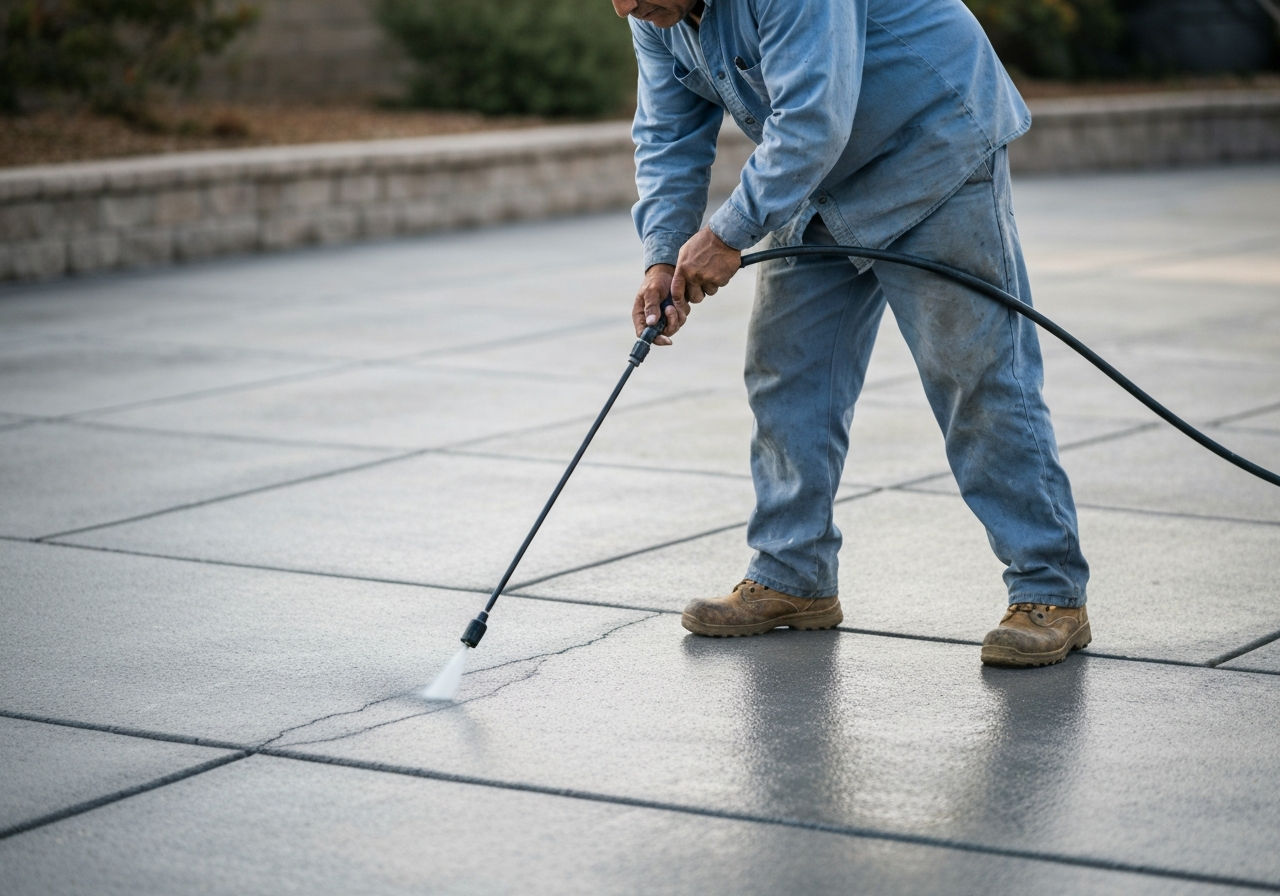
Cleaning needs are a real line item, not a courtesy. Sealer locks in whatever sits beneath it, so grime, algae, tire marks, and efflorescence have to come off first. A lightly soiled patio rinses clean; a driveway that has never been washed needs genuine restoration cleaning before sealing is even possible.
Cracks require judgment. Hairline cracks are normal and may simply be sealed over or treated, while wider or moving cracks need attention first — and if cracking signals a structural problem, sealing is not the fix (more on that below).
Porosity determines product consumption. Older, weathered, or never-sealed concrete drinks sealer; dense newer concrete takes less. This is invisible from the street and one more reason inspection beats phone quotes.
Sealer choice — penetrating versus film-forming — changes both material cost and labor, covered in its own section next.
Wet-look and appearance upgrades sit above basic protection. Enhancing and gloss finishes involve different products and additional application steps, so a decorative result prices above a purely protective one.
Exterior exposure rounds out the list. Surfaces that take full sun, heavy snowmelt, roof runoff, or deicer need product and scheduling matched to that abuse, and weather windows in Northwest Montana are a genuine scheduling constraint — sealer needs dry concrete and a dry curing window to perform.
Sealing cost factors by surface
Driveways
Driveways are the hardest-working exterior concrete in the Flathead Valley: plowed, salted, driven on with studded tires, and soaked in snowmelt for months. They tend to be the largest surfaces with the most staining and the most salt exposure, so cleaning and condition drive their quotes more than any other surface type. They are also where sealing pays back most visibly, because unsealed driveways take freeze-thaw and deicer damage first. The dedicated guide is at /cost/concrete-driveway-sealing-cost/.
Patios
Patios are usually smaller and gentler than driveways — no vehicles, no plow — but they bring their own drivers: shade-side algae, sprinkler exposure, grill and planter stains, and homeowner interest in appearance upgrades like wet-look finishes. A patio quote often carries proportionally more stain treatment and finish selection, and less heavy cleaning, than a driveway of the same size.
Walkways and steps
Walkways price on detail rather than volume. Edges, steps, landings, and slip-resistance considerations mean more hand work per square foot than an open slab, and winter safety matters — walkways get the most deicer per square foot of any surface at your home. Small surfaces are often most economical when bundled with a driveway or patio in the same visit, which is worth asking about at quote time.
Penetrating vs film-forming: the price logic
The two sealer families protect differently, and they price differently for understandable reasons.
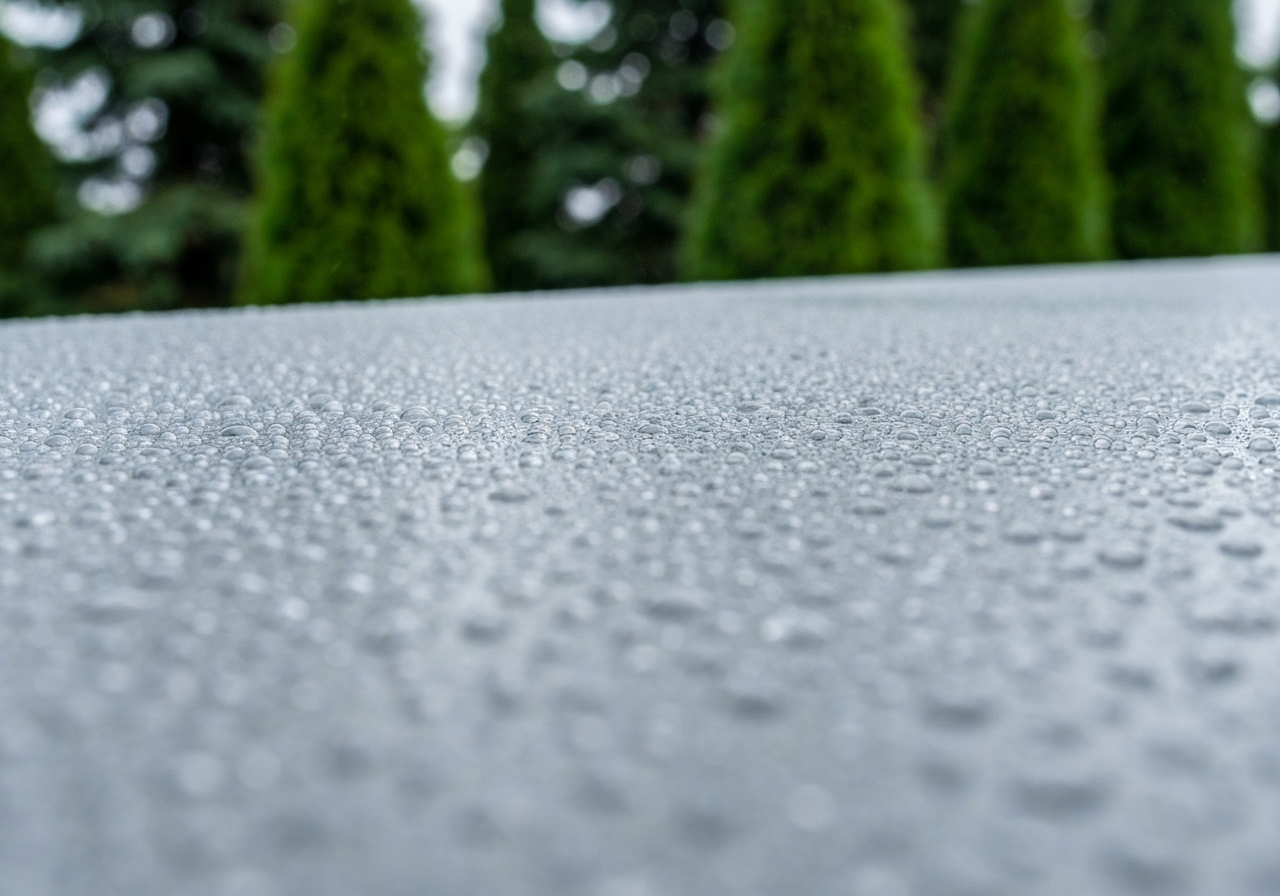
Penetrating sealers soak into the concrete and react below the surface, blocking water and salt absorption without changing the look. They are the workhorse recommendation for Montana driveways and walkways because freeze-thaw and deicer protection is the whole point. Their cost logic: product quality drives the price more than labor, application is efficient on properly cleaned concrete, and there is no film to maintain later.
Film-forming sealers cure as a layer on the surface — this family includes the enhanced and wet-look finishes people love on decorative concrete and patios. Their cost logic runs the other way: more application steps, more sensitivity to weather during curing, and a maintenance cycle, since a surface film wears under traffic and UV and is periodically renewed. You pay for the appearance both at installation and over the surface's lifetime.
Neither is "better" in the abstract. A salt-soaked driveway in Evergreen usually wants penetrating protection; a view patio in Whitefish may be worth the film-forming upkeep for the finish. Streamline Solutions recommends by surface and goal, not by margin — the options and trade-offs are laid out at /concrete-sealing/.
Resealing intervals and lifetime cost
Sealing is a maintenance investment, so think in lifetime cost, not just today's quote.
Intervals vary by sealer family and exposure. Penetrating sealers typically protect for years between applications, with the interval stretched or shortened by traffic, sun, and deicer load. Film-forming sealers generally renew on a shorter cycle because the film itself wears. Any company quoting you should tell you the expected interval for the specific product on your specific surface — make them say it.
The lifetime math favors maintenance heavily in a freeze-thaw climate. Water that penetrates unsealed concrete freezes, expands, and breaks the surface from within; deicer accelerates it. Periodic resealing costs a fraction of what surface repairs, resurfacing, or living with a scaling driveway costs over the same years. The most expensive sealing strategy in the Flathead Valley is not sealing at all.
One honest nuance: resealing a maintained surface is usually a lighter project than the first sealing, because a protected surface stays cleaner and needs less prep. Starting the maintenance cycle is the expensive step; staying on it is cheap by comparison.
The winter clock: why timing affects value
In most climates, sealing is cosmetic maintenance you can defer indefinitely. In Northwest Montana it has a deadline. Every unsealed surface goes into November absorbing snowmelt, then spends months freezing and thawing — often daily on sun-exposed driveways in Kalispell and Somers — while road salt and deicers work into the pores. Each winter of exposure can add cleaning needs, surface damage, and porosity, which means each deferred year can make the eventual sealing project cost more.
The practical takeaway: the best-value sealing window is summer through early fall, when concrete dries fully and cures properly, ahead of the freeze. If your surface is currently unsealed and sound, sealing it before this winter is the cheapest that project will ever be. For what winter actually does to unprotected concrete — and how to protect surfaces that already show damage — see /concrete-sealing/winter-concrete-protection/.
How to compare sealing quotes
Sealing bids are easy to undercut and hard to verify after the fact, so compare scope in writing. A quote worth signing states the measured square footage, the cleaning and prep included, how stains and cracks will be handled, the named sealer product or family (penetrating vs film-forming — if they can't tell you which, stop), the expected resealing interval, weather and curing requirements, and a fixed total.
The classic cheap-bid failure in this trade is thin or diluted product over inadequate cleaning: it looks identical the day it's done and quits protecting years early — or worse, a film-forming product traps moisture or dirt and fails visibly. You cannot inspect your way around this after application, which is why the written scope and the company behind it are the real product you are buying.
Streamline Solutions puts every sealing scope in writing before work begins, so you can line our quote up against any other bid item by item. If a cheaper bid includes the same cleaning, the same product class, and the same scope in writing, it deserves your consideration — most don't.
When sealing is not the answer
An honest cost guide includes the projects we turn down. Sealing is surface protection, and it cannot fix what is wrong underneath. If your concrete is heaving, settling, or moving at cracks, sealer will not stabilize it. If the surface is already deeply scaled or spalled, sealing may lock in a failing surface rather than protect a sound one — some driveways need repair or resurfacing conversation first, and some are honestly at the end of their life. If the slab drains toward the house or ponds water, that is a drainage problem sealing will not solve. And if the concrete is scheduled for replacement, put the money toward the replacement.
Streamline Solutions will tell you at the inspection which category your surface is in, including the categories that make us no money. A sealing quote you didn't need is more expensive than no quote at all.
Service area
Streamline Solutions provides concrete sealing quotes and service across Kalispell, Whitefish, Columbia Falls, Evergreen, Bigfork, Somers, Lakeside, Kila, Marion, Polson, Ronan, and Eureka — serving Flathead County, the Flathead Valley, and nearby Northwest Montana.
Streamline Solutions · Concrete Surface Protection Specialists · Kalispell, MT · (406) 909-4342
Concrete sealing cost FAQs
Related cost guides
Cost hub
Our complete guide to pricing for all concrete coating and sealing services.
Learn moreConcrete Driveway Sealing Cost
Understand what drives the price of sealing driveways in the Flathead Valley.
Learn morePaver Sealing Cost
Pricing guide for paver patios, walkways, and joint sand stabilization.
Learn moreConcrete Sealing services
Explore our full range of professional concrete sealing solutions.
Learn moreWinter Concrete Protection
How to defend your concrete against freeze-thaw and road salt.
Learn moreGet a written sealing quote before winter does the math for you
One inspection, one fixed written price — cleaning, prep, product, and total in plain language.
