
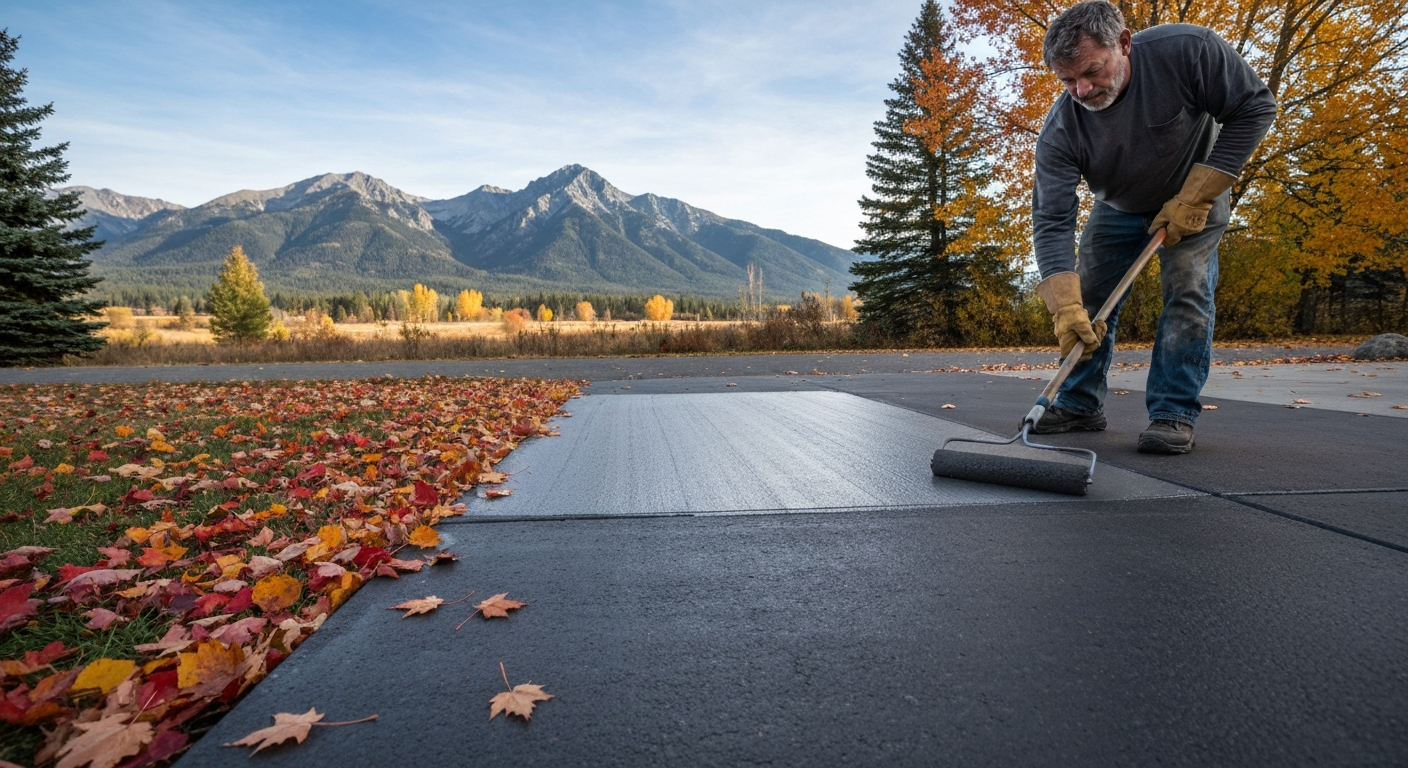
Winter Concrete Protection in Kalispell & the Flathead Valley
Protect existing concrete surfaces before the first hard freeze to resist water absorption, snowmelt, and freeze-thaw damage.
4–8 Weeks
Ideal pre-freeze window
September
Critical planning month
4–5 Months
Of winter exposure
Moisture-Driven
Early scaling cause
THE PROBLEM
Winter Damage Compounds on Unsealed Flathead Concrete
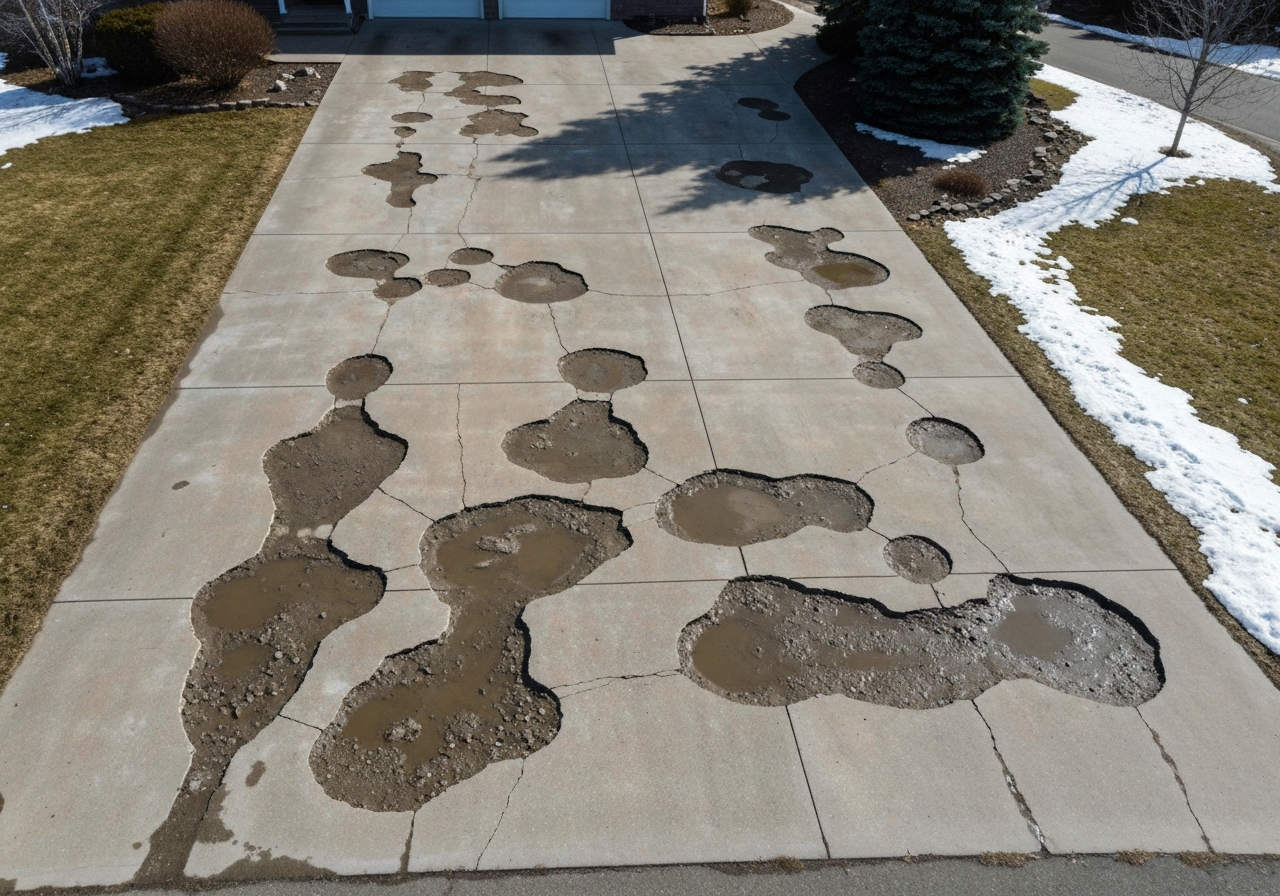
Concrete in the Flathead Valley faces a specific winter pattern: snow accumulates, melts under sun or de-icers, soaks into surface pores, then refreezes overnight or during cold snaps. The problem is worse on driveways, steps, walkways, garage aprons, patios, and exposed slabs that collect plowed snow or roof runoff.
De-icer and road-salt residue can be tracked, splashed, and shoveled onto residential concrete. Chloride brine can soak into the top surface rather than staying only on the road. Freeze-thaw spalling and scaling are often surface failures that start small. Snowmelt repeatedly saturates unsealed concrete and then freezes inside the pore structure.
Existing surface weakness compounds each winter when it is left unprotected. Shaded mountain-home steps, lakeside patios, and north-facing driveways often stay wet longer. Flathead County properties can see a mix of glacial clay, rock, runoff, slope, snow storage, and variable exposure that makes drainage and surface protection important.
Sealing is not a structural repair, but it is one of the most useful pre-winter protection steps for existing concrete that is still a good candidate.
WHAT WE DO
What Streamline Solutions Does
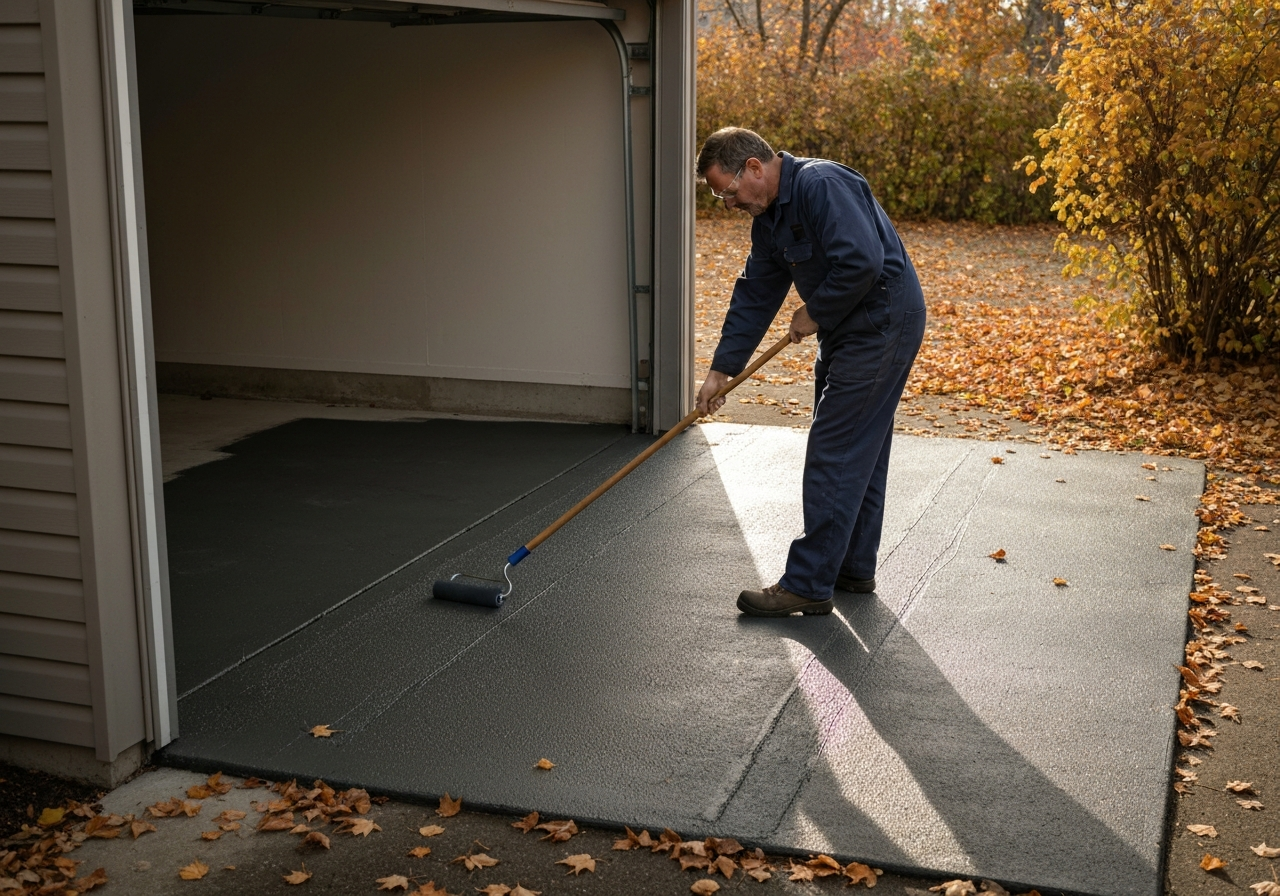
Streamline Solutions performs pre-winter penetrating concrete sealing for existing exterior concrete surfaces in the Kalispell and Flathead Valley area. The work starts with surface assessment, cleaning, drying, preparation, and product selection based on exposure and condition. The goal is to protect the existing slab from water absorption, snowmelt, and chloride intrusion before repeated freezing begins.
Penetrating silane/siloxane sealers do not simply sit as a shiny coating on top. They are designed to penetrate into the concrete surface and bond within the pore structure, creating water repellency while allowing vapor to move. This makes them well suited for exterior concrete exposed to freeze-thaw cycles, snowmelt, and de-icer residue.
The timing matters because sealing cold, damp, or already saturated concrete is not the same as sealing a clean, dry surface during the right weather window. The whole point is to get protection in place before winter water begins cycling through the slab. Once snow piles, shaded ice, and repeated thawing have saturated the surface, the job becomes more weather-dependent and less predictable.
Surfaces protected include existing concrete driveways, garage aprons, patios, walkways, steps, entryways, exposed slabs, residential hardscape areas that collect snowmelt, and light commercial exterior concrete where appropriate.
BENEFITS
Benefits of Pre-Winter Concrete Protection
The slab enters winter sealed and protected
Helps repel chloride brine from de-icers
Sheds snowmelt before it can freeze inside
Slows scaling, pitting, and surface wear
Preserves the surface season after season
Local Depth: The Flathead Pre-Winter Window
The Flathead Valley pre-winter sealing window is not a single date. It depends on elevation, shade, drainage, slab temperature, forecast, and whether the surface can dry after cleaning. For many Kalispell-area properties, late summer through early fall is the practical planning window, with September often treated as the month to get serious about exterior concrete protection.
Lakeside properties near Somers, Lakeside, Bigfork, and Polson may have different exposure than shaded mountain homes near Whitefish or Columbia Falls, but the rule is the same: seal before the surface starts spending nights cold and damp.
Penetrating sealers need access to the surface pores. Dirt, algae, embedded road film, old residue, and standing moisture can interfere with absorption. If the slab is damp below the surface, the sealer may not penetrate evenly. That is why Streamline Solutions focuses on cleaning, dry time, and weather windows before application.
Chloride de-icers and road residue can lower the freezing point of surface water, which creates more melt-and-refreeze activity near the top of the slab. This brine can migrate into unprotected concrete, carrying salts into the pore structure and increasing the chance of scaling where moisture, freezing, and surface weakness overlap.
INSTALLATION
Process: How Winter Concrete Protection Works
Assess surfaces before the cold sets in
Streamline Solutions starts by looking at the existing concrete, including age, porosity, surface wear, drainage, cracking, scaling, previous coatings, shade, and snow-storage areas. The goal is to determine whether sealing is appropriate and what preparation is needed before the weather window closes.
Clean and pressure wash the surface
The surface must be clean before a penetrating sealer can do its job. Dirt, algae, tire residue, de-icer film, and loose surface contamination are removed so the sealer can absorb more evenly into the concrete. When cleaning is needed, Streamline Solutions may use pressure washing as part of the preparation process.
Allow the concrete to dry fully
Dry time is not a formality in the Flathead. A slab can look dry on top while holding moisture below the surface, especially in shaded areas or after cool nights. Streamline Solutions schedules sealing around weather, exposure, and dry time so the sealer has the best chance to penetrate properly.
Prep and address surface issues
Loose material, minor surface concerns, residue, and problem areas are addressed before sealing when appropriate. Sealing is not a cure for major structural movement or severe deterioration, but preparation helps improve performance on concrete that remains a good candidate.
Apply the penetrating sealer inside the right weather window
The sealer is applied when surface conditions, temperature, dry time, and forecast support the work. Streamline Solutions uses penetrating products suited for exterior freeze-thaw exposure so the protection works within the concrete surface rather than relying on a fragile topical film.
Let the surface cure ahead of the first freeze
The surface needs time to cure before snow, heavy moisture, or freezing conditions return. This is one reason pre-winter planning matters. Waiting until the first storm is already in the forecast can limit options.
Walk through the finished work
After the application and cure window, Streamline Solutions reviews the protected areas and explains what to expect. The property owner gets practical guidance on winter maintenance, snow storage, de-icer use, and when future resealing should be considered.
A Year-Round Concrete Protection Rhythm for the Flathead
Winter is when the damage shows, but protecting concrete is a year-round rhythm — and getting the timing right is what keeps a slab out of trouble. Streamline Solutions thinks about your concrete across all four seasons, not just the week before the first freeze.
Spring is for inspection: once the snow clears, that's when last winter's freeze-thaw damage is visible and when a slab tells you whether its seal held. Summer is the working window, with warm, dry concrete that takes a sealer cleanly and cures fully before fall. Early fall is the deadline — sealing needs to be done and cured before overnight temperatures start dropping toward freezing. And winter itself is about maintenance: keeping de-icer residue rinsed off and slush moving toward drains so the protection you paid for isn't fighting a losing battle. Fit sealing into that rhythm and you stop reacting to spalled, scaling concrete every spring and start staying ahead of it.
Related Concrete Sealing Services
Streamline Solutions provides comprehensive surface protection across the Flathead Valley.

Driveway Sealing
Protect existing concrete driveways from water absorption, salt, and freeze-thaw damage.
Learn moreWet Look Sealer
Color-enhancing sealers for stamped concrete, exposed aggregate, and decorative surfaces.
Learn moreConcrete Sealing Hub
View all our concrete sealing services, applications, and surface protection options.
Learn moreCost of Winter Concrete Protection
The cost of winter concrete protection depends on the surface, the preparation, and the size of the project. A small set of steps or a short walkway is different from a large driveway, a garage apron, and multiple patio sections.
Key Cost Drivers:
- Total Square FootageThe size of the project directly impacts material and labor costs.
- Current Surface ConditionCleaning, preparation, and porosity affect how much sealer is needed.
- Number of SurfacesProtecting multiple separate areas increases the scope and complexity.
- Timing UrgencyScheduling before winter weather arrives requires careful planning and coordination.
For the most accurate price, request a written quote before the fall sealing window fills. The best time to price winter protection is before the surface is wet, cold, and already under seasonal pressure.
Winter Protection Pros
- Slab enters winter sealed and protected from moisture
- Helps repel chloride brine from de-icers
- Sheds snowmelt before it can freeze inside the pores
- Slows scaling, pitting, and surface wear
Best For:
Existing driveways, garage aprons, steps, shaded walks, lakeside/mountain-home surfaces before first freeze.
Limitations
- Cannot reverse major existing damage or structural issues
- Requires a clean, dry surface and a workable weather window
- Does not make concrete immune to harsh de-icers or poor drainage
- Needs periodic evaluation and resealing on a maintenance schedule
Not Recommended For:
Concrete that is already cold and saturated, actively deteriorating surfaces, mid-winter application in freezing conditions.
Myth vs. Reality
Myth: You can seal anytime, even mid-winter.
Reality:
Winter sealing is limited by temperature, moisture, surface condition, and cure time. A penetrating sealer needs a clean, dry surface and a workable weather window. The practical goal is to seal before the first regular freezing pattern, not after the slab is already cold and saturated.
Myth: Salt only matters on roads, not driveways.
Reality:
Road residue travels home on tires, wheel wells, snowbanks, plow piles, and runoff. A driveway, garage apron, or walkway can be exposed to chloride brine even when the homeowner uses little or no ice melt directly on the surface.
Myth: Newer-looking concrete is winter-proof.
Reality:
Concrete can look sound while still absorbing water through surface pores. Winter damage often begins below the visible surface and shows up later as scaling, pitting, or flaking. Sealing is most useful before those signs become widespread.
Myth: One sealing lasts forever.
Reality:
Exterior concrete protection wears with weather, traffic, snow removal, de-icer exposure, and UV exposure. Most properties need periodic evaluation and resealing on a maintenance schedule rather than a one-time treatment expected to last indefinitely.
Service Area
Streamline Solutions provides winter concrete protection for existing concrete surfaces across the Flathead Valley and Northwest Montana.
Streamline Solutions Recommendation
For Flathead Valley properties, Streamline Solutions recommends evaluating exterior concrete before the first consistent freeze pattern, especially driveways, garage aprons, steps, and shaded walkways. If the surface is still a good candidate, clean it, let it dry fully, and seal it before the winter moisture cycle begins. Waiting until the first storm is already on the ground usually reduces options and increases weather risk.
— Streamline Solutions, Kalispell, MT
Get a Pre-Winter Sealing Quote
Streamline Solutions is owner-operated, local to Kalispell, and focused on protecting existing exterior surfaces with honest recommendations. The work is about preparing the concrete correctly and applying the right protection before Montana winter creates the conditions that cause surface damage.
Curious about what sealing costs? See our pricing guide for details.
Be our first Flathead Valley review.
