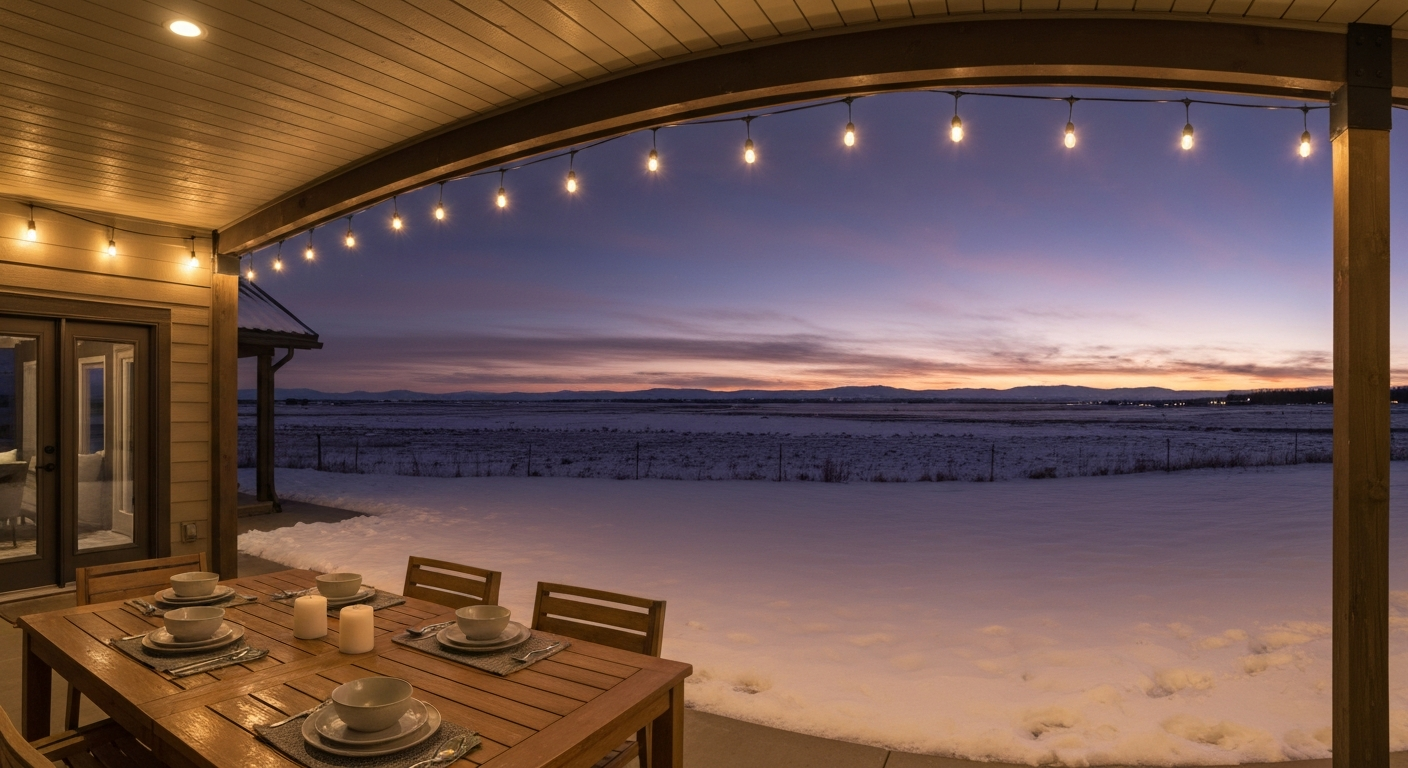
Patio Coatings in Kalispell & the Flathead Valley
UV-stable coating systems for covered patios, porches, and sunrooms — with honest guidance on when sealing beats coating outdoors.
Flathead Patios Fight UV, Snow Load, Freeze-Thaw, and Fast Wear
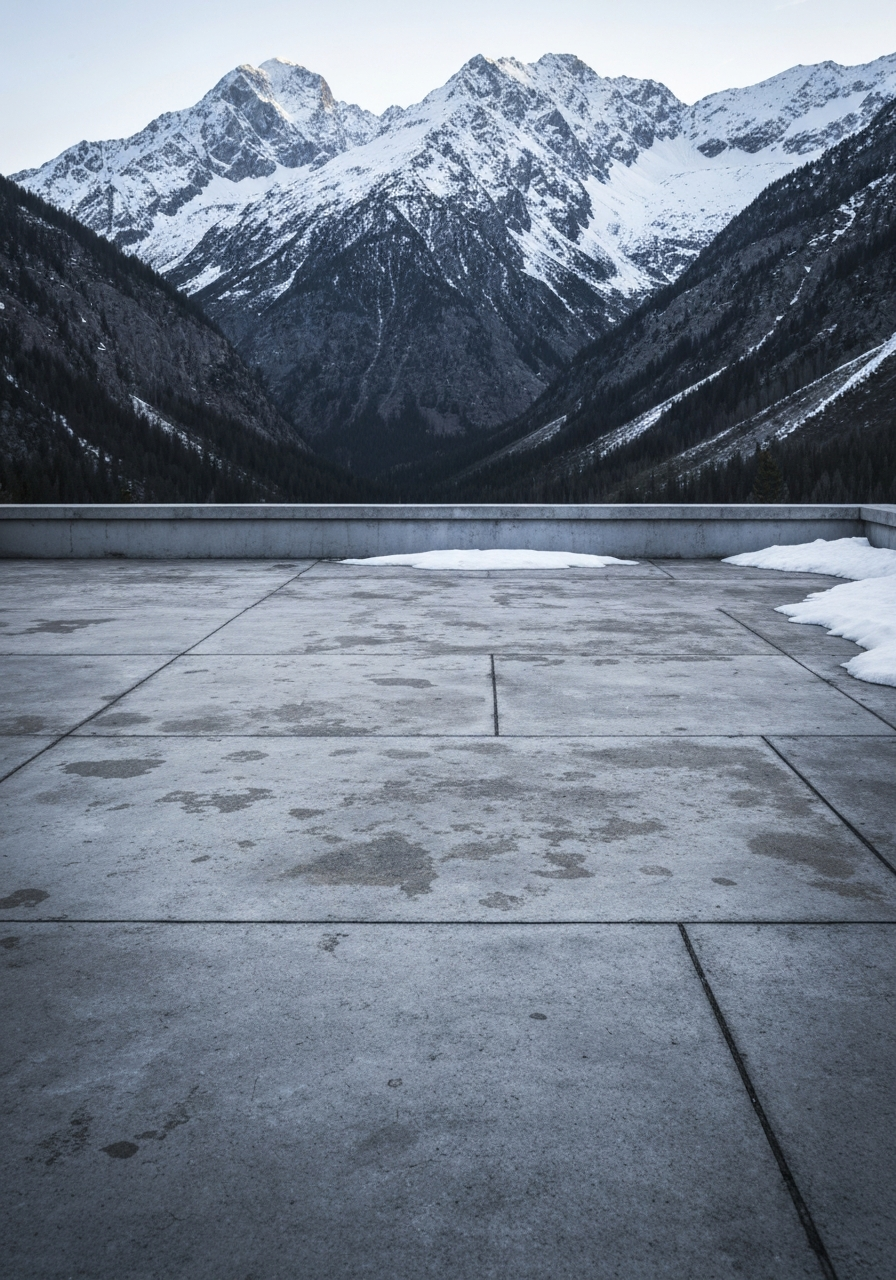
Outdoor concrete in Northwest Montana has a hard job. A patio may look fine in July and still be under serious stress from the rest of the year: snow load, ice, freeze-thaw movement, runoff, road salt carried in on boots, and strong seasonal UV exposure. Over time, that combination can make concrete look blotchy, dusty, stained, rough, or tired.
Flathead Valley patios also see a lot of moisture cycling. Snow melts during the day, refreezes at night, and pushes water into open pores, cracks, joints, and weak surface areas. When water sits on concrete or gets trapped beneath a film-forming coating, the risk of peeling, whitening, delamination, or freeze-thaw damage increases.
That is why outdoor patio coatings need to be evaluated differently than indoor garage floors. A garage floor coating can usually be installed in a controlled space with less weather exposure. A patio coating in Kalispell needs a more careful look at roof coverage, slope, drainage, sun exposure, surface condition, moisture, and seasonal timing.
For many homeowners, the goal is simple: make the patio feel like a finished part of the home instead of a worn slab outside the door. The right system can improve the look of the space, make furniture areas feel more intentional, add traction underfoot, and reduce the constant dusty-gray appearance of bare concrete.
What We Do: Exterior-Appropriate Patio Coating Systems
A patio coating is a protective floor system applied over an existing concrete patio, porch, sunroom slab, or covered outdoor-living surface to improve appearance, traction, cleanability, and resistance to everyday wear. For the right surface, a professionally prepared concrete patio coating can turn plain, weathered concrete into a finished outdoor room that feels cleaner, safer, and easier to maintain through Montana's short but valuable outdoor-living season.
At Streamline Solutions, we install exterior-appropriate coating and sealing systems for existing concrete and paver surfaces across Kalispell and the Flathead Valley. We are Concrete Surface Protection Specialists, which means our work is focused on coating, sealing, protecting, restoring, and upgrading surfaces that are already in place. We do not pour new concrete, install new slabs, stamp concrete, or perform asphalt work.
Streamline Solutions installs exterior-appropriate systems for existing patio surfaces. Depending on the space, that may include a UV-stable polyaspartic coating system, decorative flake broadcast for texture and traction, surface preparation by grinding or mechanical profiling, crack and defect repair where appropriate, and a protective topcoat selected for outdoor use.
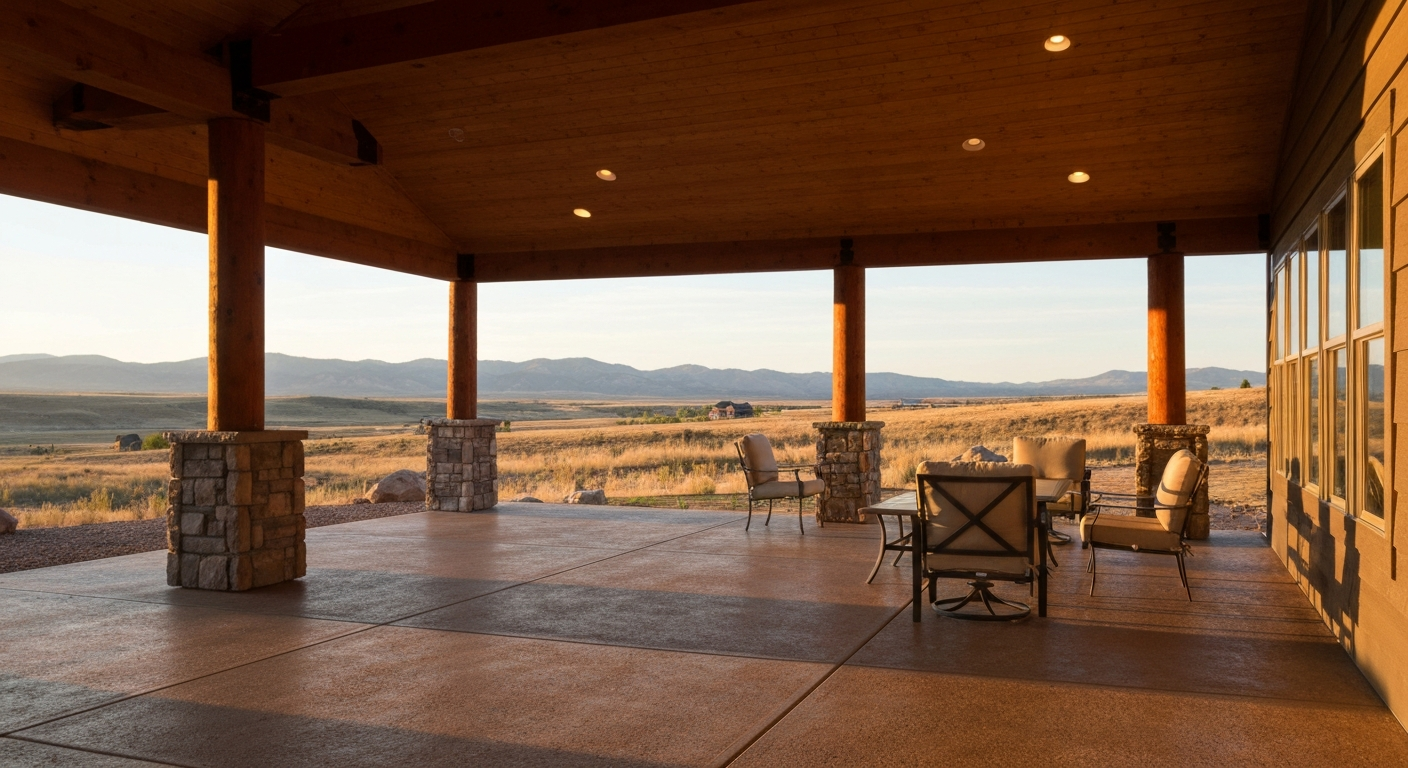
Covered and protected patios are often the strongest candidates for film coating systems. These include covered back patios, roofed porches, covered walkout areas, sunrooms, three-season rooms, and outdoor-living spaces that do not hold water for long periods. In those settings, a patio coating can provide a clean, finished appearance while adding protection against foot traffic, furniture movement, spills, and normal outdoor use.
Fully exposed flatwork is different. If a patio has no roof cover, poor slope, standing water, constant snowpack, heavy direct UV, or visible moisture issues, we may recommend a penetrating concrete sealer instead of a film coating. A penetrating sealer does not create the same finished flake-floor look, but it can be a better fit for concrete that needs breathable protection against water absorption and freeze-thaw wear.
We only work on existing surfaces. If your concrete patio is already in place and you want to improve, protect, seal, or restore it, that is the work we do. If the slab needs to be removed and replaced, poured larger, stamped, or newly installed, that is outside our scope.
1. A Finished Outdoor-Living Surface
A patio coating can make an outdoor space feel more like an extension of the home. Instead of bare gray concrete with stains, dusting, and patchy discoloration, you get a more uniform surface that works well with patio furniture, grills, planters, and covered seating areas. This is especially helpful for covered patios and porches that are used as outdoor rooms. A finished floor can make the space feel cleaner, more intentional, and more comfortable for daily use during Montana's warmer months.
2. Better Traction for Wet Patio Conditions
Outdoor surfaces get wet. Rain, snowmelt, irrigation overspray, wet shoes, and condensation can all make smooth concrete feel slick. A patio coating system with decorative flake and a properly selected topcoat can create more texture underfoot than plain sealed concrete or smooth paint. Slip resistance depends on the exact system, the amount of texture, surface contaminants, footwear, and maintenance. No coating can make a wet outdoor surface completely slip-proof, but we can design the surface with traction in mind instead of focusing only on appearance.
3. UV-Stable Products for Outdoor Exposure
Exterior patio coatings need products that can handle sunlight better than standard interior coatings. UV-stable polyaspartic systems are commonly used for spaces where appearance and color stability matter, especially on covered or partially protected outdoor concrete. This does not mean every exposed slab should be coated. UV stability helps the product resist yellowing and sun-related appearance changes, but drainage, moisture movement, surface condition, and freeze-thaw exposure still matter. A good outdoor recommendation looks at the whole environment, not just the product label.
4. Easier Cleaning and Less Concrete Dust
Bare concrete can hold dirt, pollen, leaf stains, food spills, grill grease, and general outdoor grime. It can also create fine surface dust as it wears. A properly installed coating helps create a more cleanable surface, so routine sweeping and light washing are usually easier. This is useful for patios connected to kitchens, mudrooms, walkouts, and main living areas. Less dust and easier cleanup can help keep the indoor transition cleaner, especially when kids, guests, pets, and outdoor furniture are part of regular use.
5. Protection Against Everyday Patio Wear
Covered patios still take abuse. Patio chairs scrape, tables shift, grills roll, pets run across the surface, and wet boots bring in dirt and salt. A professional coating system can help protect the existing concrete surface from normal wear while improving how the space looks. The key is matching the system to the use. A small covered porch, a screened-in patio, and a large walkout entertainment area may need different preparation, texture, and finish considerations.
6. A Surface That Fits Mountain Homes and Northwest Montana Living
Kalispell and Flathead Valley homes often blend indoor comfort with outdoor views. A finished patio floor can support that lifestyle by making covered outdoor spaces more usable for morning coffee, evening dinners, gear staging, hot tub access, and seasonal entertaining. The goal is not to pretend Montana weather is mild. The goal is to choose a practical system for the exposure level, prepare the surface correctly, and be honest about where coating makes sense and where sealing is the better call.
Coating vs. Sealing Outdoors: When Each Is the Right Call
A patio coating is typically a film-forming system. It sits on top of the concrete after the surface is prepared and creates a finished layer that can include decorative flake, texture, and a protective topcoat. Coatings are often the right call for covered patios, porches, sunrooms, and protected walkout areas where the slab stays reasonably dry and does not hold standing water.
A penetrating concrete sealer works differently. Instead of building a decorative film on top, it absorbs into the concrete and helps reduce water absorption while allowing the surface to remain more breathable. This can be a better fit for fully exposed patios, sidewalks, exterior flatwork, and surfaces that deal with snow, ice, water, and freeze-thaw movement.
Here is the honest rule: if the surface is protected, properly sloped, structurally sound, and not holding water, a coating may be a strong option. If the surface is fully exposed, constantly wet, poorly drained, or subject to harsh freeze-thaw cycles, sealing may be the smarter long-term recommendation.
For exposed concrete protection, visit concrete sealing. For covered patio floor coating in Kalispell, Streamline Solutions can assess the space and recommend the right system based on how the patio actually behaves through Montana weather.
Our Patio Coating Process
Practical surface evaluation
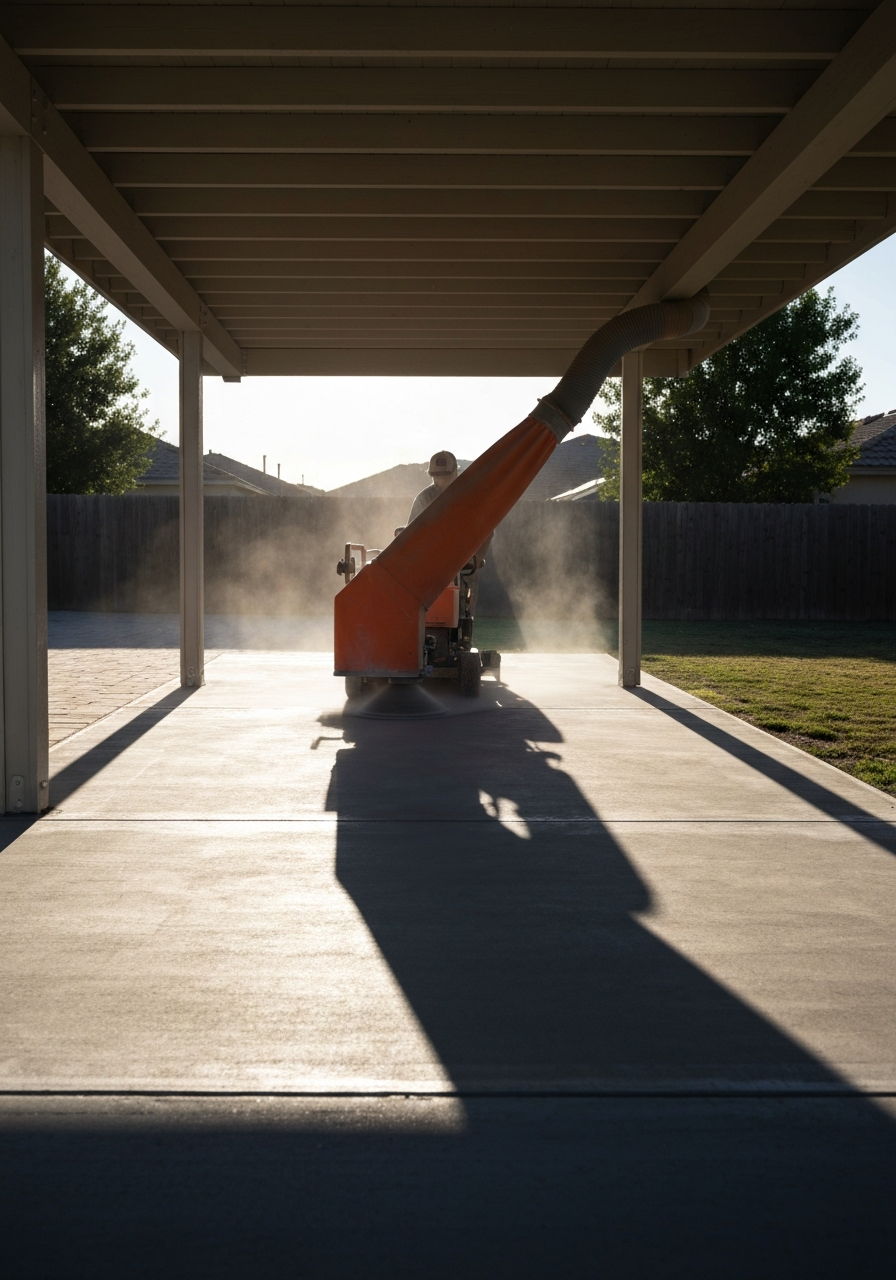
We start with a practical surface evaluation. We look at the existing concrete condition, roof coverage, sun exposure, drainage, slope, cracks, previous coatings, spalling, and signs of moisture. This step helps us decide whether a coating is appropriate or whether sealing would be the better recommendation.
Discuss patio use
We discuss how the patio is used. A quiet covered porch has different needs than a walkout patio used for grilling, pets, furniture, hot tub access, or frequent entertaining. We use that information to help select texture, finish, and system design.
Mechanical concrete preparation
We prepare the concrete mechanically. Most coating failures begin with poor preparation, so we do not treat prep as an afterthought. When coating is the right fit, the existing surface is mechanically profiled so the system has a better bonding surface.
Crack and surface defect repair
We address cracks and surface defects where appropriate. Cracks, pits, divots, and damaged areas are reviewed before coating. Some imperfections can be repaired or minimized, while moving cracks, severe spalling, or structural issues may limit what a coating can realistically do.
Base coating and texture broadcast
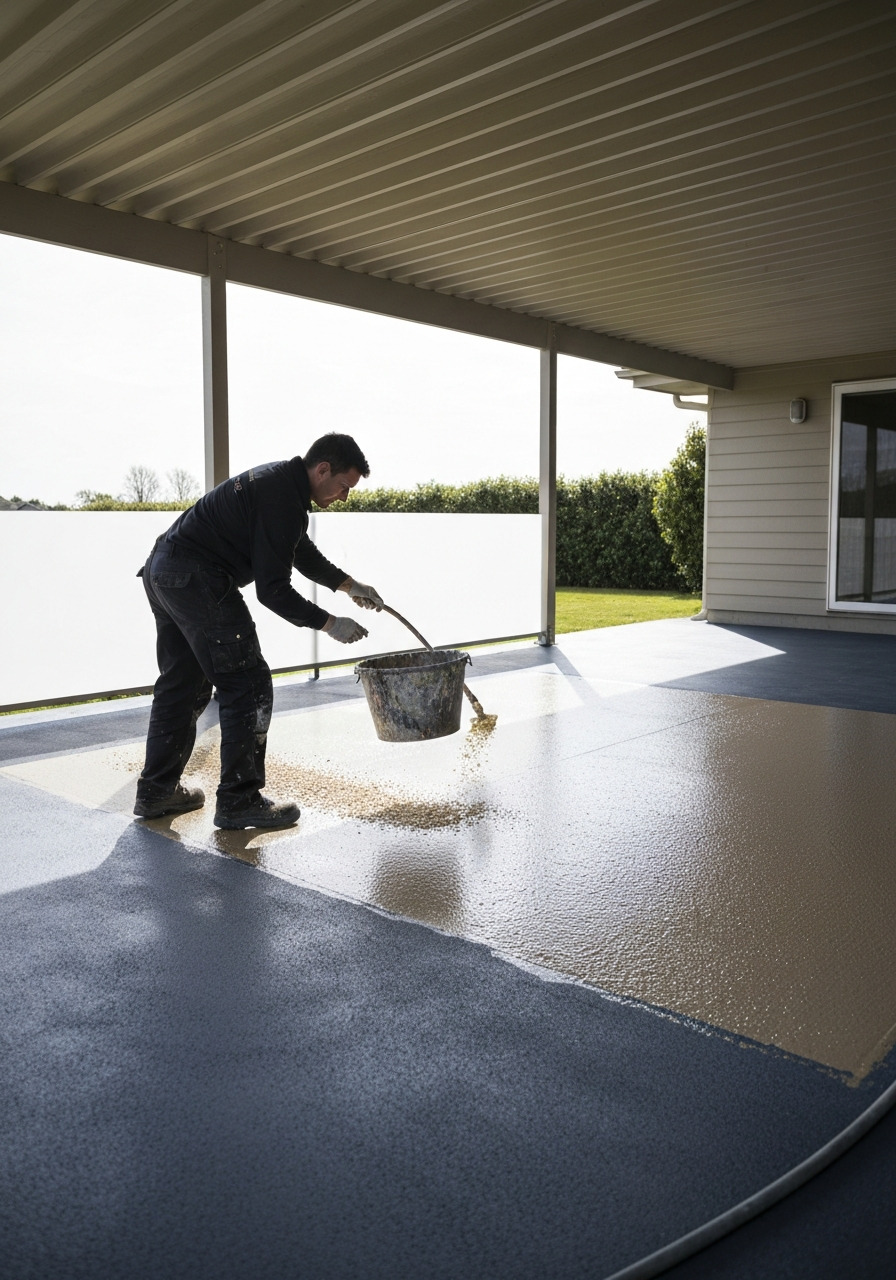
We apply the base coating and broadcast texture. For many patio coating projects, a decorative flake broadcast is used to create a finished look and add surface texture. The flake blend can help hide minor visual imperfections and make the patio feel more like a finished floor.
Exterior-appropriate topcoat
We apply an exterior-appropriate topcoat. The topcoat protects the system and helps determine final texture, cleanability, and appearance. For outdoor and semi-outdoor surfaces, product selection matters because UV exposure, moisture, and temperature swings are part of the environment.
Curing, use, and maintenance
We review curing, use, and maintenance expectations. Exterior coating work is weather-dependent, so cure times and return-to-use timing can vary by temperature, humidity, and conditions. We explain when the surface can handle foot traffic, furniture, and normal patio use.
Related Concrete Coating Services
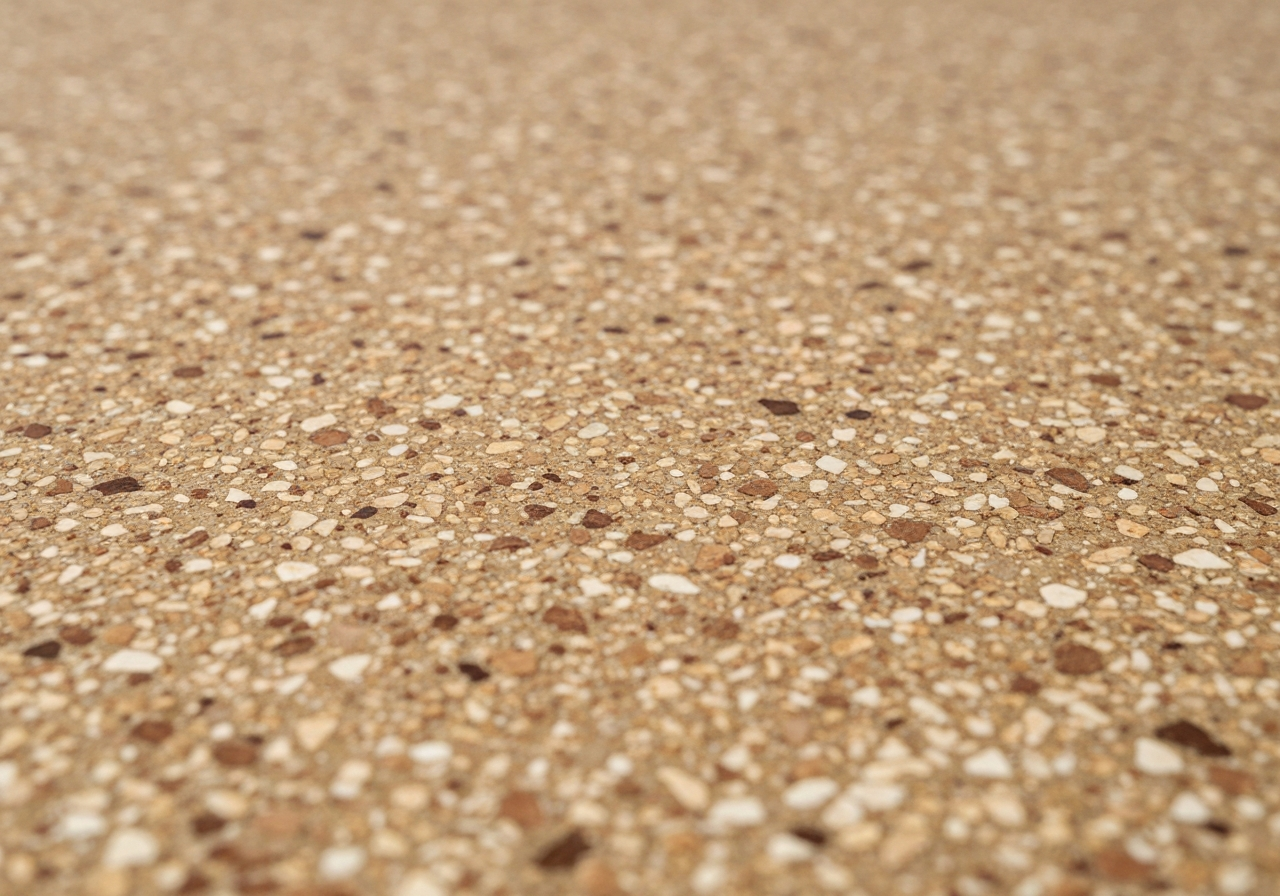
Flake Epoxy and Decorative Flake Systems
Decorative flake systems are popular because they create a clean, textured, finished appearance while helping disguise normal surface variation in existing concrete. For patios, flake can also support better traction when paired with the right topcoat and texture profile.
Learn more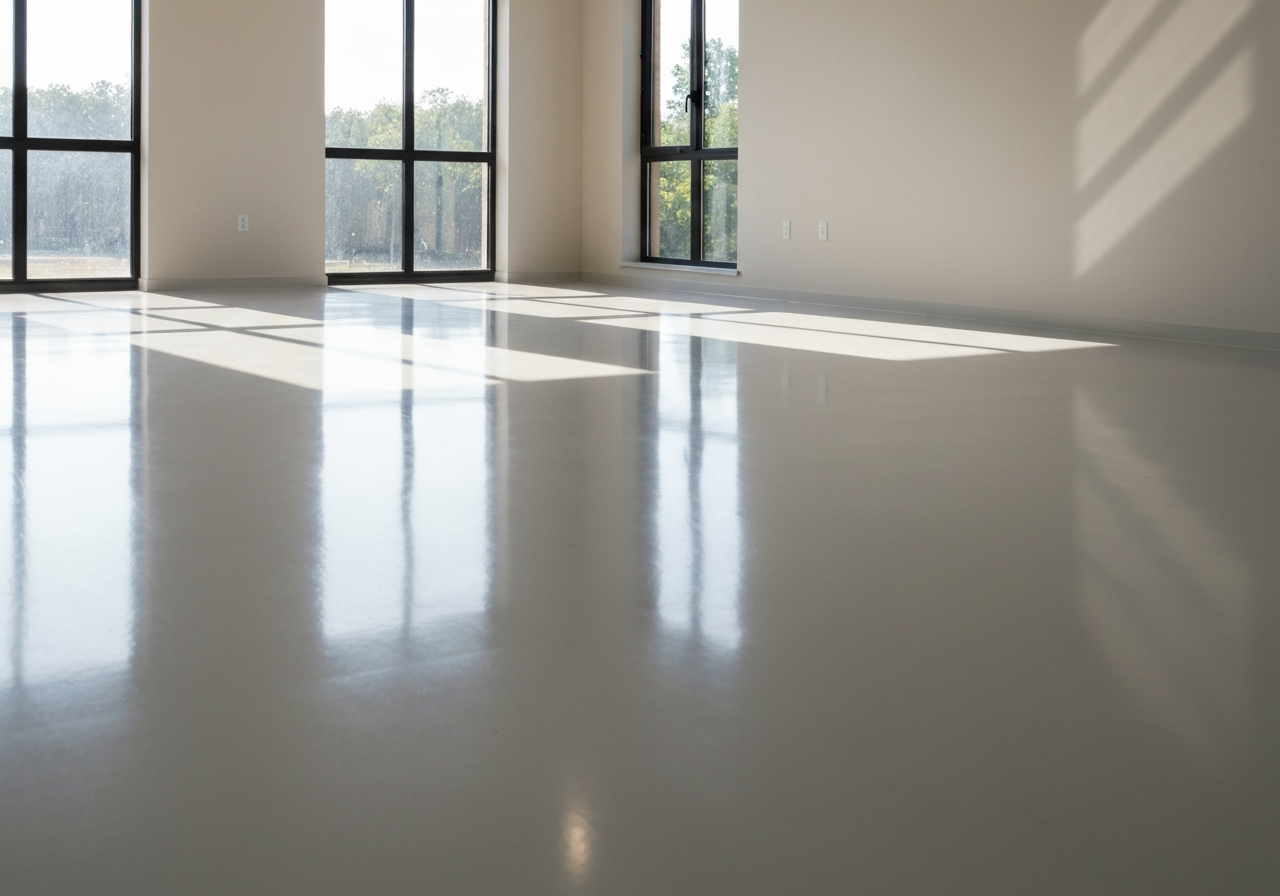
Polyaspartic Floor Coatings
Polyaspartic coatings are often selected when UV stability, durability, and a professional finish are important. For covered patios, porches, sunrooms, and protected outdoor-living areas, a UV-stable polyaspartic system may be a strong fit when the surface conditions are right.
Learn more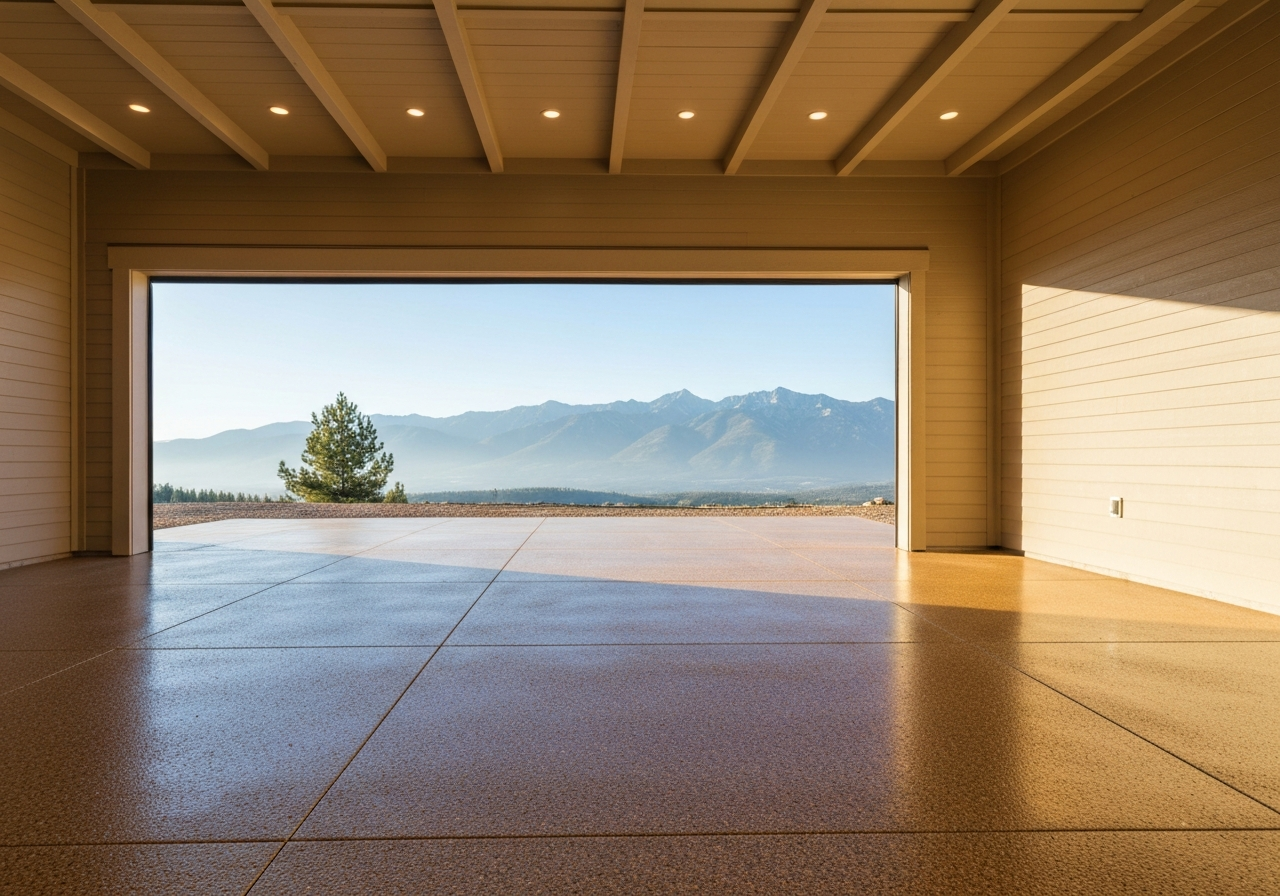
Garage Floor Coatings
Garage floors face a different type of abuse than patios: vehicles, hot tires, road salt, snowmelt, tools, storage, and daily traffic. If your patio project is part of a broader plan to upgrade your home's concrete surfaces, garage coating may be worth considering too.
Learn morePatio coatings are one part of our larger concrete surface protection work. Streamline Solutions helps homeowners and property owners protect, restore, and upgrade existing concrete surfaces with practical coating and sealing recommendations. Explore the main service category at Concrete Coating Services.
Professional Exterior System vs. DIY Deck Paint
DIY deck paint and porch paint can look appealing because it seems simple: clean the patio, roll on a coating, and get a quick color change. The problem is that exterior concrete is not wood decking, and Montana conditions are not gentle. Paint applied over poorly prepared concrete can peel, chip, trap moisture, or wear unevenly, especially when snow, standing water, UV, and freeze-thaw cycles are involved.
A professional patio coating system starts with surface evaluation and mechanical preparation. The coating is selected for the environment, not just the color. Texture, topcoat choice, drainage, and exposure are considered before the system is installed.
DIY products may be acceptable for a temporary cosmetic refresh on a low-risk surface, but they are usually not the right comparison to a professional exterior coating system. If the goal is a finished outdoor-living surface that can hold up better under real use, preparation and product selection matter.
The biggest difference is honesty before installation. A professional should be willing to tell you when coating is not the right choice. If your fully exposed patio has standing water, heavy freeze-thaw stress, or poor drainage, a penetrating sealer may serve you better than a film coating that is being asked to do the wrong job.
| Feature | Professional Exterior System | DIY Deck Paint |
|---|---|---|
| Preparation | Surface evaluation + mechanical prep | Clean and roll |
| Product Selection | Environment-selected products | Color-first paint |
| Safety & Performance | Texture, topcoat, and drainage considered | Ignored |
| Recommendation | Honest coating-vs-sealing call | One-product answer |
| Durability | Built for snow, UV, and freeze-thaw | Peels in a season |
Where We Serve
Streamline Solutions serves homeowners and property owners throughout Kalispell and the Flathead Valley. We also work across Flathead County, Flathead Valley, and Northwest Montana. Missoula is considered for commercial projects only. Because exterior coating work is weather-dependent, project timing may vary by town, elevation, shade, exposure, and seasonal conditions. Covered and protected spaces can sometimes offer more scheduling flexibility than fully exposed surfaces, but exterior installs still require the right temperature, moisture, and weather window.
Patio Coating Cost in Kalispell
Most professional patio coating projects in the Kalispell and Flathead Valley area commonly fall in the range of $6 to $12 per square foot for suitable existing concrete, with some projects landing outside that range depending on conditions. Smaller projects, heavy preparation, crack repair, coating removal, moisture concerns, access limitations, and complex edges can increase the price.
A straightforward covered patio with sound concrete, good access, and normal preparation is usually more predictable. A worn patio with old paint, spalling, uneven repairs, drainage issues, or heavy surface contamination requires more evaluation before a responsible price can be given.
The biggest cost drivers are surface condition, square footage, preparation needs, product system, texture level, crack and defect treatment, and whether the patio is covered or fully exposed. Weather can also affect scheduling because exterior work needs appropriate installation conditions.
For a practical phone quote or to discuss whether coating or sealing is the better fit, call 406-909-4342. We will ask a few direct questions about the patio, its exposure, and its condition before recommending the next step.
Pros and Cons of Patio Coatings
Pros
A patio coating can make a covered outdoor space look finished, cleaner, and more connected to the home. It can improve traction compared with smooth bare concrete, reduce concrete dust, and make everyday cleanup easier. A professional system can also protect existing concrete from normal patio use, furniture movement, spills, and foot traffic. When installed on the right surface, it can be a strong upgrade for porches, covered patios, sunrooms, and protected walkout areas.
Cons
Patio coatings are not the right answer for every outdoor slab. Fully exposed concrete with standing water, poor drainage, heavy snow load, and severe freeze-thaw exposure may be better served by a penetrating sealer. Coatings also require proper preparation, suitable weather, and realistic expectations. They are not a structural repair, they do not fix bad slope, and they cannot make failing concrete behave like a new slab.
Best For vs. Not Recommended For
Best For
Patio coatings are best for covered patios, roofed porches, screened or enclosed outdoor rooms, sunrooms, covered walkout areas, and protected outdoor-living spaces. They are also a good fit when the existing concrete is sound, drains properly, and does not hold standing water. They work especially well for homeowners who want a more finished surface for furniture, grilling areas, pet traffic, entertaining, or everyday use. A coating can help the space feel cleaner and more intentional without replacing the existing concrete.
Not Recommended For
A film coating is often not recommended for fully exposed flatwork that takes constant weather, heavy direct UV, snowpack, poor drainage, or recurring standing water. It may also be a poor fit for concrete with severe spalling, active moisture problems, unstable cracks, or major structural movement. In those cases, penetrating sealing, surface repair, drainage correction, or slab replacement by another qualified provider may need to be considered first. Streamline Solutions will not recommend a patio coating when the surface is telling us it is the wrong system.
Our Recommendation
"For most Kalispell homeowners, the best patio coating candidate is a covered or protected outdoor space that already functions like an extension of the home. If the concrete is sound, drains well, and has some protection from direct weather, a UV-stable flake coating system can be a practical way to upgrade the look, traction, and cleanability of the surface. For fully exposed patios, we recommend slowing down and choosing the system based on moisture, slope, and freeze-thaw reality rather than appearance alone. Sometimes the honest answer is a coating. Sometimes the honest answer is a penetrating sealer."
— Kalispell Concrete Surface Protection Specialists