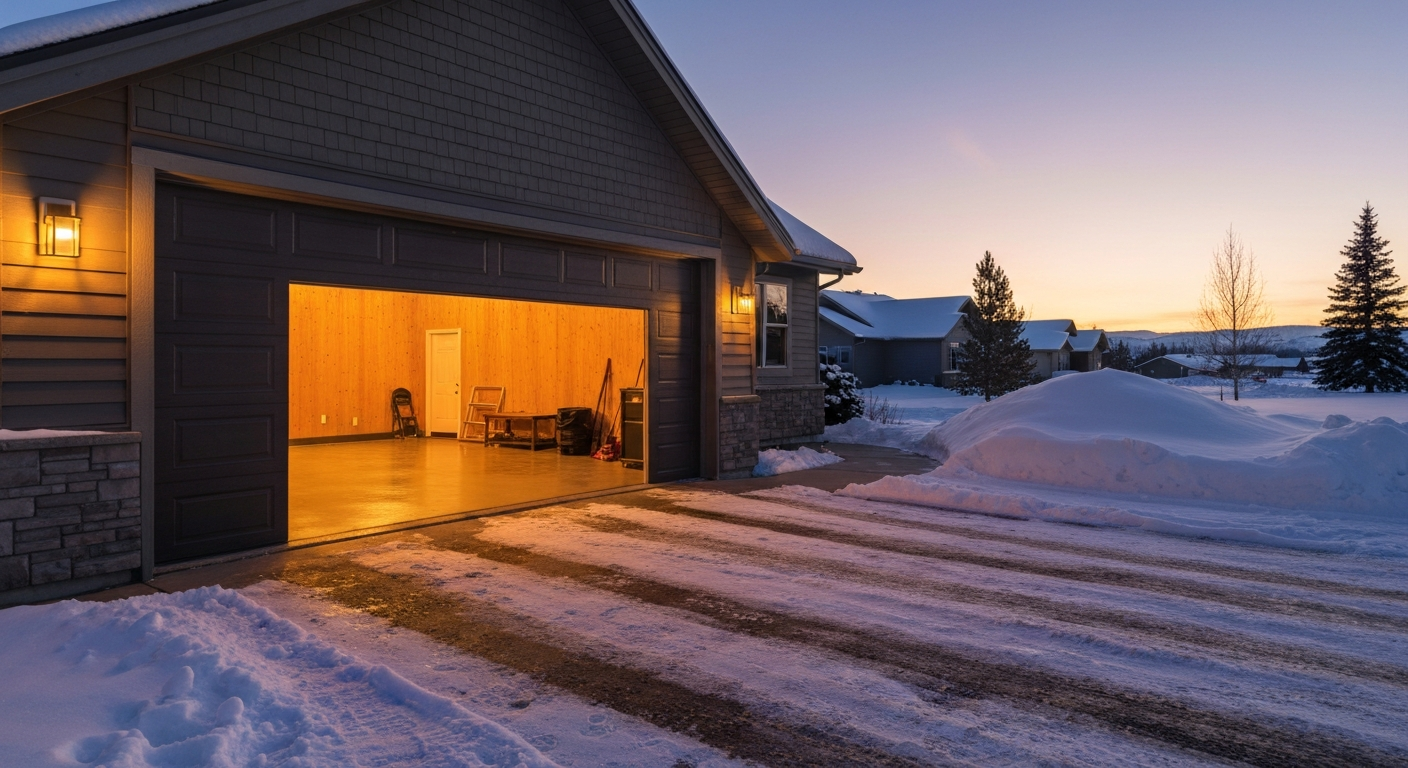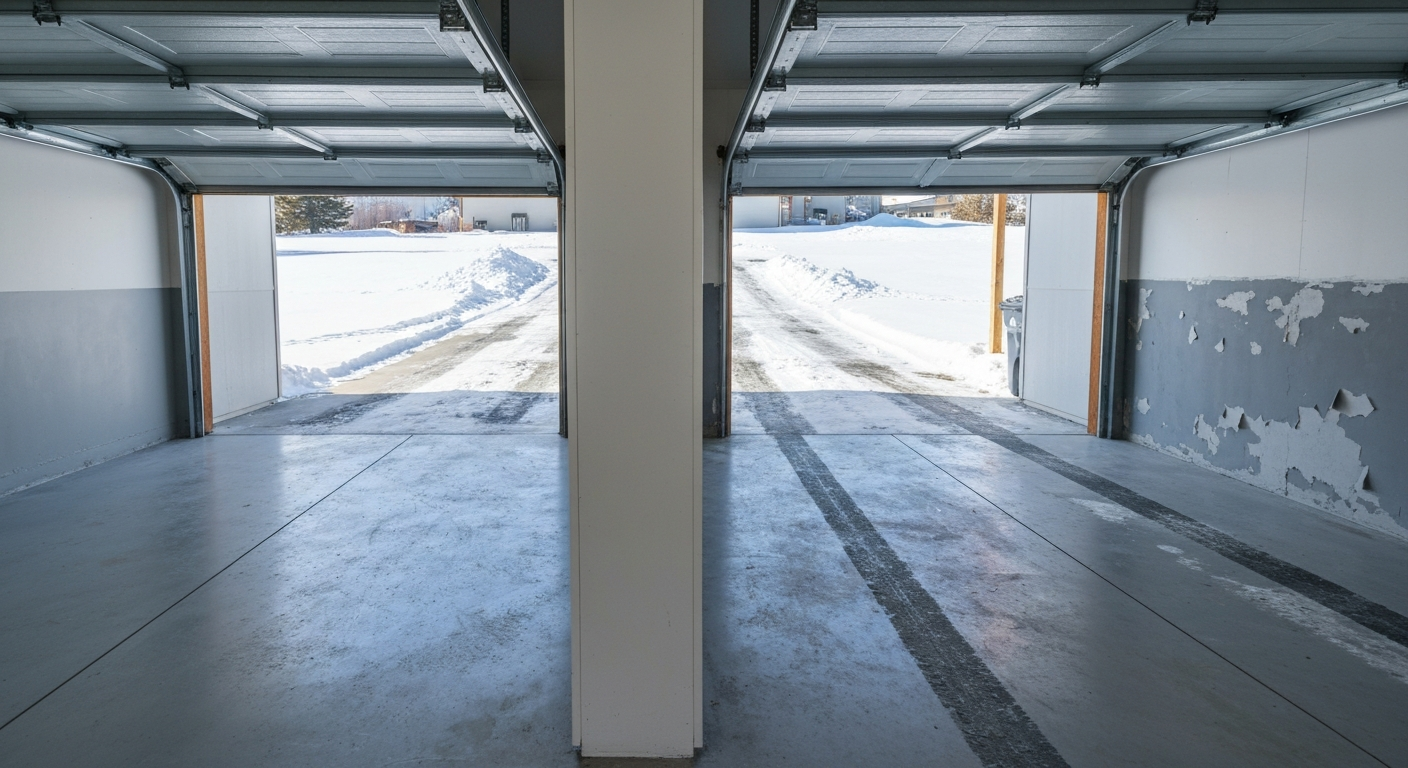
Concrete Coating vs Paint: What Actually Lasts on a Montana Garage Floor?
Floor paint is a 1-3 year film; a bonded coating system is a decades-long floor — here is the honest comparison for Flathead Valley garages.
Garage Floor Paint Looks Easy Until Montana Winter Hits It
Concrete coating vs paint is usually the first question Kalispell and Flathead Valley homeowners ask when a garage floor starts looking stained, dusty, or worn out. Floor paint is a thin decorative film that may look better for a short time, but on a Montana garage floor it typically survives about 1-3 years before peeling, tire-lifting, or wearing through. A professional coating is a chemically bonded floor system, built in layers over prepared concrete, and its service life is usually measured in decades, not seasons.
That does not mean paint is always wrong. A $50-150 DIY paint weekend can make sense if you need a temporary freshen-up, a short-horizon resale cleanup, or a low-traffic storage area that does not see hot tires, snowmelt, road salt, or daily vehicle traffic. But for garages, shops, basement floors, and working concrete surfaces in Northwest Montana, a bonded coating is the more durable answer because it is designed to grip the slab, resist abrasion, and handle the moisture and chemical exposure that floor paint was never built to take.
Streamline Solutions helps homeowners compare the real tradeoffs before they spend money twice. This guide explains how floor paint, 1-part "epoxy paint," 2-part epoxy, polyurea, polyaspartic, and flake systems perform on existing slabs in Kalispell, Whitefish, Columbia Falls, Bigfork, Somers, Lakeside, Kila, Marion, Polson, Ronan, Eureka, and the surrounding Flathead Valley.
Every hardware store in the Flathead Valley sells garage floor paint, porch-and-floor paint, and 1-part "epoxy paint" kits. The labels make them sound tough, affordable, and weekend-friendly. For a homeowner looking at a stained garage slab, the appeal is obvious: sweep the floor, roll on a fresh gray coating, sprinkle a few flakes, park the cars again, and move on.
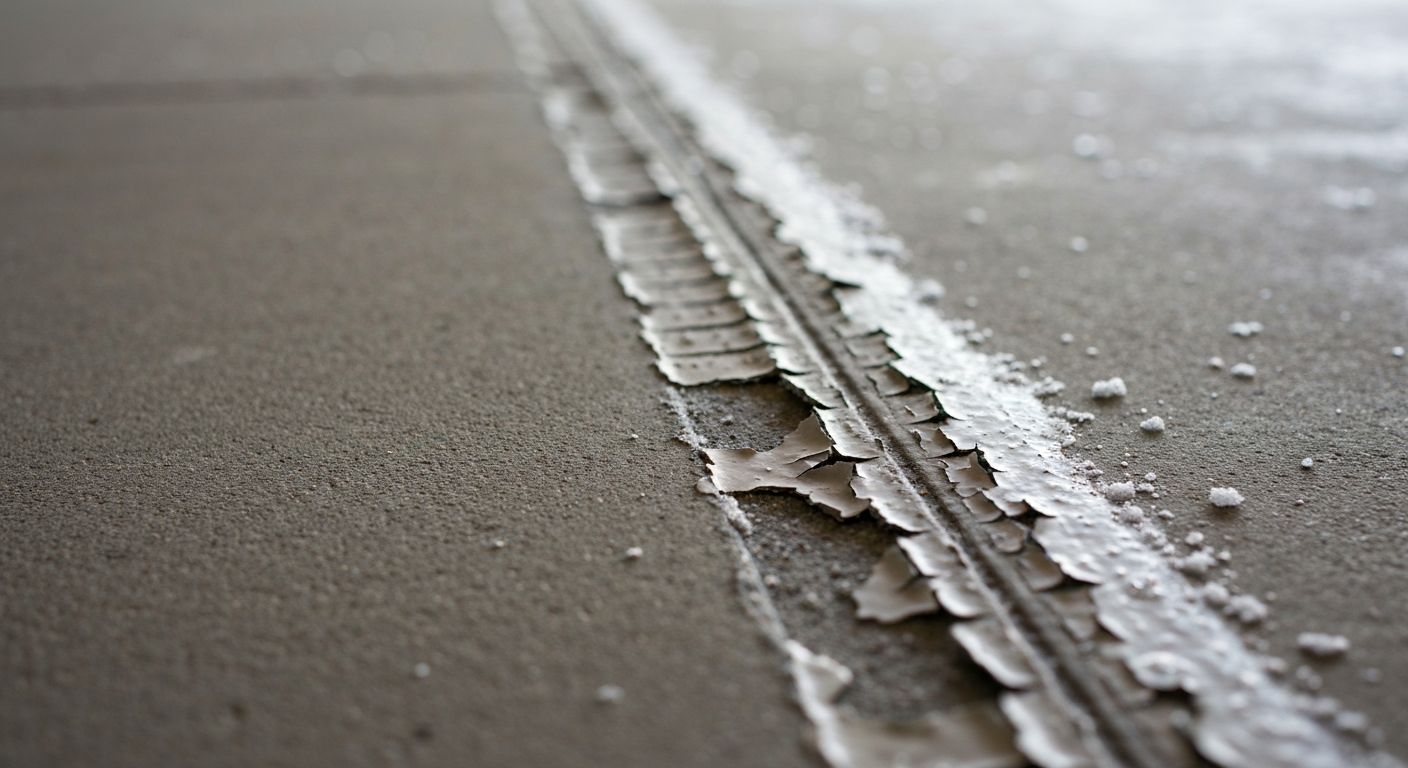
The problem is that most garage floor paint is only a thin surface film. It does not become part of the slab. It sits on top of concrete that may already contain moisture, dust, old sealer, oil contamination, road salt residue, or winter grime. Once the first Flathead Valley winter arrives, snowmelt gets tracked in, road salt and magnesium chloride sit on the surface, and hot tires repeatedly press against the film. By spring, many painted garage floors show peeling near tire paths, flaking around cracks, dull abrasion lanes, or lifted sections where the film could not stay attached.
That repaint cycle is what frustrates homeowners most. The first year feels cheap. The second year brings touch-ups. The third year often means scraping, sanding, degreasing, repainting, and wondering why the floor never looks as good as the package promised. Paint can hide concrete temporarily, but it does not solve the main problems of adhesion, impact resistance, chemical exposure, or long-term wear.
A professional coating system approaches the floor differently. Instead of assuming the slab is ready, the surface is mechanically prepared. Instead of using a thin decorative film, the system uses a base layer that bonds aggressively to opened concrete pores, followed by flake broadcast, texture options, and a wear-resistant topcoat. The difference is not just product quality. It is chemistry, surface preparation, thickness, and the way the finished floor interacts with real garage use.
The Two Approaches Explained Briefly
What Garage Floor Paint Is
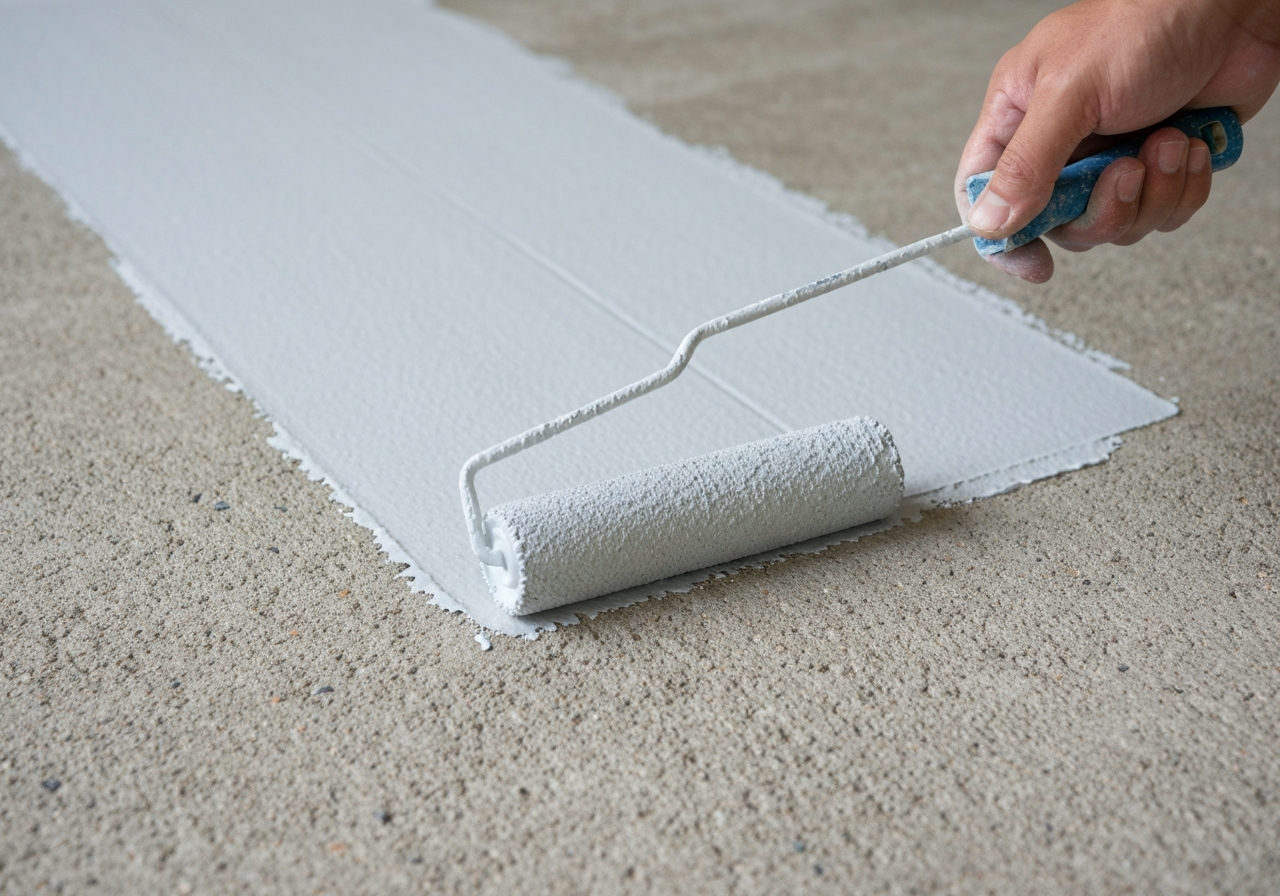
Garage floor paint is usually a latex, acrylic, or modified floor paint designed to add color to concrete. Some products are marketed as 1-part "epoxy paint," but that wording can be confusing. In many cases, the product is still a single-component coating that dries like paint rather than curing through a true 2-part chemical reaction.
Most floor paint is thin, often around 2-5 mils once dry. It depends heavily on surface cleanliness and light etching, but it usually does not require aggressive mechanical preparation. That makes it easier for DIY use, but it also limits how well it can bond to dense or contaminated garage concrete. In a storage room, utility area, or short-term cosmetic project, that may be acceptable. In a daily-driver garage, it is usually the weak point.
What a Professional Floor Coating Is
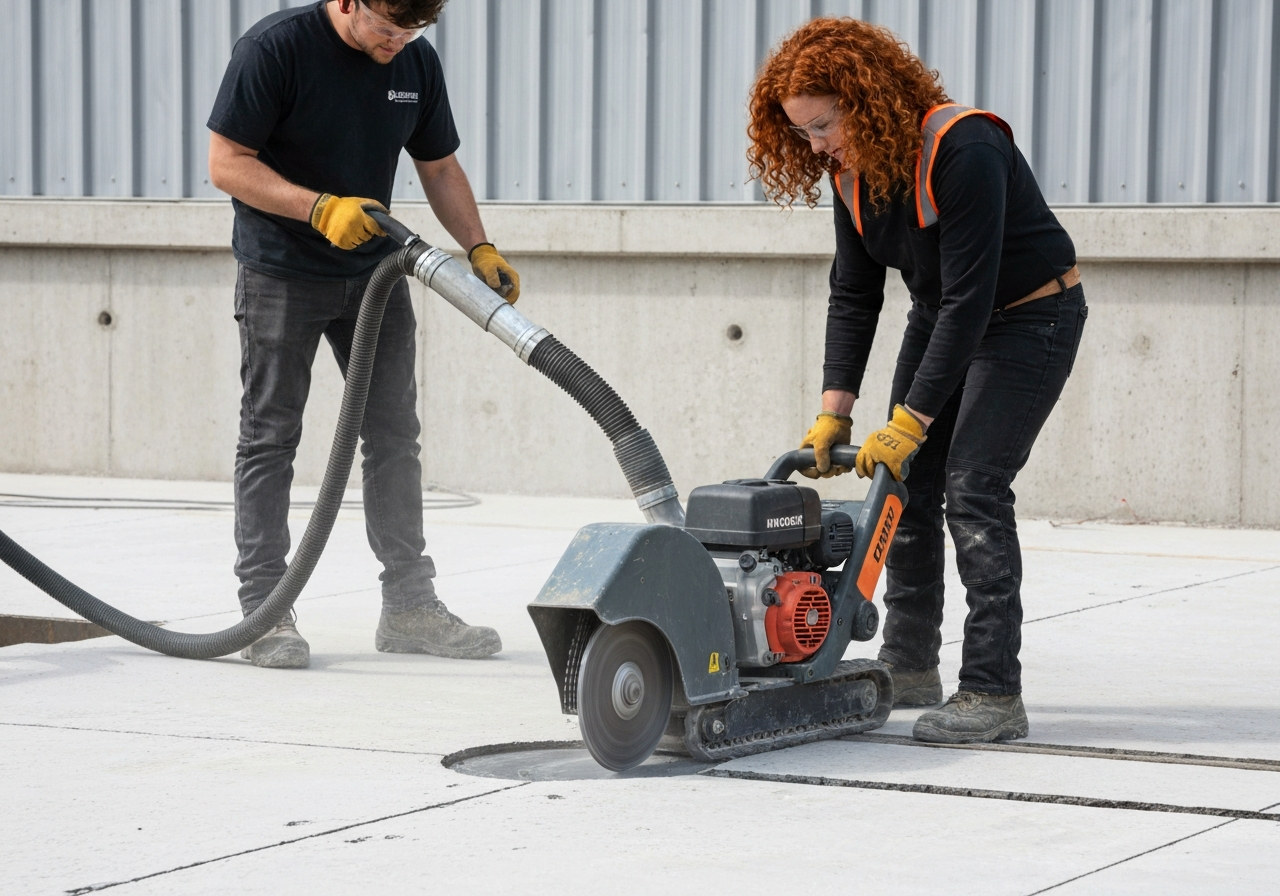
A professional coating is a layered system. Depending on the floor and the goal, that system may use a 2-part epoxy base, polyurea base, polyaspartic topcoat, or a combination designed for adhesion, build, chemical resistance, and fast return to service. The finished system often builds to 20-40+ mils, with flake broadcast and texture options available for appearance and traction.
The most important difference is preparation. Professional systems are installed over diamond-ground concrete, not just washed concrete. Grinding opens the slab, removes weak surface material, and creates a profile the coating can bond into. That bond is what helps the system resist hot-tire pickup, abrasion, road salt, oil, snowmelt, and the studded-tire grit that gets carried into garages across Northwest Montana.
The phrase "epoxy paint" on a label is often marketing, not chemistry. A true coating system is mixed, installed, cured, and built differently than a one-can floor paint. That distinction matters when the floor is exposed to vehicles, temperature swings, moisture vapor, and winter chemicals.
Concrete Coating vs Paint: Centerpiece Comparison Table
| Category | Garage Floor Paint / 1-Part "Epoxy Paint" | Professional Coating System | Practical Verdict |
|---|---|---|---|
| Chemistry & film build | Usually latex, acrylic, or single-component film around 2-5 mils | 2-part epoxy, polyurea, and/or polyaspartic system often 20-40+ mils | Coating wins for build, cure, and durability |
| Surface prep required | Cleaning, degreasing, light sanding, or mild etching | Diamond grinding, crack repair, surface profiling, contaminant removal | Coating wins because prep creates a real bond |
| Adhesion and bond strength | Sits mostly on the surface and depends on cleanliness | Bonds into opened concrete pores after mechanical prep | Coating wins for long-term attachment |
| Hot-tire pickup | Vulnerable to softening, lifting, and tire-path peeling | Designed to resist hot tires after proper cure | Coating wins for daily-driver garages |
| Abrasion and studded-tire grit | Wears through quickly in traffic lanes | Much thicker wear surface with tougher topcoat options | Coating wins for Montana garage use |
| Chemical resistance | Limited resistance to road salt, mag chloride, oil, and cleaners | Stronger resistance when the right topcoat is used | Coating wins for winter exposure |
| UV yellowing | Some paints fade, chalk, or discolor | Polyaspartic topcoats are commonly selected for better UV stability | Coating wins where sunlight hits the floor |
| Moisture-vapor tolerance | Can blister or peel if vapor pressure is present | Better assessment and product selection are possible before install | Coating wins, but slab condition still matters |
| Slip-texture options | Limited; additives can be inconsistent | Flake broadcast and traction texture can be adjusted | Coating wins for controlled texture |
| Install time and cure | DIY weekend plus drying time; traffic often delayed | Many systems are completed in one day with staged return to use | Depends, but coating often returns a garage to service faster than expected |
| Upfront cost | Low material cost, usually $50-150 for a DIY kit | Higher installed cost, commonly about $7-12 per sq. ft. | Paint wins upfront; coating wins long-term value |
| Expected lifespan and cost per year | Often 1-3 years in a working garage | Often 15-20+ years with correct prep and maintenance | Coating wins on cost of ownership |
Chemistry and Film Build Verdict
Paint is thin by design. It can improve appearance, but a 2-5 mil film has very little body to absorb abrasion, impacts, grit, or chemical exposure. That is why painted floors often look good immediately after application but decline quickly in vehicle areas.
A professional system has more material on the floor and stronger chemistry behind it. A 20-40+ mil coating system has enough build to create a real wear layer, not just a colored film. That thickness does not replace good prep, but it gives the floor far more durability once bonded.
Surface Preparation Verdict
Paint is marketed around ease. Clean the surface, etch it, roll the product, and hope the slab accepts it. That process can work on a clean, dry, low-use slab, but many Kalispell garage floors have years of tire residue, dusting, winter chemicals, and oil exposure.
Professional coatings depend on mechanical preparation. Diamond grinding removes weak material and opens the concrete so the coating can bond into the slab. On previously painted floors, the old paint is removed rather than trusted as a base layer.
Adhesion Verdict
A floor coating is only as strong as what it is stuck to. Paint often fails because it is bonded to dust, old sealer, oil residue, or a smooth concrete surface. Once moisture and tires start working against it, the film lifts.
A professional coating is designed to bond to prepared concrete. The goal is not to glue a decorative layer onto the top. The goal is to create a system that becomes mechanically and chemically connected to the existing slab surface.
Hot-Tire Pickup Verdict
Hot-tire pickup is one of the most common reasons garage floor paint fails. A vehicle tire heats up during driving, then presses against the painted surface as it cools. That pressure and heat can soften or pull the film from the concrete.
Coatings are built for that environment. When the slab is prepared correctly and the system has cured properly, a quality epoxy, polyurea, or polyaspartic floor is much better suited to daily-driver use. For a working garage, this is one of the clearest reasons to choose a bonded system.
Abrasion and Winter Grit Verdict
Montana garages collect grit. Studded tires, sand, gravel, snowmelt, and road debris all get dragged across the floor. A thin painted film has little room to wear before the concrete begins showing through.
A flake coating system with a durable topcoat is much more abrasion-resistant. It gives the floor a thicker, tougher surface that can handle traffic lanes, storage movement, tools, and general garage use. For shops and active garages, the difference is noticeable.
Chemical Resistance Verdict
Road salt, magnesium chloride, oil, fuel drips, and cleaning chemicals are hard on painted concrete. Paint may resist a small spill for a short time, but repeated winter exposure can stain, soften, or lift the film.
Professional systems are selected with chemical exposure in mind. The topcoat matters, especially in a garage that sees snowmelt and road treatments for months. A properly chosen system provides a better barrier between the slab and the chemicals that shorten the life of a painted floor.
UV and Appearance Verdict
Garage doors open. Sunlight hits the front edge of the floor. In high-altitude Montana conditions, UV exposure can accelerate discoloration in weaker products.
Polyaspartic topcoats are often selected when UV stability matters. That does not mean every coating is immune to every condition, but the right system gives homeowners a better chance of keeping a consistent appearance over time. Paint is more likely to fade, chalk, or look tired in exposed areas.
Moisture-Vapor Verdict
Concrete can move moisture. Freeze-thaw cycles, slab conditions, and vapor drive can all affect what happens under a surface film. Paint is often installed without a serious assessment of vapor issues, which can lead to blistering or peeling.
Professional preparation gives the installer a chance to evaluate the slab before committing to a system. Some floors need extra repair, moisture consideration, or a different product choice. Coatings are not magic, but a professional process is better equipped to handle real slab conditions.
Slip Texture Verdict
Paint can accept traction additives, but the result can be uneven. Too little texture feels slick. Too much can make the floor hard to clean. DIY broadcast flakes may improve appearance without creating a consistent wear surface.
Professional flake systems allow more controlled texture. The broadcast level, topcoat, and traction profile can be matched to how the garage is used. For homeowners who want a floor that is cleanable but not glassy, that control matters.
Cost Verdict
Paint wins the first receipt. A weekend paint kit is cheap compared with a professional installation. For a temporary cosmetic project, that can be perfectly reasonable.
Coatings win when cost is measured over useful life. Repainting every 1-2 years costs money, time, prep effort, and frustration. A 15-20+ year system costs more upfront, but the yearly cost can be much lower when the floor is used daily.
Why Montana Weather Matters
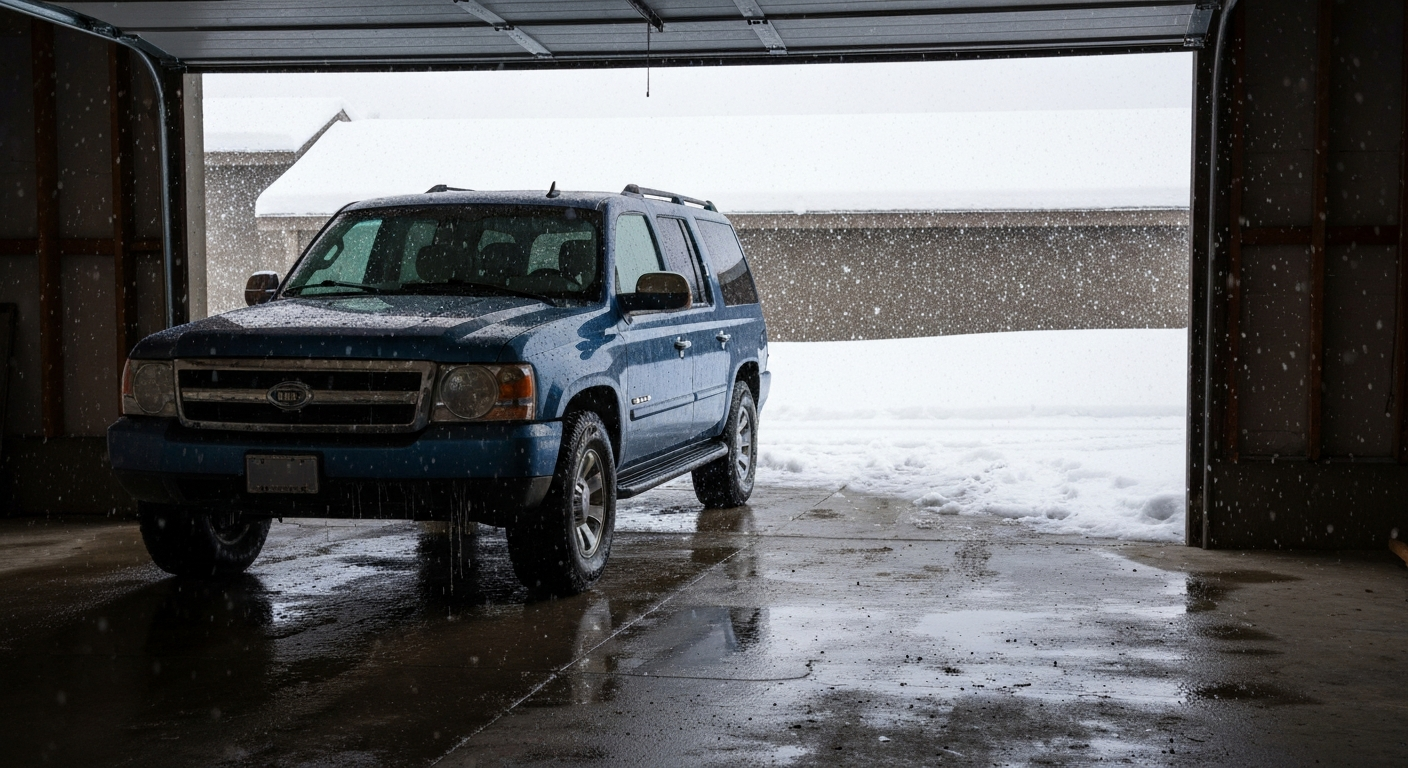
A garage floor in Kalispell does not live the same life as a showroom slab in a mild climate. Montana winters create a cycle of cold concrete, wet vehicles, snowmelt, salt, grit, and freeze-thaw pressure. That combination is exactly where thin paint films tend to fail fastest.
Freeze-thaw conditions can push moisture through and around concrete. When a thin film blocks the top but does not bond deeply, vapor pressure can contribute to blistering or flaking. If the surface was painted over dust, old sealer, or incomplete prep, winter moisture finds the weak point quickly.
Sub-zero garage temperatures also matter. Some DIY products are applied when the slab is too cold, the garage is poorly heated, or the floor cannot dry fully. Even if the paint looks acceptable at first, poor cure conditions can reduce adhesion and durability.
Road salt and magnesium chloride are another major factor. Vehicles carry slush into the garage all winter. That liquid sits in tire paths, at the front of stalls, near drains, and along low spots in the slab. Paint is not built to resist repeated chemical exposure the way a selected professional topcoat can.
Then there is grit. Studded tires, sand, and winter road debris act like sandpaper. A thin painted film may look fine in low-traffic corners but wear quickly where tires turn, snow shovels scrape, and tools get moved around.
Even UV exposure plays a role. High-altitude sunlight through open garage doors can yellow, fade, or dull weaker surfaces. A polyaspartic topcoat is often the better option when appearance, sunlight exposure, and long-term protection all matter.
Where Each Option Belongs
Paint belongs in a few honest situations. It can be a defensible stopgap when the goal is a short-horizon resale freshen-up, a low-traffic storage corner, or a rental property where the budget does not support a full system. It can also make sense when the floor will not see hot tires, winter slush, salt, heavy tools, or daily use.
A bonded coating belongs where the floor has to work. Daily-driver garages, shops, basement floors, laundry areas, hobby spaces, and storage floors all benefit from a surface that is mechanically prepared and chemically cured. If the floor sees hot tires, road salt, snowmelt, oil, grit, or frequent cleaning, paint is usually a temporary cosmetic layer rather than a lasting solution.
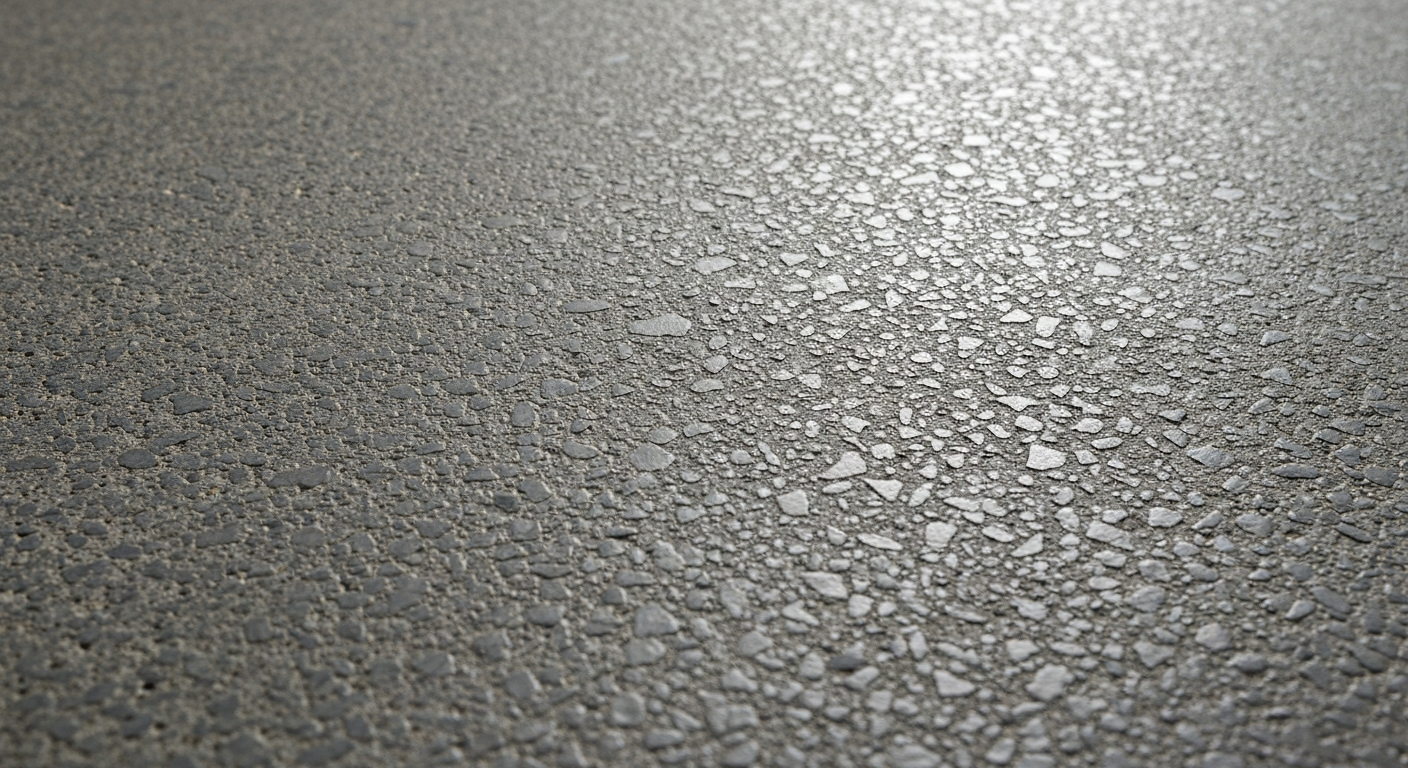
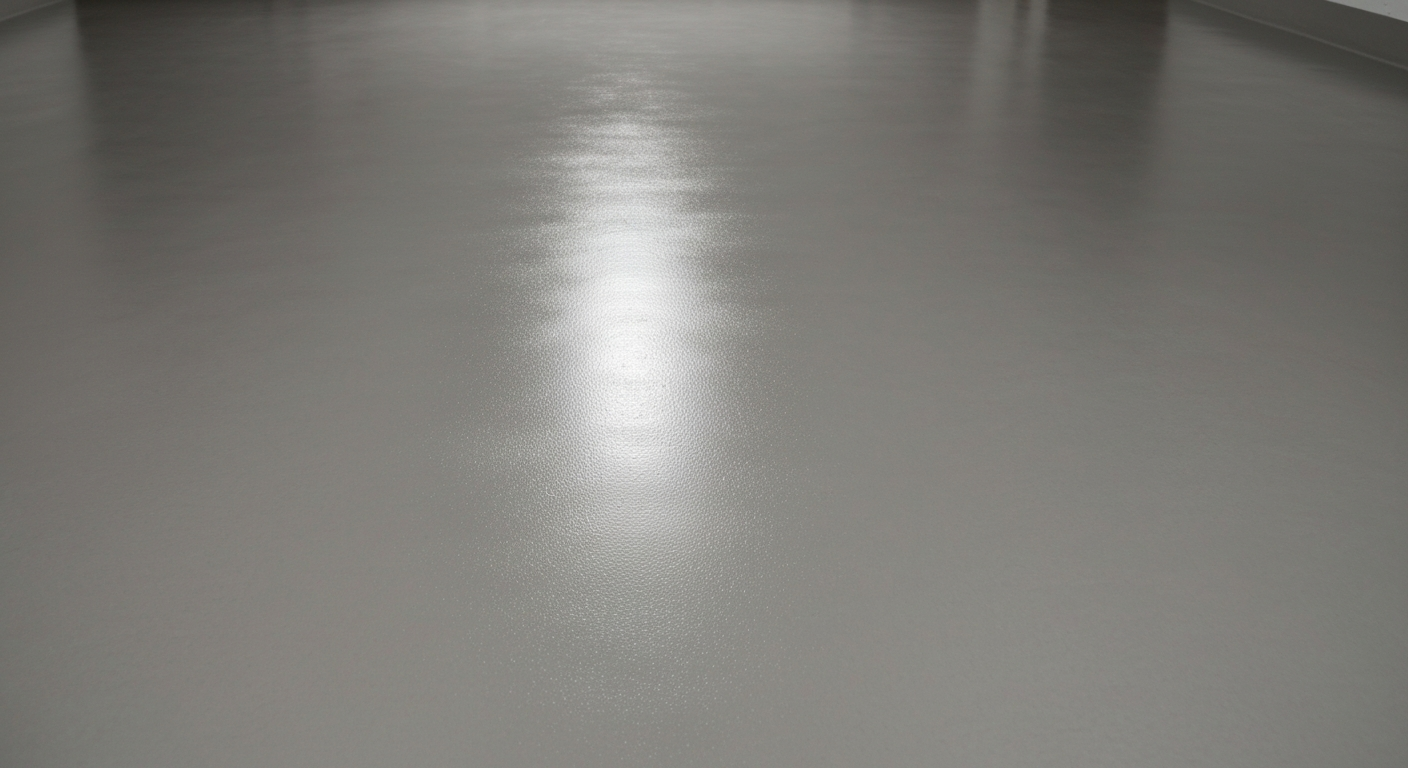
You can also explore the broader system options at Concrete Coating, or compare specific material choices at Polyaspartic vs Epoxy, Polyurea vs Polyaspartic, and Flake vs Metallic Epoxy.
Garage Floor Paint Pros
- Low upfront cost
- DIY-friendly for homeowners with basic tools
- Good for short-term cosmetic improvement
- Easy to find at hardware stores
- Works in some low-traffic storage areas
- Can make a stained floor look cleaner temporarily
Garage Floor Paint Cons
- Thin film with limited wear life
- Vulnerable to hot-tire pickup
- Often peels after winter salt and snowmelt exposure
- Requires frequent touch-ups or repainting
- Limited abrasion resistance
- Limited chemical resistance
- Can fail quickly if the slab is not perfectly clean and dry
- Does not solve dusting, weak surface material, or old coating problems
Professional Coating Pros
- Much thicker system build
- Bonds into diamond-ground concrete
- Better resistance to hot tires, road salt, oil, and abrasion
- Flake broadcast and texture options improve appearance and traction
- Longer service life in active garages and shops
- More controlled prep, repair, and cure process
- Better cost of ownership over many years
- Can transform a worn slab into a clean, usable surface
Professional Coating Cons
- Higher upfront investment
- Depends heavily on professional preparation
- Requires slab assessment before final product selection
- Previously painted floors need old paint removed
- Some floors need repair or resurfacing before coating
- Not every slab is a same-day project if damage or contamination is severe
Garage Floor Paint Is Best For
Garage floor paint is best for short-term visual improvement. It works when the floor is low-traffic, dry, clean, and not exposed to vehicles. It can be reasonable for storage corners, utility areas, rental touch-up, or a homeowner who needs a temporary improvement before a larger project later.
Paint is also best when the budget is the only deciding factor and expectations are realistic. If the goal is "make it look better for now," paint can do that. If the goal is "stop repainting and protect the floor for years," paint is usually the wrong product category.
Garage Floor Paint Is Not Recommended For
Paint is not recommended for daily-driver garages in Kalispell or the Flathead Valley. It is especially weak where tires park, turn, and cool after driving. It is also a poor match for snowmelt, road salt, oil drips, studded-tire grit, and repeated winter cleaning.
Paint is not recommended for shops, working garages, or floors with existing peeling coatings. It should not be trusted over old paint that is already lifting. If the existing surface is failing, the next layer is only as strong as the weak layer underneath it.
Professional Coatings Are Best For
Professional coatings are best for garages, shops, basements, and working concrete floors where durability matters. They are the right call when the floor sees vehicles, tools, storage, snowmelt, road salt, or regular cleaning. They are also a strong choice when homeowners want a finished surface that looks intentional rather than merely covered.
A coating system is especially useful when the slab has cosmetic damage, minor surface wear, old coating failure, or a floor that always looks dusty. With the right prep and repairs, the finished surface can be cleaner, brighter, easier to maintain, and more resistant to daily use.
Professional Coatings Are Not Recommended For
A full coating may not be the best immediate choice when the homeowner only needs a very temporary cosmetic fix. It may also be more than necessary for a storage-only area with little traffic and no moisture exposure. In those cases, paint may be fine for now if the owner understands the shorter life.
A professional coating also should not be installed casually over unknown materials. Old paint, weak coatings, oil contamination, and surface damage need to be addressed first. The system is only worth installing when the preparation matches the performance expectation.
Cost Comparison: DIY Paint Weekend vs Long-Term Coating System
A DIY garage floor paint kit usually costs about $50-150 in materials. That number is attractive, especially if the homeowner already owns rollers, brushes, tape, and basic prep supplies. But the real cost includes a weekend of cleaning, degreasing, etching, drying, painting, waiting, and then repeating the process when the film starts to fail.
A professional garage floor coating commonly falls around $7-12 per square foot installed, depending on floor size, condition, repairs, coating system, flake broadcast, and return-to-service needs. A two-car garage often costs significantly more than a DIY paint kit on day one. But the comparison changes when you divide the cost over expected service life.
If paint lasts 1-2 years in a working garage, a homeowner may repaint the same floor 8-15 times over the life of a well-installed coating system. Each repaint adds material cost, labor, downtime, and more surface-prep frustration. If the old paint peels badly, removal becomes harder and more expensive later.
A 15-20+ year professional system changes the math. The upfront price is higher, but the yearly cost of ownership can be lower because the floor is not being stripped, patched, and repainted every season or two. The floor also performs better while it is in service, which matters for homeowners who use the garage every day.
For a deeper pricing breakdown, visit Garage Floor Coating Cost or the main cost guide at Cost.
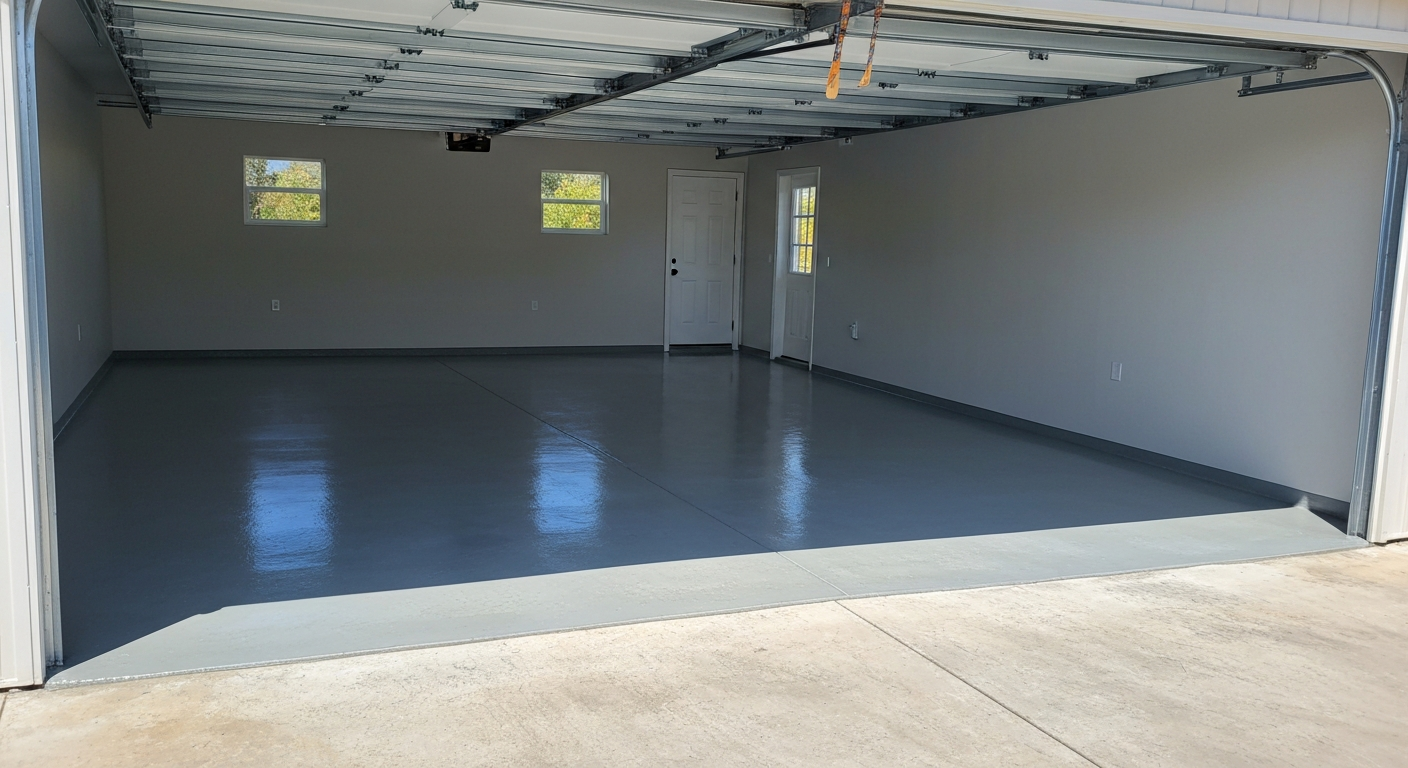
Myth vs Reality
"Epoxy paint is the same as an epoxy coating."
Many 1-part "epoxy paint" products are not the same as a professional 2-part epoxy coating system. A true coating cures through a different process, builds thicker, and is installed over prepared concrete. The wording on a can does not make a thin film perform like a bonded floor system.
"Paint just needs a good cleaning to stick."
Cleaning helps, but it does not solve surface profile, contamination, moisture, old sealer, or weak concrete. Many garage slabs need mechanical preparation before a durable system can bond. A clean smooth slab can still reject paint if the surface is not properly opened.
"Coatings are just expensive paint."
Coatings use different chemistry, different preparation, different thickness, and different topcoat options. They are not simply a premium version of paint. The performance difference comes from the whole system, not just the product label.
"A pressure wash is enough prep."
Pressure washing removes loose dirt, but it does not create the profile needed for a strong coating bond. It may also leave moisture behind in the slab. Diamond grinding is the more reliable preparation method for professional coating systems.
"A DIY kit with flakes matches a professional flake floor."
Decorative flakes in a DIY kit can improve appearance, but they do not automatically create a thick, durable, sealed flake system. A professional flake floor involves preparation, base coat selection, broadcast coverage, scraping, topcoat build, and traction control. The flakes are only one part of the system.
Streamline Solutions Recommendation
For a Flathead Valley garage floor that sees real use, Streamline Solutions would choose a professionally prepared coating system over paint nearly every time. The reason is simple: Montana garages need more than color. They need adhesion, thickness, chemical resistance, abrasion resistance, and a surface that can handle snowmelt, road salt, hot tires, and winter grit.
For many homeowners, the best fit is a flake system with a durable base and polyaspartic topcoat. It provides a clean finished look, practical traction, strong wear resistance, and a surface that is easier to maintain than bare or painted concrete. For certain floors, epoxy may be the right base. For others, polyurea or polyaspartic materials may be selected for speed, UV stability, or performance needs.
The one honest case where we would tell a customer paint is fine for now is a short-term cosmetic project with low traffic and a limited budget. If the goal is to make a storage corner or temporary resale floor look cleaner for a season, paint may be the practical choice. But if the garage is used every day, if vehicles park inside, or if winter salt and slush are part of the floor's life, a bonded coating is the better investment.
— Streamline Solutions · Concrete Surface Protection Specialists, Kalispell, MT
Service Area, Trust, and Next Step
Streamline Solutions serves homeowners throughout the broader Flathead Valley. Missoula is handled for commercial projects only.
We are licensed and insured, and we provide free written quotes so homeowners can compare options clearly before choosing a floor system. Whether your garage floor is bare concrete, worn paint, peeling "epoxy paint," or an older coating that needs evaluation, we can inspect the surface and explain what prep, repair, and coating approach makes sense.