
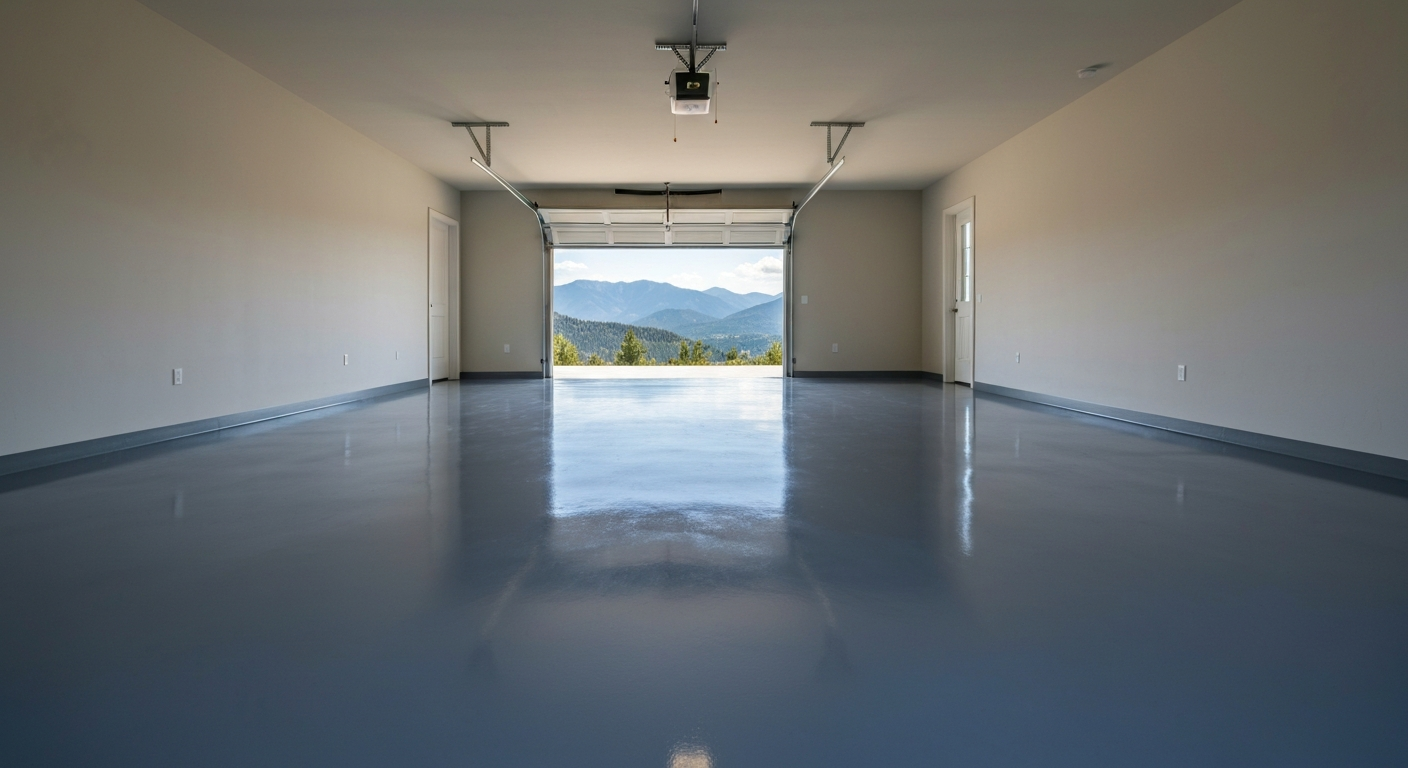
Epoxy Garage Floors in Kalispell & the Flathead Valley
Solid color, flake, or metallic — the right epoxy system for your slab, your garage, and a Montana winter.
The Local Problem: Montana Garages Are the Hardest-Working Room in the House
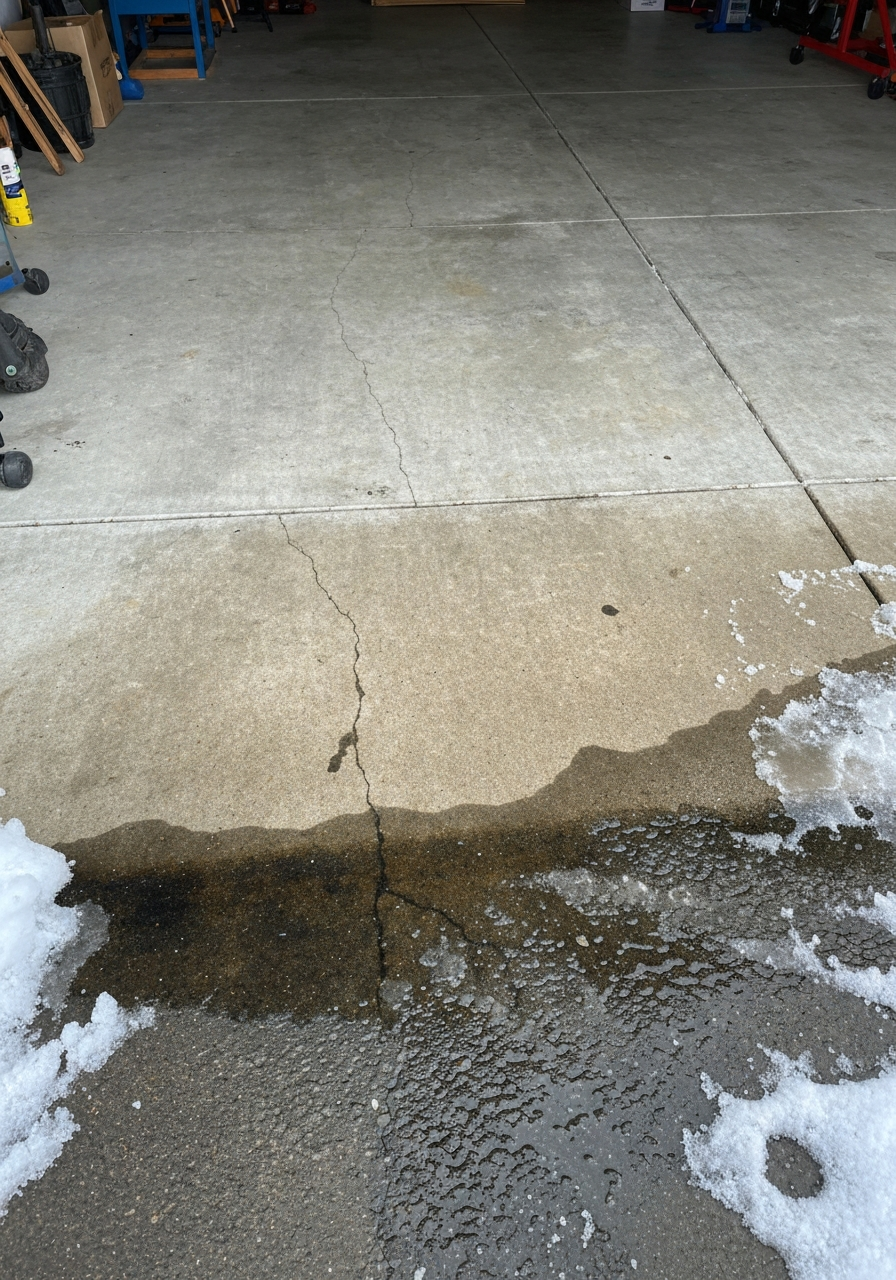
In Northwest Montana, a garage is rarely just a garage. It is a parking area, gear room, snow-management zone, workbench space, storage area, mudroom extension, freezer room, tool area, and sometimes a small shop. In winter, it also becomes the place where snow, gravel, slush, road salt, mag chloride, and freeze-thaw moisture collect on the floor.
Bare concrete is porous. It absorbs water, holds stains, sheds dust, and becomes harder to clean as the surface wears. Even concrete that looked good when the home was built can become rough, patchy, dusty, or stained after years of vehicles, hot tires, oil drips, snowblowers, shovels, bikes, storage racks, and seasonal traffic.
Kalispell and Flathead Valley garages deal with a specific mix of problems. Snow and ice melt off vehicles. Deicing residue sits on the slab. Gravel gets ground into the surface. Hot tires can pull at weak coatings. Temperature swings can expose preparation shortcuts. A professional epoxy garage floor system is designed to improve the existing surface so it can handle real Montana use with less dust, less staining, and easier maintenance.
What We Do: The Right System for the Garage, Not One-Size-Fits-All
An epoxy garage floor is a protective coating system installed over existing concrete to make the surface cleaner, more durable, easier to maintain, and better suited for daily garage use. Depending on the garage, that system may be a solid-color epoxy coating, a full-broadcast flake floor, a more decorative metallic epoxy finish, or an upgraded system that uses a polyaspartic topcoat or full polyaspartic coating for faster cure, better UV stability, and stronger performance in certain conditions.
At Streamline Solutions, we install epoxy garage floors in Kalispell and across the Flathead Valley for homeowners, shop owners, and property owners who want a better surface over the concrete they already have. We do not approach every garage with the same product or the same sales pitch. The right garage floor coating depends on the condition of the slab, how the space is used, whether vehicles park inside, what kind of winter exposure the floor sees, and how much durability, texture, appearance, and chemical resistance the project requires.
Streamline Solutions installs garage floor coating systems for existing concrete surfaces. Our role is to evaluate the slab, understand the way the garage is used, and recommend a coating system that fits the project instead of forcing every customer into one finish.
As Concrete Surface Protection Specialists, we coat, seal, protect, restore, and upgrade existing concrete. We focus on the surface that is already in place, including garage slabs, shop floors, basement concrete, and other usable concrete areas that need better protection and appearance.
Solid-Color Epoxy Garage Floors
A solid-color epoxy floor is a clean, simple coating option for garages where the goal is basic protection, easier cleaning, and a uniform appearance. It can work well in storage areas, utility spaces, and garages with lighter use. Solid-color systems are usually more sensitive to visible dust, tire marks, scratches, and slab imperfections because there is no flake or visual texture to hide daily wear. For some garages, solid color makes sense. For others, especially vehicle-heavy garages in Montana, a flake broadcast or upgraded topcoat is often the more practical recommendation.
Flake-Broadcast Epoxy Garage Floors
A flake-broadcast system uses a pigmented base coat, decorative vinyl flakes, and a clear protective topcoat. A full-broadcast flake floor is one of the most popular garage-floor choices because it hides minor imperfections, improves visual texture, and creates a more finished look than plain concrete or solid-color coating. Flake systems are especially practical in Kalispell garages because they camouflage winter dirt, gravel, road residue, and normal daily use better than a single-color surface. For a deeper look at this specific system, visit /concrete-coating/flake-epoxy/.
Metallic Epoxy Garage Floors
Metallic epoxy is a more decorative and custom-looking option. It creates depth, movement, and a high-end visual effect that can work well in showrooms, finished garages, basements, studios, and specialty spaces. It is not always the most practical choice for a hard-working daily parking garage because the smoother decorative finish can show wear differently than a flake system. For homeowners who want a statement floor rather than a traditional garage finish, metallic epoxy may be worth considering. The right recommendation depends on use, expectations, and maintenance preferences.
When Polyaspartic Is the Better Choice
Polyaspartic coatings are often used as premium clear topcoats over flake systems, and in some cases a full polyaspartic system may be the better fit. Polyaspartic products can offer strong abrasion resistance, good clarity, UV stability, and faster return-to-service when installed under appropriate conditions. They can also support certain indoor garage installations during colder months when temperature, humidity, slab condition, and cure requirements are properly managed. That does not mean every garage automatically needs full polyaspartic. It means product selection matters. In some garages, epoxy as a base layer with a polyaspartic topcoat is a strong combination. In others, a full polyaspartic system may be recommended for faster cure, higher performance, or specific use conditions.
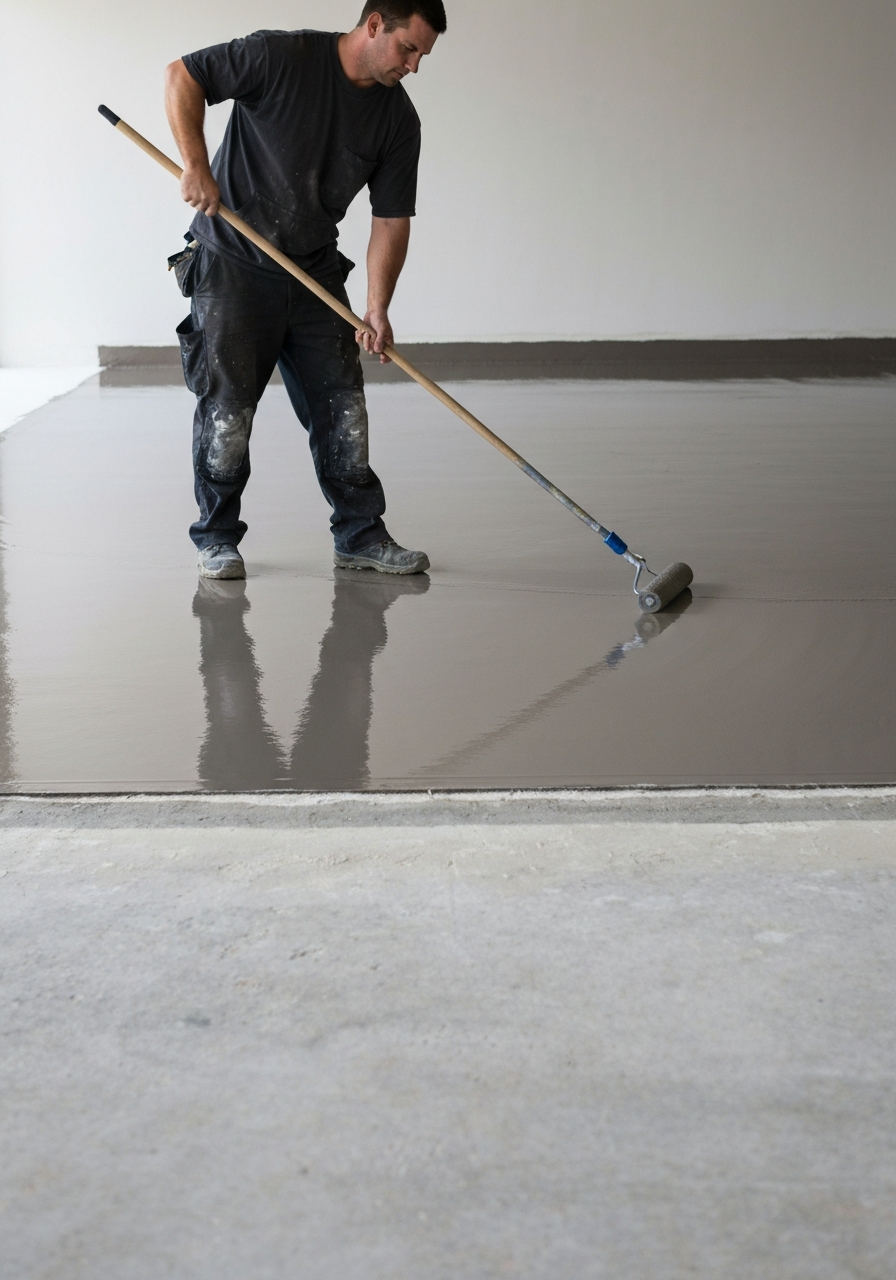
Benefits of a Professional Epoxy Garage Floor
1. A Cleaner, More Finished Garage
A professional epoxy garage floor changes the feel of the entire space. Instead of dusty, stained concrete, the garage gets a more finished surface that looks intentional and easier to maintain. For attached garages, mountain homes, and shops, that makes the space feel less like an unfinished utility area and more like a usable part of the property. The right finish also helps visually organize the garage. Vehicles, tools, shelves, bikes, and storage systems all look better against a clean coated floor than against blotchy bare concrete.
2. Easier Cleaning After Snow, Dirt, and Daily Use
Bare concrete holds onto dust, dirt, tire residue, and winter contamination. A coated garage floor makes regular cleaning more manageable because the surface is less porous and easier to sweep, blow out, mop, or rinse. This is especially helpful during Flathead Valley winters. Snowmelt, road salt, mag chloride, and gravel still need to be cleaned, but they are easier to remove from a properly coated surface than from raw concrete.
3. Better Protection for Existing Concrete
An epoxy garage floor helps protect the existing slab from direct exposure to daily wear. Vehicles, hot tires, snowmelt, minor spills, and foot traffic all contact the coating system instead of the bare concrete. No coating makes a slab indestructible, and no coating can fix structural movement underneath it. But when the concrete is stable and properly prepared, a professional coating system can reduce surface dusting, staining, and wear.
4. System Options for Different Garage Uses
Not every garage needs the same floor. A storage-heavy garage, a daily parking garage, a heated shop, a hobby workspace, and a finished showroom-style garage all have different needs. Epoxy systems can be adjusted with different base coats, broadcast methods, topcoats, textures, and color options. That flexibility is one of the reasons epoxy garage floors remain popular. The term "epoxy garage floor" covers a range of systems, and the value comes from choosing the right one for the space.
5. Better Appearance Without Overcomplicating the Space
A garage floor does not have to look flashy to look good. Many homeowners want a clean, durable, neutral surface that hides normal use and fits the home. Flake blends, solid colors, and select metallic finishes give different levels of visual impact depending on the goal. For most working garages in the Flathead Valley, practical finishes tend to perform best visually over time. Mid-tone flake systems are especially popular because they hide dust, gravel, and winter residue better than very light or very dark floors.
6. Stronger Value Than Temporary Floor Paint
Floor paint can make concrete look better for a short period, but it is not the same as a professional epoxy garage floor system. Paint is typically thinner, less durable, and more likely to peel or wear under vehicles, moisture, and hot tires. A properly installed epoxy or epoxy/polyaspartic system is built around surface preparation, coating thickness, adhesion, repairs, and protection. That is what separates a garage floor coating from a simple cosmetic paint job.
Why Epoxy Garage Floors Are Specified Differently in Montana
Garage floor coatings need to be specified around the environment. A system that performs well in a mild climate may not be the right choice for a Montana garage that sees snowmelt, road salt, mag chloride, gravel, freeze-thaw cycles, hot tires, and long periods of wet winter use.
The first difference is surface preparation. Diamond grinding is especially important because the coating needs a reliable mechanical profile. Acid etching is not enough for the kind of garage floors we are asked to install. Etching can be inconsistent, can leave residue, and does not properly address many surface contaminants or weak top layers.
The second difference is system selection. A smooth solid-color coating may look clean, but it may show tire marks, dust, scratches, and winter residue more easily. A flake-broadcast system may be more forgiving for daily parking. A polyaspartic topcoat may be the better choice when fast cure, durability, and UV stability matter.
The third difference is scheduling and cure conditions. Indoor garage installations can sometimes be completed outside the warmest months, but temperature, slab condition, humidity, ventilation, and product selection must be considered. Cold-cure polyaspartic options can help in some cases, but the conditions still need to be evaluated honestly.
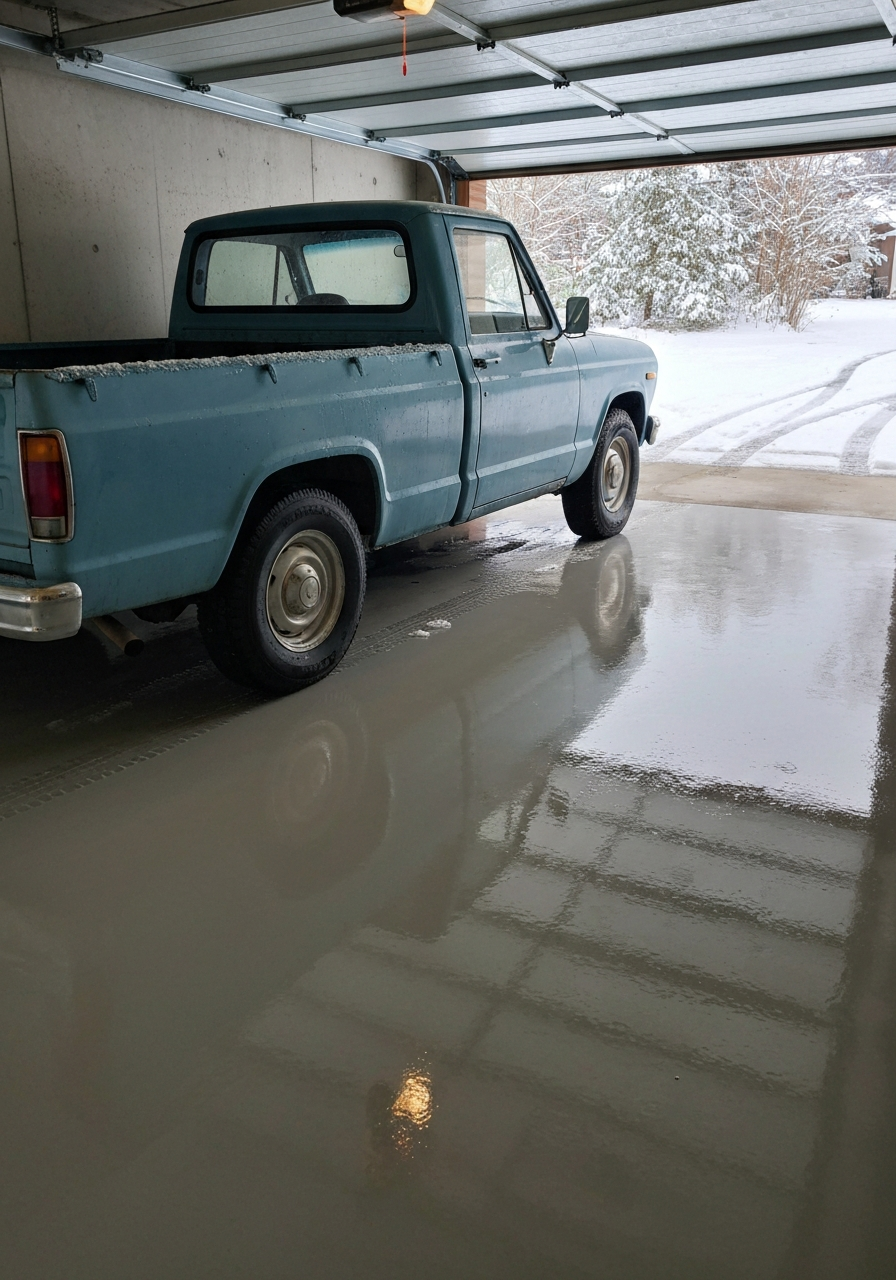
Our Epoxy Garage Floor Installation Process
Garage evaluation and system recommendation
We start by reviewing the existing concrete, the size of the garage, how the space is used, and what you want the floor to accomplish. We look for cracks, pitting, oil contamination, existing coatings, moisture concerns, soft surface areas, drains, stem walls, garage doors, and access conditions. From there, we recommend the system that makes the most sense: solid color, flake, metallic, epoxy with polyaspartic topcoat, or another protective option.
Moisture, contamination, and condition review
Before coating, the slab needs to be stable enough for the system being installed. Heavy oil contamination, trapped moisture, old failing coatings, severe pitting, or moving cracks can all affect the recommendation. We explain these issues before work begins so expectations are clear.
Diamond grinding, never acid etching
We mechanically prepare the concrete with diamond grinding. This opens the surface, removes weak surface material, and creates a better bonding profile for the coating. We do not rely on acid etching because it is not the preparation standard we want behind a professional garage floor.
Crack and surface repair
Appropriate cracks, pits, spalls, and damaged areas are repaired before coating. Some repairs are cosmetic and some are functional, depending on the condition of the slab. Moving cracks or major slab problems may still show movement over time, but proper repair work helps create a cleaner, more stable coating surface.
Base coat or primer application
Depending on the selected system, we apply the appropriate base coat or primer to the prepared concrete. This may be a pigmented epoxy layer, a moisture-tolerant primer when needed, or a coating selected for the installation conditions. The base layer is important because it supports adhesion, color, build, and the next steps in the system.
Finish system installation
For solid-color floors, the finish may remain clean and uniform. For flake systems, flakes are broadcast into the wet base coat, often to full refusal for a dense garage-floor finish. For metallic epoxy, the decorative layer is installed to create depth and movement. The process depends on the selected finish, but the goal is always a floor that matches the use of the space.
Scraping, cleaning, and topcoat preparation
When a flake system is installed, excess flake is removed and the surface is scraped to control texture. The floor is then cleaned and prepared for the protective topcoat. This step affects the final feel of the floor, including the balance between traction and cleanability.
Protective topcoat application
The topcoat is the working surface of many garage floor systems. Polyaspartic topcoats are often recommended for garage floors because they can provide strong durability, good clarity, and practical performance when installed correctly. We select the topcoat based on the system, garage conditions, and expected use.
Cure guidance and return-to-use instructions
After installation, we explain cure timing, when the floor can handle foot traffic, when vehicles can return, and how to clean the surface. Cure schedules vary by product and jobsite conditions, so we provide instructions based on the actual system installed.
A multi-layer system, mechanically bonded — built to outlast Montana winters.
Related Concrete Coating Services
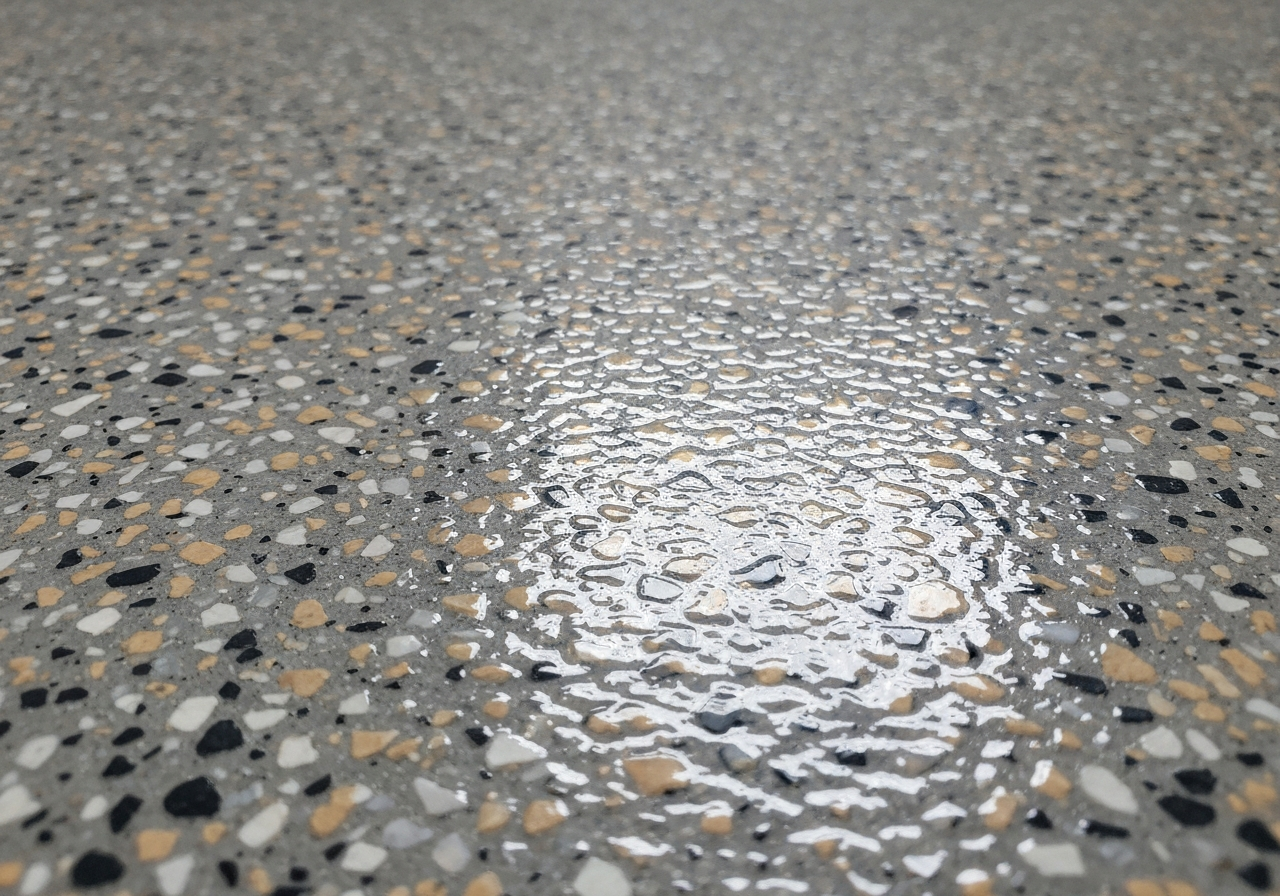
Flake Epoxy
Flake epoxy is one of the most practical garage floor systems for daily-use garages in Kalispell and the Flathead Valley. It uses a decorative chip broadcast and clear topcoat to create a finished surface that hides minor imperfections and handles normal garage use well.
Learn more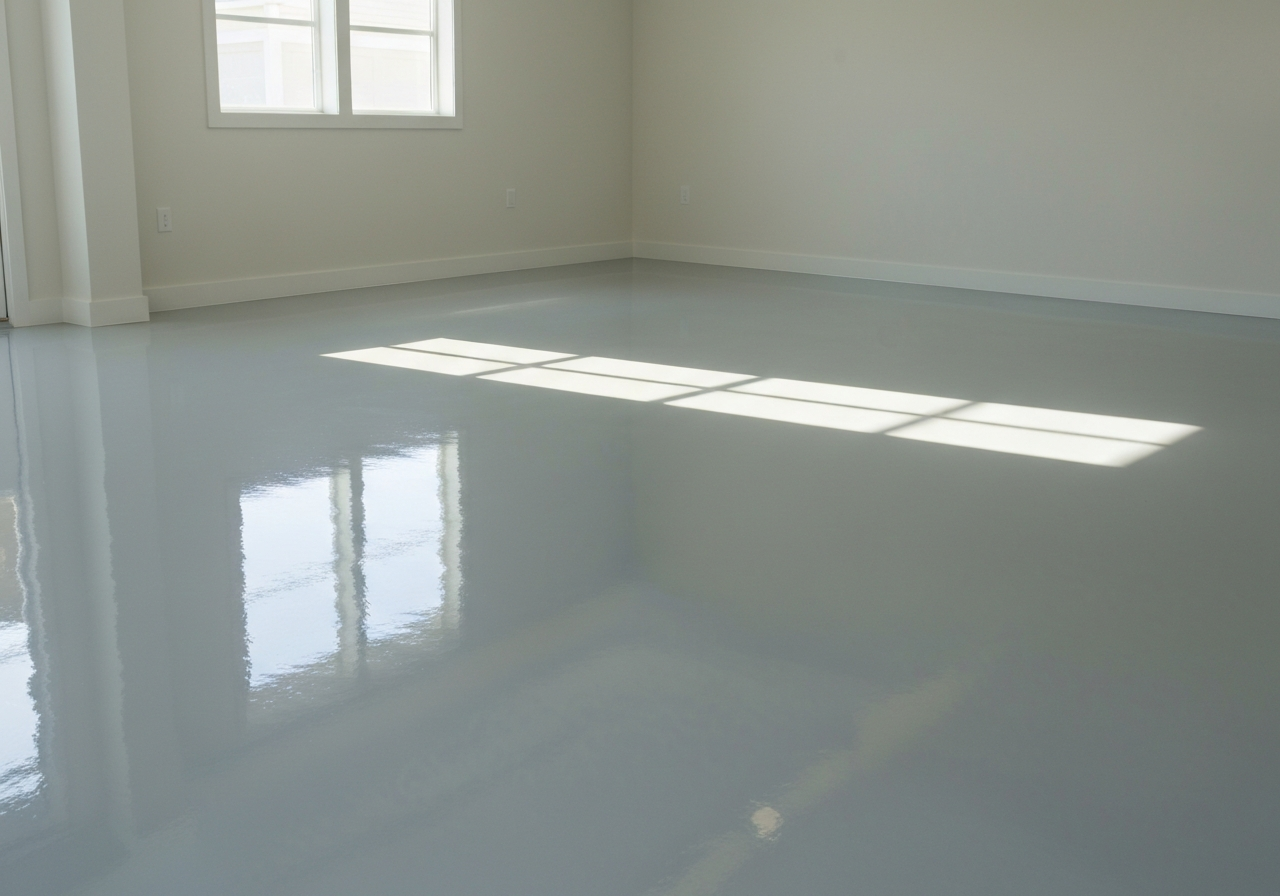
Polyaspartic Floor Coatings
Polyaspartic coatings are often used as premium topcoats and may also be recommended as full coating systems in certain garages, shops, or concrete spaces. They are worth considering when fast return-to-service, UV stability, and high-performance topcoat characteristics are priorities.
Learn more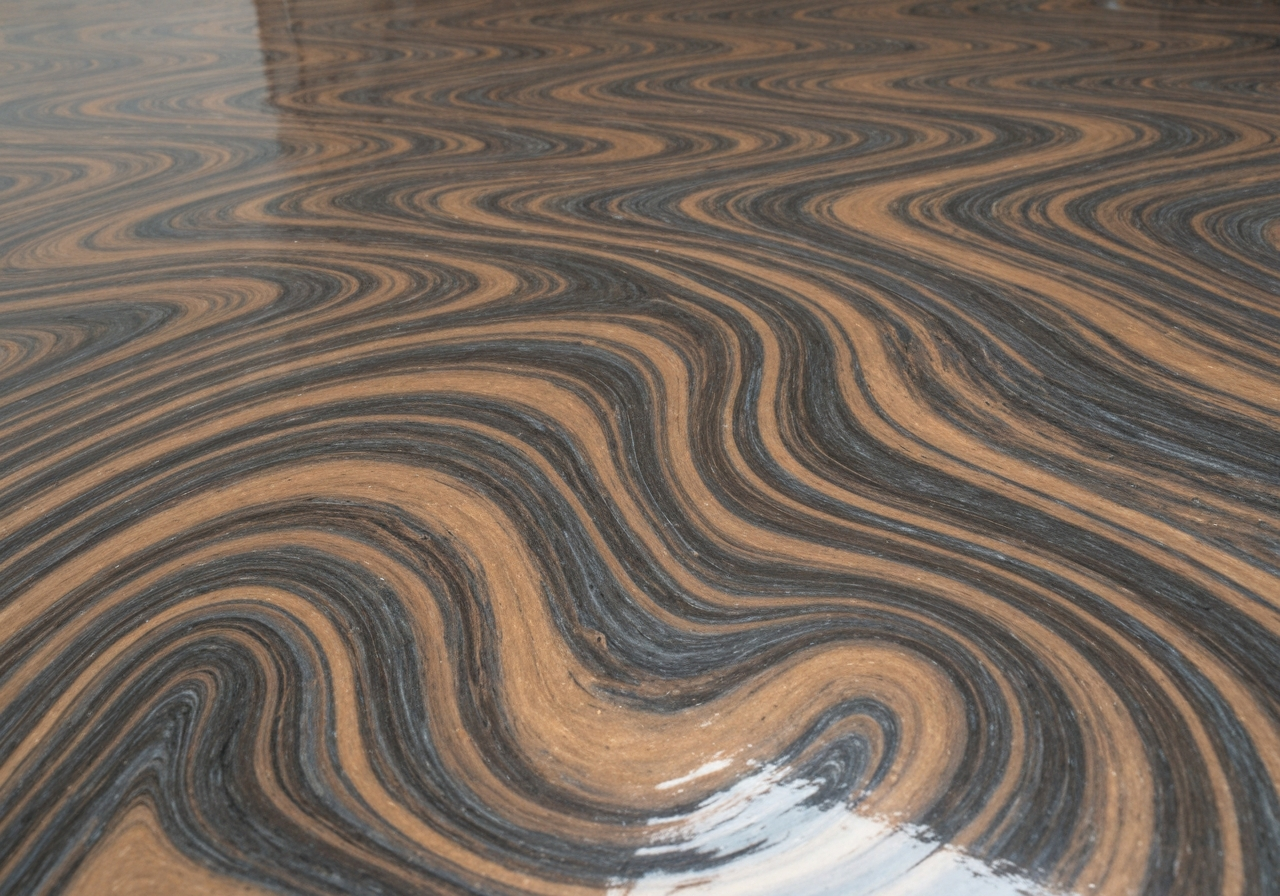
Metallic Epoxy
Metallic epoxy is a decorative coating option for garages, basements, showrooms, studios, and finished concrete spaces where appearance is a major priority. It creates a more custom, dimensional finish than a standard garage floor system.
Learn moreConcrete Coating — Epoxy garage floors are part of our broader concrete coating services for existing concrete surfaces. We help protect, seal, restore, and upgrade garages, shops, basements, patios, and other concrete areas throughout the Flathead Valley. See the main service page.
Professional Epoxy System vs. Paint, DIY Kits, and Rushed One-Day Specials
Many homeowners start by comparing professional epoxy garage floor installers with paint, DIY kits, or low-cost one-day specials. The price difference can be real, but so can the performance difference.
Garage floor paint is usually a surface-level cosmetic product. It may improve appearance briefly, but it does not provide the same build, adhesion, chemical resistance, or wear surface as a professional epoxy or polyaspartic coating system. In a working Montana garage, paint can wear through, peel, stain, or become patchy quickly.
DIY epoxy kits can work for very light-duty expectations, but they often rely on limited preparation, thin material, and sparse decorative chips. Most failures come from what happens before the coating is applied. If the slab is not properly profiled, cleaned, repaired, and evaluated, even a good-looking finish can fail early.
Rushed one-day specials can also be a problem when speed becomes more important than surface evaluation, repairs, coating selection, or cure conditions. Some one-day systems are legitimate when installed correctly under the right conditions. Others cut corners by moving too fast for the slab, the environment, or the customer's expectations.
A professional epoxy garage floor is not just a product. It is a system. The system includes slab assessment, diamond grinding, repair work, base coat selection, finish selection, topcoat selection, and cure guidance. That is why choosing the right installer matters as much as choosing the right coating.
| Feature | Professional Epoxy System | DIY Kits & Paint | Rushed One-Day Specials |
|---|---|---|---|
| System Type | Real coating system | Cosmetic paint film | Often rushed single pass |
| Preparation | Diamond-ground prep | Limited/no prep (acid etch) | Sometimes inadequate prep |
| Material Build | Measured thickness | Thin kit material | Varies |
| Repairs & Moisture | Repairs + moisture evaluation | Skipped | Often skipped for speed |
| Topcoat | Right topcoat for salt/UV | None or thin | Generic quick-cure |
| Cure Schedule | Honest cure schedule | Long or inconsistent | Rushed one-day |
| Guidance | Written guidance | None | Varies |
Where We Serve
Streamline Solutions installs epoxy garage floors across Kalispell and the Flathead Valley, including:
We also serve surrounding parts of Flathead County, Northwest Montana, and select commercial projects in Missoula. For the most accurate recommendation, call 406-909-4342 and share the property location, approximate garage size, current floor condition, and how the space is used.
Epoxy Garage Floor Cost in Kalispell and the Flathead Valley
Professional epoxy garage floor pricing in the Kalispell and Flathead Valley area commonly ranges from about $6 to $12+ per square foot, depending on the system, floor condition, preparation requirements, repairs, coating thickness, topcoat selection, and project size. A simple solid-color coating over a clean slab may be closer to the lower end. A full-broadcast flake floor with a polyaspartic topcoat, significant repairs, coating removal, or more complex preparation can land higher.
For a typical two-car garage, many projects fall around $3,000 to $6,500+. Smaller garages can cost more per square foot because setup, grinding, mobilization, masking, repairs, and cure management still take time. Larger garages, shops, or multi-bay spaces may price differently because production, material usage, and layout complexity change at scale.
The biggest cost drivers are existing concrete condition, cracks, pitting, oil contamination, old coating removal, moisture concerns, edge detail, color or finish selection, flake broadcast level, topcoat type, access, and scheduling conditions. A basic coating and a premium garage floor system are not the same thing, even if both are casually called "epoxy."
For a realistic quote, call 406-909-4342. We can usually begin with your location, approximate square footage, photos, current floor condition, and the type of finish you are considering. If the slab needs closer evaluation, we will explain what we need to see before giving a final recommendation.
Pros & Cons of Epoxy Garage Floors
Pros
Epoxy garage floors can make existing concrete cleaner, more attractive, easier to maintain, and better protected from daily wear. They offer flexible system choices, including solid color, flake, metallic, and epoxy systems upgraded with polyaspartic topcoats. When properly prepared and installed, they are a strong fit for garages, shops, storage areas, and many working concrete spaces. Epoxy systems also allow practical customization. A homeowner who wants a simple clean floor can choose one system, while someone who wants a durable full-chip garage finish or a decorative showroom look can choose another. That flexibility makes epoxy a useful category rather than a single product.
Cons
Epoxy is not magic, and it is not immune to poor preparation. If the slab is contaminated, wet, weak, moving, or poorly profiled, the coating can fail. That is why diamond grinding, repair work, moisture awareness, and honest system selection are so important. Epoxy can also yellow or perform differently under UV exposure depending on the product and topcoat. In some cases, polyaspartic is the better choice, especially for topcoat performance, UV stability, or faster return-to-service. The right answer depends on the specific garage.
Best For
Epoxy garage floors are best for existing concrete garages, attached garages, detached garages, heated shops, hobby spaces, storage garages, basement concrete, utility areas, and certain finished workspaces. They are a strong choice when the goal is to reduce concrete dust, improve appearance, simplify cleaning, and protect the slab from normal residential or light commercial use. They are also a good fit for homeowners comparing epoxy flooring companies near me and trying to understand which system actually belongs in their garage. The best result usually comes from selecting the finish around real use, not just color.
Not Recommended For
Epoxy may not be recommended for severely damaged concrete, slabs with major moisture vapor issues, surfaces with ongoing movement, or areas where the underlying concrete needs more than surface-level repair. It may also be the wrong choice for fully exposed exterior surfaces, depending on UV, drainage, standing water, and freeze-thaw exposure. A decorative metallic system may not be ideal for a hard-working winter parking garage, and a smooth solid-color floor may not be ideal where traction and visual camouflage are priorities. In those cases, a flake system, polyaspartic system, concrete sealing option, or other surface protection approach may be better.
Our Recommendation
"For most Kalispell and Flathead Valley garages, the best epoxy garage floor is not simply the cheapest coating or the fastest install. It is the system that matches the slab, the winter exposure, the vehicle use, and the owner's expectations. In many working garages, that means diamond grinding, appropriate repairs, a durable base system, a practical finish such as flake, and a protective polyaspartic topcoat when performance calls for it."
— Kalispell Concrete Surface Protection Specialists
FAQs About Epoxy Garage Floors
Give Your Garage a Floor Built for Montana
Be our first Flathead Valley review.
