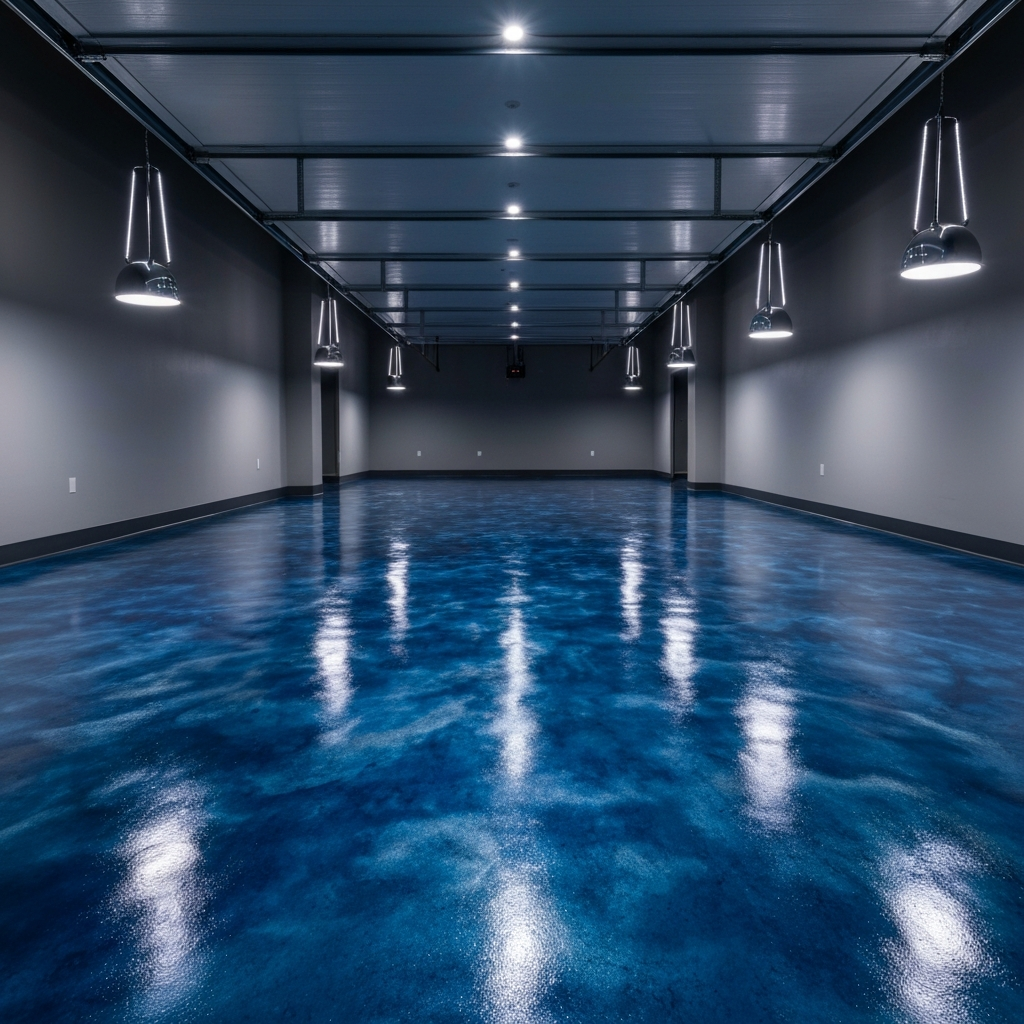
Metallic Epoxy Floors in Kalispell & the Flathead Valley
One-of-a-kind, glassy, dimensional statement floors for finished garages, basements, showrooms, and studios.
The Local Opportunity: Unfinished Concrete Can Undersell a Good Space
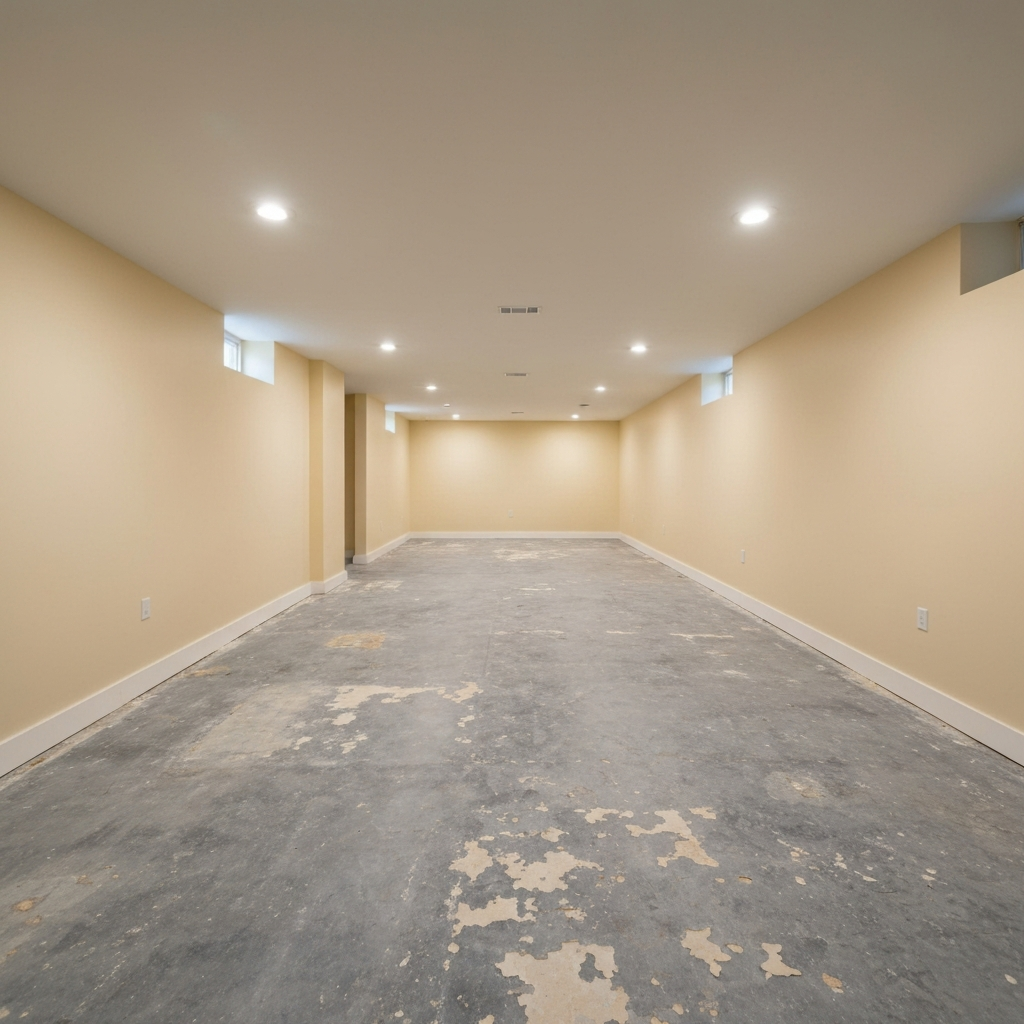
Many Flathead Valley homes have garages, basements, shops, and lower-level rooms with more potential than the existing floor shows. The walls may be finished, the lighting may be upgraded, and the room may be used every week, but the bare concrete still makes the space feel unfinished. Stains, old paint, patchy sealer, concrete dust, hairline cracks, and uneven color can make an otherwise useful room feel rough or temporary.
That is especially common in basements, rec rooms, studios, and finished garages. These are spaces where homeowners want something cleaner and more intentional than raw concrete, but they may not want carpet, laminate, tile, or another flooring system that struggles with moisture, tools, furniture, or heavy use. A metallic epoxy floor gives the concrete a finished, custom look while keeping the benefits of a hard surface.
Painted concrete often undersells the space too. Paint may cover the gray for a while, but it usually lacks depth, durability, and design value. Metallic epoxy is different because the visual effect is created inside the coating system itself. The pigments move through the resin, creating depth and variation that cannot be repeated exactly from one floor to the next.
What We Do: Custom Metallic Epoxy Systems for Existing Concrete
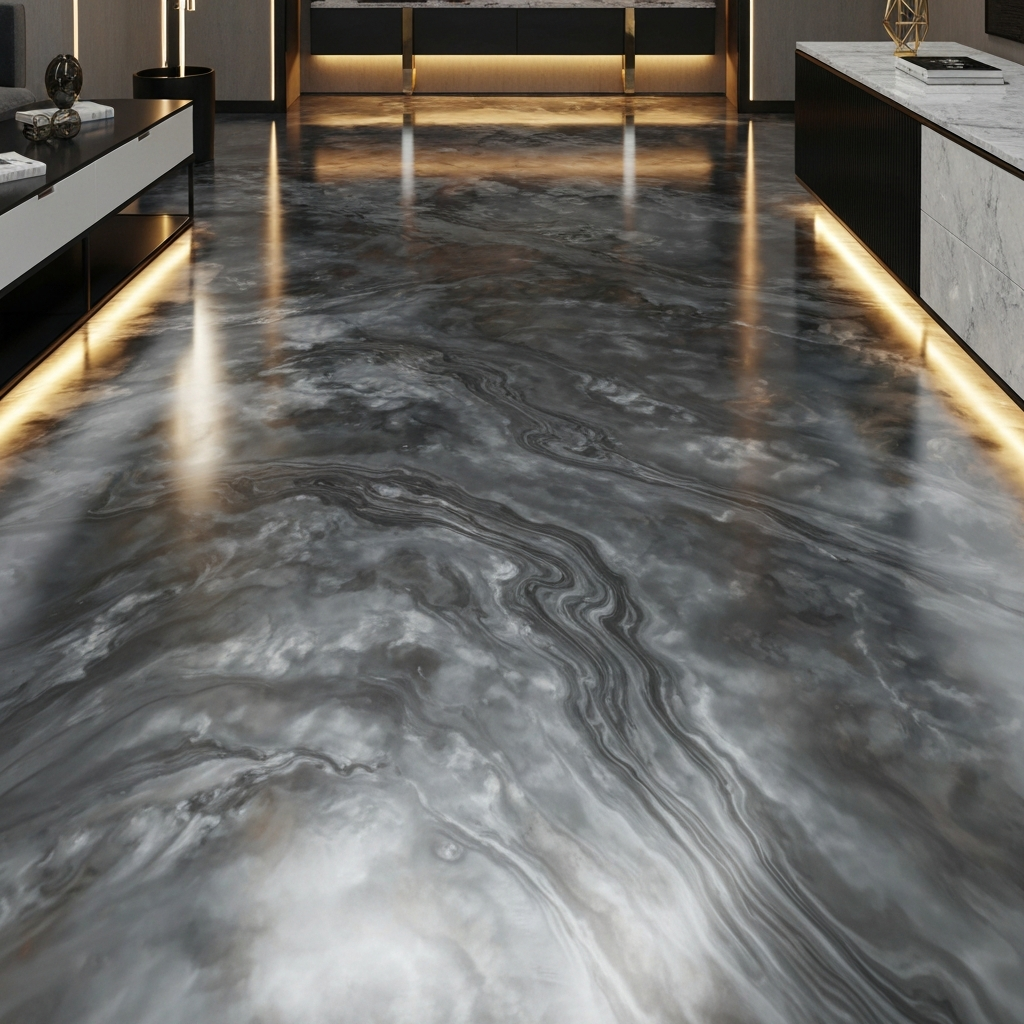
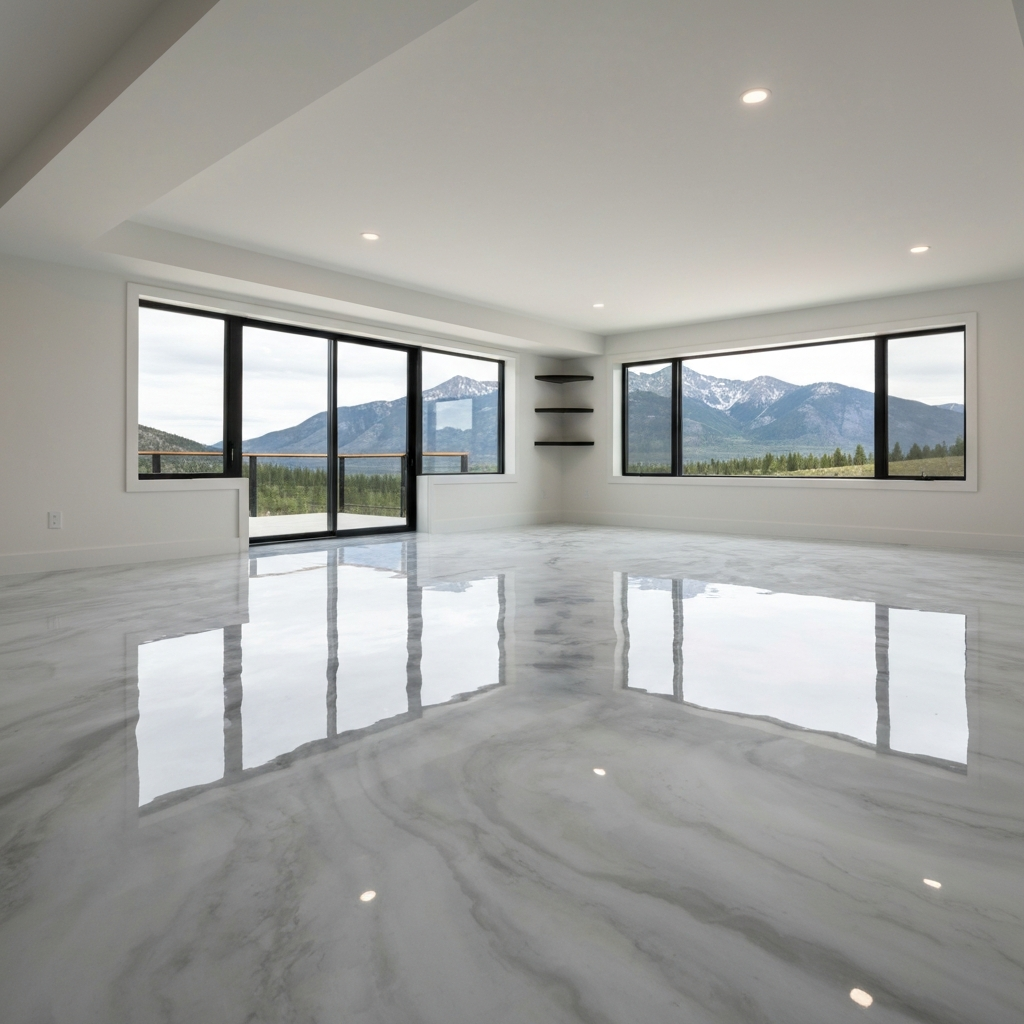
Metallic epoxy is a premium decorative floor coating installed over existing concrete using metallic pigments swirled through resin to create a glassy, dimensional, one-of-a-kind surface. Unlike a standard solid-color coating or a practical full-flake garage floor, a metallic epoxy floor is designed to make the concrete itself part of the room's visual impact. The finished look can resemble polished stone, flowing metal, marble movement, smoke, water, or a custom abstract finish depending on the colors, pigments, movement, and clear protective topcoat selected.
At Streamline Solutions, we install metallic epoxy floors in Kalispell and across the Flathead Valley for homeowners and property owners who want more than a basic concrete coating. Metallic epoxy is a strong fit for finished garages, basements, showrooms, studios, rec rooms, offices, and other spaces where appearance matters as much as protection. It is not the right choice for every concrete surface, and we will say that clearly. For hard-working daily parking garages that see constant snowmelt, road salt, mag chloride, gravel, and tool traffic, a flake system may be more practical. For statement spaces, metallic epoxy can completely change how the room feels.
Streamline Solutions installs metallic epoxy systems over existing concrete surfaces. We are Concrete Surface Protection Specialists, which means our focus is coating, sealing, protecting, restoring, and upgrading concrete that is already in place. Before recommending metallic epoxy, we evaluate the slab, the room, the expected use, the lighting, the moisture exposure, and the level of finish the customer wants.
A metallic epoxy floor starts with preparation. We use diamond grinding to mechanically prepare the concrete, remove weak surface material, and create a proper profile for the coating system. We address appropriate cracks, pits, divots, and surface defects before the decorative layers are installed. The goal is not to pretend older concrete is perfect, but to prepare it correctly so the coating has the best possible foundation.
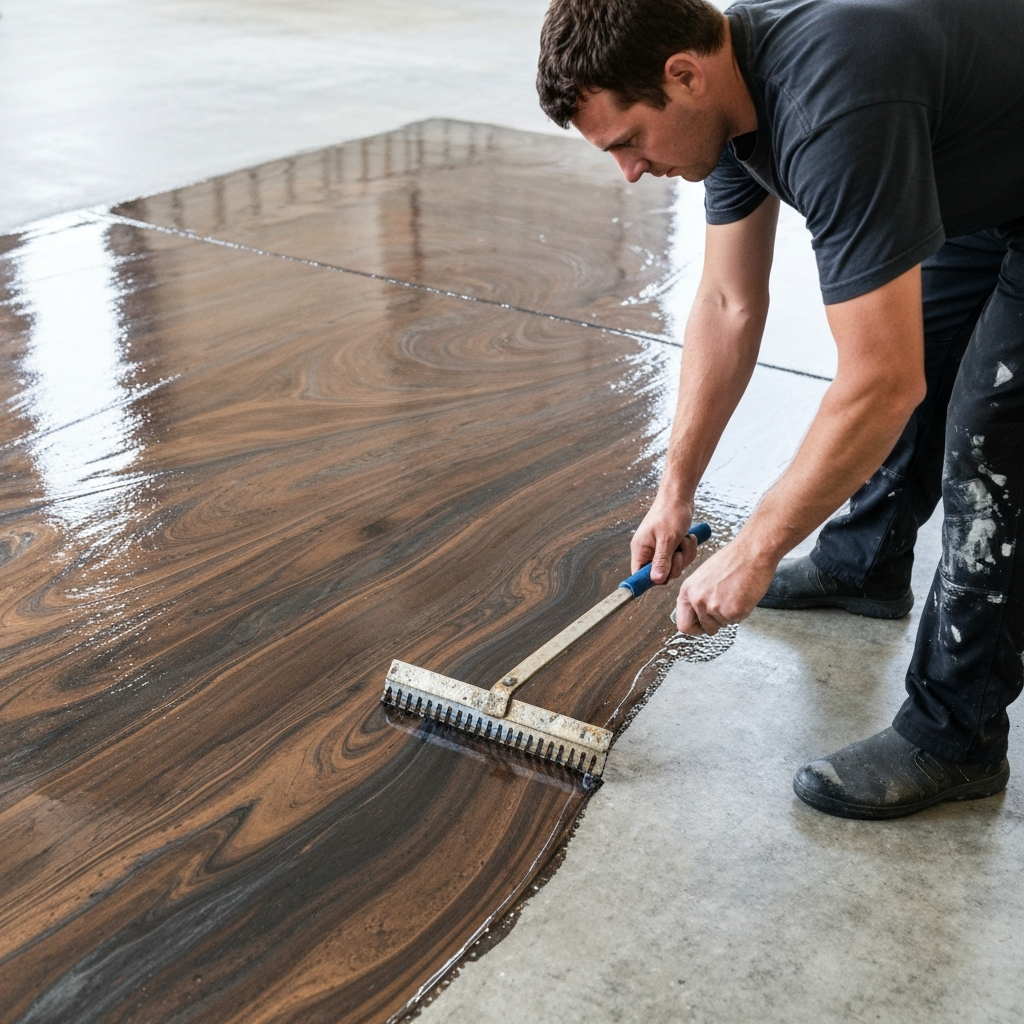
After preparation and repairs, the system typically includes a base layer that helps support color depth and visual consistency. Metallic pigments are then worked through the resin using controlled pour and swirl techniques. This is where the floor becomes unique. The movement, color separation, highlights, and flowing effects are influenced by pigment selection, installation technique, room temperature, product behavior, and the layout of the space.
The final clear protective topcoat is selected around the use of the room. In many cases, a polyaspartic or other durable clear topcoat may be recommended to help protect the decorative layer, improve cleanability, and support long-term appearance. For spaces with windows, garage doors, or stronger light exposure, UV-stable topcoat selection becomes especially important.
Benefits of Metallic Epoxy Floors
A Premium Statement Floor
Metallic epoxy is chosen when the floor is meant to be seen. It creates a high-end visual effect that can become one of the defining features of a room. In finished garages, basements, offices, studios, and showrooms, the floor can turn plain concrete into a design element. The finish can be bold or restrained. Some metallic floors use dramatic contrast and movement, while others use soft grays, silvers, charcoals, bronzes, whites, or earth tones for a more refined look. The right design depends on the room and the level of visual impact you want.
One-of-a-Kind Appearance
No two metallic epoxy floors are exactly the same. Even when the same colors are used, the movement of the pigments, the shape of the room, the lighting, the temperature, and the installer's technique all influence the finished result. That uniqueness is part of the appeal. This is important for homeowners who do not want a standard product look. Metallic epoxy is not a repeating plank, tile, or printed pattern. It is a custom coating system with natural-looking variation and depth.
Better Use of Existing Concrete
Metallic epoxy allows an existing concrete slab to become the finished floor. That can be useful in basements, garages, offices, and rec rooms where adding another floor covering may not be practical or desired. Instead of hiding the concrete under a separate material, the slab is prepared and upgraded directly. This approach works especially well when the goal is a hard, cleanable surface. Furniture, rolling chairs, storage, light shop use, and foot traffic can all be considered when selecting the topcoat and texture level.
Easier Cleaning Than Bare or Painted Concrete
Bare concrete absorbs dust, spills, and residue. Painted concrete may improve appearance temporarily, but it can still scuff, peel, or wear depending on the product and preparation. Metallic epoxy creates a sealed decorative surface that is easier to sweep, dust mop, or damp mop. Maintenance still matters. Grit should be removed regularly, spills should be cleaned, and furniture should be protected with proper pads. But compared with dusty raw concrete or aging paint, a professionally installed metallic epoxy floor is much easier to keep presentable.
Design Flexibility for Finished Spaces
Metallic epoxy can be customized with different color combinations, pigment effects, movement levels, and topcoat finishes. Popular looks include silver and charcoal, white and gray, bronze and black, blue and steel, copper tones, smoke effects, marble-like movement, and darker showroom-style finishes. Lighting plays a major role. A floor that looks subtle under soft basement lighting may look more dramatic near a garage door or large window. During planning, we can discuss how the room is lit and how bold the final effect should feel.
A Strong Fit for Finished Garages and Specialty Rooms
For daily-use winter garages, flake is often the more practical coating finish. For a finished garage, showroom-style space, hobby room, studio, office, rec room, or basement, metallic epoxy can be a better visual match. It gives the space a custom surface that feels intentional instead of purely utilitarian. This is where metallic epoxy stands apart. It is not just about protecting the concrete. It is about changing the character of the room.
Why Metallic Floors Work in Montana Homes
Metallic epoxy can be a strong fit for Montana homes because many properties have basements, garages, shops, and multi-use rooms with existing concrete that is structurally usable but visually unfinished. A metallic coating lets those rooms feel brighter, cleaner, and more finished without switching to carpet, wood-look flooring, or other materials that may not be ideal for every concrete space.
Basement brightness is one of the biggest advantages. A gray, dusty slab can make a lower-level room feel darker than it needs to. A reflective metallic finish can help the room feel more polished and open, especially when paired with good lighting and lighter wall colors.
UV exposure should be considered. Metallic epoxy itself is usually installed indoors, but garage doors, walkout basements, large windows, and sun-facing openings can expose parts of the floor to stronger light. That is where clear topcoat selection matters. UV-stable topcoats can help protect appearance better than lower-quality clear coatings, especially near doors and windows.
Year-round indoor installation can also be possible when conditions are controlled. Montana winters do not automatically stop all indoor coating projects, but slab temperature, room temperature, humidity, ventilation, and product cure requirements still matter. For some projects, polyaspartic topcoats or cold-tolerant product selections may help support installation outside the warmest months, but the space must be evaluated before scheduling.
Our Metallic Epoxy Floor Installation Process
Project review and design conversation
We begin by discussing the room, the current concrete, and the look you want to create. Metallic epoxy is highly visual, so we talk through color direction, lighting, room use, furniture, traffic, windows, doors, and whether the finish should feel bold, subtle, modern, industrial, or showroom-like.
Existing concrete evaluation
We inspect the slab for cracks, pitting, previous coatings, paint, sealers, oil contamination, moisture concerns, soft surface areas, and previous patching. Metallic epoxy is decorative, so slab condition matters. Some imperfections can be repaired or visually reduced, while others may still influence the final floor.
Diamond grinding for mechanical preparation
We prepare the concrete with diamond grinding, not acid etching. Grinding creates a mechanical profile for the coating system and helps remove weak surface material, old residue, and many bond-inhibiting surface conditions. This preparation is critical because a premium decorative floor still depends on adhesion.
Crack and surface repair
Appropriate cracks, divots, pits, and surface defects are repaired before the decorative system is installed. The goal is to improve the surface and reduce visible imperfections. Moving cracks, severe slab problems, or moisture issues may require special discussion before metallic epoxy is recommended.
Base coat or primer application
A base coat or primer is installed to support adhesion, color depth, and the metallic effect. The base color can influence the final look because metallic pigments interact visually with the layer beneath them. Dark bases often create more dramatic depth, while lighter or neutral bases can support softer effects.
Metallic epoxy pour and swirl techniques
Metallic pigments are blended into the resin and placed across the floor using controlled installation techniques. The pigments are moved, blended, and encouraged to flow in ways that create depth and variation. This is the artistic stage of the system, but it still requires technical control over timing, temperature, product behavior, and coverage.
Cure and surface review
After the metallic layer cures, the surface is reviewed before topcoating. Decorative movement continues slightly as the material settles, which is part of why each floor is unique. We check the floor and prepare it properly for the protective clear coat.
Clear protective topcoat
The clear topcoat protects the decorative metallic layer and becomes the main wear surface. Depending on the space, we may recommend a polyaspartic or other durable clear topcoat for better performance, clarity, and cleanability. Topcoat choice is especially important in finished garages, high-traffic rooms, and areas with light exposure near windows or doors.
Cure guidance and maintenance instructions
Once the system is installed, we explain when the floor can handle foot traffic, when furniture can return, and how long to wait before heavier use. Cure timing depends on product selection and jobsite conditions. We also provide care guidance so the floor keeps its appearance as long as possible.
Related Concrete Coating Services

Flake Epoxy
Flake epoxy is often the more practical choice for hard-working daily parking garages. It hides dust, gravel, tire marks, and minor imperfections better than a smooth decorative floor while still giving the garage a finished look.
Learn more
Epoxy Garage Floors
If you are comparing solid-color epoxy, flake systems, metallic epoxy, and polyaspartic options for a garage, the epoxy garage floor page gives a broader system-selection overview. It is a useful starting point when performance and finish type are both being considered.
Learn more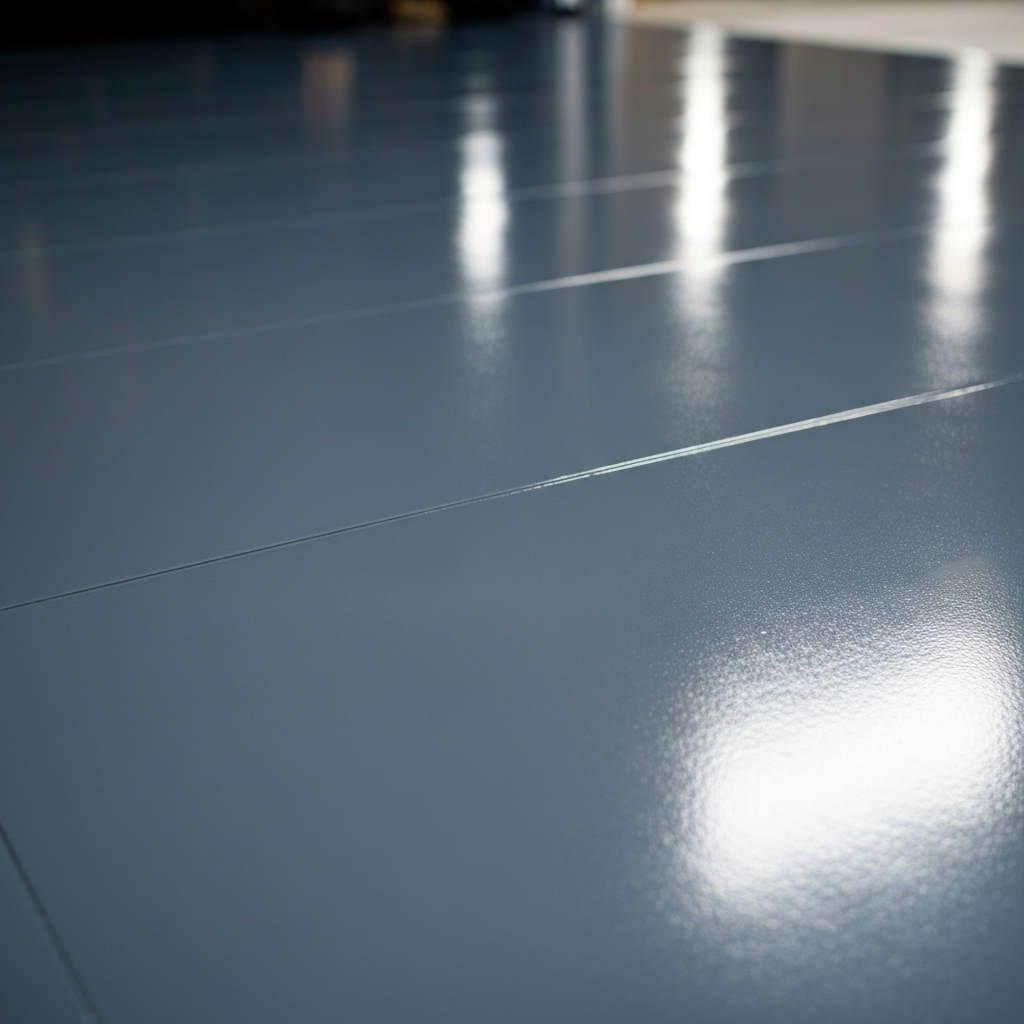
Polyaspartic Floor Coatings
Polyaspartic coatings are commonly used as durable clear topcoats and may be recommended for metallic epoxy floors when UV stability, faster cure, and topcoat performance matter. They are also used in premium garage and shop coating systems.
Learn moreMetallic epoxy is part of our broader concrete coating service line for existing concrete surfaces. We help protect, restore, seal, and upgrade garages, basements, shops, patios, and other concrete areas throughout the Flathead Valley. Start at /concrete-coating/.
Metallic vs. Flake vs. Solid-Color Coatings
Metallic epoxy, flake epoxy, and solid-color coatings can all improve existing concrete, but they serve different goals. Choosing the right one starts with how the room will be used and how much visual impact you want from the floor.
| Metallic Epoxy | Flake Epoxy | Solid-Color Coatings |
|---|---|---|
Metallic epoxy is the premium decorative option. It is best when the floor is a design feature and the room needs a custom, high-end finish. Finished garages, basements, showrooms, offices, studios, and rec rooms are strong use cases. The tradeoff is that metallic epoxy is usually smoother and more visually detailed than a practical flake garage floor. In a daily parking garage with heavy winter residue, gravel, snowmelt, and tool traffic, it may show use differently and require more careful maintenance. | Flake epoxy is usually the more practical garage finish. It hides imperfections, dust, grit, tire marks, and winter residue better than a smooth decorative floor. It also provides useful surface texture when installed with the right topcoat. For most hard-working Kalispell garages, flake is often the stronger everyday recommendation. It is not as visually dramatic as metallic epoxy, but it is more forgiving under daily garage conditions. | Solid-color coatings are clean and simple. They can work well for lower-use areas, storage rooms, utility spaces, or customers who want a basic uniform floor. However, solid colors tend to show dust, scratches, tire marks, and surface imperfections more readily than flake or metallic effects. Solid color may be the right choice when simplicity matters most. It is usually not the best option when visual camouflage or decorative depth is a priority. |
Where We Serve
Streamline Solutions installs metallic epoxy floors across Kalispell and the Flathead Valley, including:
We also serve surrounding parts of Flathead County, Northwest Montana, and select commercial projects in Missoula. For the most accurate recommendation, call 406-909-4342 and tell us where the property is located, what type of room you are coating, the approximate square footage, and how the space will be used.
Metallic Epoxy Floor Cost in Kalispell and the Flathead Valley
Metallic epoxy is a premium decorative coating, so it typically costs more than a basic solid-color floor and often more than a standard garage flake system. In the Kalispell and Flathead Valley area, professional metallic epoxy floors commonly range from about $10 to $18+ per square foot, depending on slab condition, preparation, repairs, color complexity, topcoat selection, access, layout, and level of customization.
Smaller rooms can carry a higher per-square-foot cost because setup, grinding, masking, mixing, design work, cure management, and topcoat application still require time. Larger basements, showrooms, or finished garages may price differently based on square footage, number of rooms, edges, stairs, drains, stem walls, and transitions.
The main cost drivers are existing concrete condition, old coating removal, crack and pit repairs, moisture concerns, base coat selection, number of metallic colors, design complexity, clear topcoat type, UV exposure, ventilation needs, and scheduling conditions. A simple two-color metallic floor over clean concrete will usually price differently than a multi-color statement floor with heavy repairs and a premium topcoat.
For a realistic quote, call 406-909-4342. We can begin with approximate square footage, photos of the current concrete, room type, location, and the look you want. Because metallic epoxy is highly visual, an in-person review is often helpful before finalizing the system and price.
Pros and Cons of Metallic Epoxy Floors
Pros
Metallic epoxy creates a premium, custom appearance that standard garage coatings cannot match. It adds depth, movement, and visual interest while turning existing concrete into a finished design surface. It is especially strong for basements, finished garages, offices, studios, showrooms, and rooms where the floor should feel intentional. It is also easier to clean than bare or painted concrete when installed and topcoated properly. The seamless finish avoids grout lines, plank seams, and tile gaps, which makes it practical for many finished concrete spaces.
Cons
Metallic epoxy is not the most forgiving option for every garage. In hard-working daily parking spaces with snowmelt, gravel, road salt, mag chloride, tools, and frequent vehicle traffic, a flake-broadcast floor is often more practical. Metallic floors can show scratches, dust, or wear differently because the surface is smoother and more decorative. Metallic epoxy also requires strong preparation and realistic expectations. Each floor is unique, so the exact movement and pattern cannot be duplicated perfectly from a sample. It is a custom finish, not a factory-printed surface.
Best For vs. Not Recommended For
Best For
Metallic epoxy is best for finished garages, basements, showrooms, studios, rec rooms, offices, hobby rooms, and specialty concrete spaces where appearance matters. It is a strong choice when the goal is a high-end, glassy, dimensional floor that turns the room into something more finished and memorable. It also works well for homeowners who want a hard surface without carpet, laminate, or tile. When the slab is suitable and the system is installed correctly, metallic epoxy can make existing concrete feel like a custom design feature.
Not Recommended For
Metallic epoxy may not be recommended for severely damaged concrete, unstable slabs, major moisture vapor concerns, or areas with heavy ongoing movement. It may also be the wrong choice for fully exposed outdoor areas or spaces with constant standing water, heavy grit, or harsh mechanical abuse. For daily-use winter garages with constant vehicle traffic, road residue, snowmelt, and gravel, flake epoxy or a polyaspartic garage coating may be the better practical recommendation. Metallic epoxy can still work in finished garages, but the expectations should match the way the space will actually be used.
Our Recommendation
"Choose metallic epoxy when the floor is meant to be part of the design, not just a protected surface. For finished garages, basements, showrooms, studios, offices, and rec rooms, a properly prepared metallic epoxy floor with a clear protective topcoat can turn existing concrete into a premium statement surface. For hard-working daily parking garages, we will often recommend flake or polyaspartic-focused systems instead because practical fit matters as much as appearance."