Site Prep in Kalispell & the Flathead Valley
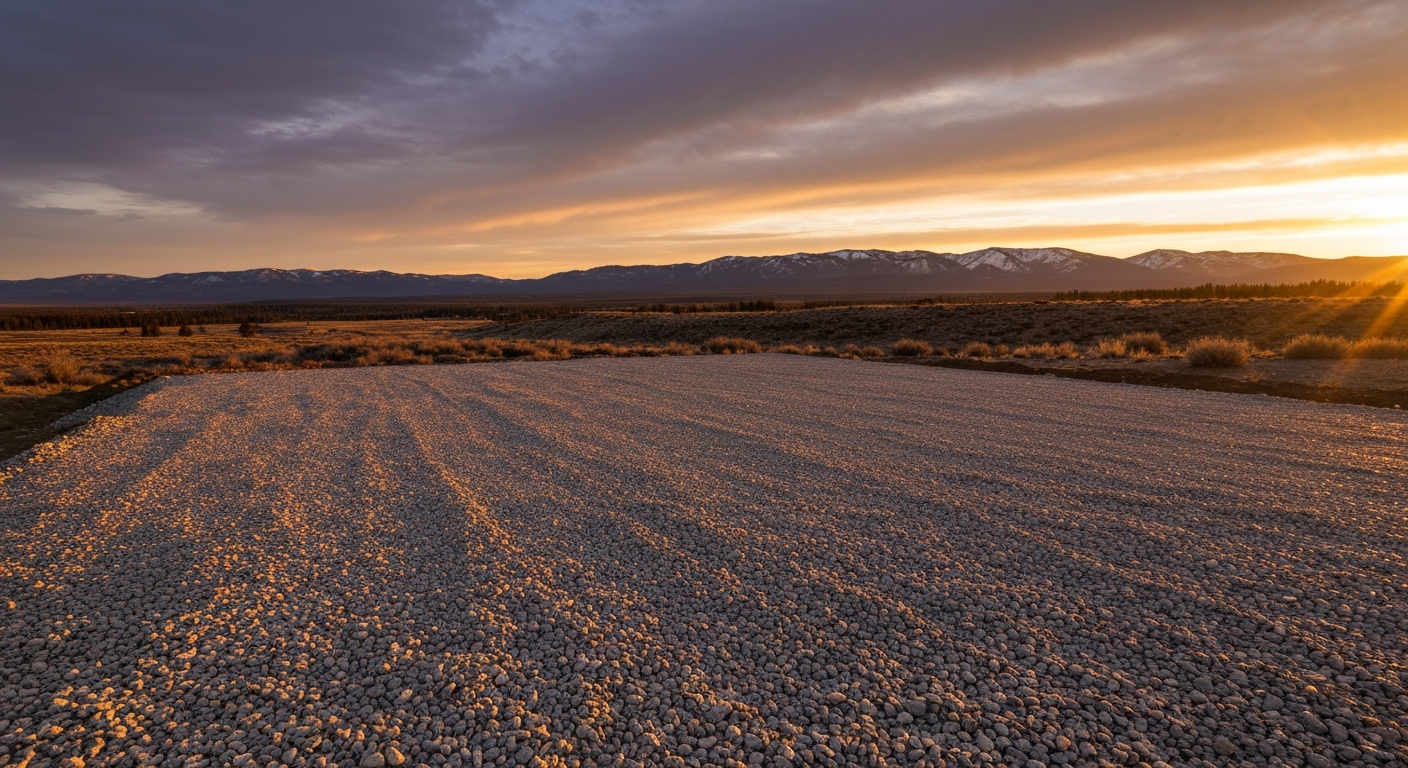
Site prep in Kalispell is the dirt, gravel, grading, and compaction work that gets a shop, garage, home pad, access road, or outbuilding site ready before the slab or structure goes in.
12 service-area towns
Compacted in lifts
Base depth varies by ground
Drainage-first approach
THE PROBLEM
Flathead Valley Ground Is Not Always Forgiving
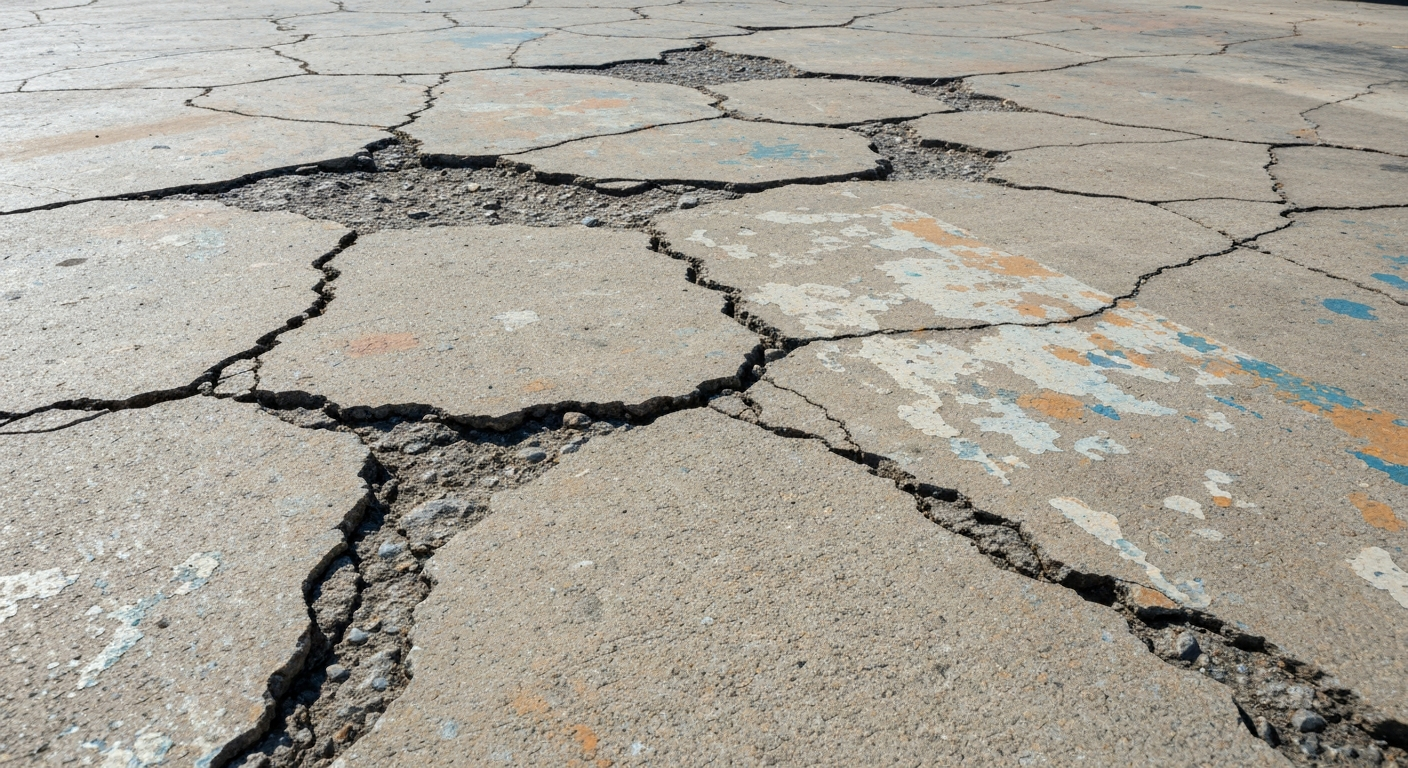
A building pad can look flat and ready from the surface while still being weak underneath. That is where problems start. If organic soil is left below the pad, if soft glacial clay is not handled correctly, or if gravel is spread without proper compaction, the surface may settle after the slab or structure is already in place.
In the Flathead Valley, site prep is not just about making a rectangle of dirt look level. The ground can change quickly from one part of a property to another. One corner of a future shop pad may be rocky and firm while another corner holds moisture, clay, or old fill. Rural lots near Kalispell, Kila, Marion, Bigfork, Lakeside, and the edges of the Valley often bring a mix of slope, buried rock, tree roots, seasonal runoff, and difficult access.
Poor pad prep can create problems that are expensive to correct later. A shop floor may crack because the base underneath was never compacted evenly. A garage pad may settle at one edge because the fill was placed too deep without lifts. A future home site may collect snowmelt and spring water because the grade was shaped toward the building footprint instead of away from it. A rural access road may rut out before construction is finished because it was never built with enough base for heavy trucks.
Montana winters add another layer. Freeze-thaw cycles, snow load, meltwater, shaded areas, and frost-susceptible soils all matter. When water sits under a pad or against a future structure, it can contribute to frost movement, soft spots, and long-term maintenance issues. Site prep is the phase where those risks should be addressed, not ignored.
APPROACH
What Streamline Solutions Does for Site Prep
Streamline Solutions provides site prep as part of its excavation and dirt work lane. The work is focused on preparing existing ground for future construction phases, especially shop pads, garage pads, home building pads, accessory buildings, equipment pads, RV pads, driveways, and rural access routes.
The first step is understanding the site. A pad near Whitefish Lake, a shop site outside Kalispell, a sloped rural lot near Kila, and a lakeshore property near Somers may all need different solutions. The ground, drainage, access, haul distance, base depth, and intended building use determine how the work should be approached.
For many projects, Streamline Solutions starts by clearing the footprint. That can include removing brush, small trees, roots, debris, old surface material, or unsuitable organic material from the future pad area. When heavier clearing is needed, the work may connect with land clearing so the building area and access path are opened up before pad construction begins.
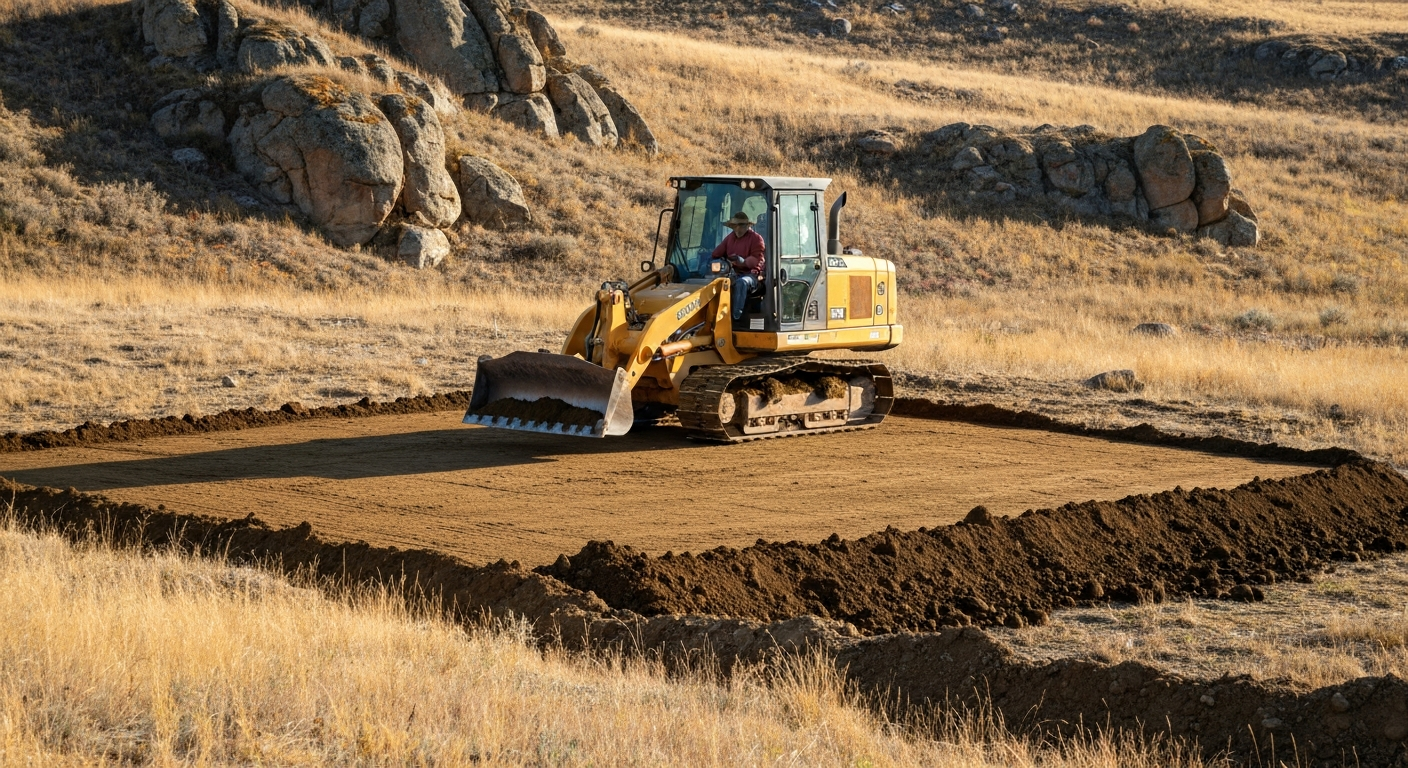
After clearing, the pad area is shaped. This may involve cut and fill, benching into a slope, removing high spots, filling low areas, or creating a stable sub-grade. On rocky properties, this can mean working around or removing rock that interferes with the pad. On clay-heavy sites, it can mean paying close attention to moisture, drainage, and separation between native soil and imported base.
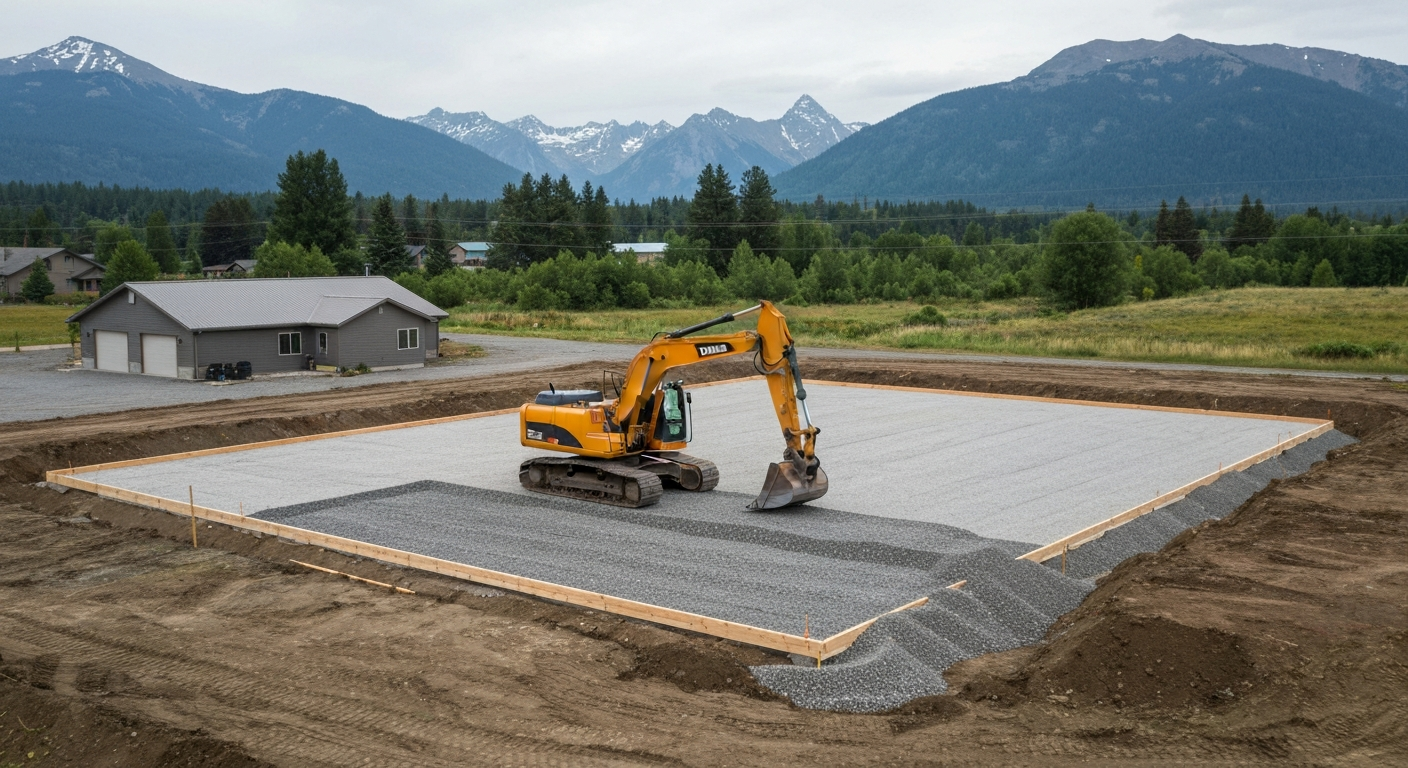
Structural gravel base is then brought in as needed. The base is not just spread and left loose. It is placed in lifts and compacted so the pad develops consistent support. The exact base depth depends on the project, soil, expected loads, and any plan or engineering requirements. A small accessory building pad may not need the same base as a heavily used shop or equipment area.
Grading is another major part of site prep. Streamline Solutions handles rough and finish grading so water is directed away from the future structure and toward appropriate drainage paths. In some cases, this overlaps with dedicated grading work, especially where slope, runoff, driveway approach, or yard transitions need to be shaped carefully.
Access roads and driveways are often part of the same conversation. A great pad is not very useful if the delivery trucks, framing crew, or slab crew cannot reach it without getting stuck. Streamline Solutions can prepare rural access routes, driveway approaches, staging areas, and gravel travel paths so the property functions during construction and after the building is complete.
Benefits of Proper Site Prep
A Pad That Is Built to Resist Settling
A stable pad starts below the surface. Streamline Solutions focuses on removing weak material, shaping the sub-grade, and placing structural gravel base in compacted lifts. The goal is a firm, consistent platform that is ready for the next trade.
A Building Area That Stays Level
A shop, garage, home, or accessory structure needs more than a flat-looking footprint. Proper cut and fill, benching, and base prep help create a level working area that supports the intended use. On sloped or rocky ground, this often requires careful machine work instead of simple scraping.
Water Moving Away From the Structure
Good site prep includes drainage thinking from the start. Finish grade should move rain, snowmelt, and roof runoff away from the building area. This helps reduce pooling, soft edges, ice buildup, and water pressure around the future structure.
A Clean Base Ready for the Slab Crew
When the earthwork is organized, the next phase is easier. A clean, compacted gravel base gives the slab crew a better working surface and helps reduce last-minute corrections. It also makes the site safer and more accessible for trucks, equipment, and materials.
Local Depth: How Flathead Valley Site Prep Differs
Flathead Valley site prep has to account for local ground, weather, and property layouts. Many properties sit on a mix of glacial clay, rounded rock, sandy pockets, old fill, and organic topsoil. That mix can make earthwork unpredictable. A machine may cut easily for ten feet and then hit dense rock or wet clay in the next pass.
In Kalispell and Evergreen, drainage and access are often the bigger concerns. Around Whitefish, Bigfork, Somers, and Lakeside, slope, snowmelt, lakeshore moisture, and tight access can shape the plan. In Kila, Marion, Eureka, Ronan, and rural edges of the service area, longer driveways, rocky ground, and construction access for trucks often become part of the site-prep scope.
A properly built pad should separate the structure area from unstable surface material, provide a compacted working base, and shape water away from the future building. It should also be practical for the property. A mountain home site, a shop behind an existing house, and a pole-barn-style building on a rural lot all call for different machine work.
The Site Prep Process
Site walk and staking
Streamline Solutions reviews the proposed building area, access route, slope, drainage, soil conditions, and staging needs. The pad footprint, driveway approach, and working limits are clarified before the machine work begins.
The footprint is cleared
Brush, roots, surface debris, unsuitable material, and obstacles are removed from the building area. When the project needs more extensive clearing, the site-prep plan may include opening access for trucks and equipment as well as clearing the pad itself.
Topsoil is stripped and stockpiled
Organic topsoil is not a structural base, so it usually needs to come out of the pad footprint. When it is clean and reusable, it can often be stockpiled for later grading or landscaping work.
Cut and fill bring the pad toward grade
High areas are cut down and low areas are filled as needed to create the planned building surface. On sloped ground, benching may be required so the pad is built into stable material instead of perched on loose fill.
Structural gravel base is installed in compacted lifts
Gravel is placed in manageable layers, then compacted before the next lift is added. This helps create a more uniform base and reduces the risk of soft pockets under the future slab or structure.
Proof-rolling or compaction checks
The pad is reviewed under equipment weight and field conditions to watch for pumping, rutting, or movement. Soft spots can then be corrected before the site is handed off.
Final grade and drainage are shaped
The area around the pad is graded so water moves away from the structure footprint. Driveway tie-ins, swales, transitions, and surrounding ground are considered so the pad does not become a low point.
The site is handed off
The goal is a clean, compacted, accessible base that allows the next phase to proceed without avoidable dirt-work corrections. Streamline Solutions handles the groundwork so the following crew starts from a better prepared site.
Related Dirt Work Services

Grading
Slope correction, drainage improvements, and earthwork shaping to move water away from structures and usable property areas.
Learn more
Land Clearing
Brush removal, stump removal, defensible space, and access clearing for overgrown lots and rural acreage.
Learn more
Excavation & Dirt Work
The main hub for all excavation, dirt work, grading, and site preparation services across the Flathead Valley.
Learn moreMyth vs. Reality
Myth
Any gravel will do.
Reality
The type of base, depth, placement, and compaction all matter. Structural gravel placed in compacted lifts is what helps reduce settling and soft spots.
Myth
You can skip compaction to save money.
Reality
Loose fill may look fine until it carries weight, freezes, thaws, or gets wet. Proper compaction is one of the most important parts of building a stable pad.
Myth
A flat surface means the site is ready.
Reality
A pad can look flat while still having organic soil, moisture, soft clay, or uncompacted fill underneath. Site prep is about the support below the surface as much as the surface itself.
Myth
Streamline Solutions pours the slab.
Reality
Streamline Solutions prepares the earthwork, gravel base, compaction, access, and drainage. A separate slab crew handles the pour after the pad is ready.
Service Area
What Site Prep Costs
Site prep is priced by what the ground gives you, not by a simple flat per-pad number. Two pads with the same footprint can require very different work. One may need light clearing, a shallow cut, and modest gravel. Another may need tree and root removal, a long access road, deep fill, imported base, benching into a slope, and extra drainage shaping.
The biggest cost drivers are usually access, haul distance, amount of cut and fill, rock, soil moisture, base depth, gravel quantity, disposal needs, slope, drainage complexity, and how ready the site is when work begins. Projects with tight access or long rural driveways often take more planning because trucks and equipment need room to move safely.
Glacial clay and rock can also affect the price. Clay may require separation, drying time, or additional base. Rock may slow excavation or change how the pad is cut. Wet ground may require a different schedule or extra stabilization before the base can be compacted properly.
The most honest way to price site prep is to look at the property, understand the intended structure, and build a scope around the actual conditions.
Key Cost Drivers
- Access and haul distance for materials and equipment
- Amount of cut, fill, benching, and soil movement required
- Base depth and total gravel quantity needed
- Soil conditions (glacial clay, rock, moisture, topsoil depth)
- Drainage complexity and slope management
Site Prep Profile
Best For
Shop pads, garage pads, home building pads, equipment/RV pads, rural access roads.
Not Recommended For
Structural pours — those require a separate slab crew after site prep is complete.
Streamline Solutions Recommendation
For shop, garage, and building pad prep in the Flathead Valley, do not treat the dirt work as an afterthought. Get the drainage, sub-grade, base depth, and compaction right before the next trade arrives. It is easier to build a stable pad now than to correct settlement, rutting, or water problems after the structure is in place.
— Streamline Solutions, Kalispell, MT