
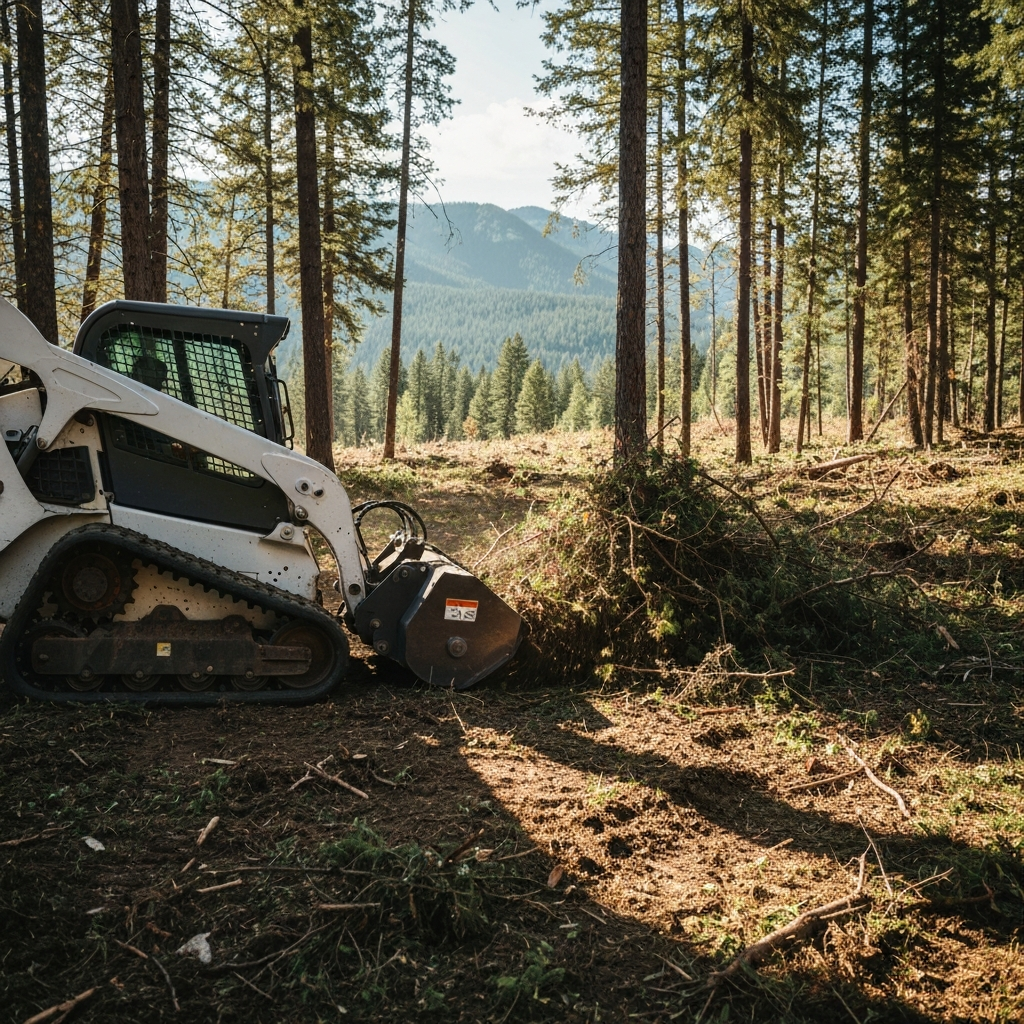
Land Clearing in Kalispell & the Flathead Valley
Land clearing Kalispell property owners need often starts with brush clearing & fire mitigation Flathead Valley conditions make important: wooded acreage, steep lots, snowmelt-soft ground, dense undergrowth, and limited access.
Overgrown Land Can Limit Safety, Access, and Usability
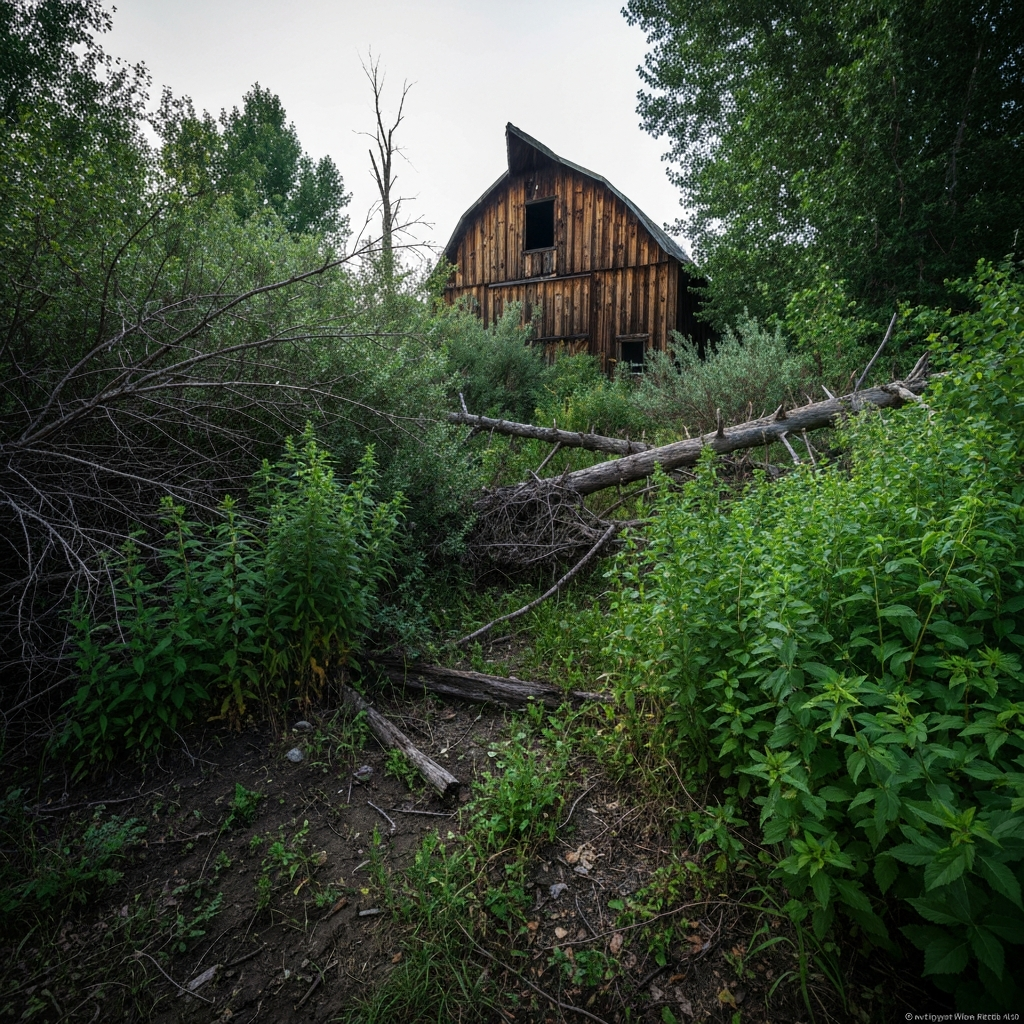
Across Kalispell and the wider Flathead Valley, land can become difficult to use when brush, deadfall, stumps, and undergrowth take over. Rural lots and wooded parcels often collect a mix of small trees, downed limbs, old slash, thick brush, and uneven surface debris. On properties near timber, lakes, mountain edges, or open rural ground, that material can block access and make future improvements more complicated.
Overgrown brush and ladder fuels can also create real wildfire concerns near rural homes, cabins, outbuildings, shops, and forest-edge properties. The issue is not that every tree is a problem. The issue is fuel continuity: low brush, dead limbs, small trees, pine needles, and dense undergrowth can allow fire to move through a property more easily. Removing flammable fuels around the Home Ignition Zone is an important part of wildfire preparedness.
Dense timber, old stumps, and uneven ground can also block practical use. A future home site, shop pad, driveway, access road, equipment route, or usable yard area may be hard to plan until the property is opened up. Land clearing helps expose the ground, reveal drainage issues, show where glacial rock or slope may affect the next phase, and create room for equipment to move safely.
Deadfall, slash piles, and scattered debris can make acreage difficult to walk, mow, inspect, or maintain. This matters for landowners who want to reclaim pasture edges, build walking paths, improve views, reduce trip hazards, or simply understand what is on their property. In Northwest Montana, where snowmelt, shaded timber, and rough terrain can hide surface problems, clearing often becomes the first practical step before grading, site prep, landscaping, or utility-related dirt work can happen.
Hard-to-reach lots may need access cut in before any meaningful improvement can begin. A back lot outside Kalispell, a steep wooded parcel near Whitefish, a lakeside property near Bigfork, or rural acreage near Kila may each need a different clearing strategy. Streamline Solutions focuses on the sequence: what needs to open first, what should be protected, where debris should be staged, and how the site should be left for the next phase.
What Streamline Solutions Does
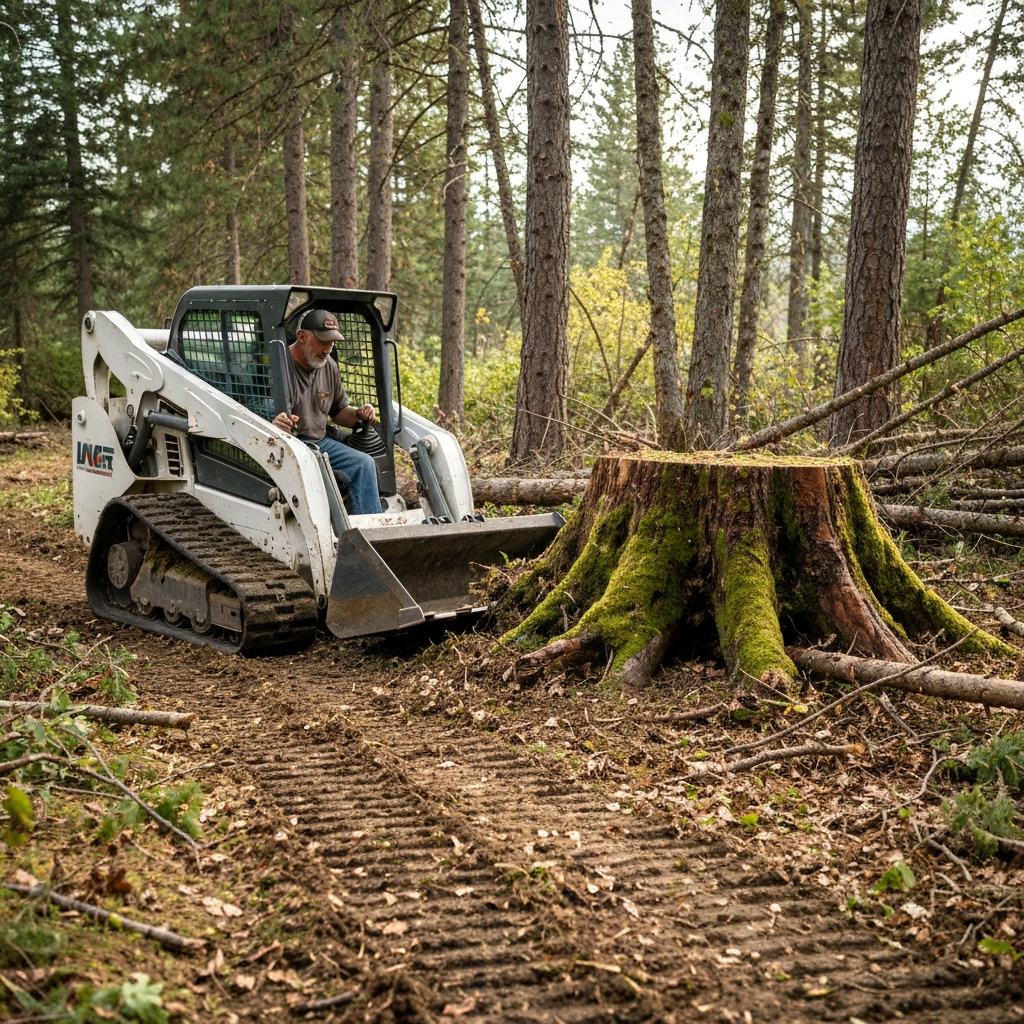
Streamline Solutions provides land clearing as part of its excavation and dirt-work services. The work is practical, operator-led, and planned around the realities of each property: access, slope, drainage, timber, retained trees, existing structures, future build areas, and what the property owner wants to preserve.
Brush and undergrowth clearing is often the first step. This may include removing thick vegetation around structures, opening overgrown edges, clearing old access routes, cutting back growth that blocks maintenance, and creating a cleaner working area. In Northwest Montana, brush clearing may also support fire-mitigation goals by reducing fuel near homes, cabins, outbuildings, and equipment routes.
Tree and stump removal may be included where needed for access, lot prep, defensible space, or usable acreage. Not every tree needs to go, and many properties benefit from selective removal. Streamline Solutions can help identify trees or stumps that block planned access, sit inside a future work area, create equipment conflicts, or prevent a lot from being used the way the owner intends.
Debris and deadfall removal is another major part of land clearing. Deadfall, old slash, branches, and scattered surface material can make a property difficult to walk and maintain. It can also hide grade changes, rocks, soft areas, and drainage problems. Clearing that material helps expose the site and creates a better foundation for future decisions.
Defensible-space thinning for fire mitigation focuses on removing fuel continuity and ladder fuels, especially near structures and access routes. Ladder fuels are low vegetation, small trees, dead limbs, and dense undergrowth that can allow fire to move from the ground into larger tree canopies. The work should be selective, practical, and tied to the structure, terrain, and long-term maintenance plan.
Access clearing may involve opening a route for equipment, future driveways, back lots, trailers, and continued site work. Once access is established, the property may be ready for grading, site prep, driveway planning, or landscape improvement. The best sequence depends on the property, but clearing usually comes before the heavier shaping and preparation work.
Benefits of Professional Land Clearing
Defensible Space and Reduced Wildfire Fuel Around the Home
Clearing brush, removing ladder fuels, spacing vegetation, and reducing deadfall can help create a more manageable Home Ignition Zone around homes, cabins, shops, garages, and outbuildings. The purpose is not to strip the property bare. The purpose is to reduce combustible material near structures, break up continuous fuel, and make the area easier to inspect and maintain.
A Clearer, More Buildable Lot
A lot cannot be properly planned when the ground is hidden under brush, stumps, deadfall, and surface debris. Clearing helps reveal grade, slope, drainage patterns, rock, wet areas, and access limitations. That information matters before planning a driveway, home site, shop area, equipment route, or future pad.
Improved Access to the Property
Many Flathead Valley properties have usable land that is difficult to reach. Overgrown two-track routes, blocked back lots, brush-choked pasture edges, deadfall across old trails, or timbered corners can keep trucks, trailers, equipment, and maintenance vehicles from getting where they need to go.
Brush, Stumps, and Debris Handled Correctly
Good clearing is not just cutting material down. It includes deciding what stays, what goes, where material is staged, what needs to be removed, and what should be handled differently because of slope, drainage, structures, retained trees, or future work plans.
Usable Acreage Reclaimed
Overgrown acreage can often become usable again with a focused clearing plan. Land that was difficult to walk, mow, maintain, or inspect can be opened for walking paths, views, pasture edges, maintenance routes, landscape planning, or long-term property care.
Flathead Wildfire Preparedness and Rural-Acreage Usability
Land clearing in the Flathead Valley often connects two goals: wildfire preparedness and usable acreage. Many homes and rural parcels sit near timber, mountain slopes, forest edges, lakeshore terrain, or long access routes. A property may not need aggressive clearing, but it may need thoughtful fuel reduction, access improvement, and removal of material that blocks inspection or maintenance.
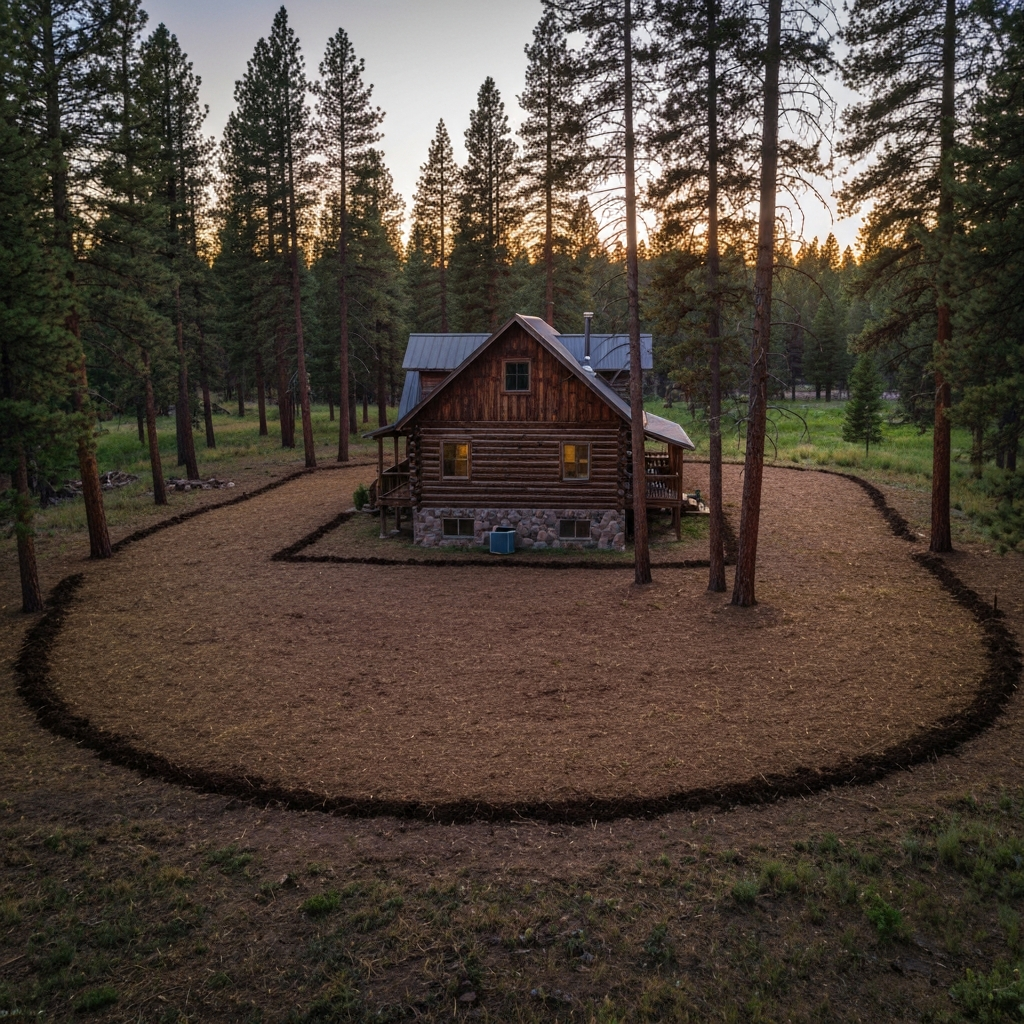
Defensible-space planning is commonly explained in zones. The immediate zone is generally the first 0-5 feet around a structure and should be kept especially clean of combustible debris and dense vegetation. This area matters because embers can collect near siding, decks, corners, steps, vents, and other vulnerable points.
The intermediate zone is generally 5-30 feet from the structure. This area focuses on reducing brush, separating plants and trees, removing ladder fuels, and improving maintenance access. On a Flathead Valley property, that may mean thinning dense undergrowth, removing dead limbs, opening space between plantings, or making sure the area can be walked and maintained without fighting through brush.
The extended zone is generally 30-100 feet from the structure. This area focuses on thinning, breaking up continuous fuels, removing deadfall, and improving spacing. It is not usually a clear-cut zone. It is a management zone where the objective is to reduce the intensity and continuity of fuel farther from the home.
Ladder fuels matter because low brush, small trees, dead limbs, and dense undergrowth can carry fire from the ground up into larger tree canopies. Once fire reaches the canopy, it can move differently than a surface fire. Removing ladder fuels and deadfall helps reduce that pathway and makes the property easier to manage.
This is relevant in Northwest Montana because many properties combine wooded rural parcels, dry summer periods, deadfall, mountain terrain, and remote access. When access is blocked, it is harder for landowners to maintain the property and harder for contractors to perform the next phase of work. When brush, stumps, and downed material cover the ground, it is also harder to see grade problems, wet areas, rock, and slope.
Clearing also connects directly to build readiness. Before a future home, shop, driveway, equipment route, or landscape area can be planned well, the site often needs to be opened. Removing stumps, exposing the ground, clearing access, and creating equipment paths helps prepare the land for future pads, driveway routes, grading, or site prep.
Defensible Space Zones
Land Clearing Process
Walk the Property and Identify What Stays, What Goes, and Where the Fire-Risk or Access Issues Are
Streamline Solutions starts by looking at the property as a whole. This includes structures, access points, slope, drainage, tree cover, brush density, deadfall, stumps, and the areas the owner wants to use or protect.
The walk-through helps separate necessary clearing from unnecessary clearing. Some trees or features may be worth preserving, while other material may block access, create fuel continuity, or interfere with future work.
Plan the Clearing Sequence, Access Route, Equipment Approach, Debris Staging, and Protected Areas
Once the site is understood, the clearing sequence can be planned. This includes where equipment can safely enter, where material can be staged, which areas need to be protected, and whether clearing should happen in phases.
This planning matters on steep, soft, wooded, or lakeshore properties where poor sequencing can create avoidable disturbance. It also helps prepare the site for grading, site prep, driveway work, landscaping, or continued maintenance.
Clear Brush, Undergrowth, Deadfall, and Surface Vegetation Blocking Access or Adding Fuel Load
The first active clearing step is often removing brush, undergrowth, deadfall, and surface vegetation that blocks access or adds unnecessary fuel. This can open walkable routes, work zones, and equipment paths.
The amount of clearing depends on the property's purpose. A defensible-space project near a structure may be more selective, while a future build area may require more complete clearing within the planned footprint.
Remove Trees and Stumps as Needed for Access, Lot Prep, Defensible Space, or Planned Property Use
Tree and stump removal is handled where needed for the project scope. This may include stumps in a future driveway route, trees blocking access to a back lot, or vegetation that prevents a structure from having practical defensible space.
Streamline Solutions does not approach every property as if everything should be removed. The better plan is usually to remove what interferes with safety, access, drainage, or future work while keeping useful trees and landscape features where they make sense.
Remove, Pile, Process, or Haul Debris Based on the Project Scope, Access, and Disposal Plan
Clearing produces material that must be handled intentionally. Brush, slash, deadfall, stumps, and debris may need to be piled, processed, staged, or hauled away depending on access, volume, disposal options, and the owner's goals.
This step is often where project timelines vary. A small brush-clearing job with minimal hauling is different from wooded acreage with heavy debris, stumps, and limited equipment access.
Rough Grade or Leave the Site Ready for the Next Phase
After clearing, the site can be left rough-cleared or prepared for the next phase. Depending on the project, that next phase may include grading, site prep, driveway work, landscaping, or continued property maintenance.
The goal is to avoid leaving the owner with a cleared area that still cannot be used. Streamline Solutions considers what comes next so the clearing work supports the larger property plan.
Related Services

Grading
Shape soil to move water away from structures, fix low spots, and create usable yard space.
Site Prep
Prepare building pads, shop sites, and gravel bases with proper compaction after clearing is complete.
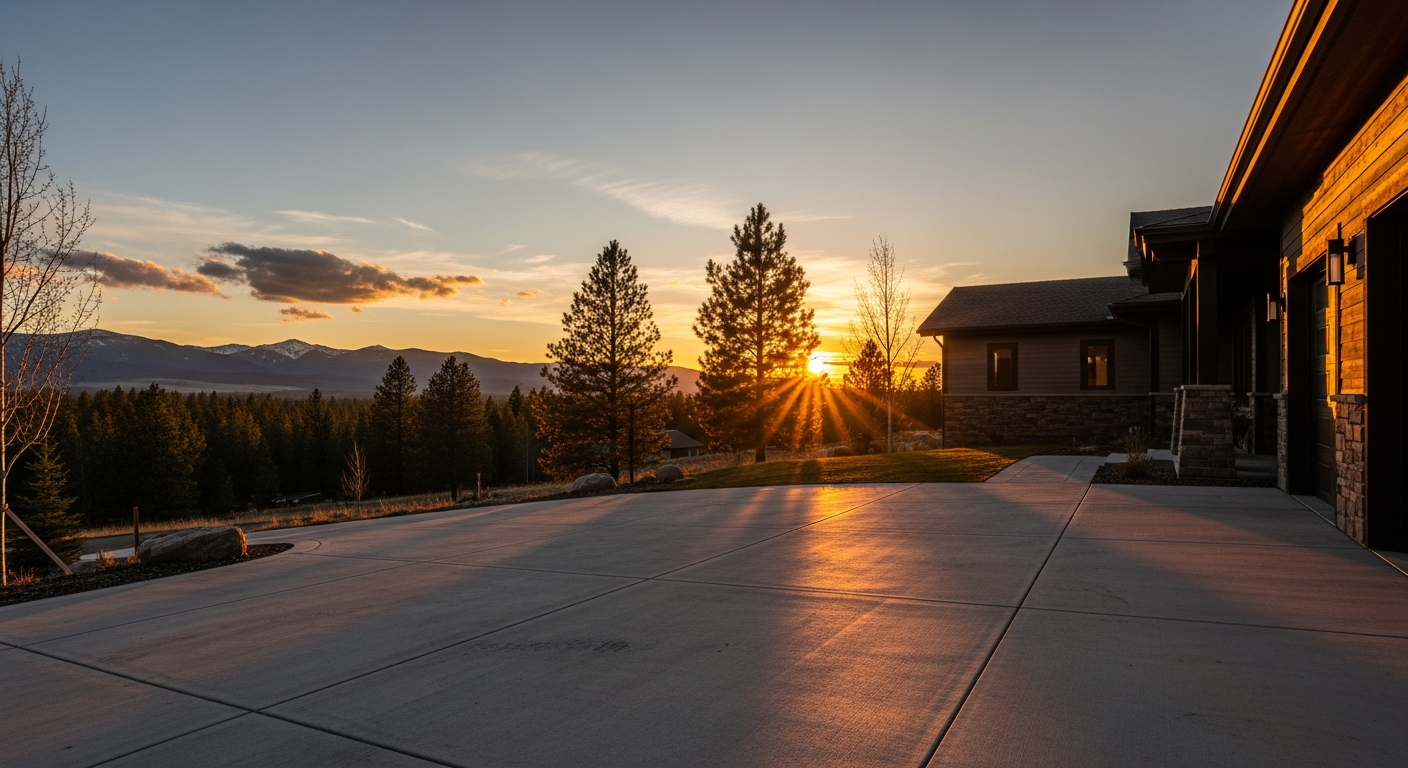
Excavation & Dirt Work
View all excavation, grading, and drainage dirt work services for Flathead Valley properties.
Myth vs. Reality
Myth
Defensible Space Means Clear-Cutting Everything
Reality
Good fire-mitigation clearing is selective. The goal is to reduce fuel continuity, remove ladder fuels, improve spacing, and keep the right trees or landscape features where they make sense. A practical plan can make a property safer and more maintainable without stripping away every useful tree.
Myth
Land Clearing Is Just Knocking Down Trees
Reality
Proper clearing considers access, debris, stumps, drainage, slope, retained vegetation, future grading, and the next phase of work. The operator has to think about what the property needs now and what the clearing work should make possible later.
Myth
You Only Clear Land for New Construction
Reality
Many clearing projects are for maintenance, defensible space, acreage reclamation, trails, access routes, or safer property management. A property does not need to be under construction to benefit from cleaner access, reduced deadfall, and more usable ground.
Myth
Small Lots Do Not Need Fire Mitigation
Reality
Smaller lots can still collect brush, deadfall, needles, and ladder fuels near structures. A focused clearing plan can make a compact property easier to maintain and better organized around the home, garage, shop, or outbuilding.
Capabilities & Limitations
Selective fuel reduction and defensible space around structures
Brush, stumps, deadfall, and debris handled and staged/hauled
Access cut in for equipment, driveways, and future dirt work
Not a clear-cut-everything service — useful trees are preserved
Steep, soft, or remote parcels may need phased clearing
Snowmelt-soft or snow-covered ground may limit timing
Where Clearing Fits
Best For
Overgrown rural acreage and homesteads, wooded mountain lots, build-site/future home or shop areas, defensible-space zones, access roads and driveway approaches.
Not Recommended For
Total clear-cutting of healthy timber — clearing stays selective and tied to safety, access, and planned use.
Land Clearing Cost
Land clearing cost depends on the property, the work area, and how the site needs to be left when the job is complete. Streamline Solutions does not use fake flat pricing because two properties with the same acreage can require very different levels of work.
The main cost factors include acreage and total area to clear, the density of brush, undergrowth, timber, and deadfall, the number and size of stumps, debris volume, and whether hauling is needed. Access also matters. A simple lot with easy equipment access is different from a steep wooded parcel with tight entry, wet areas, glacial rock, or limited room to stage debris.
Defensible-space scope can also affect cost. Clearing close to structures may require a more selective approach, especially when trees, landscaping, outbuildings, fences, or utilities are nearby. The final condition of the site matters as well. A rough-cleared area is different from a site that needs debris hauled clean and left ready for grading or site prep.
Small brush-clearing jobs are usually simpler than wooded acreage with stump removal and hauling. A site visit is the best way to price the job correctly, identify access constraints, and provide a written scope.
Where We Serve
Streamline Solutions Recommendation
"Most landowners should start by clearing access, brush, ladder fuels, and deadfall closest to structures or future work areas before expanding into larger acreage. The best clearing plan keeps useful trees and removes the material that creates risk, blocks access, or prevents the property from being used. A phased approach is often the most practical option for wooded acreage, steep lots, and rural properties with several work areas. Start with access and the highest-priority zones, then expand outward as the property becomes easier to inspect, maintain, and improve."
— Streamline Solutions, Kalispell, MT
Ready to Open Up Your Property?
Be our first Flathead Valley review.
