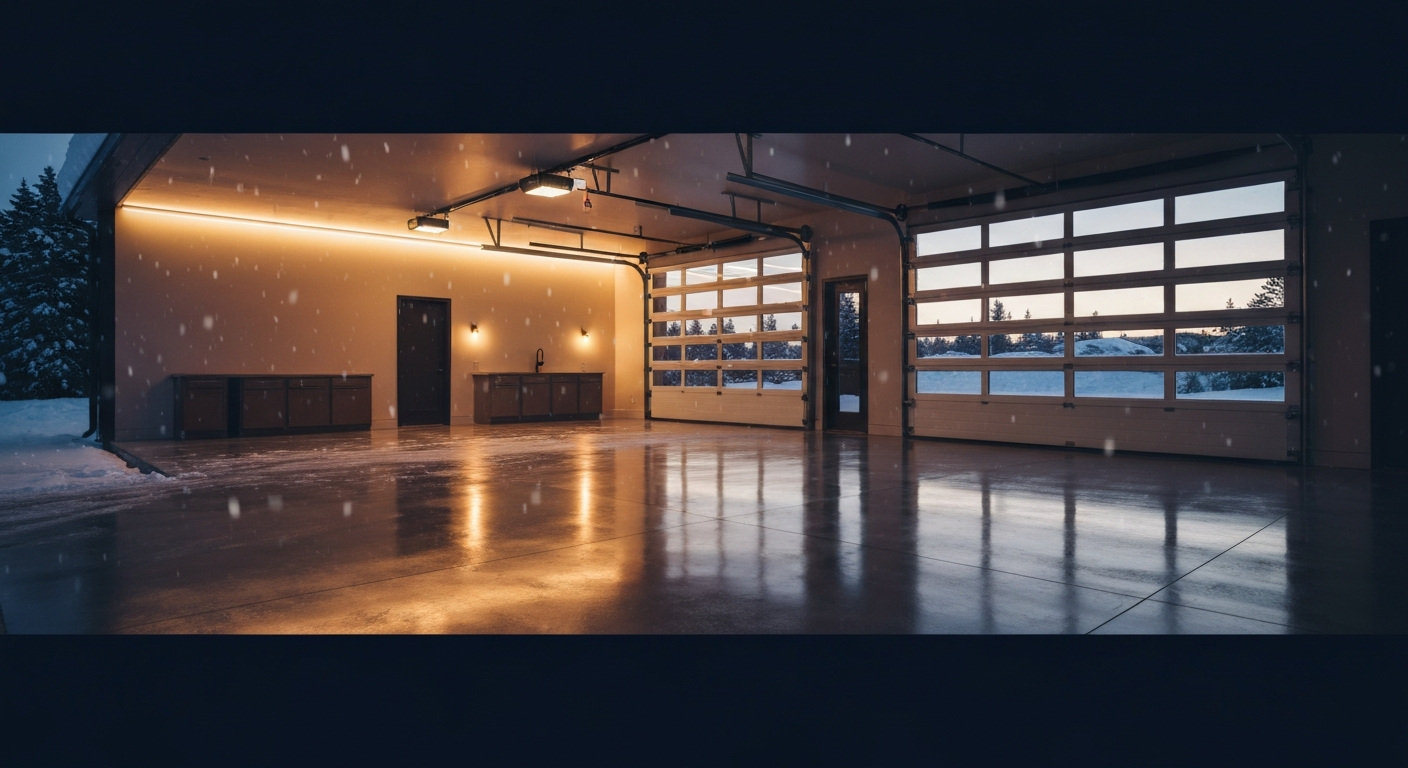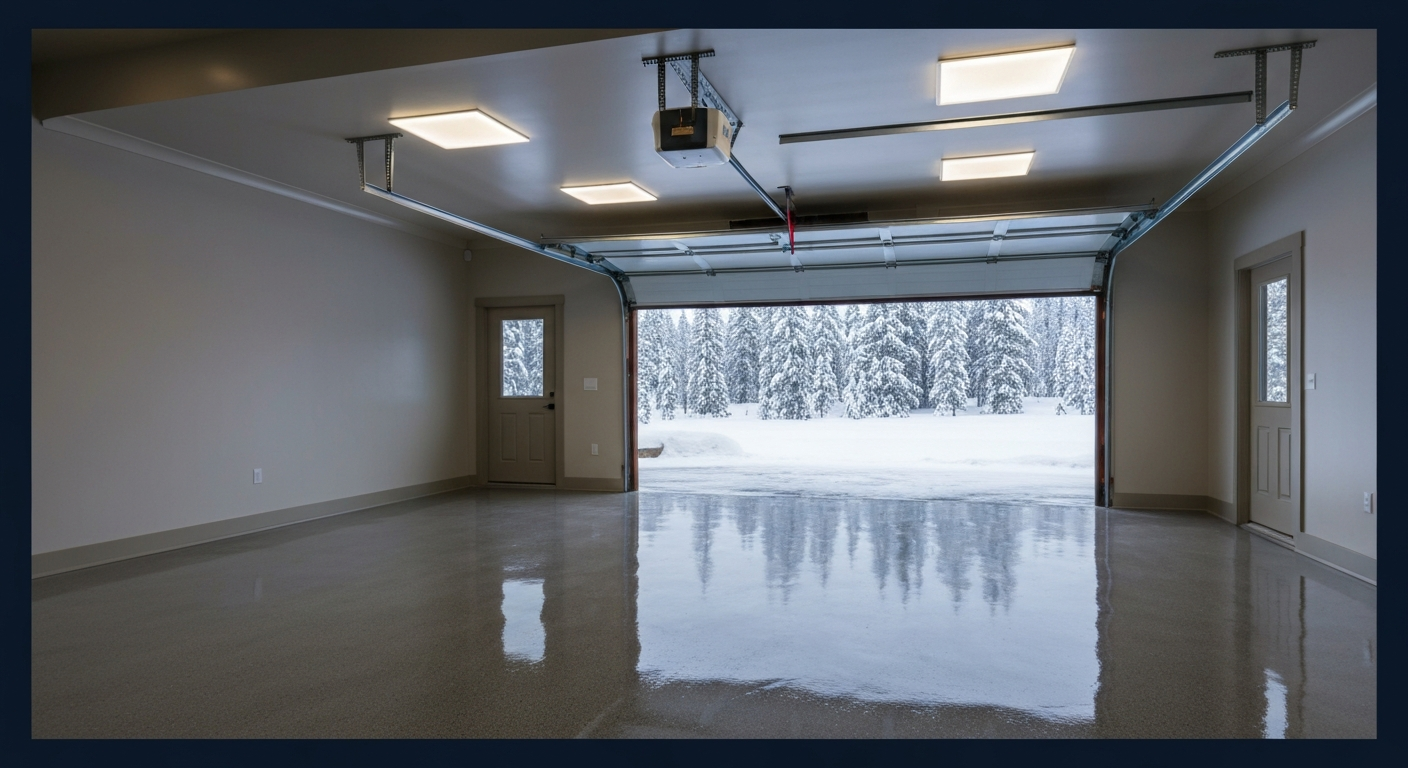
Polyaspartic Floor Coating Cost in Kalispell & the Flathead Valley
Full polyaspartic systems commonly run $10–$16+ per square foot installed — here is when the premium is worth it.
One-Day Install Potential
Cold-Weather Cure Advantage
15–20+ Year System Potential
Licensed & Insured Installation
Polyaspartic floor coating cost in Kalispell and the Flathead Valley typically lands in the upper professional garage floor coating range because it is a premium, fast-curing, UV-stable system built for existing concrete slabs that need long-term protection. For most residential garage and shop floors, homeowners should expect professional garage coatings to anchor around $7-$12 per square foot, with full polyaspartic systems commonly sitting in the upper band or above depending on slab condition, repairs, flake coverage, and topcoat requirements.
That premium is not just for a different label on the bucket. A properly installed polyaspartic floor coating can shorten the time your garage is out of use, resist yellowing from UV exposure, handle road salt and snowmelt better than basic coatings, and extend the install season in Northwest Montana's colder shoulder months. For many Kalispell, Whitefish, Columbia Falls, and Bigfork homeowners, the value comes from a cleaner installation window, a faster return to service, and a floor system designed for Montana winters rather than a temporary cosmetic upgrade.
Streamline Solutions prices polyaspartic flooring by the actual surface, not by guesswork. Square footage matters, but the bigger cost drivers are usually slab preparation, crack repair, moisture conditions, coating system selection, and how much durability the space really needs. A garage that sees daily parking, hot tires, snowmelt, road salt, tools, and storage needs a different conversation than a lightly used basement, hobby room, or seasonal shop.
Why Polyaspartic Quotes Look Higher Than Epoxy and DIY Kits
Polyaspartic quotes often look high at first glance because they are commonly compared against the wrong alternatives. A DIY kit from a retail shelf may appear inexpensive, but it usually does not include professional diamond grinding, crack treatment, moisture evaluation, proper profile creation, industrial-grade flake broadcast, or a high-performance topcoat. It also does not include the skill required to work with a fast-curing material before it becomes unworkable.
The biggest difference is preparation. A lasting coating system depends on mechanical bonding to a clean, profiled concrete surface. In Kalispell and the Flathead Valley, many garage slabs have seen years of snowmelt, deicer, road salt, hot tires, oil drips, freeze-thaw movement, and seasonal moisture. Those conditions can leave weak surface paste, hairline cracks, spalling, stains, and hidden adhesion risks. Grinding and repair are not optional details; they are the foundation of the coating.
Polyaspartic also requires tighter installation control. It has a shorter working time than many epoxies, which is part of why it can return to service faster. That same fast cure means the crew has to plan the mix, coverage rate, flake broadcast, edges, termination points, and topcoat timing carefully. When installed correctly, that speed is a major advantage. When rushed or installed over poor prep, it can become an expensive mistake.
The chemistry matters too. Premium aliphatic polyaspartic coatings are known for UV stability, clarity, abrasion resistance, and faster cure. That is why they are often used as a premium garage, shop, and patio coating component, especially where sunlight, open garage doors, Montana temperature swings, and daily vehicle use are part of the equation.
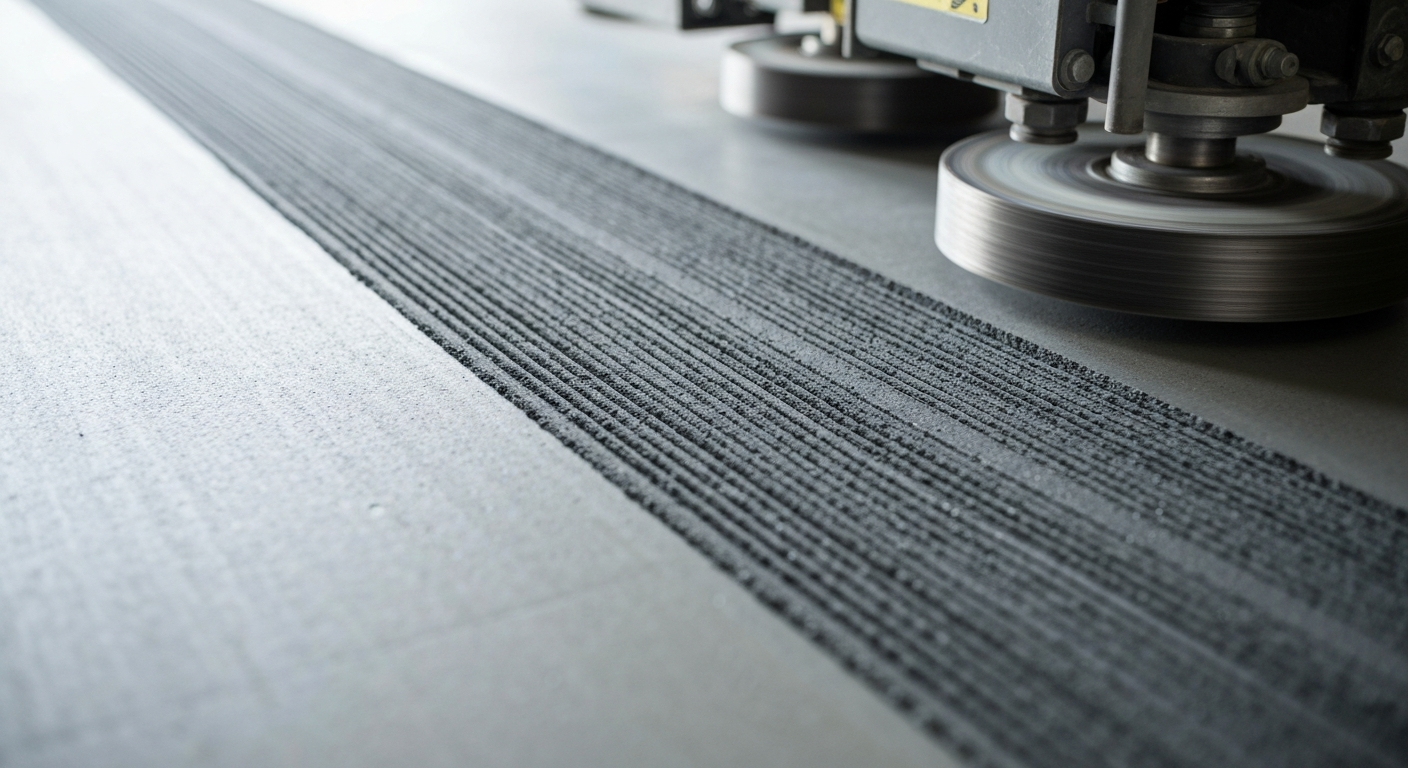
Prep is the Foundation
Mechanical diamond grinding creates the proper surface profile for the coating to bond.
Polyaspartic Floor Coating Cost: Installed Ranges and Garage Totals
Most professional garage coating projects in Northwest Montana start with the same question: "What does it cost per square foot?" That answer is useful, but it is not complete. A clean 500-square-foot garage with minor prep is a very different project from a 500-square-foot garage with spalling, moisture concerns, old coating removal, control joint work, and heavy salt damage.
For planning purposes, these are realistic installed ranges:
| System | Installed range | Cure / return-to-service time | Best use |
|---|---|---|---|
| Full polyaspartic system | $10-$16+ per sq. ft. | Light foot traffic often within hours; vehicle return commonly around 24 hours depending on conditions | Premium garage floors, shops, UV-exposed spaces, fast turnaround projects, long-term durability |
| Epoxy-base + polyaspartic topcoat hybrid | $8-$13 per sq. ft. | Usually longer than full polyaspartic; often 24-72 hours depending on system and temperature | Strong value option for garages that need durability and UV-stable top protection without full premium pricing |
| Standard professional epoxy system | $7-$12 per sq. ft. | Often several days before full return to service depending on temperature and product | Budget-conscious garages, interior slabs, lower UV exposure, projects where speed is less important |
Typical 1-Car Garage Cost
A 1-car garage is often around 240-320 square feet. A full polyaspartic system may land around $2,600-$5,100+, depending on the slab and finish. A hybrid epoxy-base plus polyaspartic topcoat system may fall around $2,200-$4,200, while a standard professional epoxy system may be closer to $1,700-$3,200.
Smaller garages can still have minimum project pricing because setup, grinding, equipment, materials, travel, and labor do not shrink perfectly with square footage. That is why a very small floor may price higher per square foot than a larger, open garage.
Typical 2-Car Garage Cost
A 2-car garage is commonly around 400-575 square feet. A full polyaspartic garage floor coating may range from $4,400-$9,200+. A hybrid system may land around $3,600-$7,500, while standard professional epoxy may come in around $2,800-$5,800.
This is the most common residential pricing conversation in Kalispell, Evergreen, Columbia Falls, Whitefish, and the surrounding Flathead Valley. For many homeowners, the decision comes down to whether the added cost of polyaspartic is worth the faster return to service, UV stability, and long-term performance.
Typical 3-Car Garage or Shop Cost
A 3-car garage or residential shop often runs 700-900 square feet or more. A full polyaspartic system may range from $7,700-$14,400+, depending on repairs, coating build, layout, and topcoat selection. A hybrid system may sit around $6,300-$11,700, while standard professional epoxy may range around $4,900-$9,000.
Larger floors often create better efficiency because grinding, material staging, and crew time can be spread over more square footage. However, larger shops may also need heavier-duty topcoats, more joint work, more crack treatment, or a finish designed for tools, equipment, trailers, or work benches.
For the broader garage coating cost anchor, see the full guide at Garage Floor Coating Cost.
What Drives the Price in Montana Conditions
Polyaspartic floor coating cost is not just a material price. In the Flathead Valley, the climate and slab history often determine the real scope.
Slab Condition & Freeze-Thaw Damage
Montana winters are hard on existing concrete. Snow, ice, road salt, and freeze-thaw movement can leave surface scaling, pits, cracks, and weak concrete at the garage entrance. If the slab needs patching, crack routing, spall repair, or extra grinding passes, the price rises because the installer has to correct the surface before coating it. A coating is only as reliable as the concrete it bonds to. Covering damaged concrete without repair may look good for a short time, but it can shorten the life of the system.
Moisture Testing and Moisture Risk
Garages in Kalispell, Lakeside, Somers, and Polson can deal with snowmelt, seasonal groundwater, drainage issues, and moisture vapor moving through older slabs. Moisture problems do not always show up as standing water. Sometimes they show up as previous coating failure, white mineral deposits, darkened concrete, or persistent dampness near doors and edges. Moisture evaluation helps determine whether the slab is a good candidate for the system being quoted.
Flake Coverage and Finish Style
A partial flake floor costs less than a full-broadcast flake system, but it also performs and hides wear differently. Full flake coverage can help mask small imperfections, add texture, and create a more finished garage floor appearance. Premium flake blends, custom colors, and heavier broadcast rates can increase material and labor cost.
Topcoat Choice
Not every topcoat is the same. The final topcoat affects abrasion resistance, UV stability, chemical resistance, traction, gloss level, and long-term cleanability. A premium polyaspartic topcoat can add cost, but it is often the layer that gives the floor its day-to-day performance.
Square Footage and Layout
Open square footage is more efficient than tight, cut-up areas. Stairs, stem walls, built-in cabinets, floor drains, deep control joints, edges, and awkward transitions all affect labor time. A simple rectangular garage usually prices more efficiently than a garage with many obstacles.
Season & Cold-Cure Chemistry
Polyaspartic can extend the Flathead install calendar because certain formulations cure in colder conditions than many standard coatings. That matters in Kalispell, Kila, Marion, Eureka, and other Northwest Montana areas where spring and fall temperatures can swing quickly. The advantage is not that weather no longer matters; it is that the right chemistry gives more scheduling flexibility when a standard epoxy system may be too slow or too temperature-sensitive.
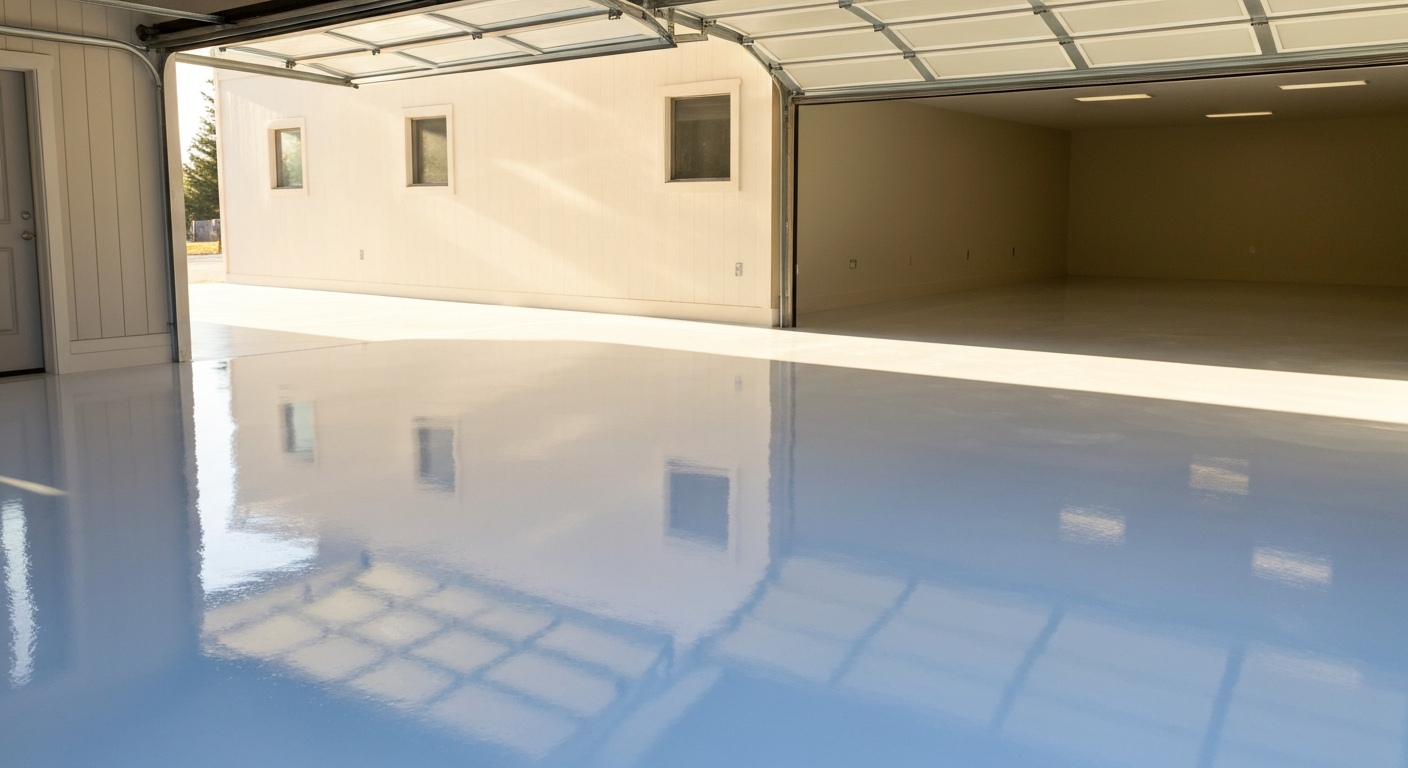
What the Polyaspartic Premium Buys You
Faster Turnaround
The most obvious benefit is speed. Many full polyaspartic systems can be installed in one day on properly prepared slabs, with the garage returning to light use quickly and vehicle parking commonly around 24 hours depending on temperature, humidity, and product specifications. For busy households, that can be a major value because the garage is not out of service for several days.
UV Stability
Polyaspartic is often chosen because it resists yellowing better than standard epoxy in UV-exposed areas. That matters when garage doors stay open, when sunlight reaches the slab, or when the coating is used in a shop, patio, or bright interior space. In Montana, UV exposure can be intense even when temperatures are cold.
Abrasion Resistance
Garage floors deal with grit, tires, tools, bikes, storage bins, and winter debris. A premium topcoat helps resist abrasion from daily use. The result is a surface that is easier to clean and better suited to real garage life.
Hot-Tire Performance
Hot tires can stress weak coatings, especially when the surface was not properly ground or the coating was not built for vehicle use. A professional polyaspartic or hybrid system is designed with hot-tire performance in mind. Proper prep still matters most, but the coating system also needs to match the use.
Longer Service Life
A well-installed premium system can last longer than a thin DIY coating or bargain floor paint. The value is not just the first-year appearance; it is the cost spread over years of use. When the floor is part of a long-term home improvement plan, polyaspartic often makes more sense than choosing the lowest upfront number.
How Streamline Solutions Quotes and Installs Polyaspartic Floors
The process starts with measurement and use-case questions. A garage used for daily parking, snowmelt, storage, and work benches is different from a clean hobby shop or a lightly used basement slab. Streamline Solutions looks at square footage, floor layout, slab condition, cracks, joints, moisture risk, sunlight exposure, and how quickly the space needs to return to service.
Next comes a condition and moisture check. The goal is to identify adhesion risks before a coating is installed. If the floor has old coating, heavy staining, spalling, soft concrete, or signs of moisture movement, those items need to be addressed in the quote instead of discovered halfway through the job.
After that, Streamline Solutions provides a fixed written quote for the selected system. The quote should explain the prep, repair assumptions, coating system, flake option, topcoat, timeline, and return-to-service expectations. That written scope is what lets a homeowner compare systems honestly instead of comparing vague square-foot prices.
A typical one-day full polyaspartic installation may follow this rhythm:
Arrival, masking, and setup.
The crew protects edges, confirms the scope, and stages equipment.
Mechanical grinding.
The slab is diamond-ground to create the proper surface profile.
Crack and surface repair.
Cracks, pits, and damaged areas are repaired as needed.
Base coat installation.
The coating is applied at the correct rate for the system.
Flake broadcast.
Decorative vinyl flakes are broadcast to the selected coverage level.
Scrape and cleanup.
Loose flake is removed and the surface is prepared for topcoat.
Polyaspartic topcoat.
The topcoat locks in the system and provides the final wear surface.
Return-to-service guidance.
The homeowner receives timing for foot traffic, storage, and vehicle parking.
For more detail on the premium service page, visit Polyaspartic Floor Coatings.
Polyaspartic vs Epoxy vs DIY Kit: Cost and Ownership Comparison
| Option | Typical installed cost | Cure / downtime | UV stability | Expected lifespan | 10-year ownership view |
|---|---|---|---|---|---|
| Full polyaspartic | $10-$16+ per sq. ft. | Often one-day install; vehicle return commonly around 24 hours | Excellent compared with standard epoxy | Often 15-20+ years with proper prep and care | Higher upfront cost, stronger long-term value when speed, UV, and durability matter |
| Professional epoxy | $7-$12 per sq. ft. | Often several days depending on temperature and system | Can amber or yellow with UV exposure | Often 8-15 years depending on prep, use, and topcoat | Strong value where UV exposure and fast turnaround are less important |
| DIY kit | Lower upfront material cost | Varies widely; prep is often the weak point | Limited to moderate depending on product | Often shorter, especially with poor prep | Cheapest upfront, but may cost more if it fails and must be removed before professional coating |
For a deeper material comparison, see Polyaspartic vs Epoxy. For related coating chemistry, see Polyurea vs Polyaspartic.
The key point is that the cheapest option is not always the lowest-cost option over ten years. If a DIY coating peels, hot-tire lifts, yellows, or traps moisture, the next professional installation may need coating removal before the real prep can even begin. That can make a "cheap" first attempt more expensive than doing the surface correctly the first time.
Pros, Cons, and When Polyaspartic Makes Sense
Pros
Polyaspartic offers fast cure, strong UV stability, excellent topcoat performance, and a premium finished look. It is a strong fit for Kalispell and Flathead Valley garages where the floor sees vehicles, road salt, snowmelt, sunlight, and frequent cleaning. It also helps when homeowners need the garage back quickly instead of losing access for several days.
Cons
Polyaspartic costs more than standard epoxy and requires more installation discipline. The working time is shorter, which means it is not forgiving for inexperienced application. On some slabs, especially those with serious moisture issues or extensive concrete damage, the correct solution may require additional repair, testing, or a different system design.
Best For
Polyaspartic is best for homeowners who want a premium garage or shop floor and plan to stay in the home long enough to benefit from the longer service life. It is also best for UV-exposed garages, fast-turnaround projects, high-use floors, and homes where snowmelt and road salt make cleanability important.
Not Recommended For
Polyaspartic may not be the best value if the garage is lightly used, budget is the top concern, the floor has severe unresolved moisture problems, or the space can remain unused for several days without issue. In those cases, a standard professional epoxy system may deliver the right balance of appearance, protection, and cost.
For homeowners still comparing options, the broader coating category is explained at Concrete Coating.
Myth → Reality
Myth 1: "Polyaspartic is just overpriced epoxy."
Reality: Polyaspartic and epoxy are different coating chemistries with different strengths. Epoxy can be a smart, durable option, but polyaspartic usually offers better UV stability, faster return to service, and a wider install window in colder conditions.
Myth 2: "One-day install means rushed prep."
Reality: A one-day install should not mean skipping prep. The time savings comes from fast-curing chemistry and an efficient installation sequence, not from avoiding grinding, repair, or cleanup.
Myth 3: "Every garage needs full polyaspartic."
Reality: Not every garage needs the premium system. If the floor is interior, low-UV, lightly used, and budget-sensitive, standard epoxy or a hybrid system may be a better-value call.
Myth 4: "DIY kits are basically the same if you add flakes."
Reality: Flakes are only one part of the system. Professional prep, coating thickness, repair materials, broadcast method, and topcoat quality have a major impact on durability.
Myth 5: "Cold-weather installation means weather does not matter."
Reality: Weather still matters. Polyaspartic can improve scheduling flexibility in Montana shoulder seasons, but slab temperature, moisture, ventilation, and product specifications still guide the final install plan.
Streamline Solutions Recommendation
For most high-use garages in Kalispell and the Flathead Valley, Streamline Solutions recommends starting the conversation with either a full polyaspartic system or a hybrid epoxy-base plus polyaspartic-topcoat system. Full polyaspartic is the premium choice when speed, UV stability, cold-weather scheduling, and long-term performance matter most. Hybrid systems can be a strong middle ground when the homeowner wants premium topcoat performance but does not need the full top-to-bottom polyaspartic build.
Standard epoxy is still a valid option. It can be the smarter spend when the garage has limited UV exposure, the household can tolerate a longer cure window, and the budget needs to stay closer to the professional coating anchor. The right answer should come from the slab, the use case, and the owner's priorities, not from pushing the most expensive system every time.
— Streamline Solutions · Concrete Surface Protection Specialists, Kalispell, MT
Service Area
Streamline Solutions provides residential polyaspartic floor coating and concrete surface protection throughout the locked Flathead Valley service area:
These communities deal with similar surface challenges: Montana winters, freeze-thaw cycles, snowmelt, road salt, garage moisture, mountain-home UV exposure, and existing concrete slabs that need protection rather than replacement. The goal is to help homeowners protect garage and shop floors with a system matched to the way the space is actually used.
Missoula is handled for commercial projects only and is not part of this residential polyaspartic cost page.
Get a Written Polyaspartic Floor Coating Quote
A good quote should make the system clear. It should explain the square footage, slab prep, repair assumptions, coating type, flake coverage, topcoat, return-to-service timing, and any conditions that could affect the final installation. Streamline Solutions provides licensed and insured installation with practical workmanship-guarantee framing based on the selected system and existing slab conditions.
For a free written quote, call (406) 909-4342. Streamline Solutions will help you compare full polyaspartic, hybrid, and epoxy options so you can choose the system that fits your floor, budget, and timeline.
For a broader view of pricing across all spaces, see our overall coating cost guide.
Be our first Flathead Valley review.