
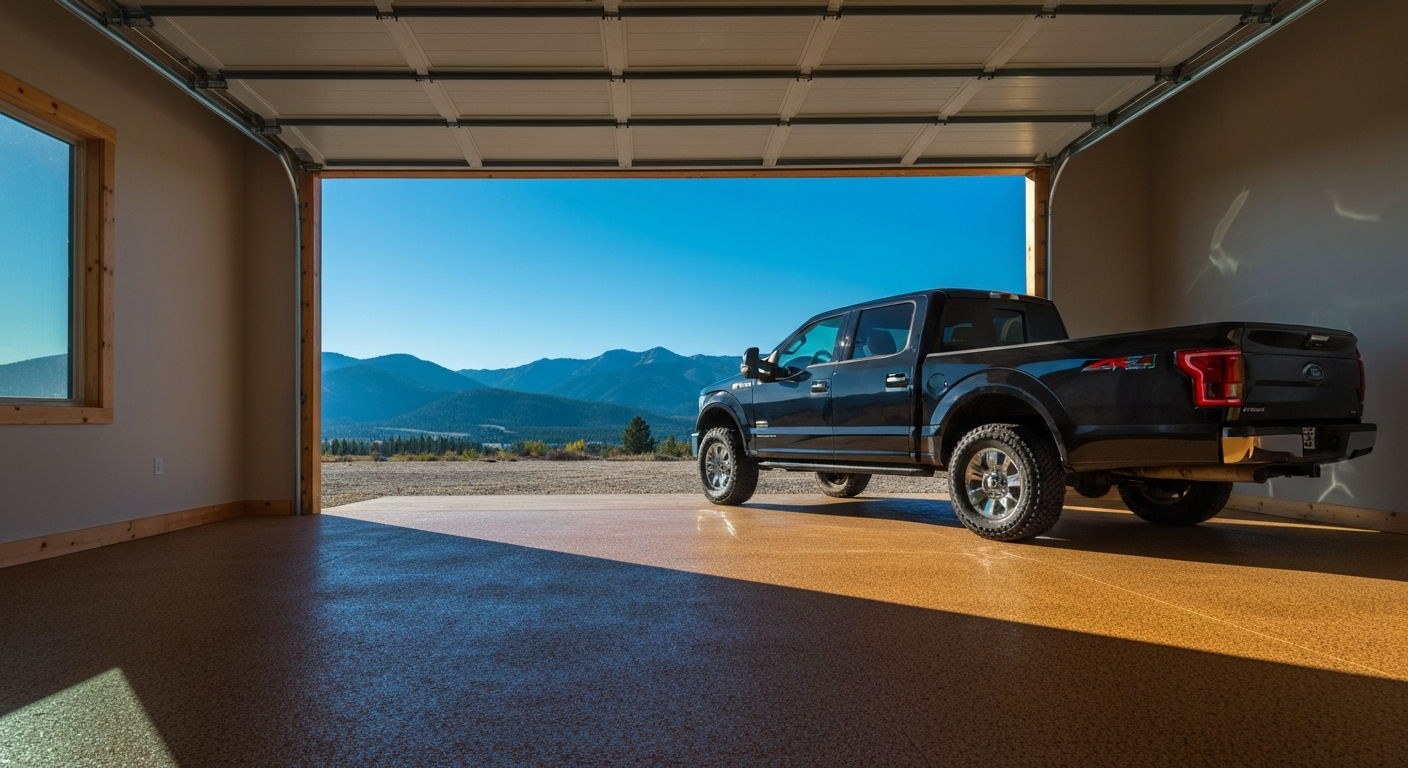
Concrete Coating Cost in Kalispell: The Honest Guide
Many professional garage and shop floor systems run about $7–$12 per square foot installed, with premium systems above that and larger commercial floors often below it thanks to scale.
The short answer on price
Most homeowners want the range first, so here it is, consistent with our full cost hub at /cost/:
- Many professional garage and shop floor coating systems land around $7–$12 per square foot installed.
- Polyaspartic systems price in a premium band above basic epoxy, because they cure fast, handle UV, and demand precise installer timing.
- Full-flake floors typically run similar to professional garage ranges, with upgrades depending on broadcast coverage and topcoat.
- Metallic epoxy sits in a higher custom range, driven by design labor and finish control.
- Larger commercial areas get scale economics — big open square footage often lowers the per-square-foot number.
Those are honest installed ranges, not teaser rates. What moves your project inside — or occasionally outside — those bands is everything below.
Prep is the Difference
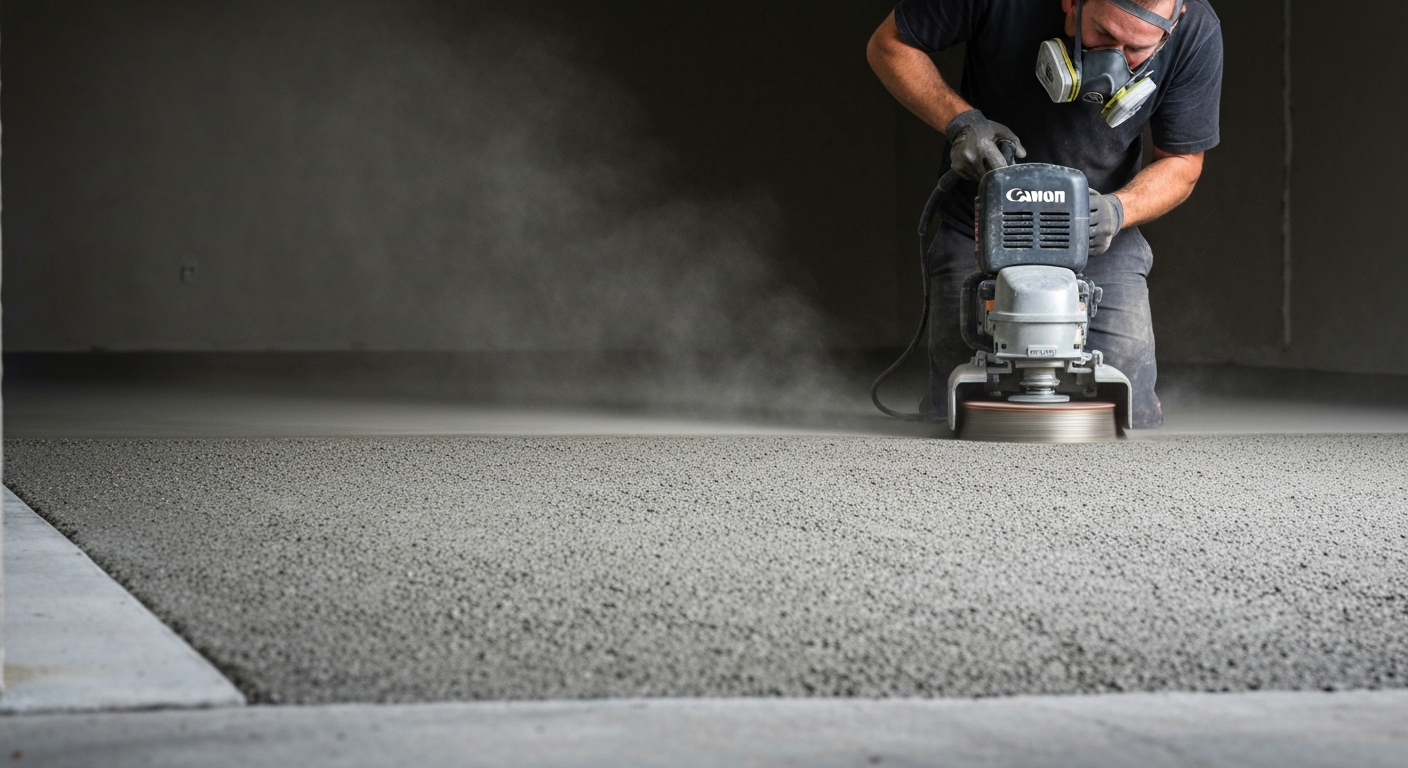
Diamond grinding and crack repair are what separate a lasting floor from a peeling failure.
What drives concrete coating cost in the Flathead Valley
Two garages with identical square footage can be quoted very differently, and both quotes can be fair. Here is where the money actually goes.
Slab condition is the biggest variable. Cracks, pitting, spalling, and salt damage all have to be repaired before a coating goes down, and Kalispell slabs take real abuse: road salt and gravel dragged in on tires all winter, snowmelt puddling under vehicles, and freeze-thaw cycles working on every existing flaw. A clean five-year-old slab needs far less correction than a 1990s garage floor that has eaten thirty Montana winters.
Moisture comes next. Concrete can look bone dry while pushing water vapor up from below, and coating over undetected moisture is the classic cause of peeling. Moisture evaluation may add nothing to your price or may change the system recommendation entirely — either way, skipping it is how cheap floors fail.
Grinding depth matters because professional coatings bond to profiled concrete, not to paint-ready smoothness. A hard, sound slab needs a standard diamond-grinding pass; a soft, sealed, or previously coated slab needs more aggressive grinding, and removing a failed old coating is real labor that shows up in the quote.
System choice and thickness set the material side of the price. A single-color epoxy, a full-flake polyaspartic system, and a metallic floor are different amounts of product and different amounts of skilled labor. Thicker builds cost more and survive more.
Edges, stem walls, and details are the quiet line items. Coating up stem walls, wrapping steps, and detailing around floor drains and posts takes hand work that a per-square-foot teaser never includes.
Finally, Montana winter access can influence scheduling and logistics. Interior coating work continues through the cold months when the space can be kept in the product's temperature window, but snow, ice, and heating needs are practical realities a local installer prices realistically rather than discovering mid-job.
Why teaser prices mislead
That rock-bottom per-square-foot number you saw in an ad is not a lie, exactly — it is a fragment. It is often the price of a thin coat over lightly cleaned concrete, with no diamond grinding, no crack or pit repair, no moisture check, no stem walls or edges, and a topcoat that may be optional or absent. The missing steps are precisely the ones that determine whether the floor lasts fifteen years or peels in two.
The pattern to watch for: a low advertised rate gets you a visit, and the "options" that were always necessary — prep, repairs, a real topcoat — get added at the kitchen table. By the time the scope is honest, the price often lands near the professional range anyway, except now you are comparing under pressure.
Streamline Solutions publishes honest ranges instead, because the cheapest number on a flyer is rarely the number a sound floor actually costs. A written fixed quote that includes prep, repair, and system details is the only price worth comparing.
DIY kit vs professional coating
The store-shelf epoxy kit is the other anchor that skews expectations. Yes, the kit is cheap. What it does not include: diamond grinding equipment, moisture evaluation, crack and pit repair, industrial-grade resins with real thickness, a UV-stable topcoat, or the judgment to know when a slab is not a coating candidate at all.
DIY kits fail most often at the bond line — thin product over acid-etched or merely cleaned concrete, sometimes over invisible moisture. When a DIY floor peels under hot tires (a Flathead Valley classic: snow tires come off in a warm April garage and take the coating with them), the redo costs more than doing it right once, because the failed coating has to be ground off before anything new goes down.
A DIY kit can be a reasonable choice for a low-stakes storage area you plan to redo anyway. For a garage or shop floor you want to last, the professional math usually wins over ten years, not just the first weekend. Our full comparison of coating chemistries is at /polyaspartic-vs-epoxy/ if you want the deeper technical dive.
Cost by system type
Different systems require different materials and labor. Here is how they stack up.
Basic epoxy systems
Entry professional systems for budget-conscious projects. Epoxy delivers solid adhesion and chemical resistance at the accessible end of the professional range, with the trade-offs of slower cure times and yellowing under UV — which matters less in a windowless shop and more near a sun-facing garage door. Prep requirements are identical to premium systems; skimping there is where "cheap epoxy" gets its bad name.
Polyaspartic systems
The premium band above basic epoxy, and usually worth it in Montana. Polyaspartic cures fast enough for one-day installation on straightforward slabs, stays clear under high-elevation UV, and handles wide temperature swings during installation — a genuine advantage in Flathead Valley shoulder seasons. The higher price buys chemistry and installer precision, not decoration. Full breakdown at /cost/polyaspartic-floor-coating-cost/.
Full-flake floors
The garage standard: base coat, broadcast flake, and a clear wear topcoat. Flake systems typically price similar to professional garage ranges, with the final number moved by flake coverage (partial vs full broadcast), flake type, and topcoat choice. Flake also hides minor slab character and shows less dirt — practical value beyond looks.
Metallic epoxy
The custom tier. Metallic floors are hand-worked, design-driven finishes for basements, showrooms, and statement spaces, and they price in a higher custom range because visual depth takes artistic labor, flatter slabs, and premium clear topcoats. Quote these individually; no flyer rate applies.
Commercial-scale systems
Large open floors — shops, warehouses, service bays — benefit from scale economics: mobilization and equipment costs spread across big square footage often reduce the per-square-foot price. Traffic type, shutdown windows, and thickness specs drive the rest. See /cost/commercial-floor-coating-cost/ for the commercial guide.
Cost by space
The type of room and its exposure change the requirements and the price.
Garage floors
The most common project and the reason the $7–$12 per square foot range exists. Two-car garages in Kalispell, Whitefish, and Columbia Falls dominate this work; the price movers are slab condition, stem walls, and system choice. The dedicated guide is at /cost/garage-floor-coating-cost/.
Shop floors
Bigger slabs, heavier use, and more variation. A hobby shop may price like a large garage, while a working shop with equipment traffic, oil exposure, and drains needs thicker builds and more detail work. Larger shop footprints begin to pick up the same scale economics as commercial floors.
Basement floors
Basements are strong coating candidates — a finished floor without the height loss or moisture worries of some flooring — but moisture evaluation matters most here, since below-grade slabs carry the highest vapor risk. Metallic and decorative finishes are popular in this space and price accordingly.
Patios and exterior slabs
Exterior work in Northwest Montana demands UV-stable chemistry and weather-window scheduling, which pushes exterior coatings toward polyaspartic and similar systems. Condition and drainage drive prep. For exterior surfaces where a coating is more than you need, sealing may be the smarter spend — an honest inspection sorts that out.
How to compare coating quotes
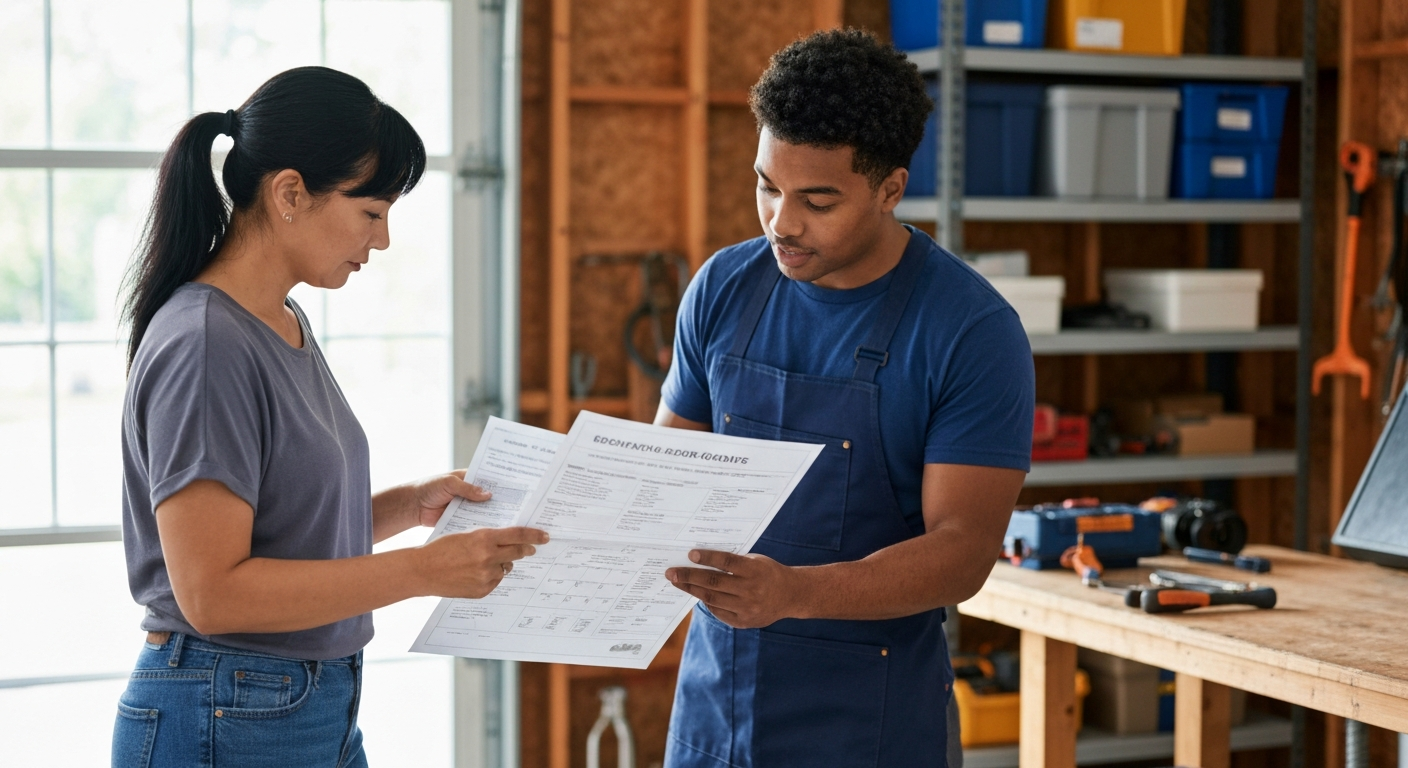
Compare scope, not just the bottom line. A useful quote names the prep (grinding, not just cleaning), lists repairs included, states the system and its thickness or build, includes edges and stem walls explicitly, addresses moisture, and puts the whole thing in writing at a fixed price. If a bid is meaningfully cheaper, find which of those items it quietly dropped — that gap is usually the entire difference.
Ask every bidder the same three questions: What prep is included? What happens if you find moisture or damage after grinding? Is the topcoat UV-stable? Vague answers to any of the three are their own answer.
Streamline Solutions quotes from an on-site inspection and puts the full scope in writing, so you can set our number next to any other bid line by line. That is the comparison we want you to make.
When coating is not worth it
Honesty marker, because this page is a guide and not a pitch: some floors should not be coated. If the slab is structurally failing, heaving, or moving at cracks, a coating hides nothing and fixes nothing. If moisture exceeds what any reasonable system tolerates, coating is money spent on a future peel. If the concrete is scheduled for replacement in a few years, protect the budget instead of the slab. And if all you need is protection from water and salt on an exterior surface — not a new finish — a sealer may do the job for less; see /concrete-coating/ and our sealing pages to compare the two approaches.
Streamline Solutions will tell you at the inspection if your slab is a poor coating candidate. Walking away from a bad project costs us a job and saves you the redo — that trade builds the reputation we actually want in the Flathead Valley.
Service area
Streamline Solutions provides concrete coating quotes and installations across Kalispell, Whitefish, Columbia Falls, Evergreen, Bigfork, Somers, Lakeside, Kila, Marion, Polson, Ronan, and Eureka — serving Flathead County, the Flathead Valley, and nearby Northwest Montana.
Streamline Solutions · Concrete Surface Protection Specialists · Kalispell, MT · (406) 909-4342
Concrete coating cost FAQs
Related cost guides
Cost hub
Honest pricing guides for concrete coating, paver sealing, and driveway sealing.
Learn moreGarage Floor Coating Cost
See installed price ranges, prep factors, and get a free written quote.
Learn morePolyaspartic Floor Coating Cost
Understand the cost of polyaspartic floor coatings in the Flathead Valley.
Learn moreCommercial Floor Coating Cost
Learn what drives pricing for warehouse, shop, and retail floors.
Learn moreGet a real number for your floor
One inspection, one written fixed price — prep, repairs, system, and total, in plain language.
