Commercial Floor Coating Cost in Montana - Kalispell, the Flathead Valley & Missoula
Most commercial systems land between $3.50 and $14.00+ per square foot installed — here is what moves the number and what a real scope includes.
Why Commercial Budgets Feel Opaque
Commercial floor coating cost in Montana usually lands between $3.50 and $14.00+ per square foot installed, depending on the size of the floor, the condition of the slab, the coating system specified, and how much downtime your facility can tolerate. In Kalispell, the Flathead Valley, and Missoula commercial projects, most warehouse floors, service bays, shop floors, showrooms, and light industrial spaces are not priced by material alone. They are priced by the full scope: surface preparation, crack and joint repair, moisture testing, coating build, topcoat chemistry, return-to-service timing, and whether the work needs to be phased around business operations.
For many owners, facilities managers, and general contractors, the fastest usable budgeting range is this: a thin-mil maintenance re-coat may start around $3.50-$6.00 per square foot, a standard commercial epoxy or flake broadcast system often runs $6.00-$10.00 per square foot, and a heavier high-build system with urethane or polyaspartic topcoats can run $9.00-$14.00+ per square foot. Those numbers can move up or down based on square footage, slab condition, access, moisture mitigation, chemical exposure, and whether work is scheduled after hours or in phases.
Budgeting a commercial floor coating project can feel frustrating because two proposals can look similar on the surface while describing completely different floors. One quote may assume a light cleaning and thin coating. Another may include diamond grinding, crack repair, joint treatment, moisture testing, a high-build epoxy body coat, full broadcast aggregate, and a chemical-resistant urethane or polyaspartic topcoat.
That difference matters. Prep depth, mil thickness, topcoat chemistry, and return-to-service planning are often invisible when a proposal is reduced to one line item. A low-bid re-coat may appear cheaper up front, but it can become expensive if the coating peels, hot-tire marks, stains, softens under chemicals, or forces the business to close the same area twice.
For a warehouse, shop, service bay, showroom, or commercial garage, the coating is not just a finish. It is part of the operating surface. It affects cleaning labor, safety striping, light reflectivity, vehicle movement, customer impression, employee workflow, and shutdown planning. In Montana, it also has to handle freeze-thaw cycles, tracked-in deicer, road salt, snowmelt, UV exposure near doors, and the grit that comes with Northwest Montana winters.
A good commercial floor coating budget should answer four questions early:
- 1. What system is actually being installed?
- 2. What slab preparation is included?
- 3. How soon can the space return to service?
- 4. What is the likely cost per year of service, not just the initial installed price?
Commercial Floor Coating Cost by System Tier
The following ranges are planning numbers for commercial floor coating projects in Kalispell, the Flathead Valley, and Missoula commercial work. They are not a substitute for an on-site assessment, but they give owners, facilities managers, and GCs a realistic way to start budgeting.
| System tier | Installed range | Typical use | Return-to-service time |
|---|---|---|---|
| Thin-mil maintenance re-coat | $3.50-$6.00/sq ft | Previously coated floors with sound adhesion, light foot traffic, back rooms, low-abuse commercial areas, cosmetic refreshes | Often light foot traffic in 24-48 hours; full use depends on product and site conditions |
| Standard commercial epoxy or flake broadcast system | $6.00-$10.00/sq ft | Retail floors, showrooms, commercial garages, shop floors, service areas, clean storage, customer-facing spaces | Often light foot traffic in 24-48 hours; vehicles and heavier use commonly require 48-72+ hours |
| Heavy-duty high-build epoxy with urethane or polyaspartic topcoat | $9.00-$14.00+/sq ft | Warehouses, industrial floors, service bays, forklift traffic, chemical exposure, production areas, high-wear commercial slabs | Light foot traffic may be possible in 24-48 hours; heavy equipment or forklift traffic often requires 72 hours or longer depending on the system |
Cost by Space Type
Warehouse & Industrial
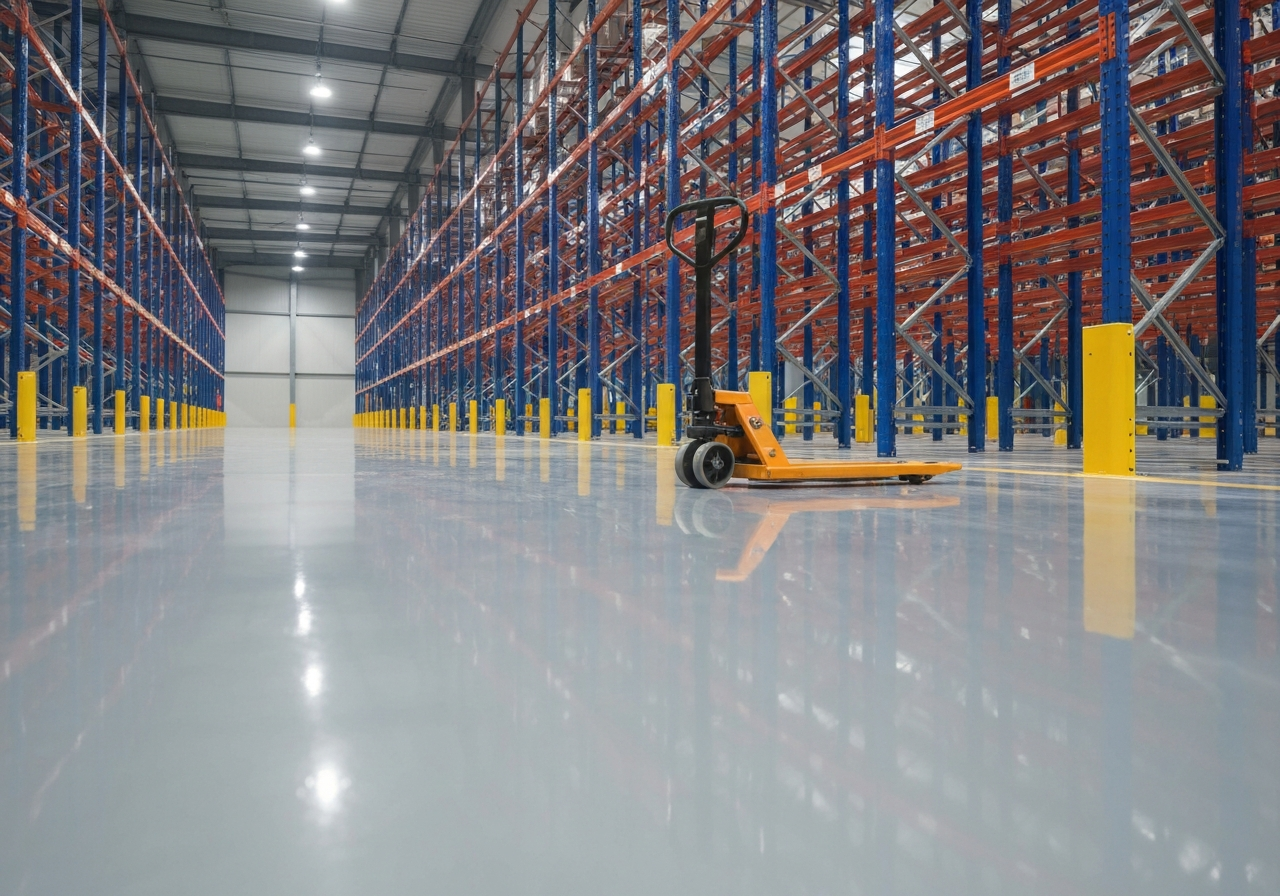
Warehouses and industrial spaces commonly need more than a cosmetic coating. Forklift aisles, loading zones, pallet jack routes, wet entries, and impact areas may require a thicker build, stronger topcoat, and more attention to joints and cracks. A warehouse floor coating price may start in the mid-range on large, clean slabs, but high-abuse spaces can move toward the upper end when moisture mitigation, heavy prep, and chemical resistance are required.
Shop & Service Bay
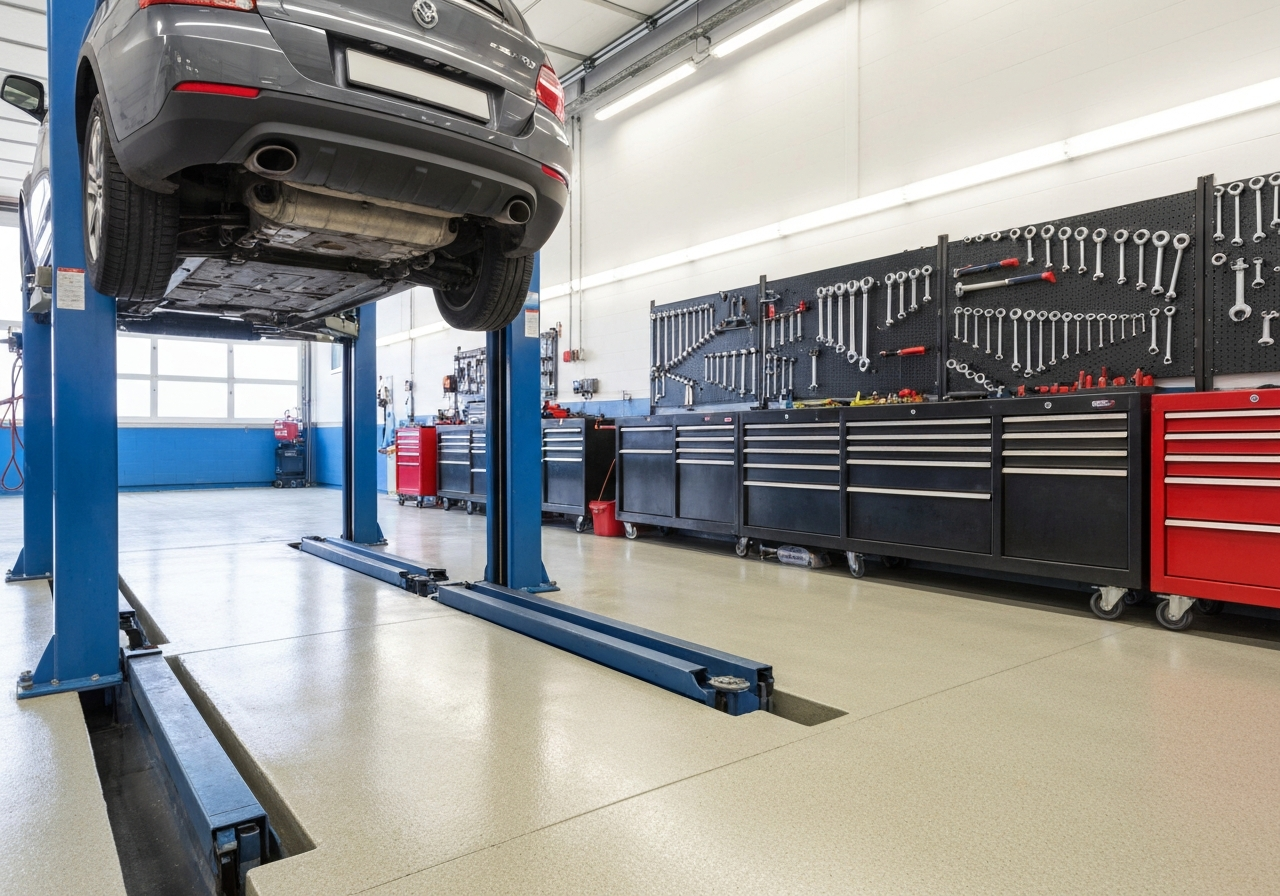
Shop floors and service bays often see hot tires, vehicle fluids, metal stands, dropped tools, road salt, deicer, and wet vehicles. These floors need enough build to protect the slab and enough topcoat performance to handle routine cleaning. A light coating may look acceptable at installation, but it can fail quickly if the space has daily vehicle traffic.
Showroom & Retail
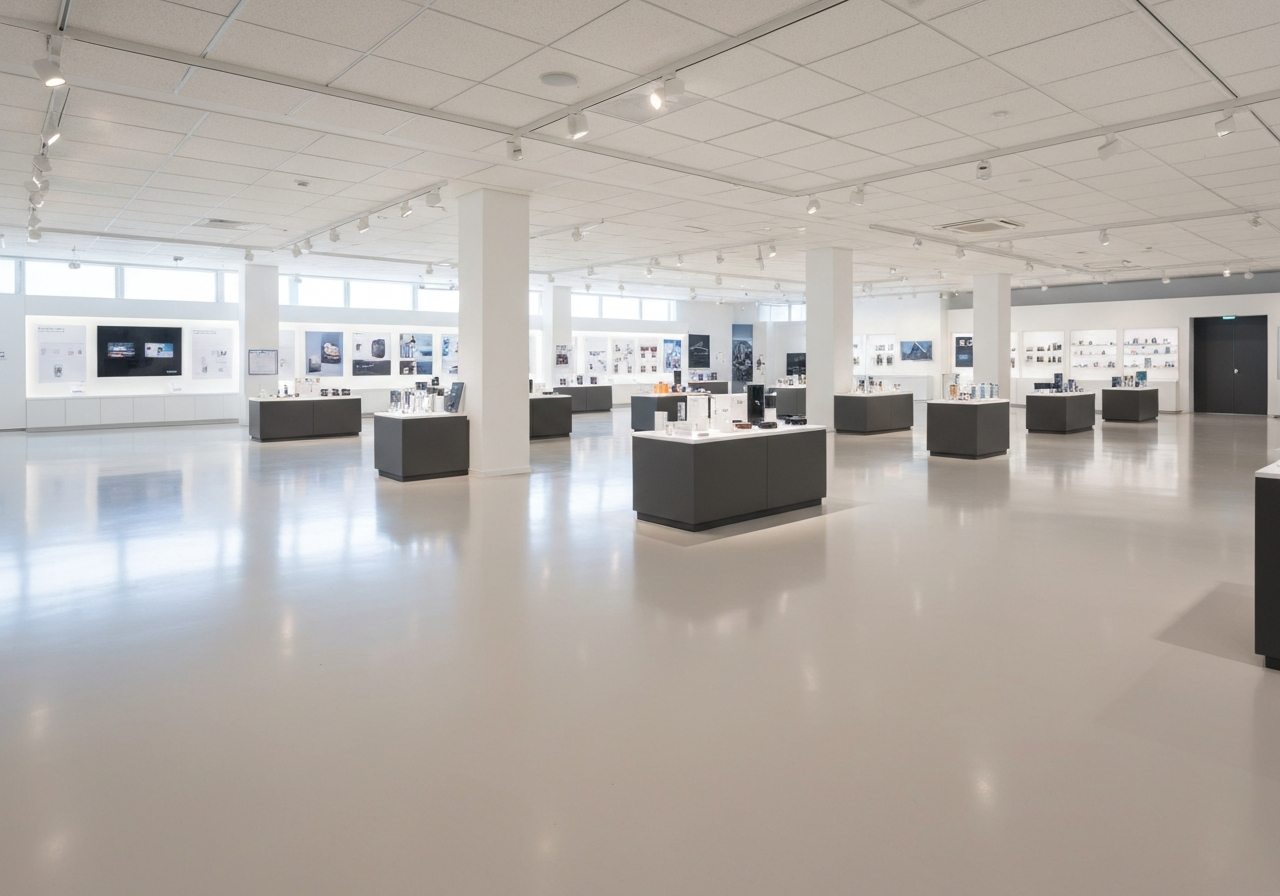
Showrooms, retail spaces, and customer-facing commercial floors usually place more value on appearance, cleanability, reflectivity, and design consistency. Decorative flake, solid-color epoxy, metallic effects, or UV-stable topcoats can affect price. These spaces may not need the heaviest industrial build, but they do require careful prep and a clean finish because flaws are more visible.
Scale Economics: Why Larger Floors Usually Cost Less Per Square Foot
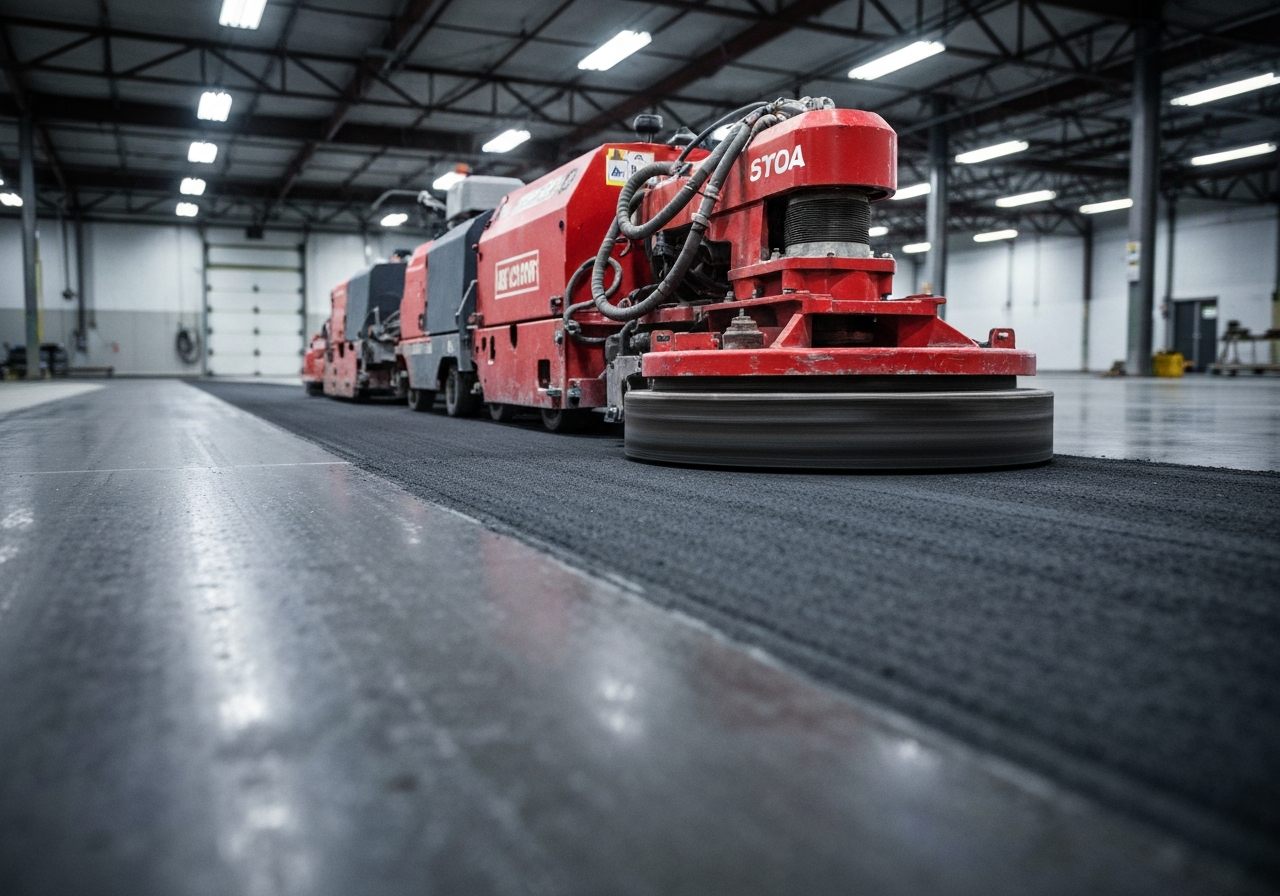
Commercial coating pricing is not perfectly linear. Mobilization, equipment setup, material staging, tooling, masking, and crew travel are part of every project whether the space is 800 square feet or 8,000 square feet. As square footage increases, those fixed costs are spread over more floor area, which often lowers the unit price. A small 700-square-foot commercial room may price higher per square foot than a 7,000-square-foot warehouse because the setup, prep equipment, and crew scheduling still have to happen. Larger open slabs with clear access, minimal obstructions, and consistent conditions usually price more efficiently. A chopped-up space with offices, tight corners, drains, equipment pads, floor anchors, and heavy masking may cost more than a simple rectangle even if the total square footage is similar.
Project Minimums and Mobilization
Most commercial floor coating projects have practical minimums because the crew still has to mobilize grinders, vacuums, tooling, repair materials, coatings, containment supplies, and safety equipment. A small commercial coating project may be quoted as a fixed minimum rather than a simple square-foot number. This is especially common when the space is below a practical production threshold or requires after-hours scheduling. Minimums are not meant to hide pricing. They reflect the reality that a professional floor system includes labor, equipment, travel, prep, setup, cleanup, and coordination. For facilities managers and GCs, the cleanest path is to share the approximate square footage, floor use, timeline, access limitations, and any known slab issues before requesting a budget number.
Downtime Is a Real Cost Line
For many commercial properties, downtime costs more than the coating itself. A floor that requires a production area, service bay, retail space, or warehouse aisle to close for several days has a business cost beyond the invoice. Streamline Solutions accounts for downtime in the planning conversation. In some buildings, the right choice may be a faster-curing topcoat or phased installation that keeps part of the space operational. In others, a slightly longer shutdown may be the smarter move if it allows better prep, thicker build, and a longer-lasting system. The cheapest coating is not always the lowest-cost floor when labor disruption, tenant downtime, missed production, and repeat shutdowns are included.
What Drives Commercial Floor Coating Price in Montana?
Commercial floor coating cost is driven by site-specific conditions. Two spaces with the same square footage can have very different prices because the slab, traffic, exposure, and schedule are different.
Slab Condition
The condition of the existing slab is one of the biggest cost factors. Clean, sound concrete with minor cracks is much easier to prep than a slab with soft concrete, surface contamination, failed coatings, oil saturation, spalling, patchwork, or uneven transitions. Commercial floors often have years of use hidden in the surface, especially in service bays, warehouses, mechanical rooms, and shop areas. Crack repair, joint treatment, divot filling, and patching add cost, but they also protect the finished system. A coating installed over unresolved slab problems may look good for a short period and then telegraph cracks, peel, chip, or wear unevenly.
Moisture Vapor Testing
Moisture matters in Montana commercial slabs. Slabs can move vapor from below, and that vapor can interfere with adhesion if the wrong system is installed. A moisture assessment helps determine whether a standard primer is appropriate or whether a moisture-mitigation primer should be included. Moisture mitigation increases the installed price, but it can prevent a much more expensive failure. For facilities with cool interiors, snowmelt near overhead doors, wet vehicle traffic, or older slabs without a known vapor barrier, testing is a practical part of responsible budgeting.
Traffic Type
Foot traffic, carts, forklifts, pallet jacks, vehicle traffic, tracked equipment, and turning tires all affect the coating specification. A showroom floor does not need the same system as a forklift aisle. A warehouse does not need the same finish as a small retail office. A service bay that sees hot tires, brake fluid, oil, road salt, and snowmelt needs a stronger approach than a lightly used storage room. The more aggressive the traffic, the more important surface profile, build thickness, broadcast texture, and topcoat selection become.
Chemical Exposure
Commercial floors may see degreasers, automotive fluids, cleaners, solvents, food-related spills, salts, fertilizers, or production chemicals. Chemical exposure can change the coating system quickly. A basic coating may be acceptable for dry storage but insufficient for a shop floor or industrial workspace. A written scope should identify likely chemicals and cleaning methods before the final system is selected. That prevents under-building the floor and helps avoid unnecessary overspending where chemical resistance is not needed.
Mil Build and Topcoat Specification
Mil build is the thickness of the installed coating system. Thin-mil systems cost less, but they provide less protection and usually have shorter service lives in high-abuse spaces. High-build systems cost more because they use more material, require more labor, and often involve multiple coats or broadcast layers. Topcoat selection also affects cost. Urethane and polyaspartic topcoats can improve abrasion resistance, UV stability, chemical resistance, and return-to-service timing. The right topcoat depends on how the space is used, how it is cleaned, and how quickly it must reopen.
Square Footage and Layout
Larger open floors usually price more efficiently than small, complex spaces. Obstacles, drains, floor penetrations, equipment, shelving, racks, offices, and tight edges slow production. Floor layout can matter almost as much as total square footage. For warehouses and industrial buildings, access is also important. Clear floor access, available power, loading access, and a defined staging area can improve scheduling and reduce friction.
Phasing and Off-Hours Scheduling
A floor installed during normal business hours is usually easier to schedule than a floor that must be completed at night, over a weekend, or in several phases. Off-hours work can reduce operational disruption, but it may increase labor planning, crew coordination, and mobilization. Phasing can be the right choice when a business must keep operating. It can also add cost because each phase may require separate setup, edge transitions, cure windows, and protection of finished areas.
Season and Montana Weather
Montana winters create floor coating challenges that do not show up in generic national price guides. Snow, ice, deicer, road salt, freeze-thaw cycling, and wet vehicles all affect how commercial floors are used. Overhead doors, loading bays, service entrances, and vehicle lanes need special attention because these areas see the most moisture and grit. Season can also affect scheduling. Temperature, ventilation, slab moisture, and access conditions may influence product selection and cure timing. A commercial floor in Northwest Montana should be specified for the actual environment, not just the square footage.
Benefits: What a Commercial Floor Coating Should Return
A commercial floor coating should be evaluated as an operating asset. The right system can reduce maintenance costs, improve safety, brighten the space, and protect the slab underneath.
More Years of Service Per Dollar
A professional floor system costs more than a quick re-coat, but it can reduce the cost per year of service. If a low-bid floor lasts two years and a properly specified system lasts ten or more, the higher initial price may be the better financial decision. This is especially true when downtime and repeat mobilization are included.
Reduced Maintenance and Easier Cleaning
Bare concrete absorbs stains, creates dust, and can be difficult to clean in active commercial spaces. A properly coated floor helps reduce concrete dusting and makes routine cleaning more predictable. For shops, warehouses, and showrooms, that can save labor over time.
Safer Movement and Line-Striping
Commercial coatings can be paired with texture, safety markings, walk lanes, equipment zones, and line striping. This can help define traffic flow, improve visibility, and support cleaner operational organization. In wet areas, texture selection matters because a floor should balance cleanability with slip resistance.
Brighter Work Areas
Coated floors often reflect more light than old, stained concrete. In warehouses, shops, and showrooms, a brighter floor can improve the feel of the space and may make cleaning issues easier to spot. For customer-facing areas, the visual upgrade can be immediate.
Professional Image
A clean commercial floor affects how customers, tenants, employees, and inspectors perceive the facility. A stained, dusty, patched slab may communicate neglect even when the business is well-run. A clean coating system can support a more professional impression without requiring a full remodel.
Streamline Solutions Process
Site Walk and Use-Case Review
The process starts with the floor and the way the space is used. Streamline Solutions reviews square footage, access, current slab condition, traffic type, chemicals, cleaning methods, desired appearance, and downtime limits. For GCs and facilities teams, this is also the stage to discuss sequencing, tenant access, other trades, and required completion dates.
Moisture and Condition Assessment
Next, the slab is evaluated for cracks, joints, contamination, existing coatings, moisture concerns, spalling, soft concrete, and surface profile needs. This step is important because the finished system is only as reliable as the preparation underneath it. Prep is not a minor line item; it is the foundation of the floor.
Written Specification and Fixed Quote
After the assessment, the project should be translated into a written scope. That scope should describe the preparation method, repairs, coating system, topcoat, texture, approximate return-to-service timing, and any exclusions or site requirements. A clear written quote helps owners compare proposals accurately.
Phased or Off-Hours Installation
When needed, work can be planned in phases or outside normal operating hours. This is especially useful for retail spaces, service departments, active warehouses, and tenant-occupied commercial properties. The right schedule depends on the coating system, cure time, access, and how much of the floor must remain operational.
Final Walkthrough and Care Guidance
A commercial floor coating project should end with practical care guidance. Cleaning methods, cure expectations, traffic timing, and maintenance recommendations help the floor perform as designed. This is also the time to review any workmanship-guarantee framing and confirm how the floor should be used during the first several days.
Low-Bid Re-Coat vs Specified Professional System
For a deeper look at commercial system options, visit the full commercial floor coating page.
| Category | Low-bid re-coat | Specified professional system |
|---|---|---|
| Surface preparation | Often light sanding, cleaning, or minimal profile work | Diamond grinding or mechanical prep matched to slab condition |
| Crack and joint treatment | Often excluded or lightly patched | Reviewed, repaired, and included where required |
| Mil thickness | Thin coating, lower material build | System build matched to traffic, chemicals, and lifespan goals |
| Topcoat | May be basic or omitted | Urethane, polyaspartic, or other topcoat selected for use case |
| Lifespan | Often short in commercial traffic | Longer service potential when correctly specified and maintained |
| Cost per year of service | Can become high if replacement is needed early | Often lower over time despite higher initial installed cost |
| Downtime risk | Higher risk of repeat shutdown | Planned cure window and phasing reduce avoidable disruption |
| Best use | Light refresh on a sound existing floor | Warehouses, shops, service bays, showrooms, and high-use commercial slabs |
Pros and Cons of Commercial Coating Systems
Pros of Commercial Floor Coatings
Commercial floor coatings can protect existing slabs, reduce dusting, improve cleanability, and create a more professional environment. They can be customized for warehouses, service bays, showrooms, retail spaces, and industrial work zones. They also allow safety markings, traffic lanes, and different textures depending on the space. A properly specified system can help a business get more years out of an existing slab without replacing the floor. For facilities managers, that can make coating a practical capital improvement instead of a cosmetic expense.
Cons of Commercial Floor Coatings
Commercial coatings require real preparation and controlled installation conditions. They are not a magic fix for structural slab problems, active water intrusion, severe movement, or major substrate failure. They also require downtime, even when fast-cure systems are used. The cheapest systems can be tempting, but under-building the floor usually creates risk. If the space has forklifts, wet vehicles, chemicals, or heavy turning traffic, a light re-coat may not be enough.
Best For vs. Not Recommended For
Best For
A commercial floor coating is often a strong fit for warehouses, industrial floors, shop floors, service bays, customer-facing showrooms, retail floors, commercial garages, storage areas, and workspaces where bare concrete is dusty, stained, hard to clean, or visually worn. For warehouse-specific planning, see warehouse and industrial floor coating. For vehicle and equipment spaces, see shop and service bay floor coating. For customer-facing spaces, see showroom and retail floor coating.
Not Recommended For
A coating may not be the right first step when the slab has unresolved structural movement, active water intrusion, major heaving, severe contamination, or failed concrete that needs correction before any coating system can perform. A maintenance re-coat is also not recommended when the existing coating is peeling, poorly bonded, or covering deeper slab problems. In those cases, the honest answer may be a full coating rebuild, heavier prep, moisture mitigation, or slab repair before coating. Streamline Solutions focuses on protecting and upgrading existing concrete surfaces, but the surface has to be prepared correctly before the coating goes down.
Myth vs. Reality
Myth:
All epoxy is the same product.
Reality:
Commercial epoxy flooring is not one product. Resin quality, solids content, primer selection, build thickness, broadcast method, topcoat chemistry, and prep standard all change performance. Two "epoxy floor" bids may describe very different systems.
Myth:
The lowest bid saves money.
Reality:
The lowest bid only saves money if the floor performs long enough to justify the reduced price. If the coating fails early, the business may pay for removal, re-prep, reinstallation, and another shutdown. Cost per year of service is usually a better measure than initial price alone.
Myth:
Coating a warehouse means shutting down for a week.
Reality:
Some large or complex projects do require extended downtime, but many commercial floors can be phased. Off-hours scheduling, fast-cure topcoats, and planned traffic zones can reduce disruption. The right schedule depends on square footage, system type, and return-to-service requirements.
Myth:
A thin re-coat can fix any old floor.
Reality:
A thin re-coat can be useful when the existing coating is sound and the space has light use. It is not a substitute for rebuilding a failed floor, repairing cracks, addressing moisture, or adding thickness for forklifts and chemical exposure.
Myth:
A shiny floor is always slippery.
Reality:
Gloss level and slip resistance are not the same thing. Texture, broadcast media, topcoat selection, and cleaning practices determine how the floor performs under foot or vehicle traffic. Commercial spaces should balance cleanability, traction, and appearance.
Streamline Solutions Recommendation
For most commercial spaces in Kalispell, the Flathead Valley, and Missoula commercial projects, Streamline Solutions recommends starting with the business use case instead of the coating product. A warehouse with forklift traffic, a service bay with deicer and automotive fluids, and a showroom with customer traffic should not receive the same specification.
If the floor is already coated and the coating is sound, a maintenance re-coat may be enough. If the floor is bare, stained, cracked, exposed to vehicles, or expected to carry heavy traffic, a standard or heavy-duty system is usually the better long-term value. If downtime is the biggest constraint, the system should be selected around return-to-service timing as well as durability.
The best floor is the one that fits the slab, the schedule, and the business case.
— Streamline Solutions · Concrete Surface Protection Specialists, Kalispell, MT
Service Area
Streamline Solutions provides commercial floor coating cost guidance and project estimates throughout the Flathead Valley and Northwest Montana, including:
Missoula — commercial only
Streamline Solutions also serves Missoula for commercial projects only, including larger commercial floor coating, warehouse floor coating, shop floor coating, service bay coating, and facility-focused coating projects where the scope supports the travel and scheduling requirements.
Trust, Scope, and Next Step
Streamline Solutions is licensed and insured for commercial surface protection work. Every commercial floor coating project should begin with a clear scope, realistic timeline, and written expectation for preparation, coating system, and return-to-service timing. Workmanship-guarantee framing is handled in the quote so owners, facilities managers, and GCs understand what is covered before the project starts.
For a fast budget number, gather the approximate square footage, current floor condition, space type, timeline, and whether the work needs to be phased. Photos help, but an on-site review is the best way to turn a planning range into a hard number.
Call 406-909-4342 to request a commercial floor coating budget quote from Streamline Solutions.