Commercial Floor Coating in Kalispell & Western Montana
Durable, cleanable, forklift-rated coating systems for warehouses, shops, service bays, and showrooms — installed around your operating schedule.
What Kills Commercial Floors in Montana Facilities
Commercial floor coating is a protective system installed over an existing concrete slab to make the surface more durable, easier to clean, safer to work on, and better suited for daily commercial use. For facility managers, business owners, property managers, and general contractors, the goal is not just appearance. The real value is in reducing downtime, limiting maintenance costs, improving traction, protecting the slab from wear, and keeping the work environment cleaner over time.
Streamline Solutions installs commercial floor coating systems for existing commercial concrete surfaces across Kalispell, the Flathead Valley, Northwest Montana, and commercial projects in Missoula. Our work is built around proper surface preparation, moisture awareness, repair before coating, and system selection based on how the floor will actually be used.
Commercial concrete floors in Northwest Montana take abuse from several directions at once. In warehouses, shops, loading areas, service bays, and back-of-house spaces, the slab is rarely damaged by one single issue. It is usually the combination of abrasion, moisture, chemicals, winter contamination, and operational pressure that wears the surface down.
Forklift and cart abrasion is one of the biggest problems. Repeated turning, braking, dragging, and loading can dust, polish, scratch, or erode unprotected concrete. Painted floors usually fail even faster because most floor paint does not have the thickness, bond strength, or wear resistance needed for commercial traffic.
Chemical and fluid exposure adds another layer of stress. Automotive fluids, deicers, cleaners, oils, mild acids, food and beverage spills, hydraulic fluid, and maintenance chemicals can stain or soften weak coatings. Once liquid gets into open pores, cracks, or spalls, the floor becomes harder to clean and easier to damage.
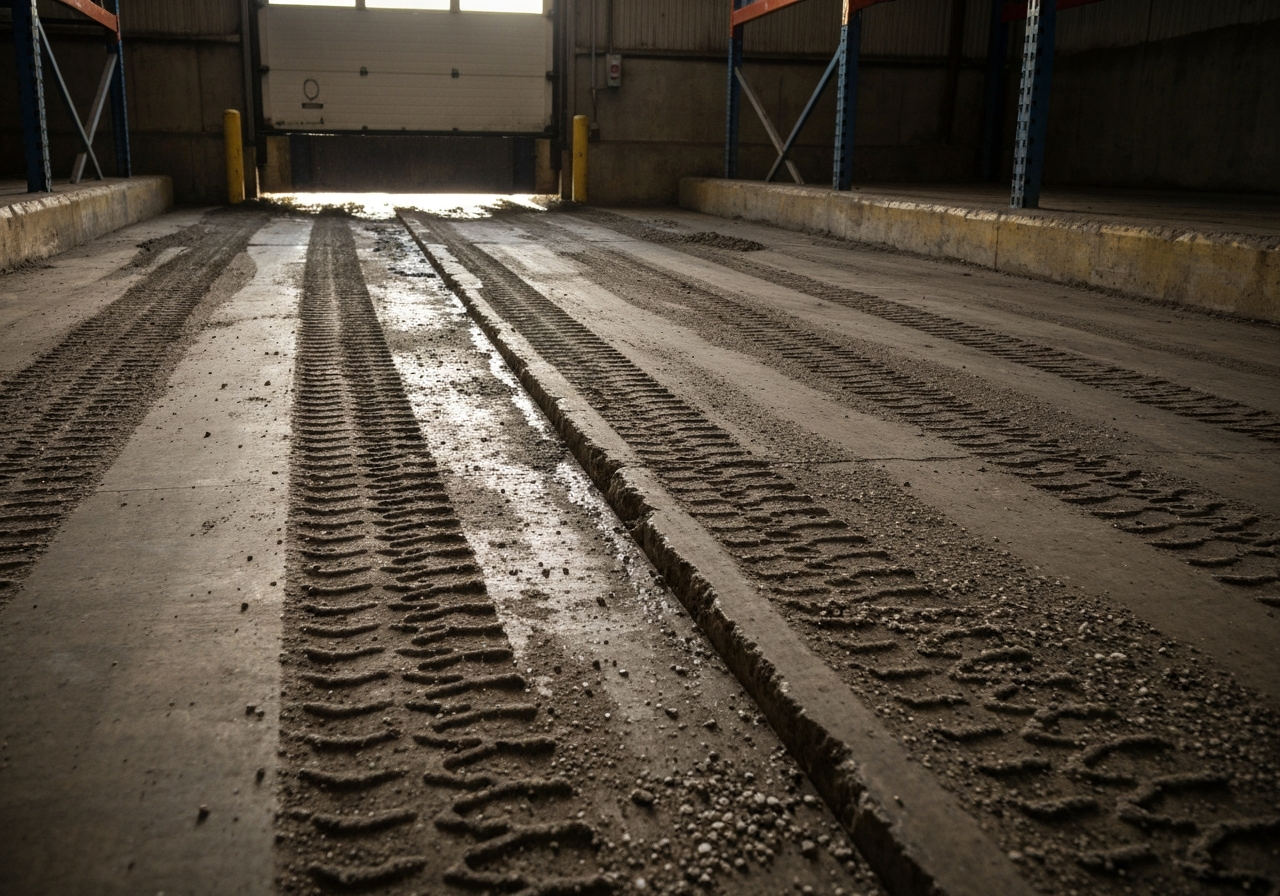
Montana winters make the problem worse. Snow, ice, slush, road salt, and sand get tracked into commercial spaces through overhead doors, walk-in entries, service bays, loading docks, and vehicle storage areas. At loading doors and transitions, thermal swings can stress the slab and coating system as temperatures move from cold exterior conditions to heated interior spaces.
Cleaning routines can also damage a weak surface. Auto scrubbers, degreasers, pressure washing, and repeated wet cleaning can expose bare concrete, lift low-grade coatings, or push moisture into cracks and joints. When the surface is already worn, cleaning takes longer and results become less consistent.
The final pressure is downtime. Commercial floors need repair, but operations often cannot stop for long. That is why Streamline Solutions plans commercial coating work around practical phasing options, including nights, weekends, sections, and realistic cure windows when the project allows. The goal is to protect the floor without creating unnecessary disruption to the business.
Our Commercial Services
Streamline Solutions installs commercial coating systems for existing concrete floors in facilities where durability, cleanability, traction, and downtime matter.
Warehouse & Industrial
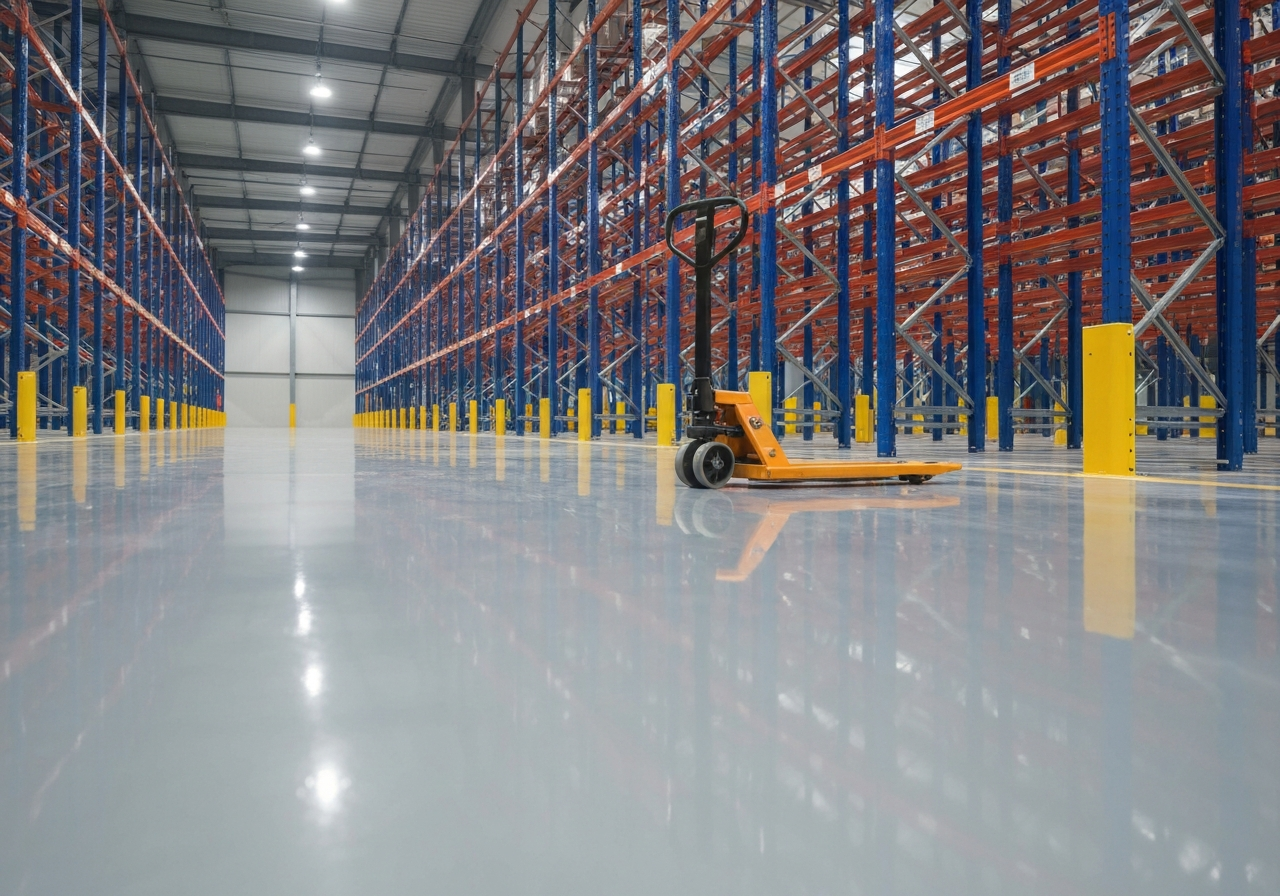
Our warehouse and industrial floor coating systems are designed for facilities that deal with forklift traffic, pallet movement, storage racks, carts, rolling loads, dusting concrete, and frequent cleaning.
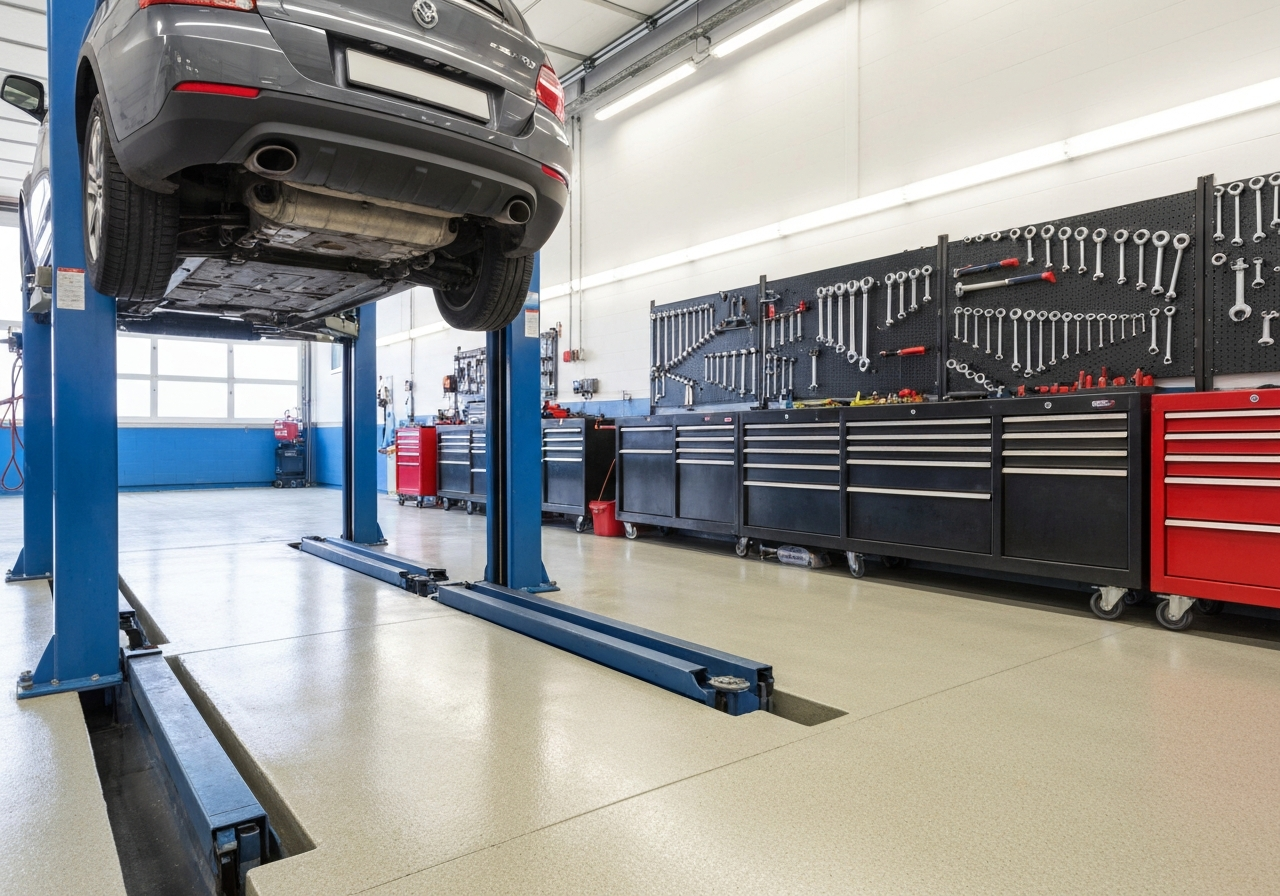
Shop & Service Bay
Our shop and service bay floor coating systems are built for auto shops, fleet bays, repair spaces, equipment areas, and working garages where fluids, tires, jacks, lifts, and tools are part of normal use.
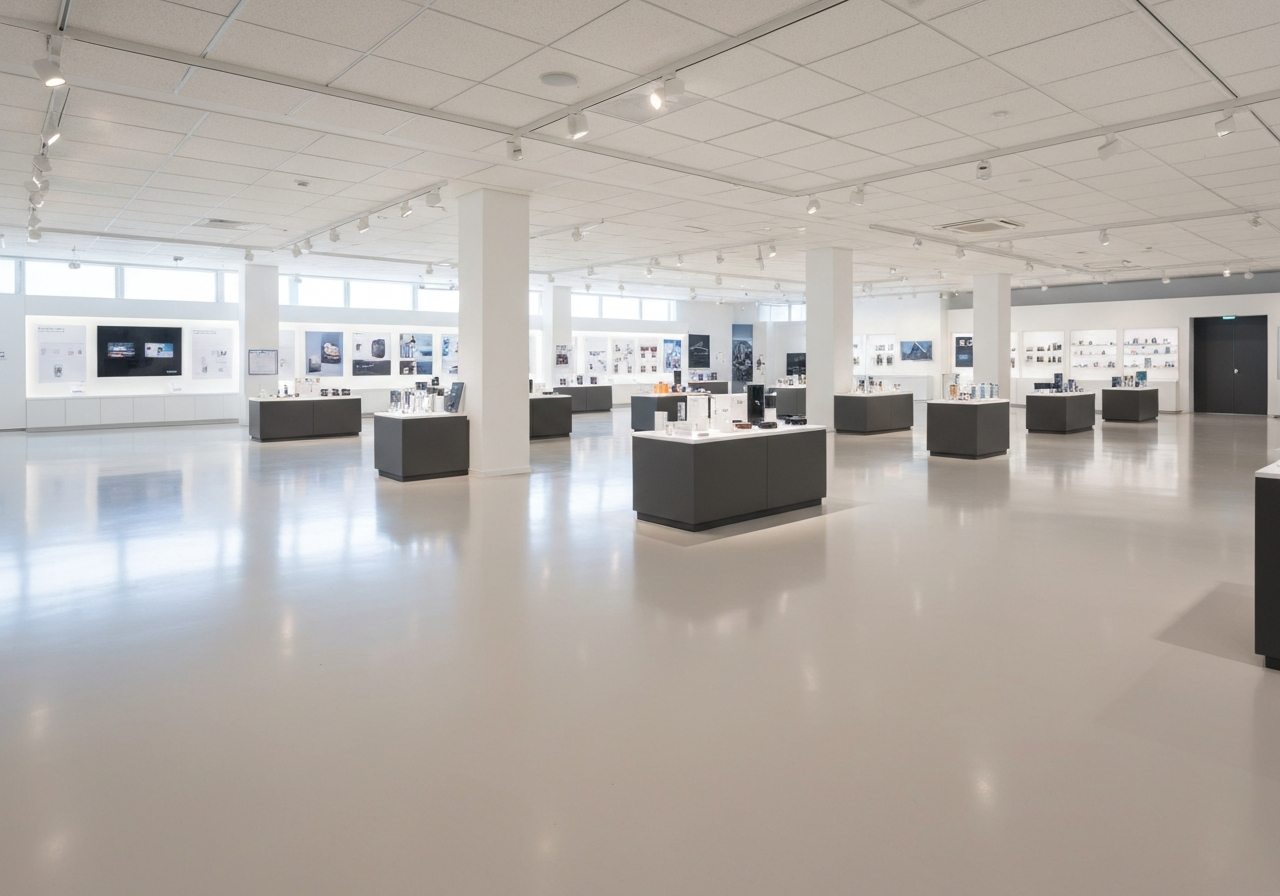
Showroom & Retail
Our showroom and retail floor coating systems help commercial spaces create a cleaner, brighter, more professional customer-facing environment without giving up practical performance.
Commercial projects in Missoula are also handled through our dedicated commercial floor coating Missoula page. Missoula is served for commercial work only.
We protect, restore, seal, and coat existing concrete & paver surfaces — we do not install new slabs, foundations, sidewalks, stamped concrete, or asphalt.
Benefits of Commercial Floor Coating for Operators
Less Downtime Over the Life of the Floor
A failing floor creates downtime in small, repeated ways. Staff spend more time cleaning dust, spills soak into open concrete, worn areas need patching, and damaged sections can interfere with normal traffic flow. A professionally installed coating system helps reduce those recurring interruptions by creating a more durable, sealed surface. For active facilities, we can often discuss phased installation. That may mean coating sections, scheduling around operating hours, or planning work over nights or weekends when the system and site conditions allow.
Lower Cleaning and Maintenance Cost
Bare concrete is porous. Once oil, salt, dirt, and fluids get into the surface, cleaning becomes slower and less predictable. Commercial coating systems create a sealed surface that is easier to scrub, mop, squeegee, or maintain with standard cleaning equipment. This does not mean the floor becomes maintenance-free. It means the maintenance process becomes more efficient because spills stay closer to the surface and dusting concrete is reduced.
A Brighter, More Functional Work Environment
Commercial coatings can improve light reflectivity, especially in warehouses, shops, showrooms, service areas, and back-of-house spaces. A brighter floor can make the space feel cleaner and easier to work in. In some buildings, better floor reflectivity can also support visibility around equipment, storage areas, workstations, and customer-facing zones. For showrooms and retail environments, appearance matters more than in a warehouse. Still, the business case is practical: a clean, reflective, well-maintained floor can support customer confidence and help the space look more organized.
Safer Traction Where It Matters
Commercial floors need the right balance between cleanability and slip resistance. A surface that is too smooth may become slick when wet. A surface that is too aggressive may be harder to clean, especially in food, retail, or high-detail spaces. Streamline Solutions can use quartz, flake broadcast, or traction additives depending on the environment. Service bays, loading areas, shop floors, and wet entries often need more texture than a dry showroom or storage area.
Better Resistance to Chemicals, Fluids, and Road Salt
Commercial epoxy and polyaspartic systems can be selected for resistance to common commercial exposures. This may include oils, automotive fluids, cleaners, deicers, tracked-in road salt, snowmelt, and general shop contamination. No coating is indestructible, and chemical resistance depends on the system specification, exposure time, concentration, and maintenance routine. The right system helps prevent common spills from becoming permanent damage when they are cleaned in a reasonable timeframe.
Longer Service Life for the Existing Slab
The slab is the foundation of the workspace. Once it starts dusting, spalling, cracking at joints, or absorbing contaminants, the cost of ownership goes up. A commercial coating system helps protect the surface from ongoing wear and makes the slab easier to maintain. Before coating, we address surface conditions that could affect performance. That may include mechanical grinding, crack treatment, spall repair, joint evaluation, and moisture testing when needed.
Typical commercial coating system layer stack showing the progression from prepared slab to protective topcoat.
Epoxy, Polyaspartic, Quartz, and Flake Broadcast
Commercial floor coating is not one product. It is a system. The right specification depends on traffic, exposure, cleaning requirements, downtime, slab condition, and the level of traction needed.
Commercial Epoxy Flooring
Commercial epoxy flooring is often used as a build coat because it can create thickness, strength, and adhesion when installed over a properly prepared slab. Epoxy is a good option for many warehouses, shops, mechanical rooms, service areas, and commercial back-of-house spaces where durability and film build matter. The tradeoff is cure time. Epoxy systems may require longer windows before heavy traffic, depending on temperature, humidity, product selection, and system thickness. For many commercial projects, epoxy works best when the schedule allows enough time for proper installation and cure.
Polyaspartic Topcoats
Polyaspartic coatings are often used as high-performance topcoats because they cure faster than many traditional systems and can provide strong abrasion resistance, UV stability, and cleanability. They are useful when a commercial floor needs a faster return to service or when the top layer needs strong wear performance. The tradeoff is that fast-cure materials require careful installation. They are not a shortcut for poor prep. The slab still needs mechanical grinding, cleaning, repair, and correct timing between coats.
Quartz Broadcast Systems
Quartz broadcast systems are useful in commercial environments where traction, durability, and a more aggressive surface profile are important. Quartz can be a strong fit for service bays, wet areas, loading zones, food and beverage back-of-house areas, and workspaces where slip resistance matters. The tradeoff is cleanability. More texture usually improves grip but can make fine-detail cleaning more involved. The right broadcast level should match the actual use of the space.
Flake Broadcast Systems
Flake broadcast systems can work well in showrooms, retail spaces, commercial garages, customer-facing service areas, and multi-use facilities. Flake helps create visual consistency, hide minor surface variation, and add texture without making the floor feel overly industrial. The tradeoff is that flake systems still need to be specified correctly for traffic and chemical exposure. A showroom floor and a working service bay may look similar from a distance, but the performance requirements can be very different.
For residential concrete coating projects, visit our concrete coating page. This commercial page is focused on B2B spaces, facility operations, and existing commercial slabs.
Our Commercial Floor Coating Process
Site walk and moisture testing.
We begin by looking at the existing slab, traffic patterns, cleaning routine, exposure risks, joints, cracks, spalls, and operational constraints. When moisture may be a concern, we discuss testing and system options before coating.
Mechanical grinding and surface preparation.
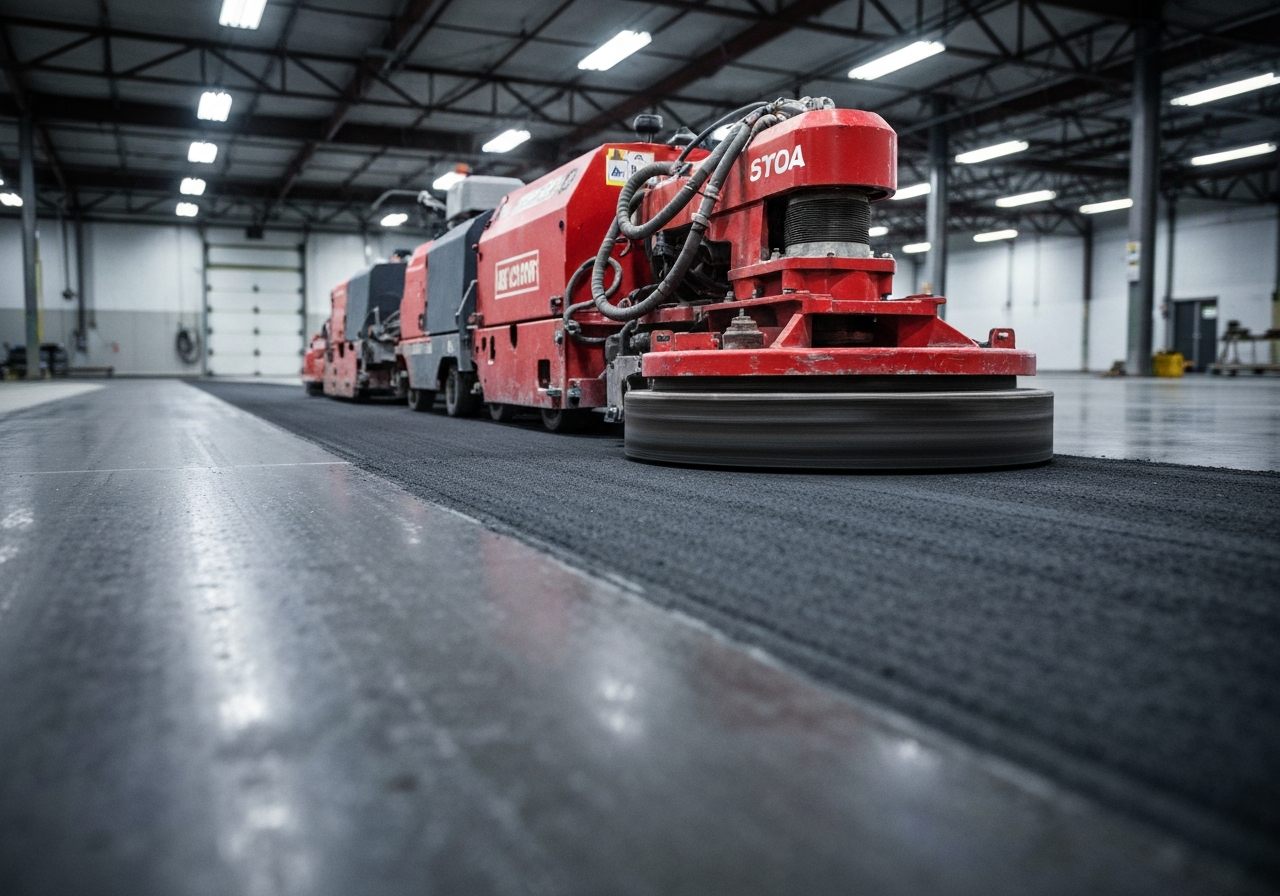
A commercial coating is only as reliable as the surface preparation underneath it. We mechanically grind the existing concrete to open the surface, remove weak material, and create a profile that helps the coating bond correctly.
Repairs, spalls, cracks, and joints.
Before the coating system is installed, damaged areas need attention. This may include filling spalls, treating cracks, evaluating control joints, and addressing areas that could telegraph through or compromise the finished system.
System installation.
We install the specified commercial system based on the needs of the facility. That may include epoxy build coats, polyaspartic topcoats, quartz broadcast, flake broadcast, or traction additives depending on the use of the space.
Cure, turnover, and phasing.
Cure time depends on the system, temperature, humidity, slab condition, and traffic type. For active facilities, we can discuss phased installation, night work, weekend scheduling, or section-by-section turnover when the project allows.
Industries and Where We Install
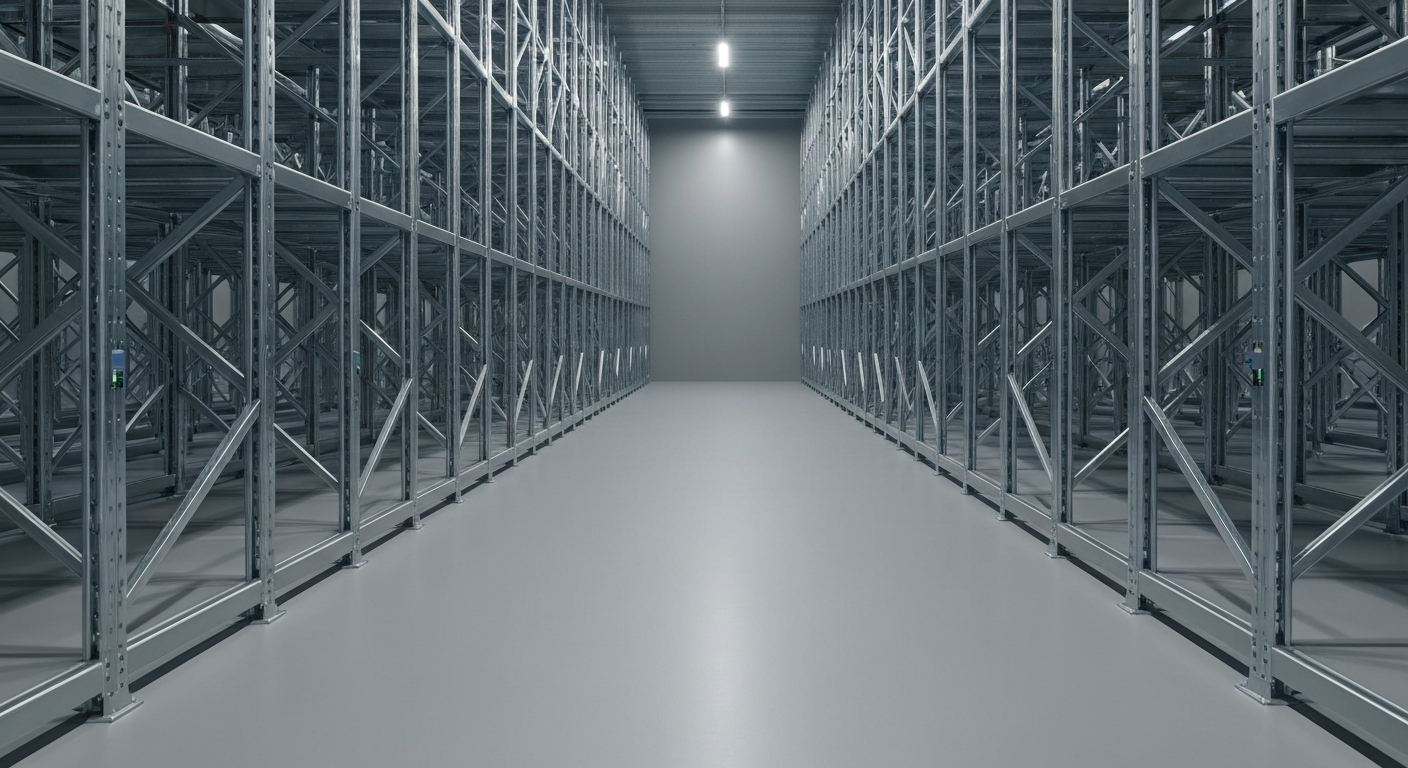
Warehouses & Distribution Spaces
Warehouses and distribution areas need floors that can handle forklifts, pallet jacks, storage racks, carts, and repeated loading cycles. Our warehouse and industrial floor coating systems are designed around abrasion resistance, dust control, cleanability, and long-term slab protection.
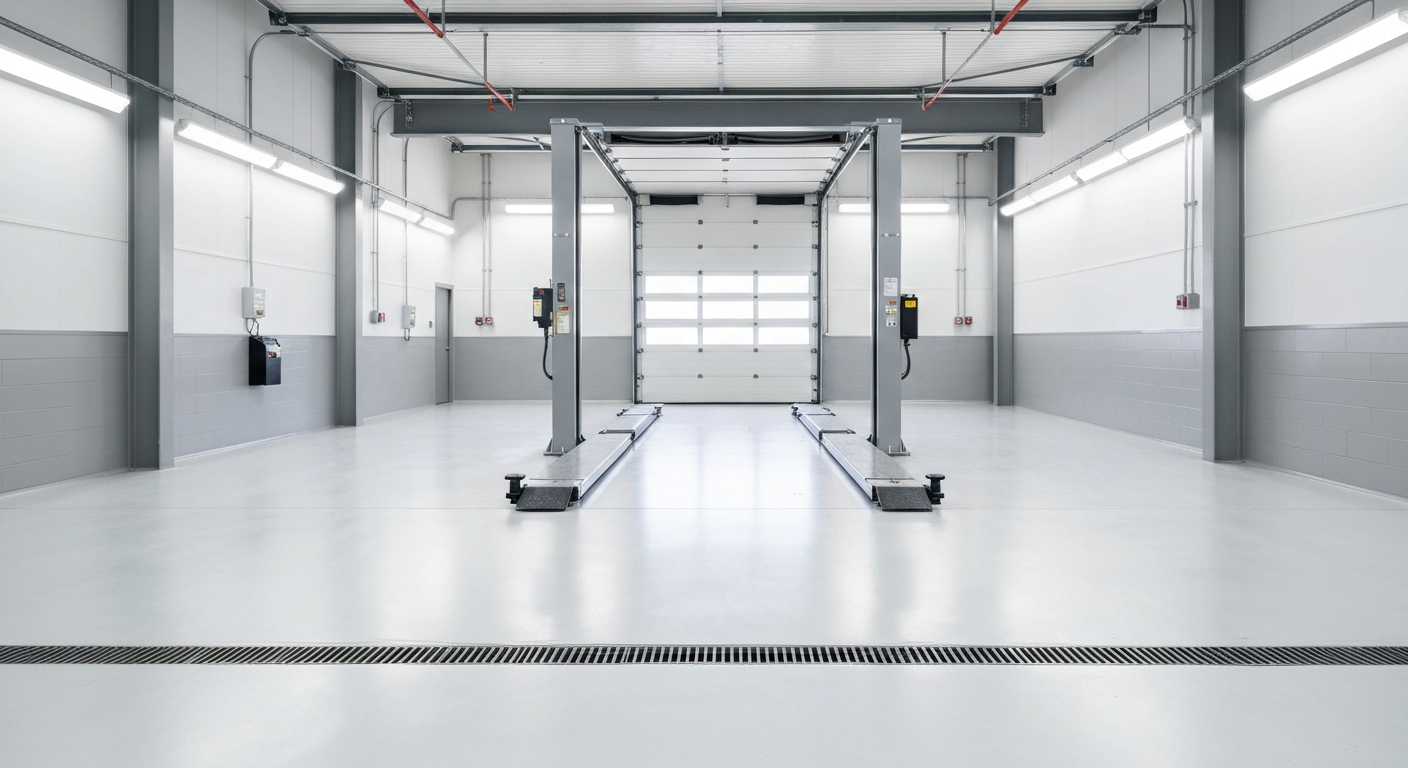
Auto Shops & Service Bays
Auto shops, fleet facilities, tire shops, equipment service areas, and repair bays need floors that can stand up to fluids, tires, jacks, lifts, and cleaning chemicals. Our shop and service bay floor coating systems focus on traction, chemical resistance, and practical return-to-service planning.
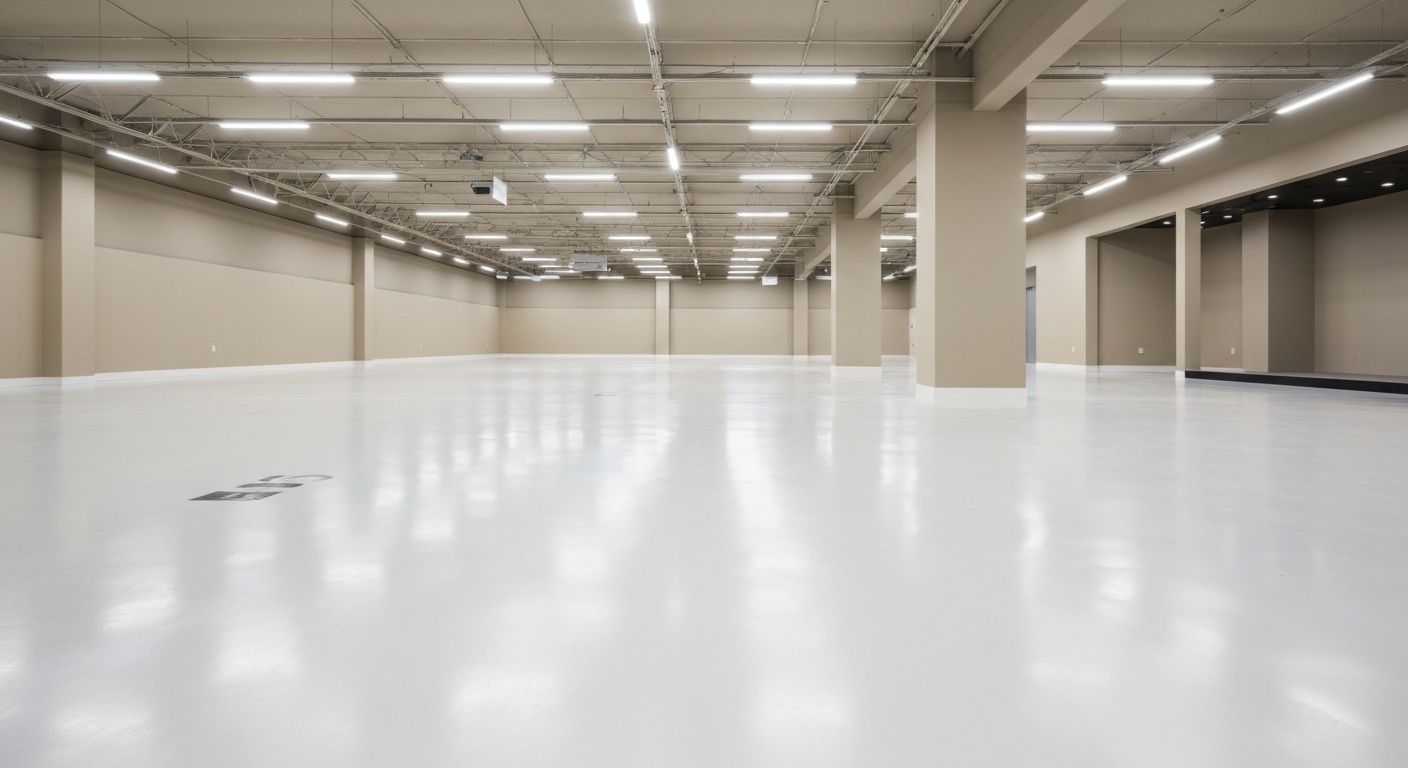
Showrooms & Retail Spaces
Showrooms and retail spaces need a professional appearance, but they still need commercial performance. Our showroom and retail floor coating systems are built for customer-facing environments where cleanability, reflectivity, and a finished look matter.
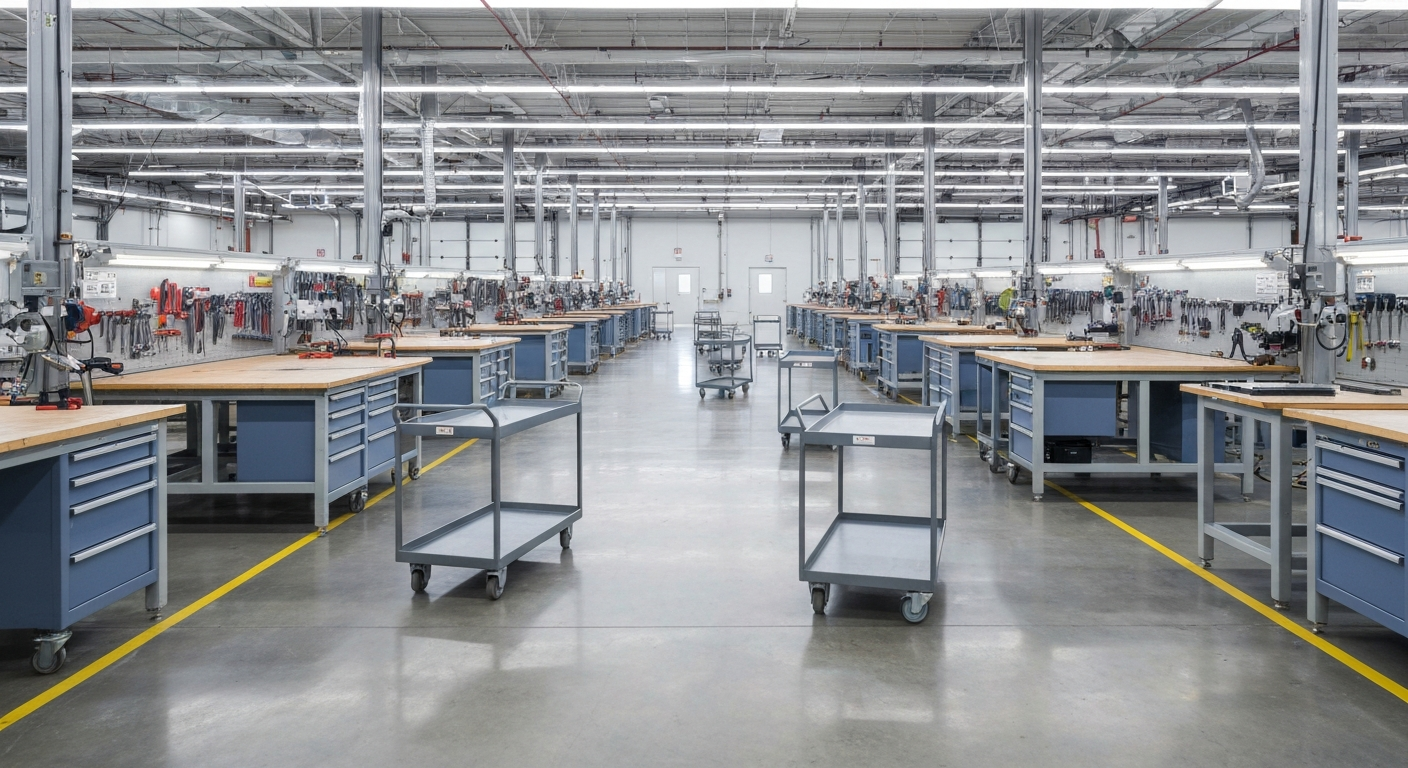
Shops & Fabrication Areas
Fabrication spaces, maintenance shops, and production areas can expose floors to rolling loads, sparks, debris, oils, parts, and tool traffic. These environments usually need a more durable system than standard paint or a thin coating.
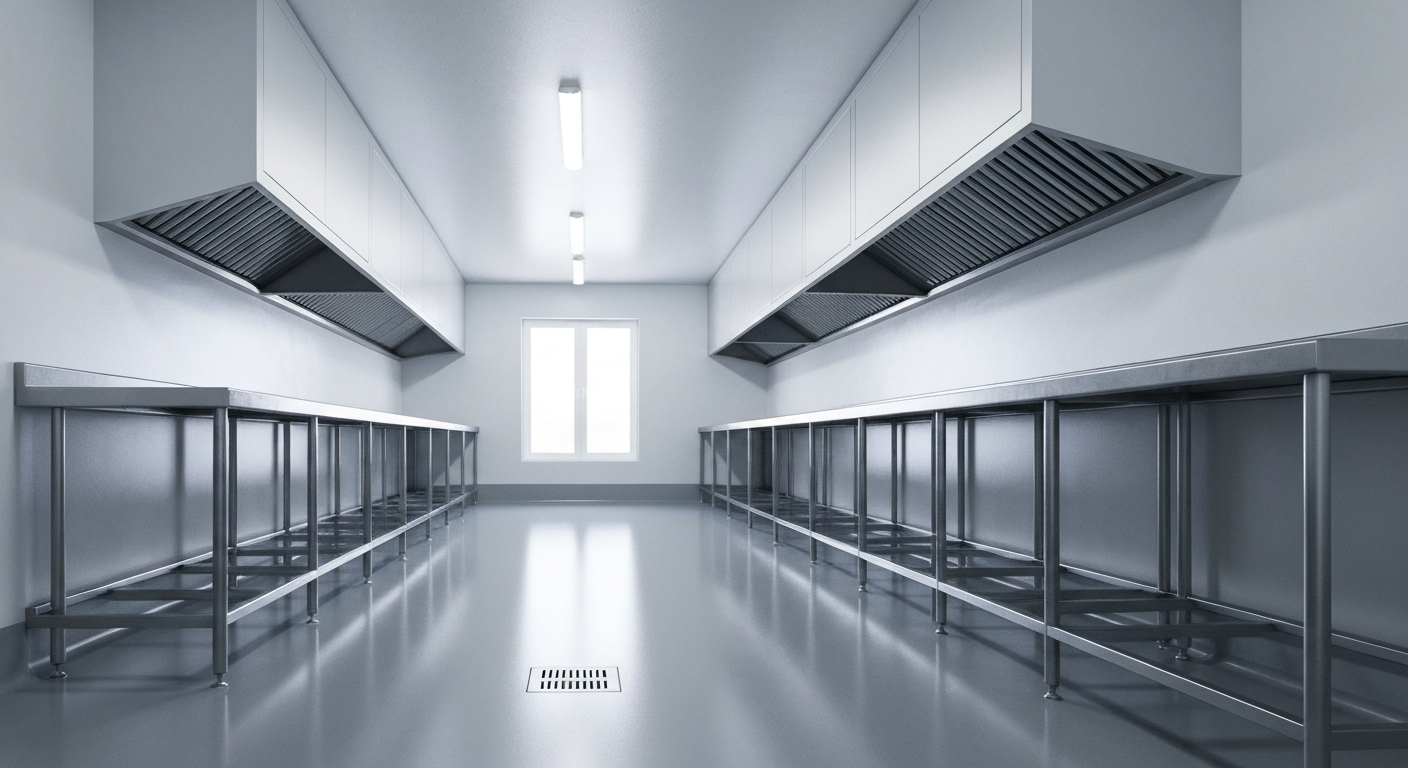
Food & Beverage Back-of-House Areas
Back-of-house commercial spaces need floors that are easier to clean and better suited for moisture, spills, and frequent sanitation routines. Depending on the operation, traction and chemical resistance may be more important than appearance.
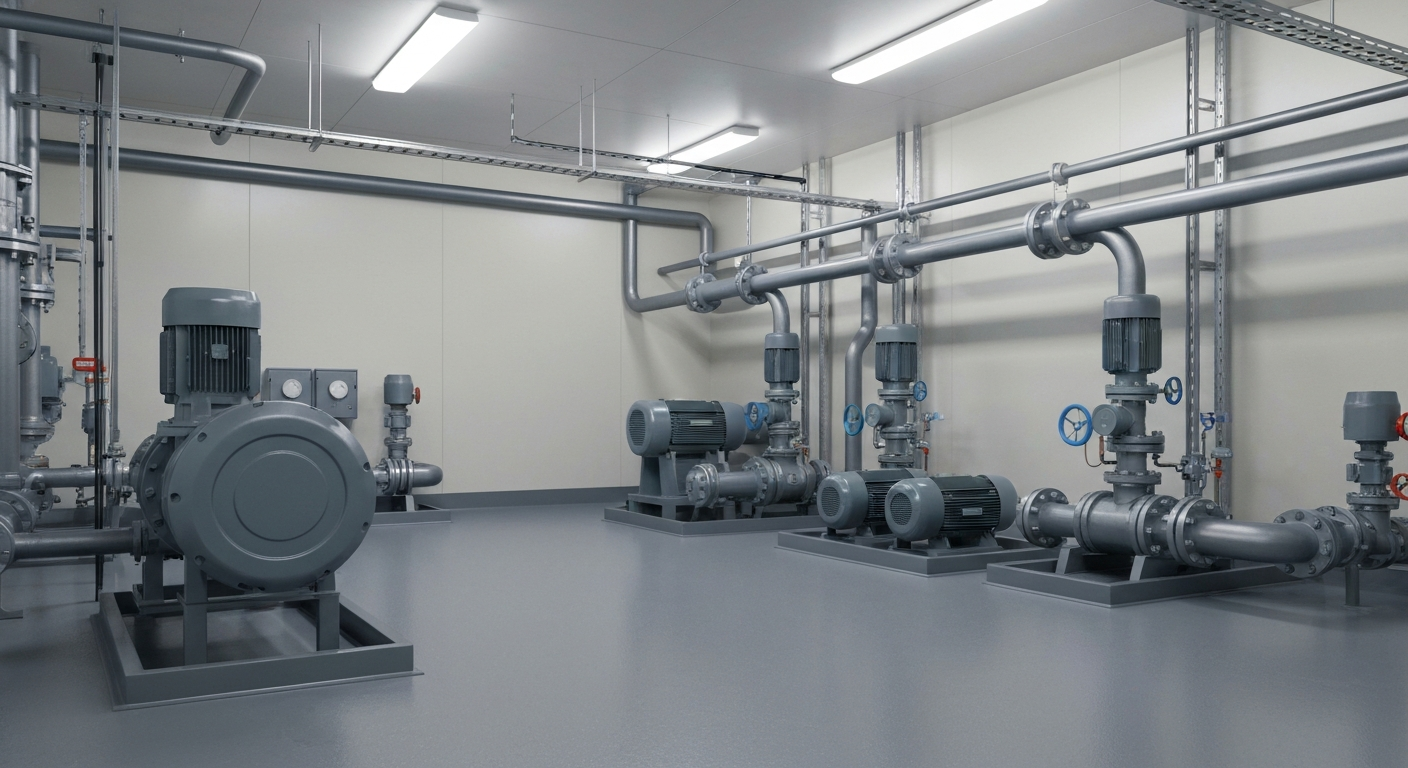
Mechanical Rooms and Utility Areas
Mechanical rooms, utility spaces, and equipment rooms often get overlooked until the floor is stained, dusty, or difficult to clean. A commercial coating system can help protect the slab, improve visibility, and make routine maintenance cleaner.
Professional Commercial Coating Systems vs Paint or DIY Epoxy Kits
Paint and DIY epoxy kits may look appealing because the upfront material cost is lower. For commercial facilities, that lower cost often disappears quickly when the floor begins peeling, scratching, dusting, or staining under real use.
Most floor paint is thin. It does not provide the build, bond, abrasion resistance, or chemical resistance needed for forklifts, carts, service vehicles, auto scrubbers, road salt, snowmelt, and daily operations. In a facility setting, a failed coating can also create operational disruption because the floor has to be reworked sooner.
A professional commercial coating system starts with mechanical preparation. The surface is ground, cleaned, repaired, and specified around actual use conditions. That preparation is one of the biggest differences between a temporary surface treatment and a commercial floor system.
For facility managers, the better question is not "What is the cheapest way to cover the floor?" The better question is "What system reduces cleaning time, protects the slab, supports safety, and keeps the building operating with the least disruption over time?"
| Feature | Professional Commercial System | Paint / DIY Kit |
|---|---|---|
| Film Build | High-build systems specified for traffic | Thin application, quickly wears through |
| Prep Method | Mechanical diamond grinding | Acid wash or light sanding |
| Abrasion Resistance | Forklift and cart rated | Peels under hot tires and heavy loads |
| Chemical Resistance | High resistance to oils, fluids, and salt | Stains and softens easily |
| Downtime Risk | Planned, reliable return-to-service | Unpredictable, frequent re-application |
| Cost of Failure | Long-term investment protects the slab | High operational disruption when it fails |
Where We Serve
Streamline Solutions serves commercial floor coating clients throughout the Flathead Valley, Northwest Montana, and selected commercial projects in Missoula.
We also serve Flathead County, the Flathead Valley, and broader Northwest Montana for qualified commercial coating projects. Because we are a service-area business with no storefront, commercial site evaluations are handled by appointment. Call 406-909-4342 to discuss your building, slab condition, square footage, and scheduling needs.
Commercial Floor Coating Cost
Commercial floor coating pricing depends on the condition of the existing slab, square footage, system specification, access, repairs, moisture concerns, traction needs, and downtime requirements. Larger open areas may price more efficiently per square foot than smaller spaces with heavy repairs, tight access, or complex phasing.
As a general planning range, many commercial floor coating projects fall somewhere around $6 to $12+ per square foot. Heavy-duty systems, significant surface repair, joint work, moisture mitigation, quartz broadcast, multiple mobilizations, or tight night/weekend scheduling can increase the price. Simpler open areas with good access and a slab in better condition may be closer to the lower end of the range.
The main cost drivers are:
- • Total square footage and layout complexity
- • Existing coating removal or surface contamination
- • Crack, spall, and joint repair needs
- • Moisture conditions in the slab
- • Epoxy, polyaspartic, quartz, or flake system selection
- • Required traction profile
- • Cure time and return-to-service requirements
- • Phasing, nights, weekends, or section-by-section installation
The most accurate way to price a commercial floor is to review the site, understand the use of the space, and match the system to the operating conditions. For a commercial quote, call 406-909-4342.
Pros and Cons of Commercial Coating Systems
Pros
Commercial coating systems can be a strong investment when the slab is structurally suitable and the system is matched to the facility. The biggest advantages are improved cleanability, reduced concrete dusting, better light reflectivity, improved traction options, chemical resistance, and longer service life for the existing slab. They also create a more professional work environment. In customer-facing spaces, the floor can support the overall impression of the business. In working facilities, the floor can make maintenance more predictable and reduce the frustration of constantly cleaning porous concrete.
Cons
The tradeoffs are real. Commercial coating systems require proper preparation, realistic downtime, and a clear understanding of how the floor will be used. They are not ideal for every slab, especially if moisture vapor, severe structural movement, or major substrate failure is present. A good result depends on the full system, not just the topcoat. That includes evaluation, prep, repairs, material selection, installation timing, cure conditions, and maintenance after turnover.
Best For vs. Not Recommended For
Best For
Commercial floor coating is a good fit for existing concrete floors in warehouses, shops, service bays, showrooms, retail spaces, mechanical rooms, back-of-house areas, equipment rooms, and light industrial spaces. It is especially useful when the business needs a cleaner, brighter, more durable surface that can handle traffic, fluids, cleaning, and Montana winter contamination. It is also a strong option when the slab is still usable but has become harder to maintain. If the floor is dusty, stained, lightly spalled, worn, or difficult to clean, a coating system may extend its service life and improve day-to-day operations.
Not Recommended For
Commercial coating is not a replacement for a failed structural slab. If the concrete is moving severely, breaking apart, heaving, or affected by major moisture issues, those conditions need to be evaluated before any coating system is considered. It is also not recommended when a business cannot allow the required preparation, installation, or cure window. Fast-cure systems can reduce downtime, but every system still needs a realistic path to installation and turnover.
Our Recommendation
For most commercial spaces in Western Montana, the right floor system starts with an honest look at use, traffic, moisture, cleaning, and downtime. A warehouse, service bay, showroom, and food back-of-house space should not all receive the same specification just because they are all concrete.
If your existing commercial slab is dusty, stained, hard to clean, or wearing under traffic, a professional coating system can be a practical long-term upgrade. We recommend starting with a site conversation, identifying the actual failure points, and choosing a system that balances durability, cure time, traction, and maintenance.
— Kalispell Concrete Surface Protection Specialists