
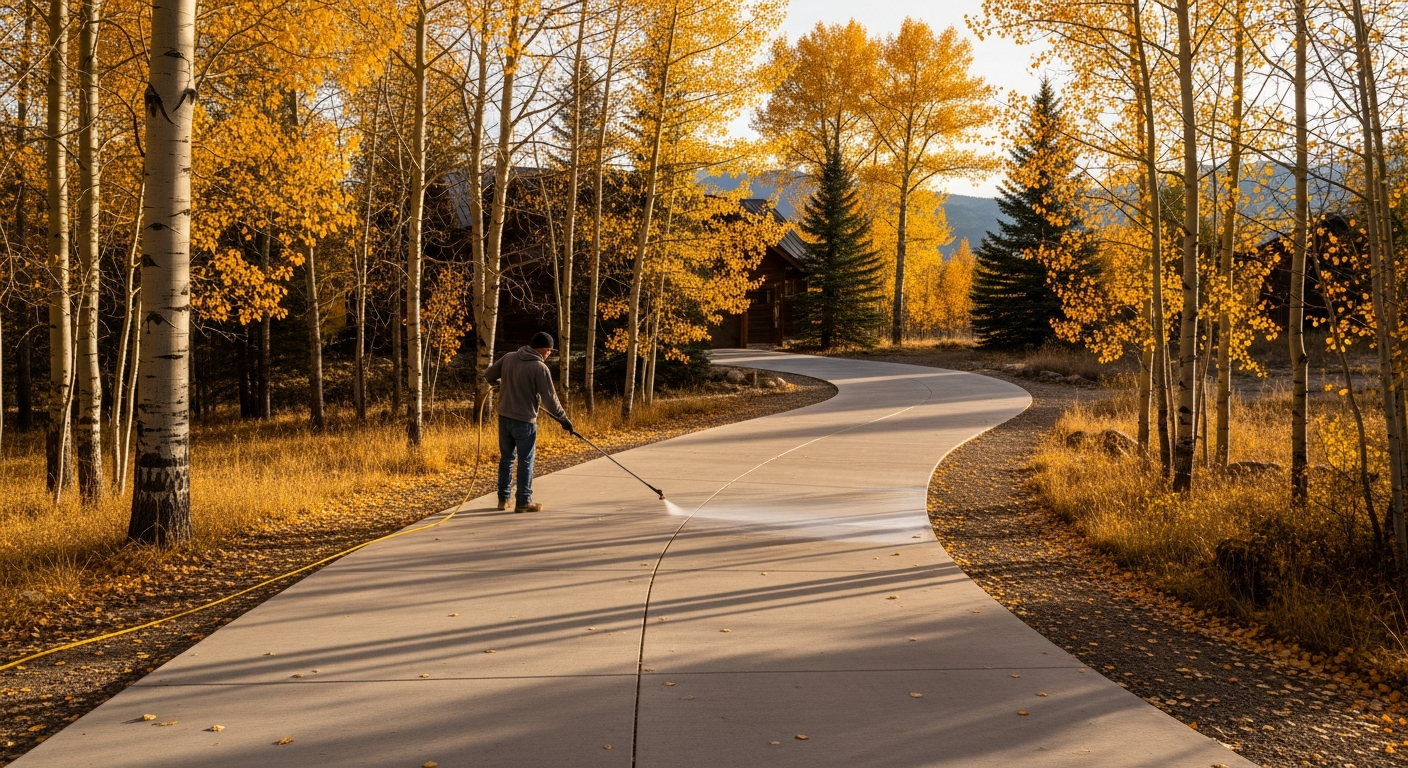
The most effective way to protect concrete before winter in Montana is to clean it, address small cracks and drainage problems, and apply an appropriate sealer while the surface is still dry and warm enough to cure. In the Flathead Valley, that usually means completing the work in late summer or early fall—not waiting until snow is already in the forecast.
These steps reduce water absorption, salt exposure, and freeze-thaw stress. They can extend the useful life of existing driveways, walkways, patios, garage approaches, and pavers, but they do not make damaged surfaces indestructible.
Quick Answer: The Pre-Winter Priorities
A practical winter-preparation sequence is clean, repair, and seal. Remove contaminants, correct minor damage and drainage issues, then seal during a suitable stretch of dry weather before the first hard freeze.
During winter, clear snow promptly, use de-icers sparingly, and rely on sand or grit when traction—not melting—is the primary need.
Why Pre-Winter Concrete Protection Matters in Montana
Concrete contains small pores that can absorb rain, snowmelt, wash water, and salty road slush. When that moisture freezes, it expands and places pressure on the surrounding cement paste. Repeated freezing and thawing can gradually contribute to scaling, flaking, popouts, joint deterioration, and widening cracks.
The risk is greater when a surface remains wet for long periods. Snow piled against a slab can melt during the day, soak the surface, and refreeze overnight. Vehicles can also carry road salt and brine onto driveways and garage floors even when no de-icer is applied directly to the property.
Winter preparation focuses on reducing those exposures before cold weather arrives.
Pre-Winter Checklist for Concrete and Pavers
The correct treatment depends on the condition of the surface, but most winter-preparation projects follow the same basic order.
1. Clean the Surface Thoroughly
Sealers and repair materials need a clean, properly prepared surface. Dirt, algae, oil, leaf residue, fertilizer, moss, tire marks, and old coatings can prevent a product from penetrating or bonding as designed.
Begin by removing loose debris with a broom or blower. Pay particular attention to:
- Control joints and expansion joints
- Cracks that collect dirt
- Low areas where water stands
- Garage-door entrances
- Driveway aprons near the road
- Shaded patios and walkways
- Paver joints containing weeds or organic growth
Remove Oil and Automotive Residue
Oil requires more than a quick rinse. A compatible concrete cleaner or degreaser may be needed, followed by agitation and thorough rinsing. Old stains may not disappear completely, but active residue should be removed before sealing.
Avoid spreading oily wash water into lawns, storm drains, or neighboring areas. The cleaning method should match the contaminant and the surrounding site.
Remove Organic Staining
Leaves, berries, algae, moss, and soil can leave tannins or biological growth behind. These areas should be cleaned before winter because organic material retains moisture and can conceal early surface deterioration.
Shaded north-facing slabs often need extra drying time after washing.
Use Pressure Carefully
Pressure washing can be useful, but more pressure is not automatically better. Aggressive tips held too close to the surface can etch sound concrete, remove weak paste unevenly, disturb paver joint sand, or enlarge existing damage.
The objective is a uniformly clean surface—not a visibly scarred one.
Allow Enough Drying Time
A surface can look dry while moisture remains in pores, cracks, joints, or shaded sections. Applying sealer too soon can lead to poor penetration, whitening, bubbling, uneven appearance, or premature failure, depending on the product.
Drying time should be based on the weather, surface porosity, shade, recent washing, and the sealer manufacturer's requirements.
2. Repair Small Cracks, Joints, and Minor Surface Damage
Winter moisture often enters through the weakest parts of a slab. Small cracks, open joints, broken edges, and isolated surface defects should be reviewed before sealing.
Address Small, Stable Cracks
A narrow, stable crack may be suitable for a compatible crack-repair material. The repair product should be selected for the crack width, expected movement, exposure, and whether the surface will later be sealed.
Crack repair has limits. A filler may reduce direct water entry, but it cannot stop slab movement, correct settlement, or restore failed base support.
Cracks with vertical displacement, active widening, repeated movement, or surrounding breakup need more than a routine cosmetic fill.
Treat Joints According to Their Purpose
Control joints and expansion joints are designed to accommodate movement. They should not automatically be filled with rigid material.
Loose debris and failed joint material can often be removed and replaced with a compatible flexible sealant where appropriate. The joint depth, width, backing material, and expected movement all affect the repair.
Remove Loose Surface Material
Small scaled or flaking areas should not simply be sealed over. Loose paste and poorly bonded material may need to be removed so the remaining surface can be evaluated.
Sealer does not glue deteriorated concrete back together. If the underlying slab is solid, a localized repair or resurfacing material may be possible. If deterioration is deep or widespread, a surface treatment may not be a durable solution.
Check Paver Joints and Edges
Paver surfaces should be checked for:
- Missing or eroded joint sand
- Loose or rocking units
- Edge restraint movement
- Low areas holding water
- Weed growth
- Efflorescence or surface deposits
- Failed previous sealer
Joint stabilization and drainage should be addressed before applying a paver sealer. Sealing over unstable pavers will not correct movement beneath the surface.
3. Seal Before the First Hard Freeze
Sealing is the main preventive step, but timing and product selection matter.
A penetrating, breathable sealer can reduce the amount of liquid water and salt solution absorbed by existing concrete. Lower absorption means less moisture is available to freeze inside the near-surface pores.
Film-forming coatings and decorative sealers behave differently from penetrating sealers. Some change appearance, increase color depth, or create a visible finish. Others are designed primarily for water repellency with little visible change. The correct option depends on the surface, use, expected traction, previous treatments, and desired appearance.
The Timing Window Is Critical
In the Flathead Valley, late summer through early fall is often the most practical application period. The slab has a better chance to dry, daytime temperatures are usually workable, and there is more opportunity for the product to cure before sustained freezing weather.
Do not apply sealer simply because the calendar says it is fall. Check:
- Surface temperature
- Air temperature
- Overnight lows
- Recent rainfall or washing
- Expected rain or snow
- Dew and frost conditions
- Required curing time
- Product-specific instructions
Some products tolerate cooler conditions better than others, but no sealer should be treated as a last-minute application after the surface is damp, frosted, or snow-covered.
Do Not Seal Over an Unknown Existing Coating
An old coating or sealer may affect adhesion and penetration. Before applying a new product, determine whether the surface has been treated previously and whether the systems are compatible.
A small test area can help identify appearance changes, absorption differences, or compatibility problems.
Understand What Sealing Cannot Do
Sealing can reduce absorption and slow weather-related deterioration. It cannot:
- Stabilize a moving slab
- Correct poor drainage
- Rebuild deep spalling
- Eliminate existing structural cracks
- Restore failed base material
- Prevent every future stain or defect
- Reverse freeze-thaw damage that has already occurred
The goal is risk reduction and longer service life—not an invulnerable surface.
Choose Winter De-Icers More Carefully
No ice-management product is completely harmless when overused. The safest approach is to remove snow promptly, improve traction mechanically, and use the smallest practical amount of chemical de-icer.
| Material | Relative concern for concrete | Best use |
|---|---|---|
| Rock salt or sodium chloride | Can increase moisture and salt exposure, contributing to scaling and surface deterioration | Limited use where melting is necessary and the surface is mature and sound |
| Calcium chloride | Effective at lower temperatures but can still contribute to salt-related damage when overapplied | Targeted melting during colder conditions, following label directions |
| Magnesium chloride | Often marketed as gentler, but repeated or concentrated exposure can still affect concrete and surrounding materials | Careful, limited use with prompt cleanup |
| Calcium-magnesium acetate | Generally considered a lower-corrosion option, though it is usually more expensive and still requires proper use | Sensitive areas where reduced chloride exposure is a priority |
| Sand or traction grit | Does not melt ice and generally presents less chemical risk to concrete | Improving traction on packed snow or ice |
| Plain mechanical removal | Lowest chemical exposure, though aggressive tools can damage surfaces | First-line snow and slush removal |
Use Less, Not More
A thick layer of de-icer does not necessarily melt ice faster. Excess product leaves more concentrated residue on the slab, enters joints, tracks into garages, and can harm vegetation or nearby metal.
Apply only the amount directed on the label. Remove loosened ice and slush instead of allowing the solution to remain on the surface.
Clear Snow Before It Becomes Compacted
Fresh snow is easier to remove than packed snow. Prompt shoveling reduces the need for chemical melting and prevents vehicle traffic from compressing snow into a dense icy layer.
Where safe, allow sunlight and airflow to finish drying the surface.
Use Traction Material When Melting Is Unnecessary
Sand or grit can improve footing without creating salty meltwater. It does not remove ice, so it may need to be swept up later, but it is often a practical choice when immediate traction is the main goal.
What to Avoid Before and During Winter
Several common practices can undermine otherwise sound winter preparation.
- Do not seal damp or cold concrete. Moisture and low temperatures can interfere with penetration, bonding, appearance, and curing.
- Do not wait until snow is falling. Last-minute sealing leaves little margin for weather changes or adequate drying.
- Do not seal over loose flakes. Deteriorated material must be removed and the remaining surface assessed first.
- Do not pile salted snow on the slab. Snow removed from roads and parking areas may contain concentrated chloride residue.
- Do not use metal blades aggressively. Sharp steel edges can chip joints, scratch coatings, and catch on existing defects.
- Do not ignore standing water. Ponding often indicates a drainage, settlement, or grading issue that sealer cannot correct.
- Do not overapply de-icer. More chemical exposure means more residue, saturation, and cleanup.
- Do not assume new-looking concrete is ready for every product. Cure time, moisture content, finishing history, and manufacturer requirements still apply.
Plastic-edged shovels and snow pushers are generally safer around joints, pavers, coatings, and already damaged surfaces.
The Flathead Valley Winter Factor
Winter preparation around Kalispell, Whitefish, Columbia Falls, Evergreen, Bigfork, Somers, Lakeside, and surrounding communities is shaped by a short and variable application season.
Freeze-Thaw Conditions
Concrete does not need to remain frozen all winter to be damaged. Problems often develop when daytime warming creates meltwater and nighttime temperatures refreeze it. South-facing surfaces may warm in direct sun while shaded areas remain frozen, creating different conditions across the same property.
Persistent Snow and Moisture
The concern with accumulated snow is not only its weight. Snow can hold moisture against driveways, patios, walkways, and pavers for extended periods. Partial melting can repeatedly saturate the surface before temperatures fall again.
Road Salt and Vehicle Tracking
Road treatments can be carried onto private property by tires, wheel wells, and vehicle undercarriages. Garage entrances and parking areas often receive the highest concentration of salty slush.
Sweeping or rinsing residue during suitable above-freezing weather can reduce buildup, provided the water can drain and the surface has time to dry before refreezing.
A Narrow Sealing Window
A warm afternoon is not enough by itself. The entire preparation, application, and curing period must fit within the product's temperature and moisture limits.
Completing the work earlier provides room to address stains, make repairs, allow the slab to dry, and adjust for changing weather. Waiting until the first prolonged cold spell removes that margin.
Streamline Solutions' Take
"The most reliable winter plan is simple: begin early, keep moisture out where practical, and avoid creating a salt-saturated surface. Clean and inspect concrete in late summer, address minor defects, and seal only when the slab and forecast meet the product requirements. Once winter starts, prompt snow removal usually does more good than repeated heavy de-icer use."
– Streamline Solutions, Kalispell, MT
How Streamline Solutions Can Help
Streamline Solutions protects and maintains existing concrete and paver surfaces throughout the Flathead Valley. Depending on the condition and use of the area, the work may include winter concrete protection, preventive driveway sealing, other concrete sealing services, or appropriate paver sealing. Additional information about preparation, timing, and service limitations is available in the frequently asked questions. Recommendations are based on the condition of the existing surface, previous treatments, drainage, moisture exposure, and realistic winter performance.
Frequently Asked Questions
Related Guides & Services
Winter Protection
Prepare your concrete before the first Montana freeze and snowmelt.
Driveway Sealing
Keep road salt and slush from destroying your driveway surface.
Concrete Sealing
Protect exterior concrete from water, salt, and freeze-thaw damage.
Paver Sealing
Lock joints, enhance color, and stop weeds on paver surfaces.
FAQ
Answers to common questions about concrete protection in the Flathead Valley.

