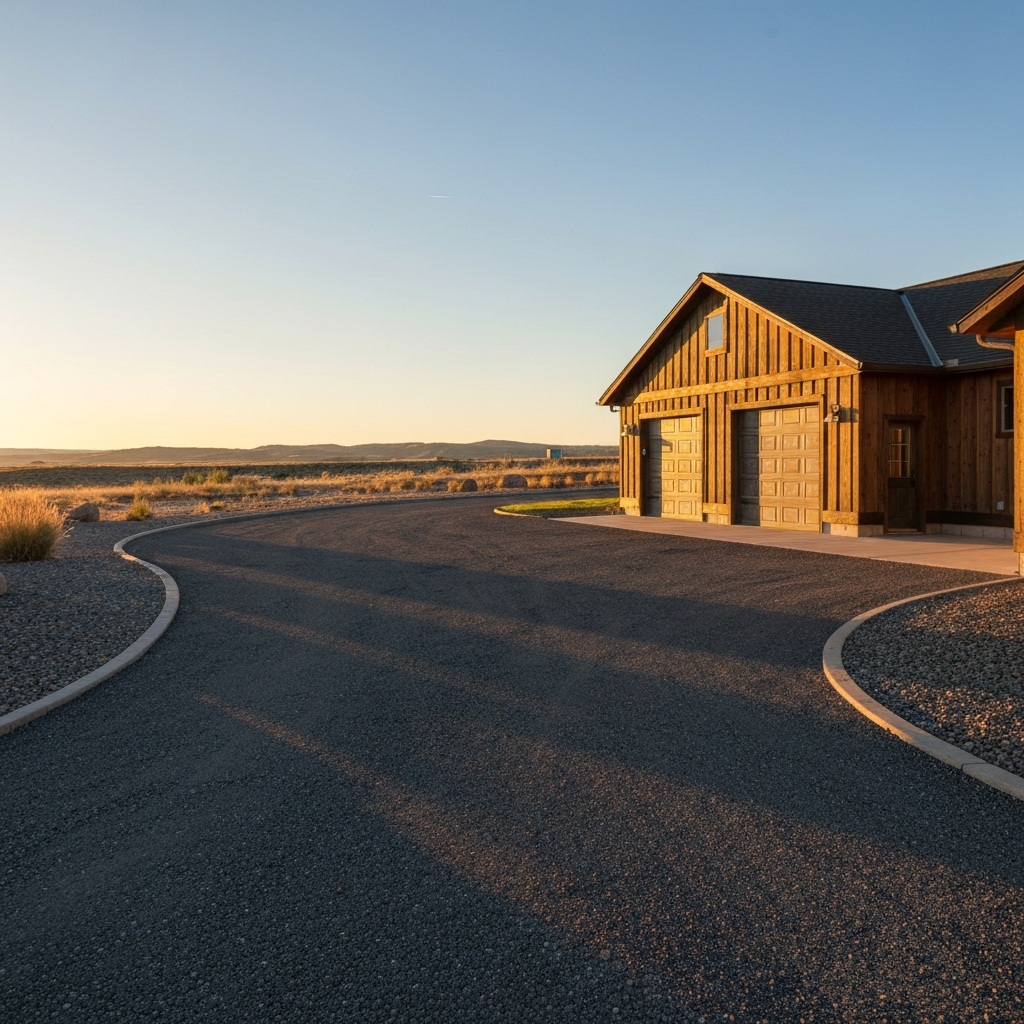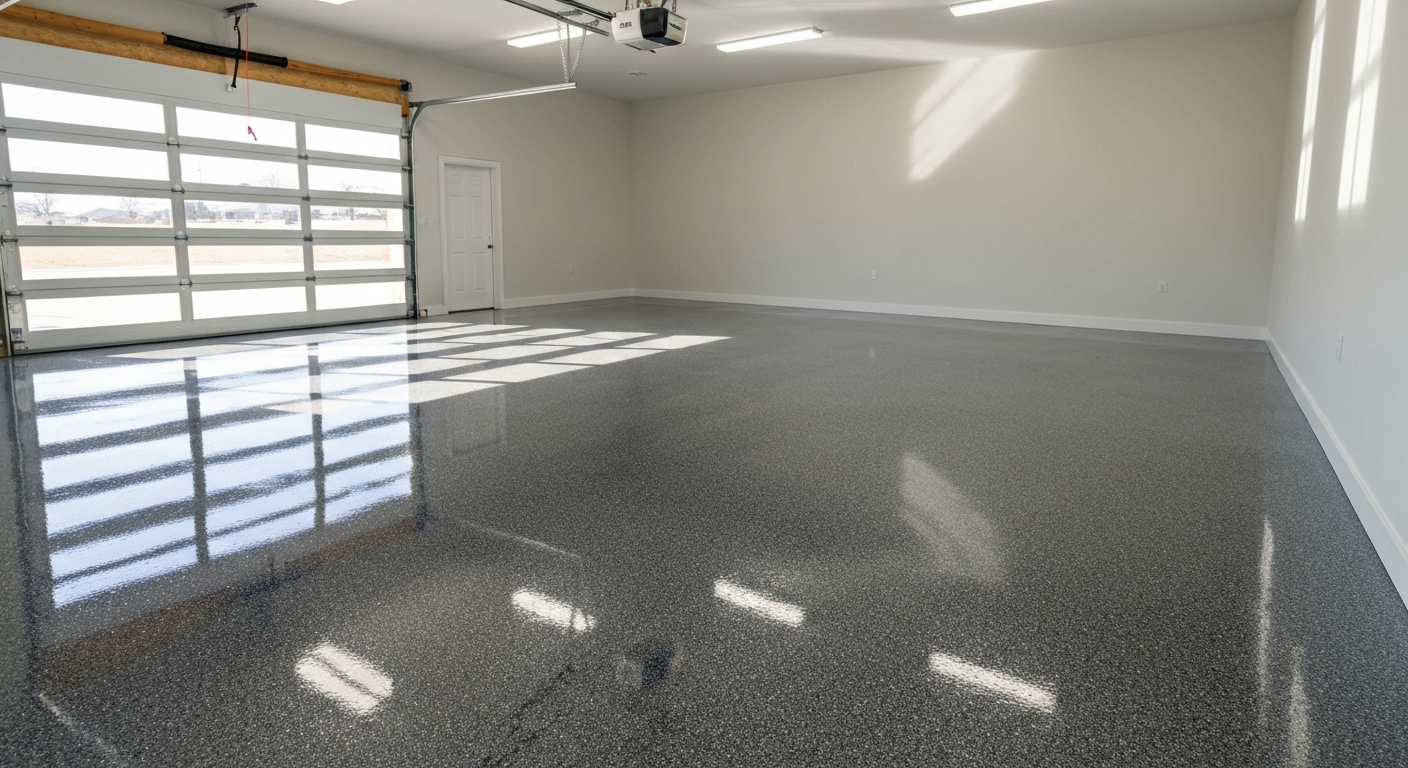
So, is polyaspartic worth it? For a Montana garage, sunny shop, patio, or other high-use surface, the answer is often yes because the added cost buys faster curing, better ultraviolet stability, and strong resistance to abrasion, tire marking, road deicers, and common automotive chemicals. It is not always necessary, however. A properly installed epoxy system may be entirely adequate for a shaded, temperature-stable interior garage with lighter traffic and no urgent return-to-service deadline.
The best value is frequently a hybrid system: an epoxy base coat for adhesion and build, a decorative flake broadcast, and a polyaspartic topcoat where wear, sunlight, and winter residue occur.
Quick Answer: Key Takeaways
- •Polyaspartic is usually worth the premium for cold-weather scheduling, sunny garage bays, exterior applications, frequent vehicle traffic, and limited downtime.
- •Epoxy is often sufficient for a shaded, climate-stable interior garage when budget matters more than cure speed or maximum ultraviolet stability.
- •A hybrid system is often the practical middle ground: epoxy beneath the flakes and polyaspartic at the exposed surface.
- •Preparation still matters most: premium chemistry cannot compensate for contamination, moisture vapor, weak surface material, or an unsuitable slab.
- •"One-day installation" does not always mean immediate parking: final return-to-service timing depends on the exact product and site conditions.
What Is Polyaspartic Floor Coating?
Polyaspartic is a two-component resin coating commonly used as a fast-curing base coat, clear wear coat, or both. In garage applications, it is often installed over a decorative flake broadcast.
The word describes a category of chemistry rather than one universal formula. Working time, cure temperature, thickness, chemical resistance, texture, and vehicle-return timing vary among products.
Polyaspartic materials are commonly selected for their rapid cure, ultraviolet resistance, abrasion resistance, chemical resistance, and suitability as clear coats over flake systems. Some formulations are also designed to resist tire marking and provide more flexibility than a standard rigid epoxy finish.
A common garage-floor build looks like this:
- Mechanically prepare the existing slab.
- Repair suitable cracks and surface defects.
- Apply an epoxy or polyaspartic base coat.
- Broadcast decorative flakes into the wet coating.
- Remove loose flakes and refine the texture.
- Apply a clear polyaspartic topcoat.
- Allow the system to cure for the specified period before traffic.
The flakes provide color variation, texture, and dirt concealment. The surrounding resin provides the actual seal and wear protection.
Polyaspartic vs. Epoxy: What Does the Premium Buy?
Both materials can perform well when matched to the surface and installed correctly. The decision is less about declaring one chemistry universally better and more about deciding which characteristics are worth paying for in a specific garage.
| Decision factor | Polyaspartic | Epoxy |
|---|---|---|
| Cure speed and return to service | Fast cure; many systems can be completed within a day and returned to use sooner | Slower cure; vehicle traffic may require several days depending on the product and temperature |
| Cold-weather installation | Many formulations cure at lower temperatures than standard epoxy, widening the practical installation window | More temperature-sensitive; cool slabs can substantially slow cure |
| UV stability | Aliphatic polyaspartic products generally retain color and clarity well in sunlight | Standard epoxy may amber, chalk, or change color with UV exposure |
| Chemical and salt resistance | Strong resistance to common garage chemicals, deicers, and automotive fluids when the product is rated for them | Good resistance when fully cured, but performance varies by formulation and topcoat |
| Abrasion and tire marking | Well suited to exposed wear coats and regular vehicle traffic | Can perform well, although a separate wear coat may improve long-term appearance |
| Flexibility and freeze-thaw conditions | Somewhat more accommodating of minor thermal movement than rigid epoxy | Generally more rigid |
| Working time during installation | Short; requires efficient mixing, broadcasting, and rolling | Longer; can be easier to place evenly and use beneath a flake broadcast |
| Relative cost | Higher | Lower |
| Best fit | Cold climates, sunny bays, patios, faster turnaround, heavier use | Protected interior spaces, tighter budgets, lower traffic, longer available cure time |
Polyaspartic's faster cure is both an advantage and a cost factor. Materials must be staged, mixed, placed, rolled, and broadcast within a shorter working period. That requires coordinated labor and leaves less room to correct missed areas or uneven application.
The coating itself is also generally positioned as a premium material. Many projects sold as polyaspartic floors include mechanical preparation, repairs, a full flake broadcast, and one or more protective coats. Part of the price difference therefore comes from the complete system—not simply the name of the resin.
When Is Polyaspartic Worth It?
When the garage cannot remain empty for several days
Fast return to service is one of the clearest reasons to pay more. A household with limited parking, a working shop, or a business bay may not be able to leave the space unused while standard epoxy cures.
Many polyaspartic systems cure within hours and can support a much faster return to service than conventional epoxy. The exact parking time still depends on slab temperature, air temperature, humidity, coating thickness, and the selected product.
A "one-day floor" should mean the coating process can often be completed in one working day. It should not be interpreted as permission to park immediately after the final roller pass.
When sunlight reaches the floor
Standard epoxy can discolor under repeated ultraviolet exposure. The most visible change often occurs at the garage entrance, beneath windows, or in areas exposed whenever the overhead door remains open.
A UV-stable polyaspartic topcoat is usually worth considering in:
- •South- or west-facing garage bays
- •Workshops with large windows
- •Covered patios
- •Exterior walkways
- •Areas extending beyond the garage-door line
- •Floors where long-term color consistency matters
Aliphatic polyaspartic products are specifically used where color retention and UV resistance are required.
Polyaspartic should still be selected for the intended exposure. A product approved only for interior use should not be assumed suitable for an uncovered exterior surface.
When winter residue is unavoidable
Vehicles in the Flathead Valley carry snow, sand, water, sodium chloride, magnesium chloride, and other winter-maintenance residue into garages.
Montana's Department of Transportation explains that chloride materials lower water's freezing temperature and help prevent ice from bonding strongly to roads. Those materials can later collect on a garage floor as melting slush.
A properly selected polyaspartic topcoat offers strong chemical and abrasion resistance, which is useful where salty water and grit repeatedly collect beneath tires. It is not maintenance-free. Standing slush and concentrated residue should still be removed rather than left to dry repeatedly on the finish.
When the surface receives regular abrasion
Road grit, vehicle traffic, rolling toolboxes, lawn equipment, floor jacks, and routine shop use gradually wear any finish.
Polyaspartic is often worth the premium when the exposed coat needs to tolerate regular abrasion while maintaining its appearance. Manufacturer guidance describes polyaspartic flooring as highly resistant to abrasion, chemicals, and heavy wear.
No thin coating is indestructible. Sharp steel edges, dragging equipment, snowmobile carbides, welding slag, and concentrated loads can damage any resin floor.
When the installation window is limited
Montana's usable installation window can be narrow, especially in an unheated or intermittently heated garage. Standard epoxy may cure too slowly when slab temperatures fall.
Some polyaspartic formulations are specifically designed for low-temperature cure as well as fast return to service. That does not mean they can be applied to frozen or wet concrete. The surface temperature, air temperature, humidity, dew point, and moisture condition must remain within the product's limits.
When Straight Epoxy Is Plenty
Polyaspartic is not automatically the best value for every floor.
A quality epoxy system may be a sensible choice when:
- •The garage is fully enclosed and shaded.
- •The space remains within a stable temperature range.
- •Vehicle and foot traffic are relatively light.
- •A few extra cure days are manageable.
- •The floor has little direct sunlight.
- •The budget is firm.
- •Appearance matters more than rapid return to service.
- •The epoxy will be protected by a suitable clear coat.
Epoxy provides useful working time, substantial film build, and good adhesion to correctly prepared concrete. Those characteristics make it especially useful as the base beneath decorative flakes.
A professionally prepared pure epoxy system in a stable interior garage can provide many years of service. Paying more for fast cure or high UV stability offers limited value when the space does not need either feature.
Polyaspartic Advantages
The premium may be justified by several practical benefits:
- •Fast cure and shorter downtime
- •Better ultraviolet stability than standard epoxy
- •Strong resistance to abrasion and tire marking
- •Good resistance to deicers and common automotive chemicals
- •Suitability for clear coats over decorative flakes
- •Wider installation flexibility in cooler conditions
- •Use in interior and approved exterior applications
- •Some additional flexibility compared with rigid epoxy coatings
These benefits describe properly selected products installed within their specified limits. Performance should never be assumed from the word "polyaspartic" alone.
Polyaspartic Tradeoffs
A balanced decision also needs to account for its limitations:
- •Higher material and installation cost
- •Short working time
- •Greater risk of roller marks or uneven texture when placement is poorly coordinated
- •Less time to broadcast flakes or correct missed areas
- •Stronger odors with some formulations
- •Potentially slick surfaces unless texture is incorporated
- •Product-specific limits on moisture, temperature, and exterior exposure
- •No ability to stop active slab movement
- •No substitute for surface preparation or moisture evaluation
Rapid cure can make a skilled installation efficient. It can make an unorganized installation fail quickly.
Is Polyaspartic Worth It in Montana and the Flathead Valley?
Cold slabs and a short installation season
The air inside a garage can feel comfortable while the slab remains cold after several freezing nights. Because coating cure is influenced by surface temperature, checking only the thermostat is not enough.
Polyaspartic's low-temperature curing capability can make shoulder-season and winter projects more practical. It still requires environmental control and adherence to the selected product's application limits.
The value is not simply that the coating dries quickly. It is that the project has a better chance of fitting into a limited weather window without leaving the garage unusable for an extended period.
Freeze-thaw movement and moisture
Moist concrete exposed to repeated freezing and thawing can deteriorate internally or at the surface. Deicing materials can add another source of stress in cold climates.
Polyaspartic is often described as more flexible than standard epoxy, but that benefit has limits. It cannot prevent an existing slab from settling, heaving, scaling, or reopening an active crack.
The more important protection steps are:
- •Evaluate the slab before coating.
- •Identify active cracks and deteriorated areas.
- •Check for moisture concerns.
- •Prepare the surface mechanically.
- •Use repairs and primers compatible with the full system.
- •Preserve moving joints where necessary.
A premium topcoat attached to weak surface material will leave the floor when that material separates.
Road salt, ice melt, and grit
Chlorides and sand carried into a garage create both chemical and mechanical wear. The liquid residue tests chemical resistance, while the grit acts as an abrasive beneath tires and boots.
A polyaspartic wear coat can be worthwhile in a garage that sees daily winter vehicle use. Routine cleaning still extends service life. Squeegee standing meltwater, sweep grit, and periodically damp-mop dried residue with a compatible cleaner.
Strong sun in south-facing and exterior areas
Montana's cold climate does not eliminate ultraviolet exposure. A south-facing bay can receive substantial sunlight when its door is open, and outdoor surfaces receive direct exposure throughout the year.
This is one of the clearest situations where standard epoxy and polyaspartic differ. A UV-stable polyaspartic topcoat better protects color and clarity in sun-exposed areas.
Fast turnaround during limited weather windows
Fast return to service has additional value when weather is changing. A garage may need to be cleared, prepared, coated, cured, and returned to use before rain or snow arrives.
The scheduling advantage can justify part of the price premium even when both epoxy and polyaspartic would eventually provide adequate protection.
A Simple Decision Framework
Polyaspartic is worth it for you if:
- •The garage receives direct sunlight.
- •The surface extends outdoors or onto a patio.
- •Winter road residue is frequent.
- •The garage sees daily vehicle or shop traffic.
- •The space must return to use quickly.
- •Installation needs to occur during cooler weather.
- •Long-term color stability is important.
- •A durable clear coat is needed over a flake floor.
Epoxy is probably fine if:
- •The garage is shaded and fully interior.
- •Temperatures remain stable.
- •Use is light to moderate.
- •Several cure days are available.
- •The budget is the main constraint.
- •Slight UV-related color change is not a concern.
- •A properly prepared, high-build system is being installed rather than a thin cosmetic coating.
Consider a hybrid system if:
- •Strong value is more important than choosing one chemistry exclusively.
- •Epoxy's working time and film build are useful.
- •Flakes will be broadcast to rejection.
- •The exposed coat needs UV, abrasion, and chemical resistance.
- •The garage has both budget and performance requirements.
For many residential garages, the hybrid approach is the most practical answer to the "worth it" question.
What Matters More Than the Resin Label
Surface preparation can determine whether either system succeeds.
The existing slab may contain oil, silicone tire dressing, curing compounds, sealer, weak surface paste, previous paint, or winter residue. Moisture may also be moving through the slab even when the top appears dry.
Mechanical preparation helps remove incompatible material and creates a profile for the coating. Existing floors with potential moisture issues, prior coatings, sealers, hardeners, or extreme temperature exposure require careful evaluation before a resin system is selected.
A lower-cost epoxy over a correctly prepared, suitable slab may outperform premium polyaspartic applied over contamination or trapped moisture.
Streamline Solutions' Take
"Polyaspartic is worth the premium when its specific advantages solve an actual problem: cold-weather scheduling, direct sunlight, short downtime, regular winter residue, or heavier wear. For many Flathead Valley garages, the practical recommendation is an epoxy base beneath a full flake broadcast with a UV-stable polyaspartic topcoat. Straight epoxy remains a sound option for a shaded, temperature-stable interior garage when cost matters and additional cure time is available."
- Streamline Solutions, Kalispell, MT
How Streamline Solutions Can Help
Streamline Solutions evaluates and protects existing garage, shop, and outdoor surfaces throughout the Flathead Valley. Property owners can review polyaspartic floor-coating options, read the detailed polyaspartic-versus-epoxy comparison, or review the factors that influence polyaspartic floor-coating cost. Broader surface-protection information is available through the concrete coating services page and the frequently asked questions.
Frequently Asked Questions
Related Guides & Services
Concrete Coating
Professional coating services for the Flathead Valley.
Polyaspartic Floor Coatings
Fast-curing, UV-stable systems for garages and shops.
Polyaspartic vs Epoxy
Compare these two popular concrete coating finishes to find the right look and durability for your space.
Polyaspartic Floor Coating Cost
Understand the cost of polyaspartic floor coatings in the Flathead Valley.
FAQ
Answers to the most common questions we get on site.