
Surface Prep in Kalispell & the Flathead Valley
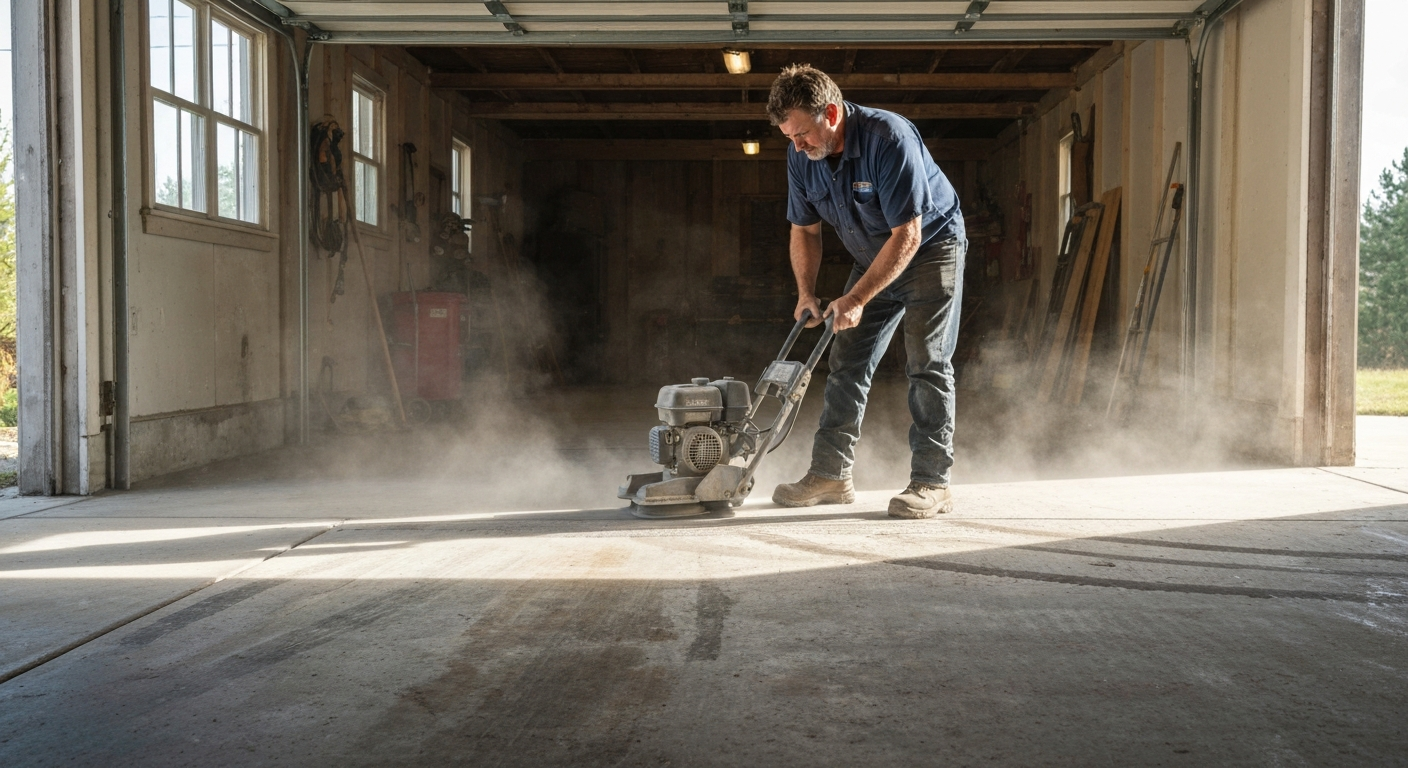
Surface prep Kalispell property owners need for coating and sealing is not basic washing, and it is not dirt-work site prep. It is concrete surface preparation for coating & sealing on existing concrete and paver surfaces, where the goal is to clean, decontaminate, profile, etch, and open the surface so the next product can actually bond.
Coatings and Sealers Fail When the Surface Was Never Ready
Many failed coatings and sealers in the Flathead Valley do not fail because the product was bad. They fail because the surface was not ready. A sealer applied over a dirty, sealed-over, overly smooth, or contaminated slab cannot bond the way it is supposed to. Once that weak bond is exposed to snowmelt, road salt, moisture, and freezing temperatures, peeling and flaking usually follow.
Old failed sealer is one of the most common issues. A driveway, patio, or walkway may have layers of aging sealer that look dull, patchy, white, glossy in spots, or flaky along the edges. Applying a new product over that failed layer does not fix the problem. It can trap moisture, lock in contamination, and create another weak layer that lifts when the surface moves through freeze-thaw cycles.
Smooth troweled concrete can create a different problem. Some slabs are so tight at the surface that coating or sealer has nothing to grip. Even if the surface has been pressure washed, the pores may still be closed, the profile may be too smooth, and the new product may sit on top instead of bonding into the surface. That is especially risky on garage floors, shop floors, covered patios, and older concrete that has been sealed multiple times.
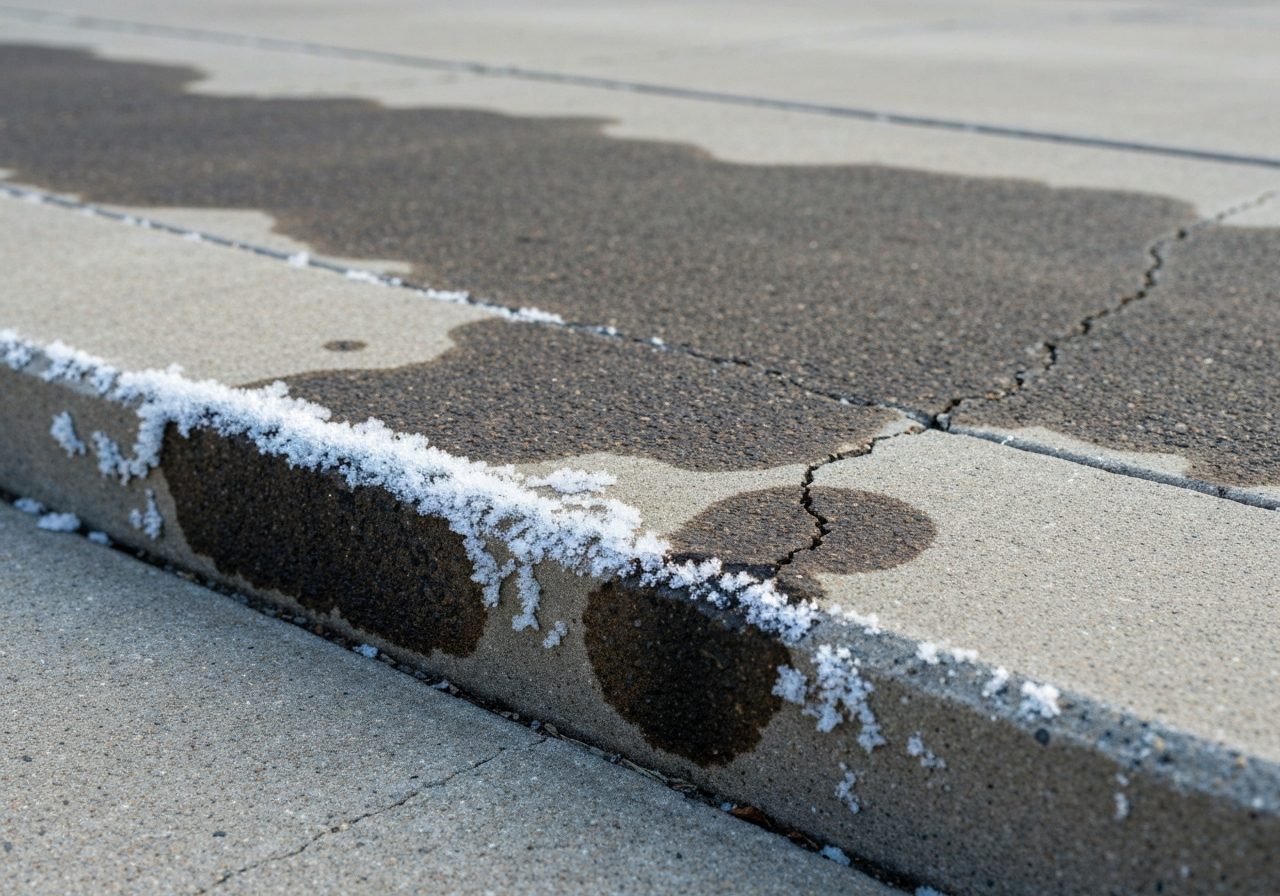
Contamination also matters. Years of vehicle traffic can leave oil, rubber residue, fuel drips, road film, deicing salt, and embedded grime. Around Flathead Lake, Whitefish Lake, and mountain homes, patios and walkways may also collect organic staining, irrigation residue, and mineral deposits. These contaminants interfere with adhesion and can create soft spots, fish-eye defects, dark patches, or areas where the sealer refuses to bond evenly.
Freeze-thaw finishes the job when prep is skipped. Moisture gets under weak material, freezes, expands, and pushes against the coating or sealer from below. What starts as a small bubble, edge lift, or cloudy patch can become peeling, flaking, or widespread delamination by spring. Proper surface prep reduces that risk by giving the coating or sealer a clean, open, bondable surface from the start.
Surface Prep Services for Existing Concrete and Pavers
Surface prep is a focused preparation service under our Pressure Washing work, but it goes beyond general cleaning. The purpose is not simply to make the surface look better for the day. The purpose is to prepare existing concrete or pavers so a coating or sealer can bond, cure, and perform as intended.
The first part of the work is deep cleaning. This removes loose soil, surface grime, organic buildup, road film, and residues that can block adhesion. For some surfaces, a service like concrete pressure washing may be part of the prep, but surface prep does not stop at washing. A surface can be clean to the eye and still be too smooth, too sealed, too contaminated, or too damp for coating or sealing.
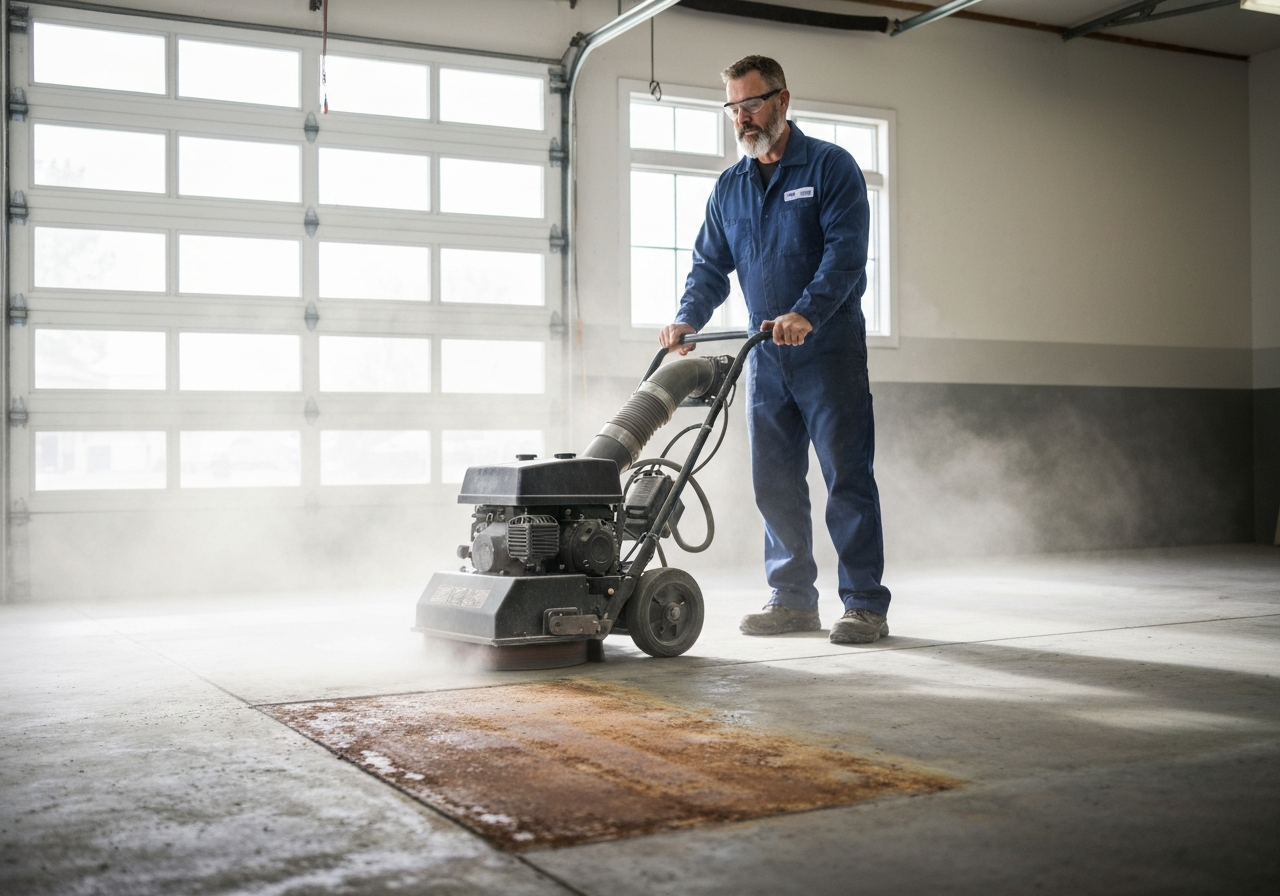
Old failed sealer and coatings often need to be removed or reduced before anything new is applied. This can involve targeted cleaning, stripping, mechanical abrasion, or other prep methods depending on the material, surface condition, and next product. The goal is not to grind blindly or strip aggressively for no reason. The goal is to remove bond-breaking layers and leave the surface sound enough to accept the next system.
Profiling and etching are key parts of the process when the surface is too tight or smooth. Concrete pores need to be open enough for the sealer or coating to key in. Depending on the project, that profile may be created mechanically or chemically. A garage floor being coated, a smooth patio being sealed, and a driveway with old sealer may each need a different prep approach.
Salt and oil decontamination are also important in Northwest Montana. Driveways and garage floors often hold years of winter road residue, oil drips, tire marks, and petroleum-based staining. These areas may require degreasing, repeated cleaning, dwell time, agitation, rinsing, and verification before moving forward. If contamination remains in the pores, the new coating or sealer may reject the surface or fail unevenly.
Moisture and temperature are checked because the Flathead working season can be short. A slab may look dry on the surface but still hold moisture from snowmelt, rain, irrigation, shade, or lake-effect humidity. Applying a coating or sealer too early, too late in the day, or during the wrong temperature window can create haze, blush, poor cure, or adhesion issues. Surface prep includes paying attention to those conditions before the next step begins.
Once the surface is clean, decontaminated, profiled, rinsed, neutralized when needed, and ready, the project can move into the next phase. Depending on the surface and goal, that may be concrete coating, concrete sealing, or paver sealing. Surface prep is the foundation those services rely on.
Benefits of Proper Surface Prep
A coating or sealer that actually bonds
Surface prep gives the next product a real chance to adhere. The surface is cleaned, opened, and checked before coating or sealing, instead of assuming that a quick rinse is enough.
Less peeling, flaking, and early failure
Peeling and flaking are often bond failures. Removing failed sealer, reducing contamination, and creating the right profile helps the new finish stay connected to the surface below.
Better value from the job
The protective product is usually the visible part of the project, but prep protects the value of that investment. A coating or sealer placed over a poorly prepared surface can fail long before the material itself is worn out.
A profile that can hold product
Flathead County surfaces deal with snowmelt, freeze-thaw, road salt, lake moisture, shaded areas, and fast temperature swings. A properly prepared surface gives the protective layer a stronger foundation before those conditions arrive.
A clearer decision before product goes down
Surface prep can reveal whether a slab or paver system is ready, still contaminated, holding moisture, or covered in old failed material. That is better to know before the coating or sealer is applied, not after it starts failing.
Local Depth: Why Flathead Valley Surface Prep Is Different
Surface prep in the Flathead Valley has to account for local conditions. Montana winters are hard on concrete and pavers because moisture does not simply sit on the surface. It moves into pores, cracks, joints, and weak layers, then expands when it freezes. If a coating or sealer is bonded to a weak surface, that movement can break the bond from below.
Kalispell driveways and garage floors often see road salt, sanding material, oil stains, and slush carried in by vehicles. Whitefish and lakeshore properties may deal with more moisture exposure, shaded areas, and surface mildew around patios and walkways. Bigfork, Somers, and Lakeside homes may have outdoor living areas where pavers, pool decks, and concrete patios need both appearance and long-term protection. Rural properties near Kila, Marion, and Eureka may have shop floors, aprons, and utility slabs with heavy use, tracked-in grit, and older coatings that need correction before resealing.
The short growing and working season also affects timing. Late frost, spring snowmelt, afternoon thunderstorms, cool nights, and sudden temperature drops can compress the window for coating and sealing. That makes it more important to prepare the surface correctly and schedule the next product during a workable cure window. Rushing prep to "beat the weather" often creates the exact failure the project was meant to prevent.
Our Surface Prep Process
Assess existing surface and identify coatings
The first step is to understand what is on the surface now, how it is failing, and what the next product needs in order to bond. This includes looking for peeling sealer, glossy sealed areas, soft coatings, tight troweled finishes, oil staining, salt residue, moisture, and surface damage.
Strip or remove failed coatings
Failed material has to be addressed before new product is applied. If old sealer is loose, cloudy, flaky, or blocking adhesion, it may need to be removed, reduced, or opened so it does not become the weak layer under the new finish.
Deep clean the surface
Deep cleaning removes loose grime, embedded soil, organic buildup, road film, and surface-level contamination. This is the visible cleaning step, but it is only one part of a complete prep process.
Decontaminate salt, oil, and residues
Driveways, garages, and shop floors often need targeted degreasing and residue removal. Salt and oil can remain in pores after a simple rinse, so the cleaning method has to match the contamination.
Profile or etch the surface
A coating or sealer needs a surface it can grip. If the concrete is too smooth, too dense, or sealed over, we use the appropriate mechanical or chemical prep method to open the pores and create a bondable profile.
Rinse and neutralize
Chemical prep, stripping, and some cleaning processes require controlled rinsing and neutralization. Leaving residue behind can interfere with the next product, so this step is handled carefully.
Verify moisture and profile
A surface may look ready but still be damp, too smooth, contaminated, or outside the right temperature range. We check the conditions before handing the surface off for coating or sealing.
Hand off ready for the next product
Once the surface is sound, clean, profiled, and dry enough, it can move into coating or sealing. The goal is to avoid long delays that allow dust, moisture, or new contamination to return before the product goes down.
Related Services
Concrete Pressure Washing
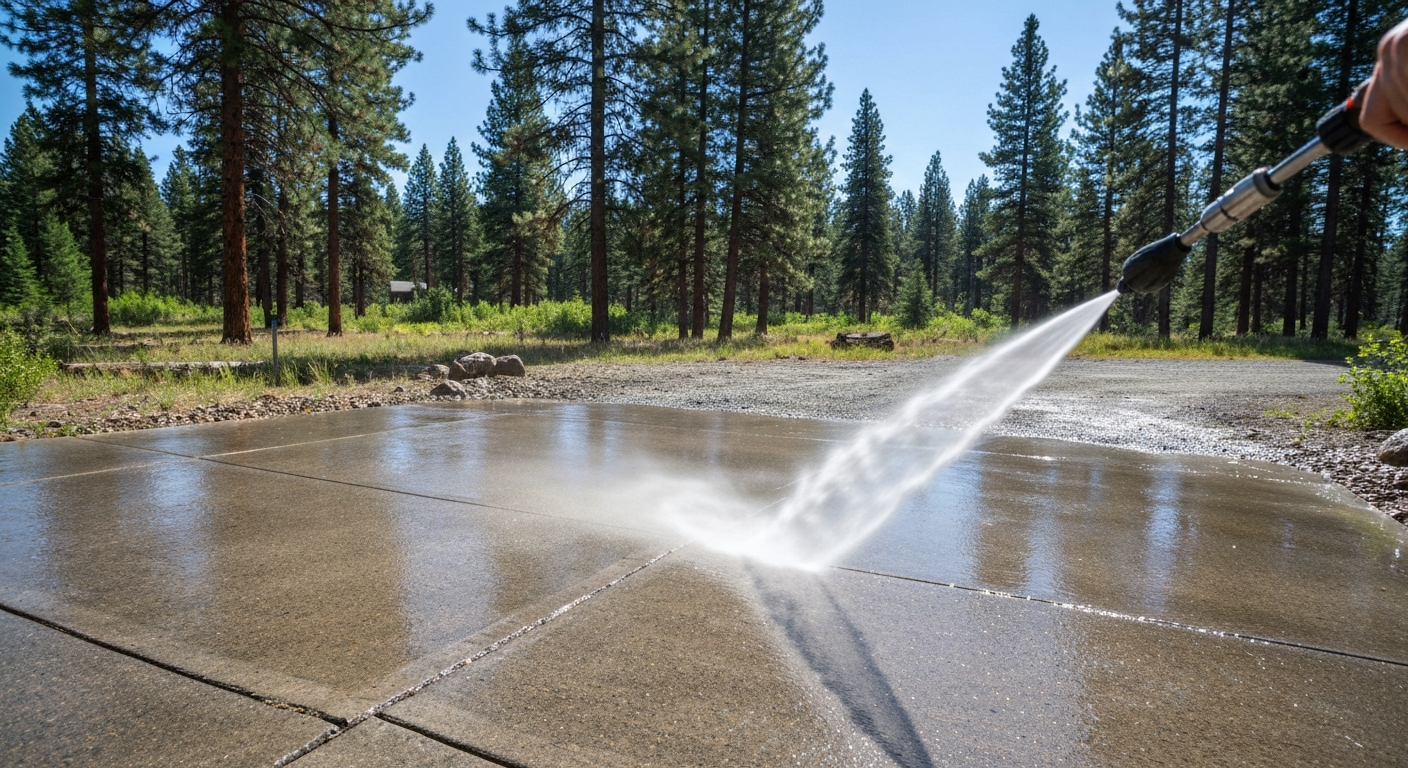
Remove winter film, algae, moss, oil marks, rust staining, and tracked-in road grime from existing driveways, patios, walkways, and garage floors.
Learn more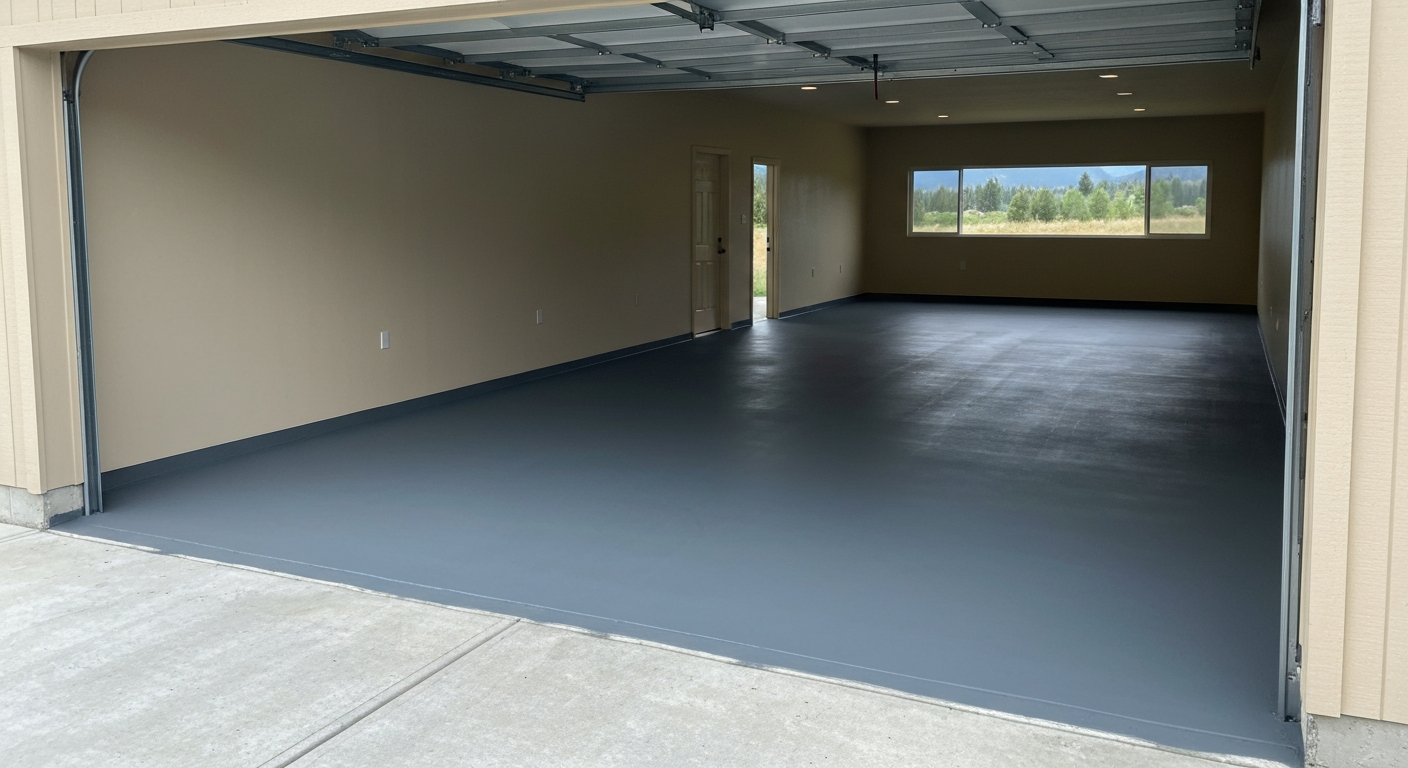
Pressure Washing Hub
Explore our full range of pressure washing and surface preparation services for existing exterior concrete and paver surfaces across the Flathead Valley.
Learn moreWhere Surface Prep Applies
Surface prep is used on existing concrete and paver surfaces that are about to be coated or sealed. It is common before resealing an older driveway, coating a garage floor, sealing a patio, protecting a pool deck, or restoring pavers that have lost their finish.
Driveways
Driveways often need prep because they collect road salt, oil, tire residue, snowmelt, and old sealer. A driveway can look clean after washing but still hold contaminants that interfere with sealing. Proper prep helps reduce the chance of early failure.
Patios & Walkways
Patios and walkways often need prep because they are exposed to irrigation, shade, organic buildup, foot traffic, and old sealer layers. If a patio has cloudy sealer, peeling areas, slick glossy patches, or inconsistent absorption, it should be evaluated.
Garage & Shop Floors
Garage floors and shop floors need careful prep because they often have smooth concrete, oil contamination, tire residue, and previous coatings. These surfaces are especially sensitive to bond issues because coatings are exposed to vehicle traffic.
Pool Decks & Outdoor Living
Pool decks and outdoor living areas need prep because moisture, splash-out, cleaning chemicals, and sun exposure can weaken poor finishes. A coating or sealer on these surfaces should not be applied over old failed material.
Paver Surfaces
Paver surfaces also need surface prep before sealing. Joint material, efflorescence, old sealer, moss, algae, weeds, and trapped moisture can all affect the final result. Proper prep helps paver sealer lay down more evenly and bond to the surface.
Service Area
Streamline Solutions provides surface prep for existing concrete and paver surfaces across Northwest Montana. The service is built for Flathead Valley properties, lake homes, mountain homes, garages, shops, patios, driveways, and outdoor living areas that need a sound surface before coating or sealing.
Surface Prep Cost
Surface prep is not priced as a flat-rate rinse because the work depends on what the existing surface needs. A newer, unsealed patio with light contamination is a different project than an older driveway with failed sealer, oil staining, salt residue, and smooth areas that need profiling. The right price depends on surface size, condition, contamination, access, and the amount of old coating or sealer that has to come off.
The main cost drivers include:
- Total square footage and whether the surface is concrete or pavers
- How much failed sealer or coating is present and how strongly it is bonded
- How much salt or oil contamination is in the surface
- Whether chemical or mechanical profiling is needed
- How much rinsing and neutralizing is required
Myth vs. Reality
A quick rinse is enough prep.
Washing can remove visible dirt, but it does not always remove oil, road salt, failed sealer, closed pores, or surface conditions that block adhesion. Surface prep is about creating a bondable profile, not just making the surface look cleaner.
You can seal right over old sealer.
Sometimes an existing sealer can be compatible, but failed sealer is a problem. If the old material is peeling, cloudy, flaky, soft, or poorly bonded, sealing over it usually carries the failure forward.
Prep is optional if the product is high quality.
Even a strong coating or sealer needs the right surface. Product quality cannot overcome contamination, trapped moisture, or a slab that was never profiled correctly.
Smooth concrete is better because it looks clean.
Smooth concrete can be too tight for a coating or sealer to grip. A controlled profile or etched surface can help the product key in and bond instead of sitting on top.
The Value of Surface Prep
- Removes bond-blocking layers before sealing or coating
- Reveals true surface condition
- Reduces peeling, flaking, and early failure
- Accounts for Montana freeze-thaw conditions
Limitations
- Cannot fix structurally failed slabs
- Some deep oil contamination may require multiple treatments
- Weather windows can compress available scheduling time in NW Montana
Streamline Solutions Recommendation
Surface prep should not be treated as a corner to cut. In the Flathead Valley, the surface under the coating or sealer has to deal with moisture, salt, freeze-thaw, and short working windows. The safest recommendation is to remove failed material, clean and decontaminate the surface, create the right profile, and apply the next product only when moisture and temperature conditions make sense.
Prep Your Surface for Success
A coating or sealer is only as reliable as the surface it bonds to. Streamline Solutions approaches surface prep with a practical, operator-led mindset: identify the real condition of the existing surface, remove what will cause failure, create the correct profile, and prepare the surface for the coating or sealing step that follows.
