
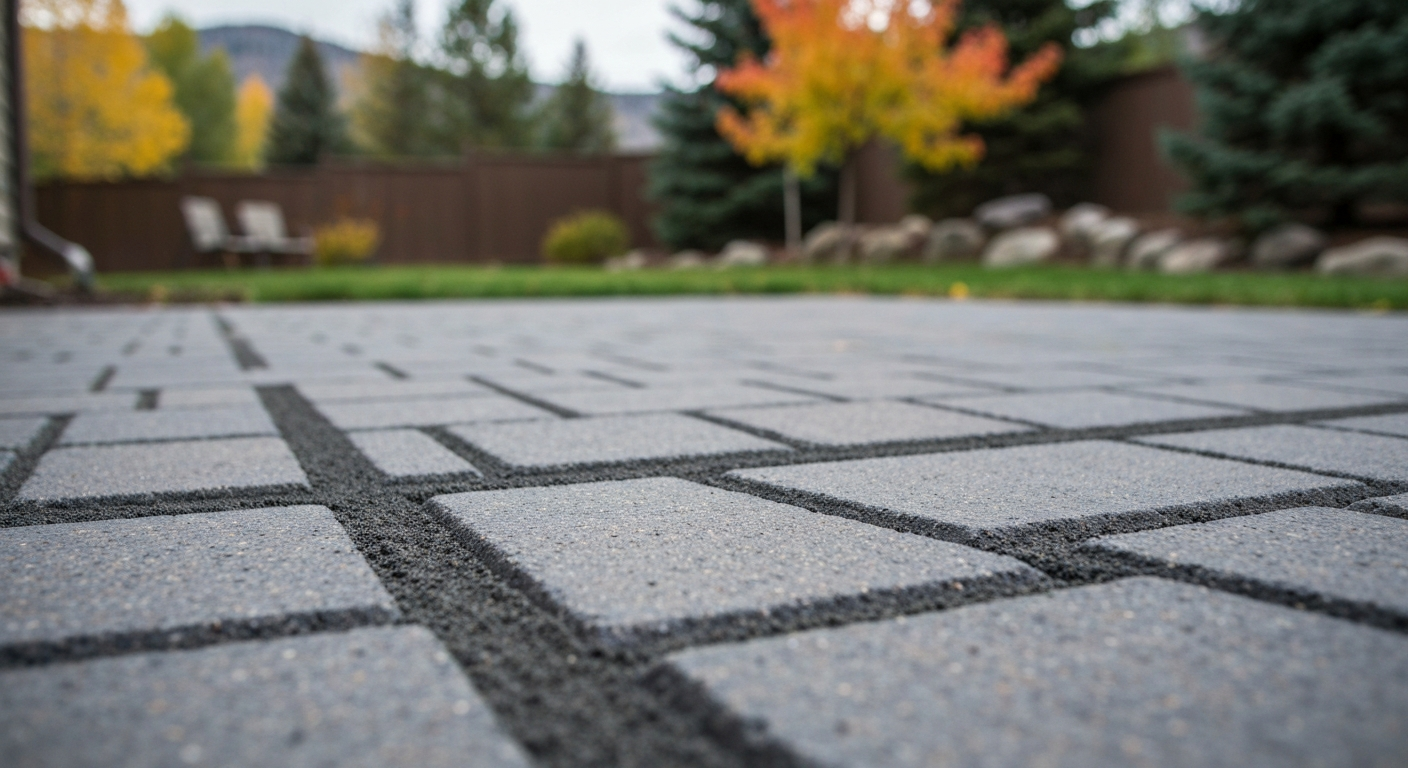
Paver Joint Sand Stabilization in Kalispell & the Flathead Valley
Replace washed-out sand and lock it in place to stop shifting, weeds, and ant hills — removing the path snowmelt uses to pry your pavers apart.
RESTORES INTERLOCK
Stops rocking and shifting
BLOCKS WASHOUT
Keeps water out of the base
PREVENTS WEEDS
Closes habitat for ants and seeds
FREEZE-THAW DEFENSE
Reduces winter heaving risk
Paver joint sand stabilization replaces the sand that's washed out from between your pavers and locks the new sand in place — with polymeric sand, a joint stabilizing sealer, or both. Done right, it stops the shifting, the weeds, and the ant hills, and it takes away the main path Flathead Valley snowmelt uses to pry a paver surface apart. Streamline Solutions re-sands and stabilizes existing paver patios, driveways, and walkways across Kalispell and the surrounding valley — we restore the pavers you already have; we don't install new ones.
Why joint sand matters more than most people think
Joint sand isn't cosmetic. It's structural. A paver surface is a flexible system: each paver carries load by locking against its neighbors, and the sand packed in the joints is what creates that lock. Full joints let a driveway take a truck tire or a patio take a loaded grill cart because the force spreads across dozens of pavers at once. Empty joints break the system. Each paver starts carrying load alone, rocking on its bedding, grinding its edges against the next paver over.
In Northwest Montana, empty joints do a second kind of damage. Every open joint is a channel straight down into the bedding sand under the pavers. Spring snowmelt and fall rain run through those channels daily, and in a Flathead Valley shoulder season the water that soaks in by afternoon freezes solid overnight. Ice expands, the bedding heaves, and by May you've got high corners, low spots, and pavers that click when you step on them. Meltwater moving through open joints also carries bedding sand away with it — which is why a washed-out patio near Flathead Lake or a sloped driveway in Whitefish can develop dips that no amount of surface sweeping explains.
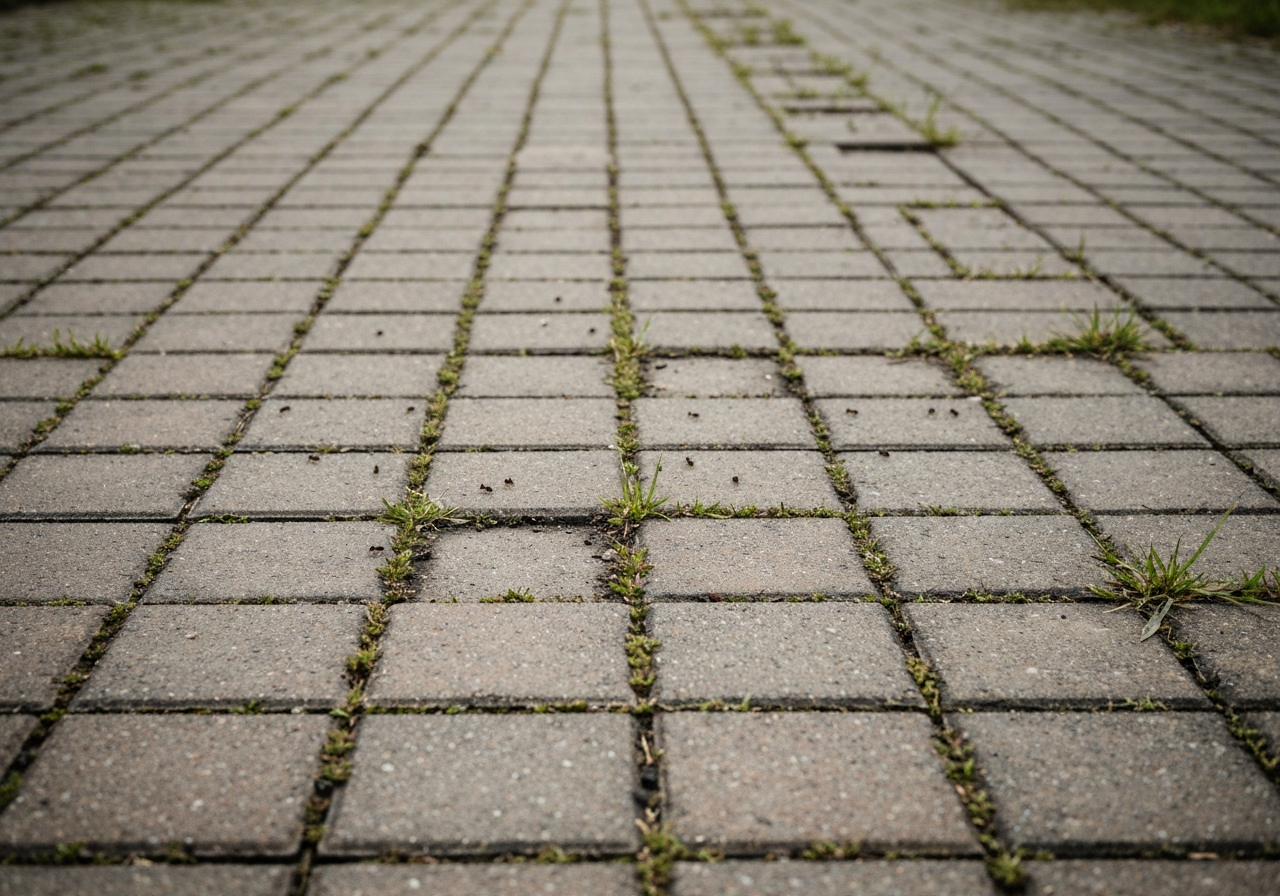
Then come the tenants. Open joints fill with windblown soil, weed seeds germinate in it, and ants discover an easy mining route to the sand below. Weeds and ant colonies aren't just ugly — both actively excavate joints and accelerate the failure.
Stabilizing the joints closes all of it at once: the lock comes back, the water channels close, and the weeds and ants lose their habitat. It's one of the highest-leverage maintenance moves a paver owner in Kalispell can make, and it costs far less than dealing with a failed surface later.
Signs your paver joints need attention
The surface usually tells you before it fails. Look for these:
- Low or empty joints. Healthy joint sand sits just below the chamfered edge of each paver. If you can see down the sides of the pavers, the sand is gone or going.
- Wobble or clicking underfoot. Pavers that rock, tip, or click against each other have lost their interlock — almost always a joint sand problem before it's a base problem.
- Sand on the surface after rain. Sand washing up and out of the joints and streaking across the pavers means every storm is emptying them further.
- Weeds growing in the lines. Weeds don't grow through pavers; they grow in the debris that collects in failing joints.
- Ant hills between pavers. Small sand volcanoes along the joints are ants excavating your bedding layer.
- Spring heave and uneven corners. Pavers that ride up over winter and settle unevenly are telling you water is getting under the field through the joints.
- Chipped or spalled paver edges. Edge damage often comes from pavers grinding against each other once the sand cushion between them is gone.
One or two of these is early-stage and cheap to correct. Several at once means the joints have been open for a while — still very fixable, but worth doing this season rather than after another winter. If the base itself has failed and the surface needs more than stabilization, Streamline Solutions will tell you that plainly instead of selling you sand.
How often to re-sand — and the Montana timing window
Plan on inspecting your joints once a year, ideally in spring after the melt. What you find drives the schedule. Standard joint sand in an exposed Flathead Valley location — a sloped driveway, a windy Somers lakefront, a patio under a roof valley that dumps snowmelt — may need topping up every year or two. Polymeric sand and sealer-stabilized joints typically hold much longer, often lasting many seasons before they need renewal, though exposure, drainage, and plowing habits all move that number.
Timing matters more here than in milder climates. Joint work needs dry pavers, dry joints, and a stretch of dry weather afterward — polymeric sand in particular has to set up before rain hits it, or it can wash or crust badly. That puts the realistic Kalispell window at late spring through early fall, once overnight temperatures are reliably out of the freezing range and the slab of weather systems coming off the mountains gives us workable dry gaps.
If you're choosing between spring and fall, there's a case for each. Spring stabilization repairs winter's damage and sets the surface up for the season you'll actually use it. Early fall stabilization sends the pavers into winter with sealed, full joints — which is exactly when it matters most, because freeze-thaw is what open joints are most vulnerable to. What we'd steer you away from is waiting until October and hoping for a warm week. Streamline Solutions schedules joint work inside the weather window on purpose, and we'll tell you honestly if the forecast says wait.
Polymeric sand, standard sand, or a joint stabilizing sealer?
There are three legitimate ways to stabilize paver joints, and the right one depends on your pavers, your exposure, and whether the surface is also due for sealing. Here's the honest comparison.
Polymeric sand
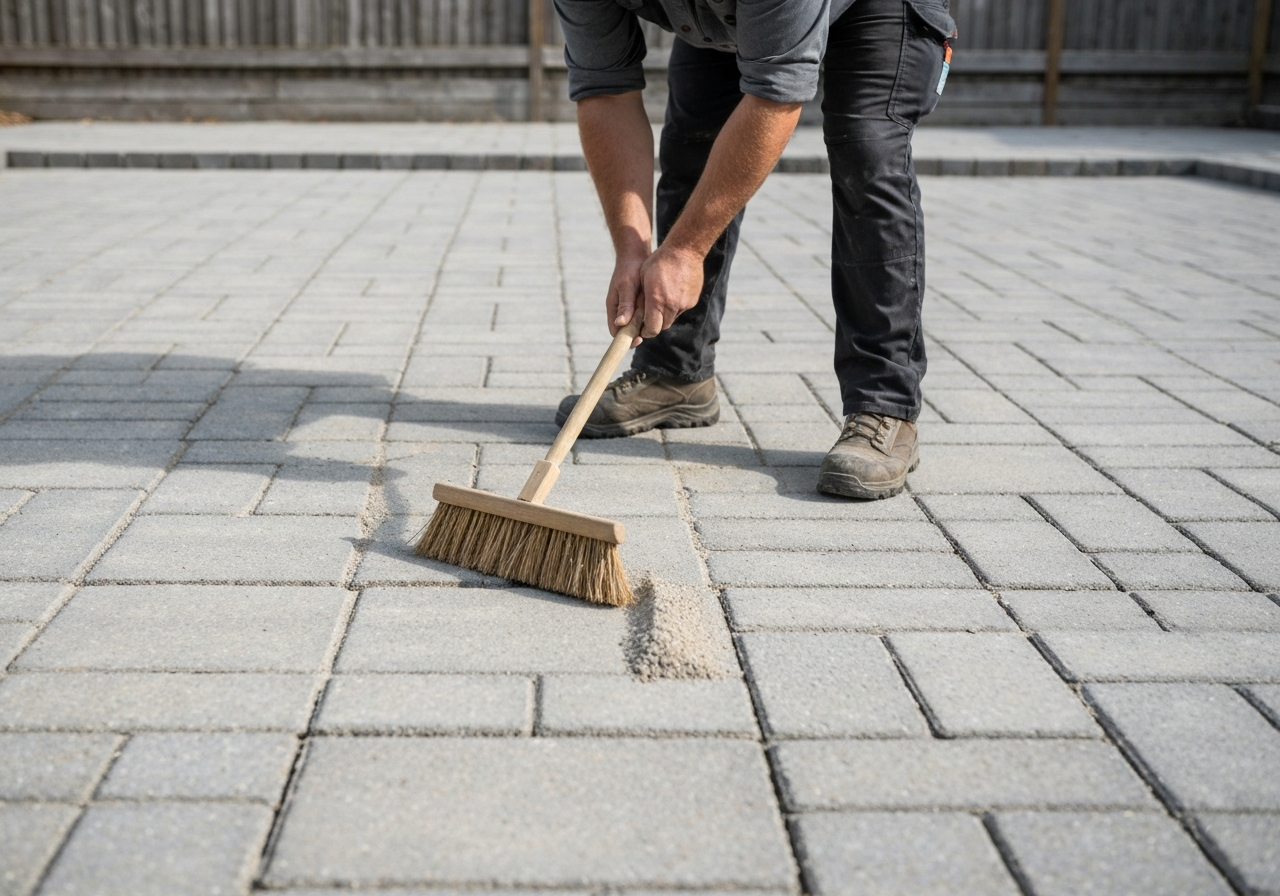
Polymeric sand is joint sand blended with polymer binders. It sweeps in like regular sand, then gets misted with water, which activates the binders and cures the joint into a firm-but-flexible seal. Cured polymeric joints resist washout, shrug off rain, block weed germination, and shut ants out almost completely. It's the strongest single answer to Montana's snowmelt-and-freeze cycle, and it's what we recommend for most driveways and exposed patios in the Kalispell area.
The catch is that polymeric sand is unforgiving to install. Joints need to be cleaned to proper depth, the surface has to be bone dry, excess dust has to come off the paver faces before activation, and the water misting has to be right — too little and it doesn't cure, too much and it washes the polymers out. Misapplied polymeric sand leaves a permanent haze on the paver faces. This is the main reason it's worth having done professionally.
Standard joint sand
Plain washed, angular joint sand is still the right call in some situations: very tight joints that polymeric sand can't penetrate properly, budget-driven refreshes on low-exposure surfaces, or as the fill layer under a joint stabilizing sealer. It restores interlock immediately and costs the least. Its weakness is staying power — on its own, standard sand washes out again, and in a high-snowmelt spot you can be back where you started in a season or two. We'll tell you if plain sand is genuinely enough for your site, because sometimes it is.
Joint stabilizing sealer
A joint stabilizing sealer is applied over the whole paver surface after re-sanding. It soaks into the fresh joint sand and binds it, while also sealing the paver faces against water, stains, and UV fade. It's two jobs in one pass, which makes it the smart choice when your pavers are due for sealing anyway — and in the high-elevation Montana sun, most unsealed pavers are. If you want the color-deepening version of that finish, see our wet-look sealer page; for the full sealing service itself, the paver sealing hub covers it in depth.
Which one is right for your surface
There's no universal answer, and anyone who quotes you one product for every job isn't looking at your site. Joint width, paver type, slope, sun and shade, drainage, and plow traffic all push the decision. Streamline Solutions recommends per surface after an on-site look — and if the honest answer is that your joints only need a standard-sand top-up this year, that's what we'll say.
What paver joint sand stabilization costs in the Flathead Valley
Joint stabilization is priced per project, not from a rate card. The drivers are square footage, joint width and depth, how much failed sand and weed growth has to come out before new sand goes in, the product system chosen, and site access. A tight-jointed walkway that needs a light refresh sits at one end; a large driveway with wide, empty, weed-filled joints sits at the other. Because condition drives so much of the number, Streamline Solutions quotes from an on-site inspection and puts the full scope in writing — measurement, joint condition, recommended system, and the installed price, fixed. Many Kalispell-area owners combine joint stabilization with sealing in a single visit, which is usually the efficient way to do both. For broader pricing context, see our paver sealing cost guide.
Get a Quote: (406) 909-4342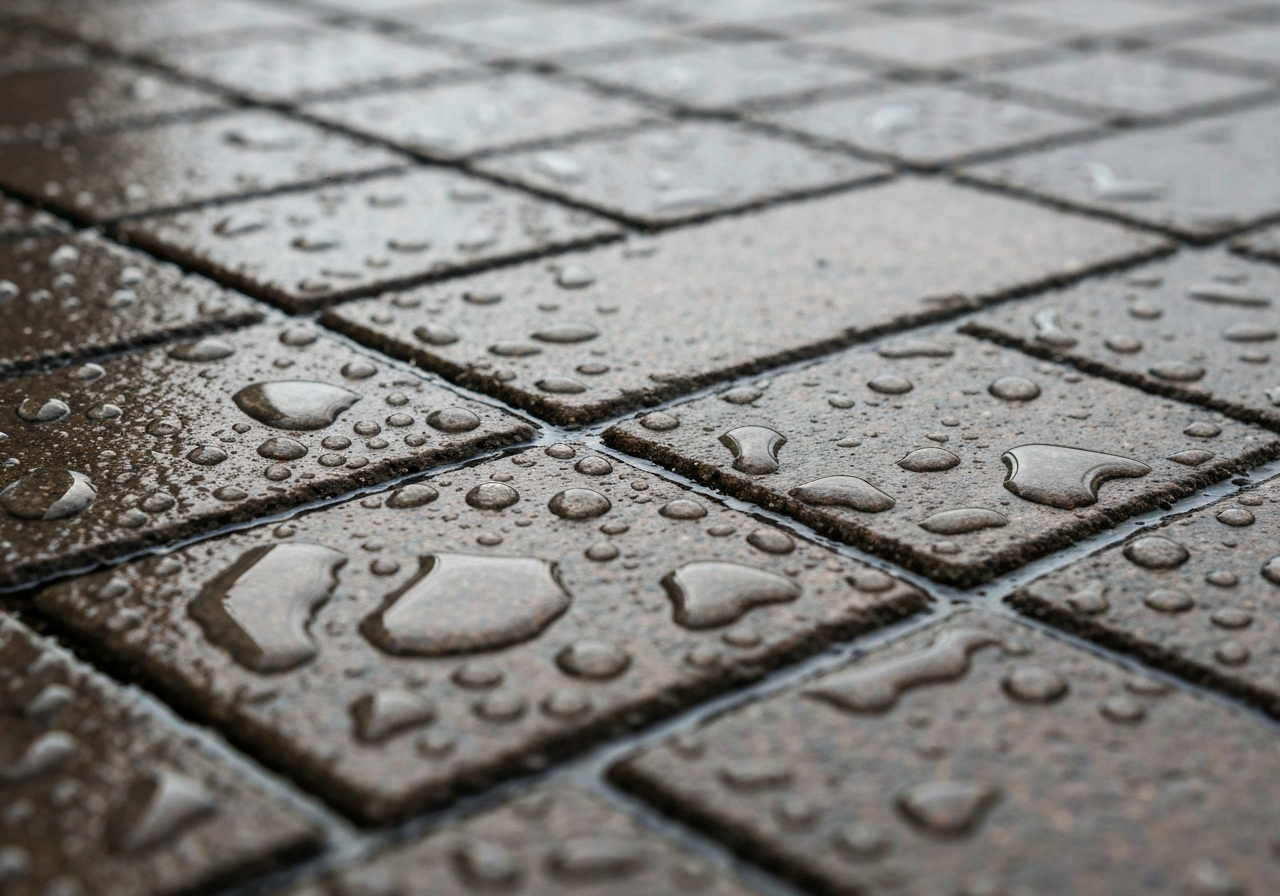
Our joint sand stabilization process
Inspect and plan
We walk the surface, check joint depth and width, look for base or drainage problems, and confirm stabilization is actually the right fix. If pavers have heaved beyond what fresh joints can hold, we'll say so before anything else happens.
Clean out the failed joints
Old sand, soil, weeds, roots, and ant workings come out to proper depth. On most projects this is done with controlled pressure washing (our paver pressure washing service covers the deep-clean side), so the new sand bonds in clean joints instead of sitting on debris.
Let the surface dry completely
Polymeric sand and stabilizing sealers both fail on damp joints. We wait for genuinely dry pavers and a workable forecast — not almost dry.
Re-sand and compact
New sand is swept into the joints, settled and compacted, then topped to the correct height just below the paver chamfer. Filling to the right level matters: overfilled joints scuff and flake, underfilled joints leave the interlock weak.
Activate or seal
Polymeric joints get a controlled water misting to cure the binders, with paver faces cleaned of dust first so nothing hazes. Sealer-stabilized projects get the joint stabilizing sealer applied across the surface instead, binding the sand and sealing the pavers in one step.
Cure and walkthrough
The surface needs protection from water and traffic while it cures — we confirm exact timing by product and weather. Then we walk the finished surface with you, show you what full, locked joints look like, and leave you with straightforward maintenance guidance for keeping them that way.
Why choose Streamline Solutions
Streamline Solutions is a Kalispell-based, licensed and insured crew that does one category of work: protecting the concrete and paver surfaces people already own. Joint stabilization is a core service for us, not an upsell bolted onto something else. You get a real recommendation among polymeric sand, standard sand, and stabilizing sealer — based on your surface, not our inventory — a written fixed-scope quote, and an install that respects how unforgiving polymeric products are about prep and moisture. We're building our reputation in the Flathead Valley job by job, and a paver surface that's still tight three winters from now is how we intend to earn the next referral.
Service area
Streamline Solutions stabilizes paver joints across Kalispell, Whitefish, Columbia Falls, Evergreen, Bigfork, Somers, Lakeside, Kila, Marion, Polson, Ronan, and Eureka — serving Flathead County, the Flathead Valley, and nearby Northwest Montana. We're a service-area business: we come to you.
Streamline Solutions · Concrete Surface Protection Specialists · Kalispell, MT · (406) 909-4342
Paver joint sand FAQs
Related services
Paver Sealing
Complete paver restoration and sealing services for Flathead Valley properties.
Learn morePaver Driveway Sealing
Protect the hardest-working paver surface on your property from tire scuffing and road salt.
Learn morePaver Patio Sealing
Protect your outdoor living space from grill grease, spilled wine, and UV fade.
Learn morePaver Pressure Washing
Deep cleaning to remove grime, moss, and failed sealer before re-sanding.
Learn moreLock your joints down before the next melt
Full joints now beat heaved pavers in April. One honest quote — measured on-site, priced in writing.
