
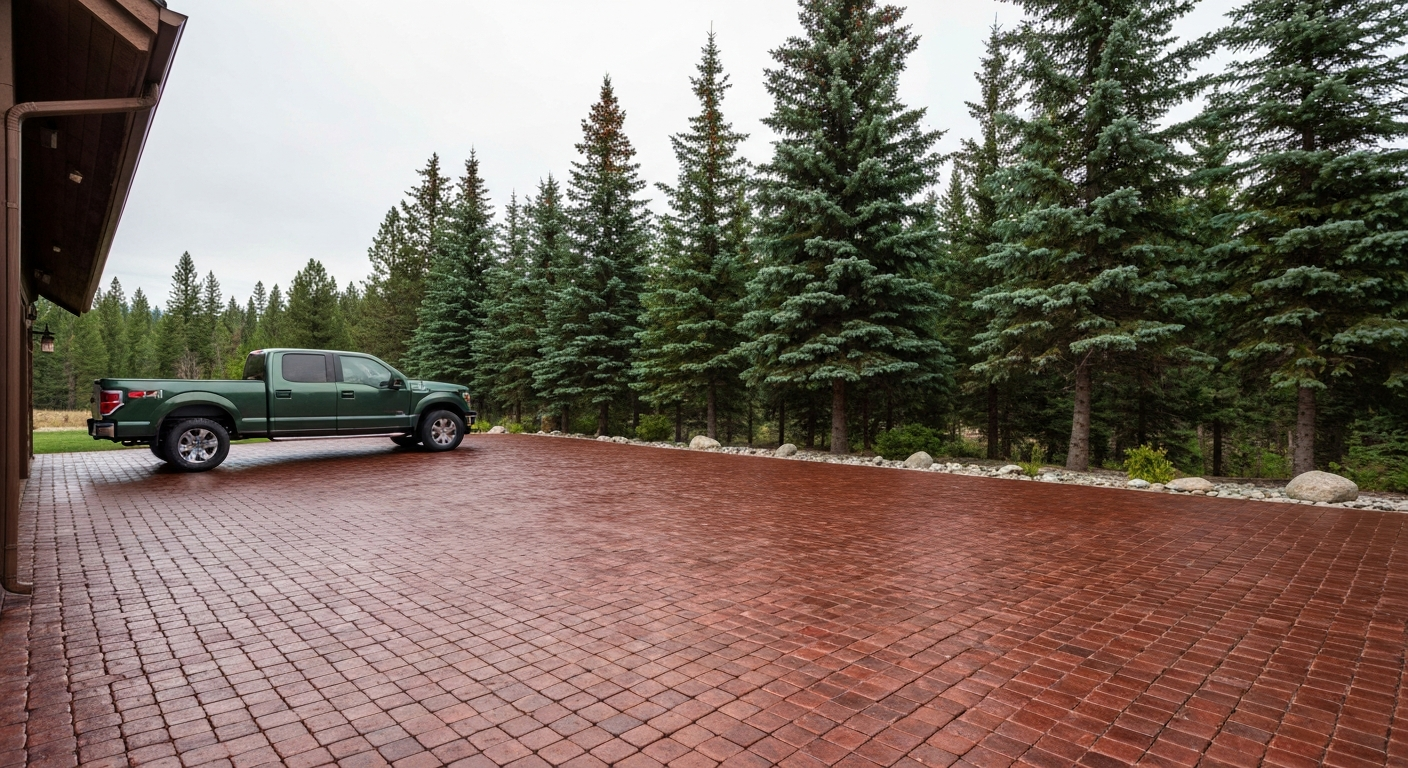
Paver Driveway Sealing in Kalispell & the Flathead Valley
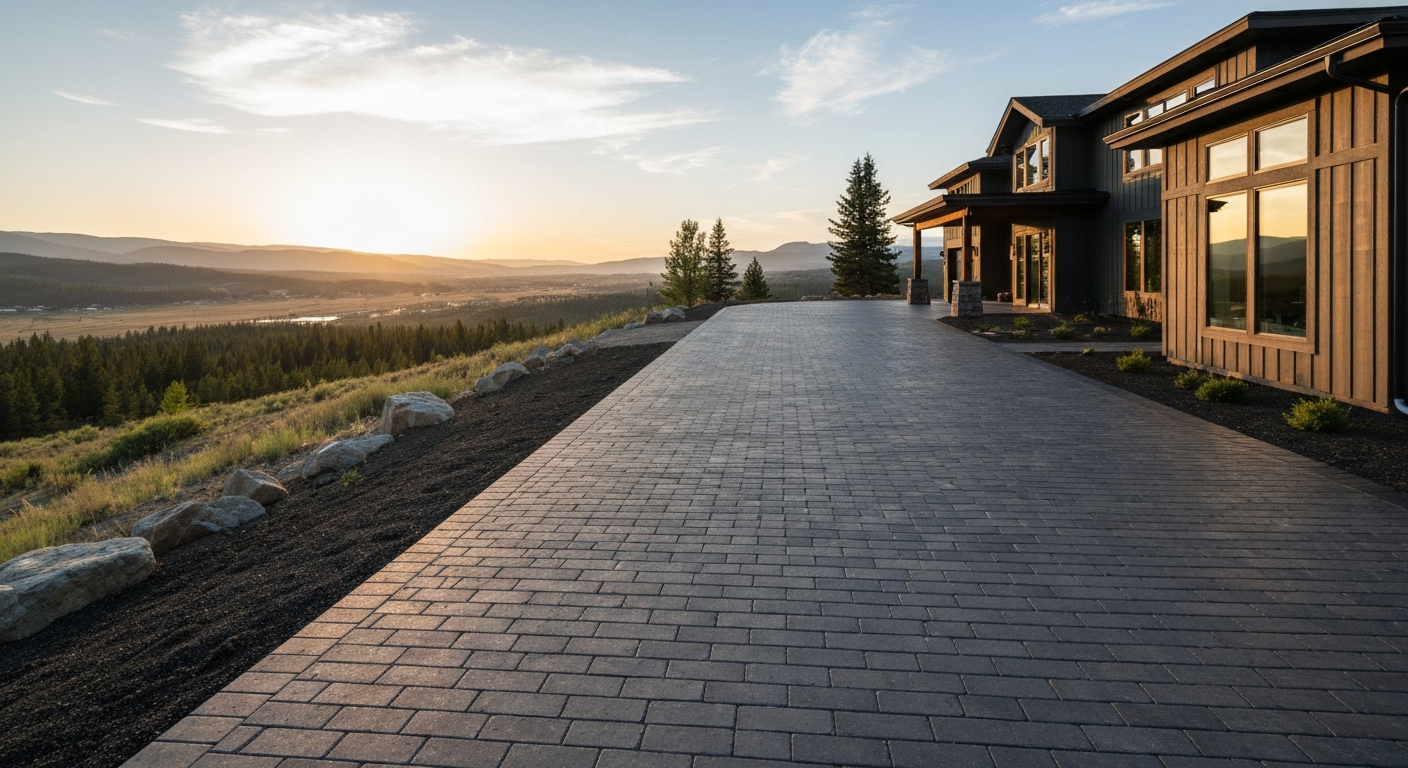
Protect the hardest-working paver surface on your property from tire scuffing, road salt, oil drips, and the Flathead Valley's freeze-thaw winters.
TIRE & PLOW DEFENSE
Protects paver face from scuffing
FREEZE-THAW PROTECTION
Reduces moisture absorption
OIL & SALT RESISTANCE
Sheds brine and vehicle drips
JOINT INTERLOCK
Stabilizes sand against washout
Streamline Solutions cleans, re-sands, and seals existing paver driveways across Kalispell and the surrounding valley — we protect the driveway you already have; we don't install new pavers. If the color is fading in the wheel paths and the joint sand keeps washing out, this page covers what sealing does for a driveway specifically, when to do it, and how the work goes.
Why unsealed paver driveways fail here
A paver driveway takes abuse that no patio or walkway ever sees, and in Northwest Montana that abuse comes from every direction at once. Understanding what's actually attacking the surface makes the case for sealing better than any sales pitch could.
Start with the vehicles themselves. Every time a tire turns on a paver — backing out, pulling in, cranking the wheel at low speed — it grinds grit into the surface like sandpaper. On unsealed pavers, that scuffing slowly polishes away the pigmented face of the paver, which is why the wheel paths on an older driveway look pale and worn while the edges still hold color. Add the weight of trucks and SUVs flexing the field, and any weakness in the joints turns into movement.
Then there's what your vehicles carry home. From November through March, cars coming off US 93 and the valley's plowed routes arrive coated in road salt, magnesium chloride, and gritty snowmelt. All of it drips off the undercarriage and melts out of the wheel wells directly onto your driveway, day after day, all winter. Unsealed pavers drink that brine in. When the temperature swings below freezing overnight — and in the Flathead Valley it swings back and forth constantly through the shoulder seasons — the absorbed moisture expands inside the paver. Over enough cycles, that freeze-thaw pressure can pit, flake, and spall the surface, and the salts left behind accelerate the damage.
The joints suffer their own failure mode. Tires push and pull on joint sand every time they roll over it, and rain, hose water, and snowmelt flush it out — fastest in the wheel paths, exactly where the driveway needs support most. Once sand goes, the pavers lose the interlock that makes a paver system rigid. They rock, shift, and open gaps that invite weeds, ants, and more water.
Finally, driveways collect the stains patios never see: engine oil, transmission fluid, power-steering drips. On unsealed pavers those soak in fast and become nearly permanent. And every winter, plow blades and steel shovels scrape the high spots, chewing at unprotected surfaces.
Sealing addresses all of it at once — a cured sealer sheds brine and oil instead of absorbing it, locks stabilized sand into the joints, and gives the plow a sacrificial wear layer to scrape instead of the paver face. One honest caveat: if a driveway has badly settled ruts or heaved sections, it needs re-leveling before sealing makes sense. Streamline Solutions doesn't do that work, and we'll tell you plainly if sealing is the wrong move for your driveway right now.
Signs it's time to seal your paver driveway
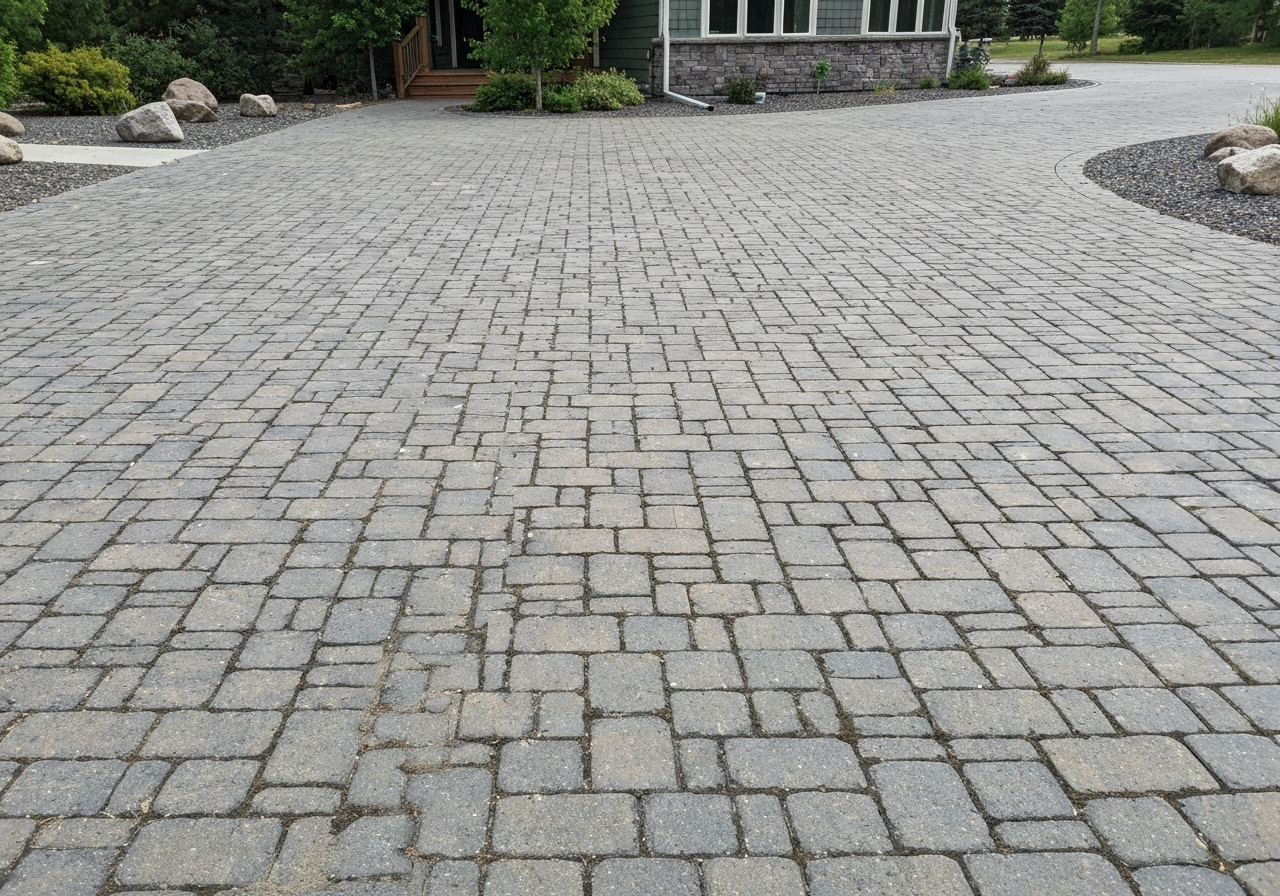
Most Kalispell paver driveways tell you when they're ready. The clearest sign is color: if the wheel paths look washed out compared to the borders, the paver face is wearing and UV is bleaching unprotected pigment. Watch the water, too — on a protected driveway, rain beads or sheets off; on a driveway that's lost its protection, water soaks straight in and the pavers stay dark long after the storm passes.
Check the joints next. If you can rake sand out with a fingertip, if weeds and ant hills are appearing in the lines, or if individual pavers click or rock under a tire, the joint sand is failing and the interlock is going with it. Oil spots that won't wash out, white efflorescence haze, chalky residue on your hand after touching the surface, and pitting or flaking in the wheel paths all point the same direction.
None of these mean the driveway is ruined. They mean it's at the point where cleaning, re-sanding, and sealing can still reset the clock — and where waiting another winter or two lets freeze-thaw and salt turn a maintenance project into a repair project. If you're seeing several of these signs at once, it's worth having the driveway looked at before the season turns.
How often to seal — and the Montana window
The honest answer: it depends on traffic, exposure, and the sealer used, but paver driveways in the Flathead Valley often need resealing every few years — typically sooner than a patio would, because tires, plows, and road salt wear the protection down faster. High-traffic driveways and driveways that get heavy winter salt exposure sit at the short end of that range; a lightly used driveway with good drainage can stretch longer. The wheel paths usually tell you first: when water stops beading there while it still beads at the edges, the sealer is going.
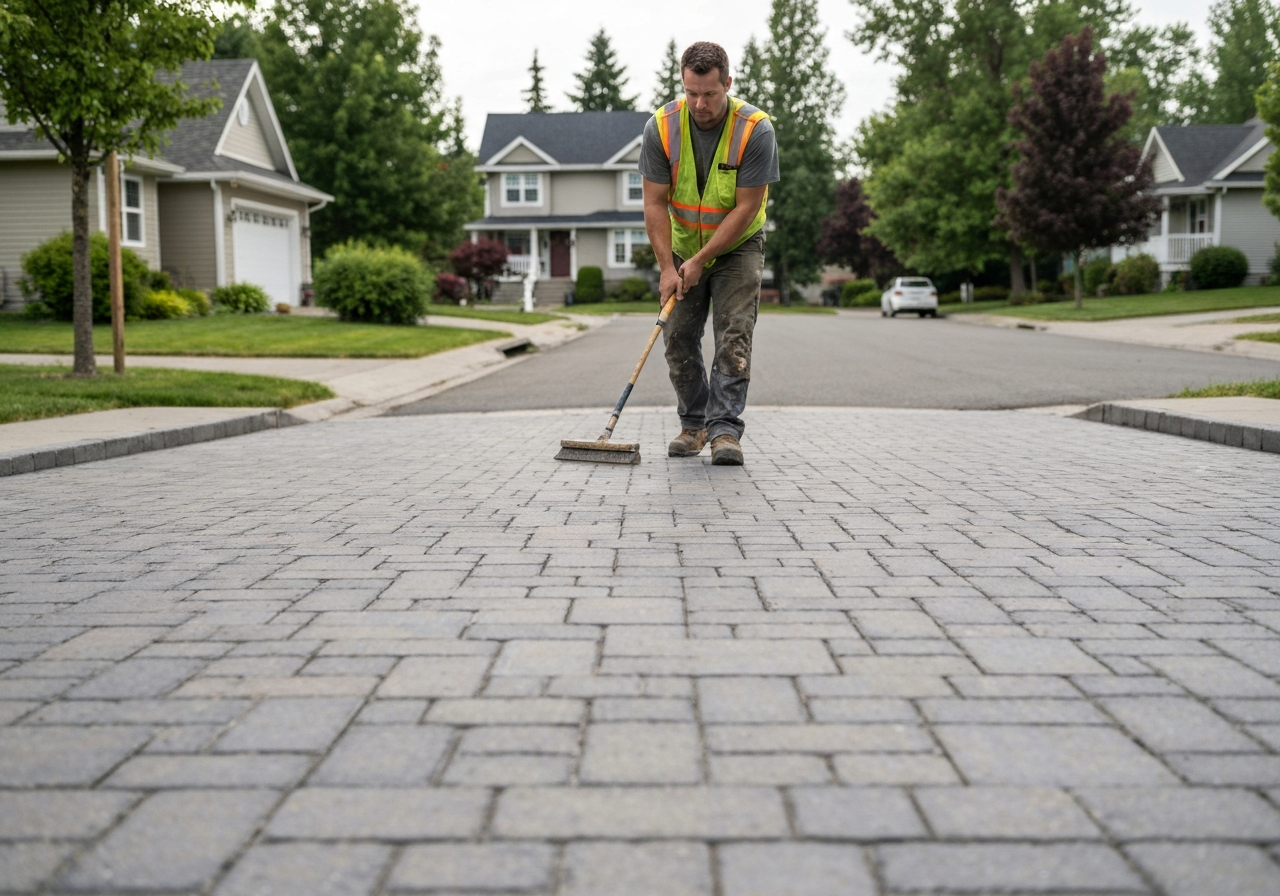
Timing matters as much as frequency here. Sealers need dry pavers and temperatures inside the product's application window, which in Northwest Montana generally means late spring through early fall. The pavers must be fully dry — not just surface-dry after a quick sun break, but dry down into the joints — and there needs to be a rain-free stretch long enough for cleaning, drying, application, and cure. In practice, the valley gives us a working season that runs roughly from the time spring moisture tapers off until the fall rains and cold nights arrive.
Two windows work especially well for driveways. Early summer, after spring runoff and pollen season, lets the driveway go into the heavy-use months protected. Late summer into early fall is arguably even smarter: the driveway gets cleaned, re-sanded, and sealed right before the salt-and-snowmelt season it most needs protection from. What doesn't work is squeezing the job into a cold, damp October week — sealer applied outside its window fails early, and we'd rather schedule you for the right conditions than sell you a coating that won't last. Streamline Solutions books driveway sealing around the weather, not the other way around.
Sealer choices for a driveway that gets driven on
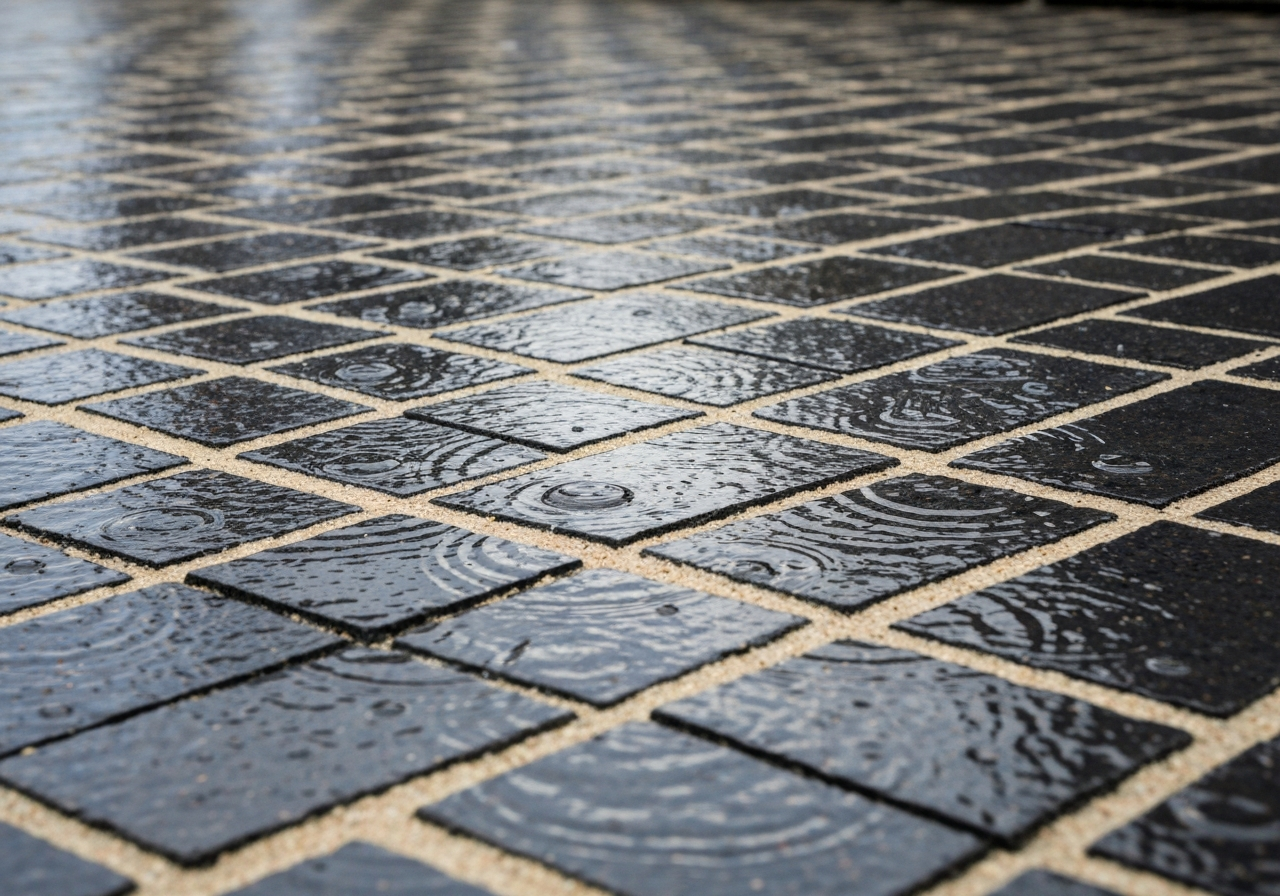
A driveway isn't the place for whatever product is on sale. The sealer has to handle vehicle traffic, petroleum drips, and winter de-icers — and it has to leave traction, especially on a sloped approach. Streamline Solutions carries options in each finish family and recommends based on your pavers, your slope, and how the driveway is used.
Natural-look penetrating sealers
These soak into the paver and protect from within, without changing the look or adding surface film. They're a strong choice for driveways because there's no coating layer for tires to wear through or for a plow to scrape, and traction stays exactly as it was. What you give up is the color pop — the driveway looks like it always has, just protected.
Enhanced / satin finishes
Enhancing sealers deepen the paver's existing color and add a low satin sheen — the "just rinsed" look without the gloss. On a driveway they're a popular middle ground: real color recovery in those faded wheel paths, with less surface film than a full gloss and better traction on grades.
Wet-look gloss
A wet-look sealer gives the deepest color and a glossy finish, and it can look outstanding on the right driveway. On sloped driveways and steep approaches, though, gloss film demands more care around traction, and driveways wear glossy film faster than patios do. We cover when wet-look makes sense — and when it doesn't — on our dedicated page: Wet-Look Sealer.
Joint-stabilizing sealers
For driveways with chronic sand washout in the wheel paths, sealers that penetrate and harden the joint sand are often the difference-maker — they bind the sand so tires and runoff can't flush it out. We treat joint stabilization as its own discipline.
What paver driveway sealing costs in the Flathead Valley
Paver driveway sealing is priced by the project, not by a flat rate — the square footage, the current condition of the pavers and joints, how much cleaning and stain treatment the surface needs, how much joint sand has to be replaced, and the sealer system you choose all move the number. A compact, well-kept driveway that needs a clean-and-seal sits at one end; a large driveway with oil staining, heavy sand loss, and years of deferred maintenance sits at the other.
Because condition drives so much of the price, Streamline Solutions quotes from an on-site inspection: we measure the driveway, assess the pavers and joints, recommend a system, and put the full scope in a written, fixed quote — no surprise line items once work starts.
Call (406) 909-4342 for a QuoteOur paver driveway sealing process
Inspect and measure
We walk the driveway with you, measure it, and assess paver condition, joint sand depth, staining, drainage, prior sealers, and any settled or rocking sections. This is where we tell you honestly whether sealing is the right move now — or whether something else needs to happen first.
Deep clean
The driveway gets professionally cleaned to strip grime, moss, efflorescence, and failed sealer, and oil spots get targeted treatment. Sealing over a dirty driveway locks the dirt in permanently, so this step is non-negotiable.
Re-sand and stabilize the joints
Once the driveway is clean and dry, we refill the joints with fresh sand and compact it — restoring the interlock that keeps pavers from shifting under vehicle weight. Where washout has been chronic, we recommend stabilization so the new sand stays put.
Seal
The sealer goes on in controlled, even coats at the coverage rate the product requires — enough to protect, not so much that it ponds in the joints or blushes. Weather is checked and rechecked; if conditions turn, we reschedule rather than seal into a failure.
Cure and walkthrough
Foot traffic usually returns quickly; vehicles need meaningfully longer, because tires turning on uncured sealer can leave permanent marks. We confirm exact timing for your product and the week's weather, walk the finished driveway with you, and leave you with simple care guidance — including what to expect from the first winter of plowing and salt.
Why choose Streamline Solutions
Streamline Solutions is a Kalispell-based, licensed and insured crew that does one thing: protect existing concrete and paver surfaces. Driveway sealing here isn't a side service bolted onto something else — surface protection is the whole business, which shows in the prep work, the product selection, and the honest recommendations. You get a straight answer on whether your driveway should be sealed, stabilized, or left alone for now, a written fixed-scope quote, and a system chosen for Montana winters rather than whatever's on the truck. We're building our reputation in the valley job by job, from Foys Lake to Whitefish, and every driveway we seal is a referral we intend to earn.
Service Area
Streamline Solutions cleans, re-sands, and seals paver driveways across Flathead County, the Flathead Valley, and nearby Northwest Montana. Service-area business: we come to you.
Streamline Solutions · Concrete Surface Protection Specialists · Kalispell, MT · (406) 909-4342
Paver driveway sealing FAQs
Related services
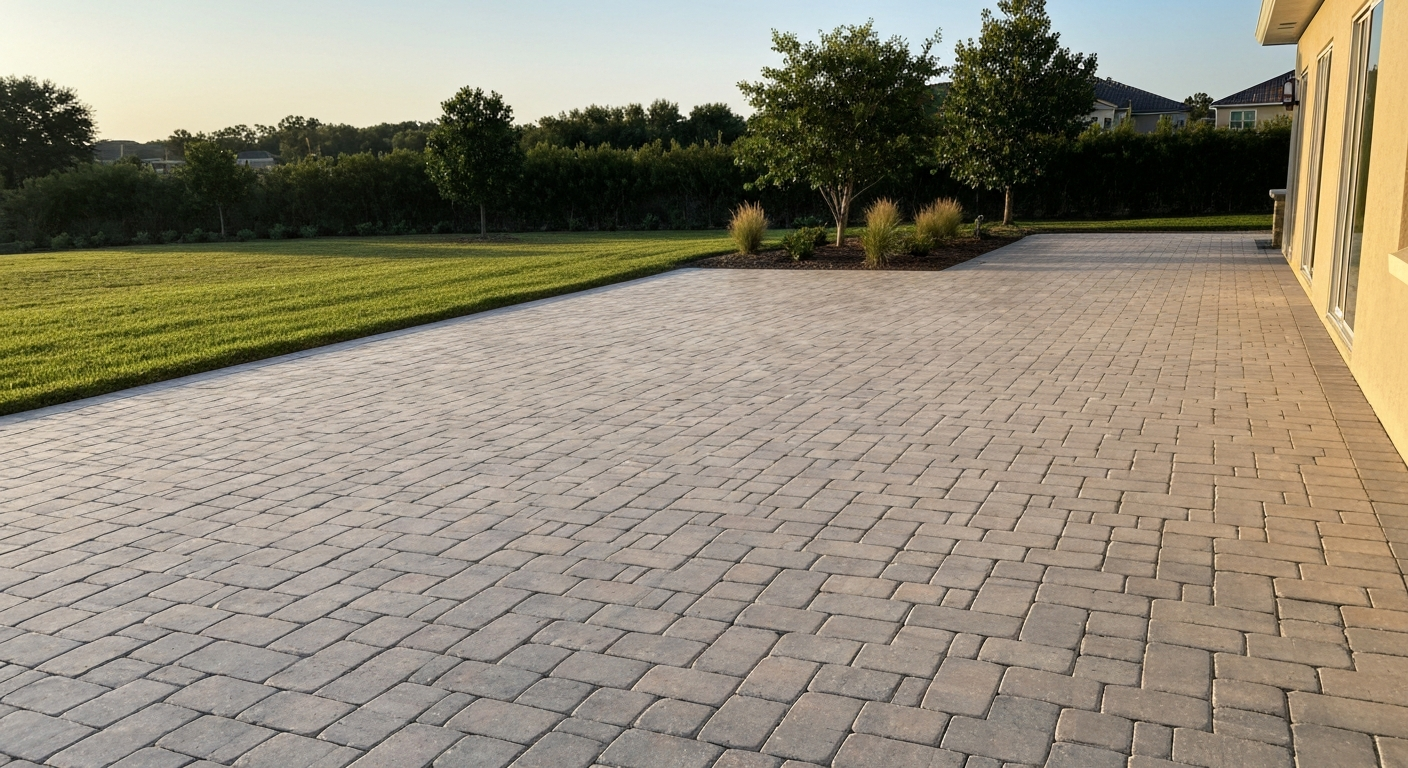
Paver Sealing (hub)
Professional paver sealing services to protect and enhance your outdoor hardscapes across the Flathead Valley.
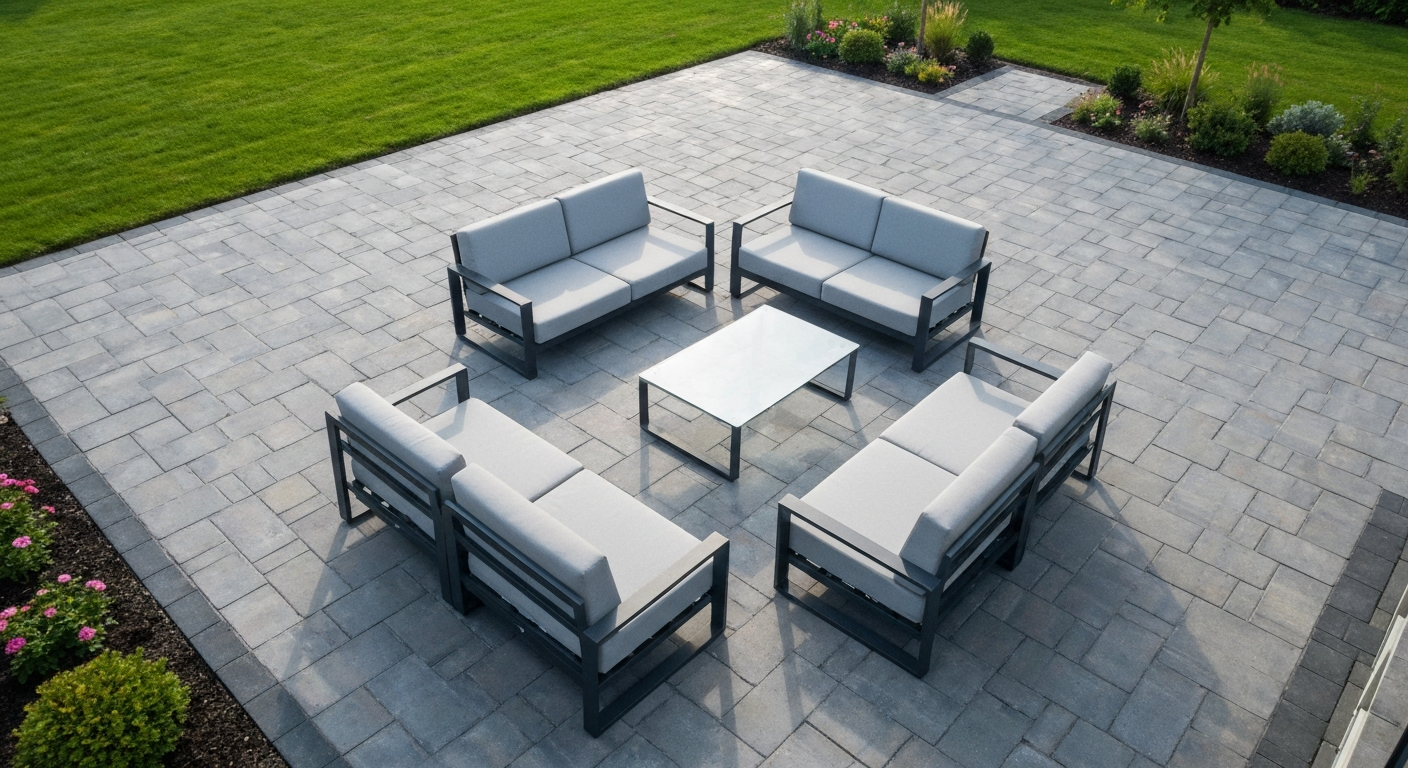
Paver Patio Sealing
Protect your outdoor living space from stains, weather, and sand washout with professional patio sealing.
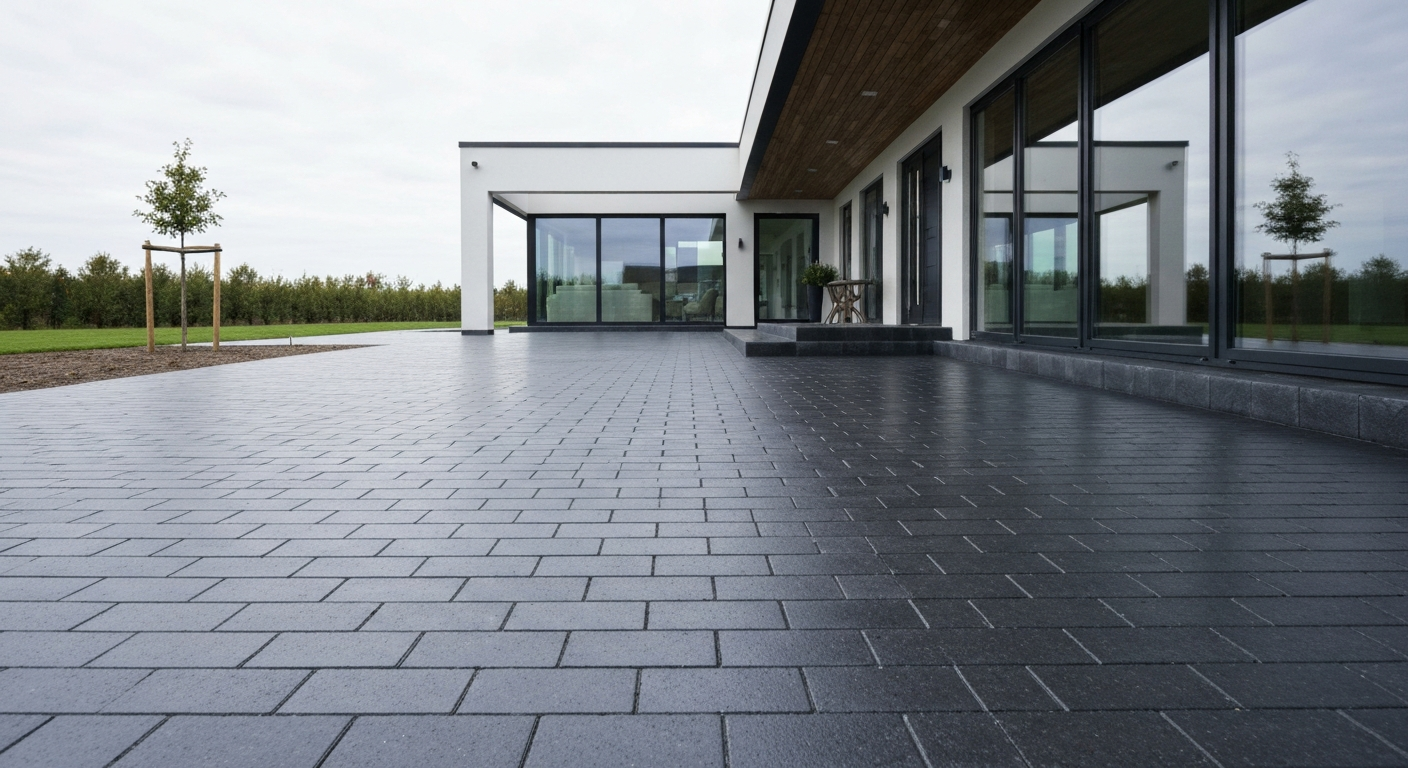
Walkway Sealing
Keep your entry paths and garden walkways clean, stable, and protected from Montana's freeze-thaw cycles.
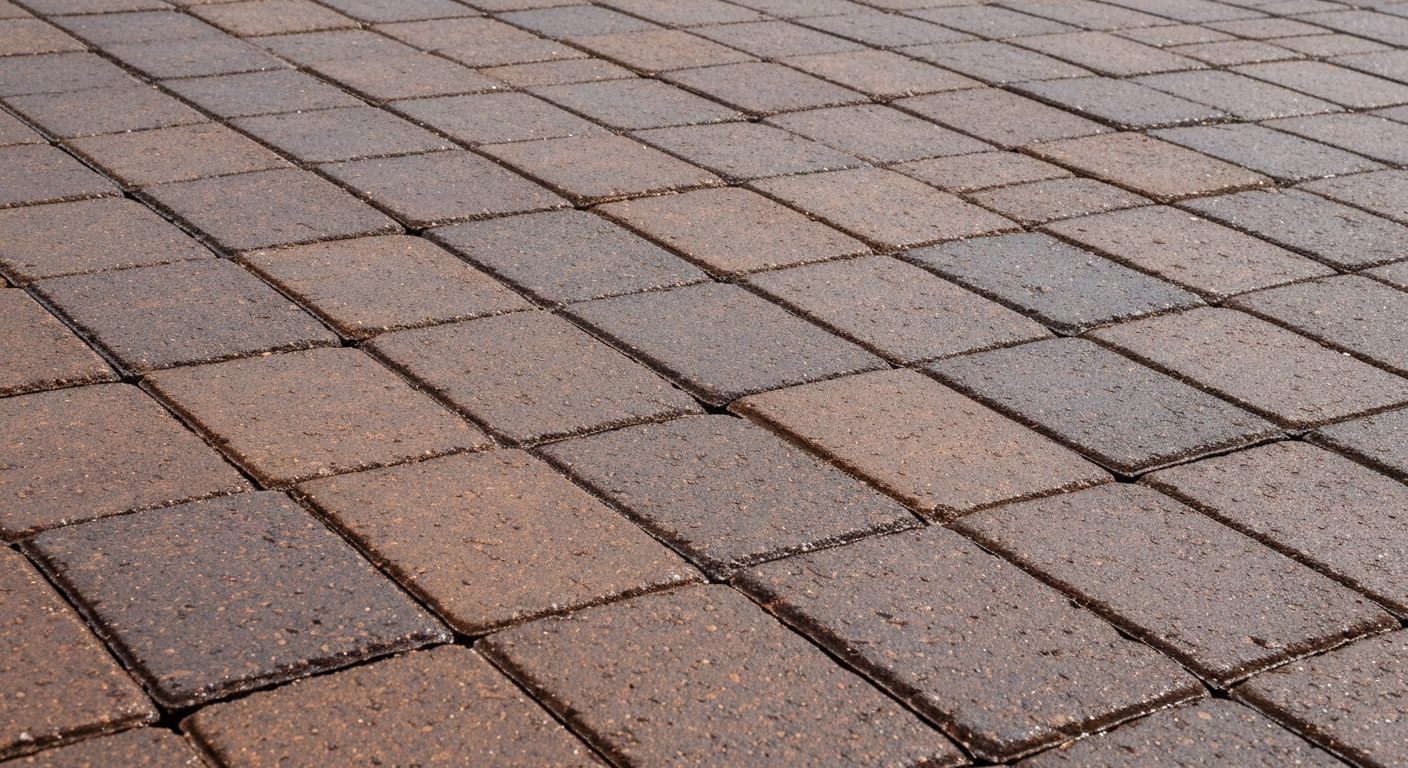
Wet-Look Sealer
Deepen natural paver colors and add a rich, enhanced finish that protects against moisture and staining.
Protect your driveway before another winter
One driveway, one honest quote — measured on-site, priced in writing, sealed in the right weather window.
