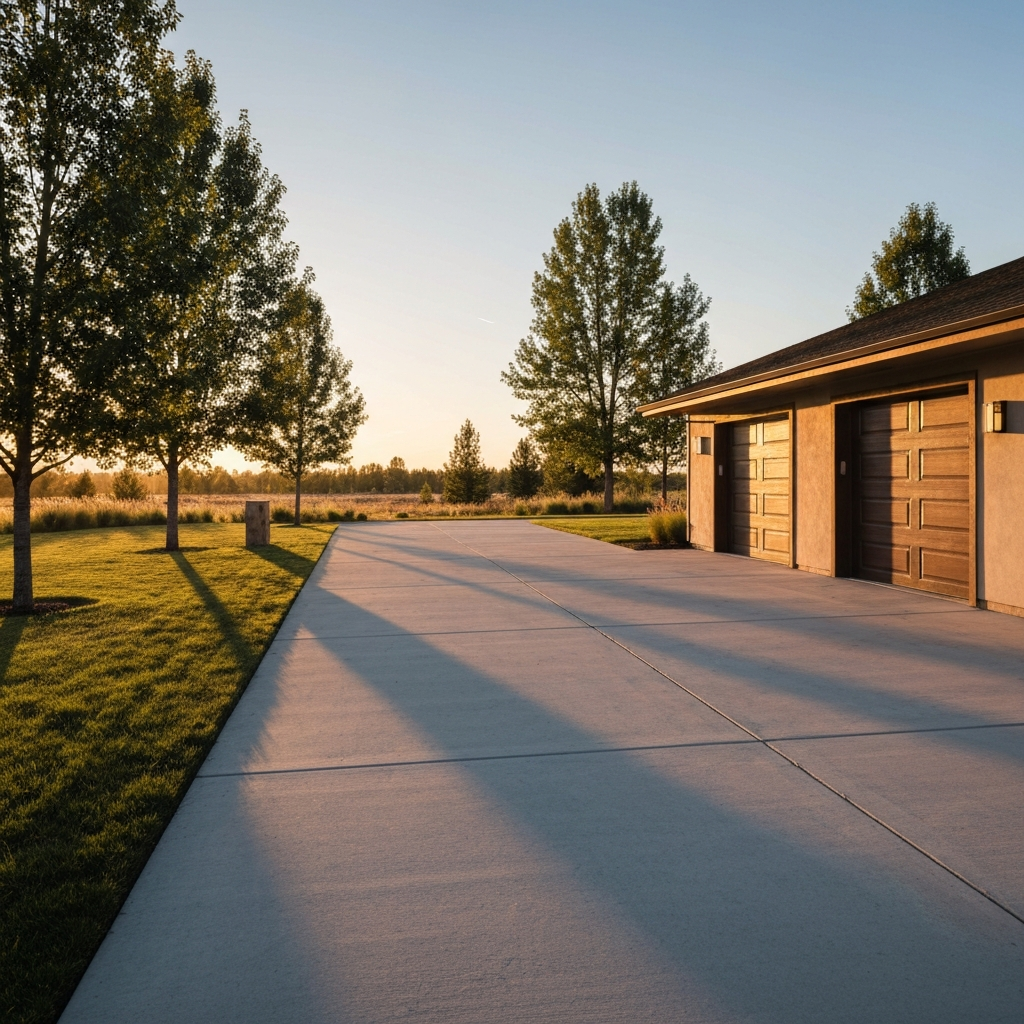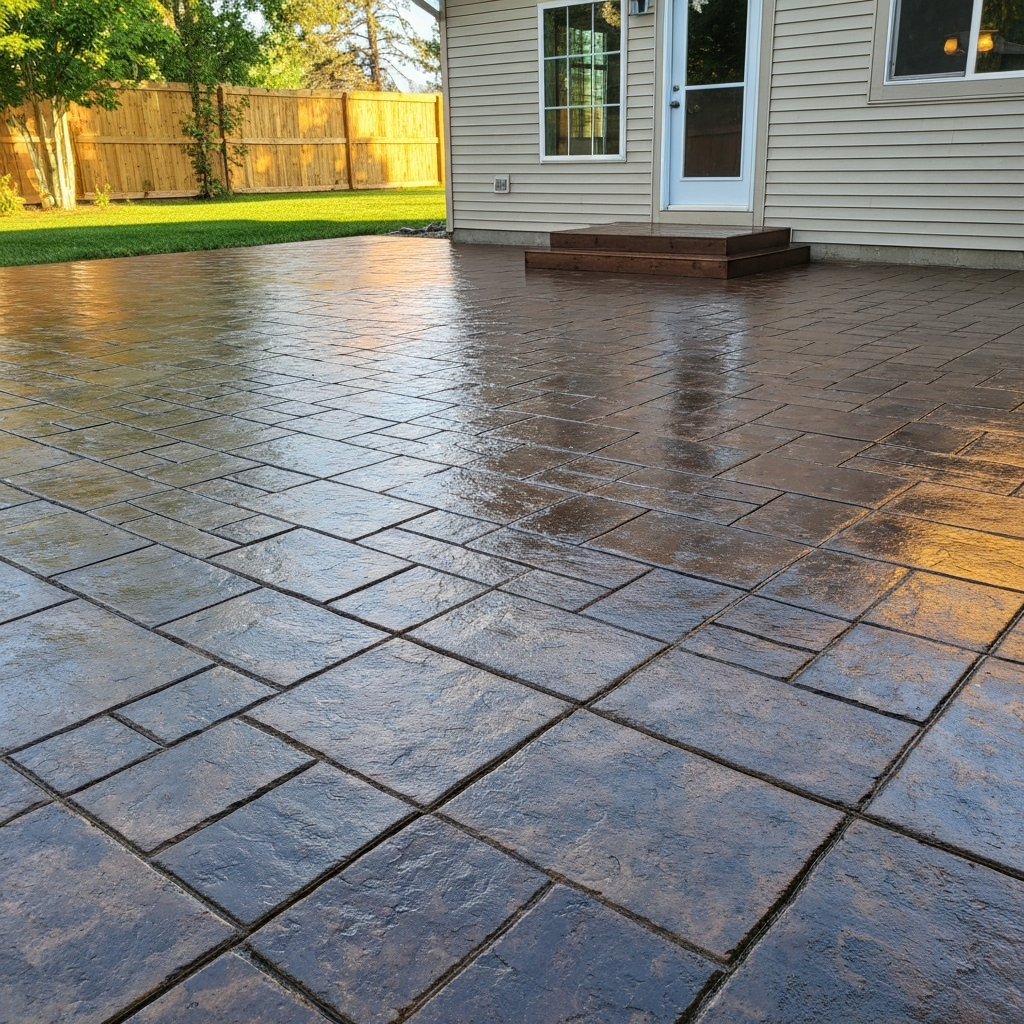
Do pavers need sealing in Montana? Sealing is not strictly mandatory, but it is strongly recommended for many patios, walkways, and driveways in the Flathead Valley. A properly selected and applied sealer can reduce water and deicer penetration, protect color, make stains easier to remove, and—in the case of a joint-stabilizing product—help keep joint sand in place through snowmelt and runoff.
Sealing is not a repair for a weak base, poor drainage, settled pavers, or active frost movement. The pavers must first be stable, clean, dry, and suitable for the chosen product.
Quick Answer: Key Takeaways
- •Sealing is usually worthwhile in Montana because pavers face freeze-thaw cycling, snowmelt, road deicers, runoff, summer UV exposure, and seasonal staining.
- •Not every sealer performs the same job. Wet-look film-forming products enhance color and may stabilize conventional joint sand; penetrating sealers preserve a more natural appearance and generally allow more vapor movement.
- •Sealing can reduce water absorption and deicer penetration, but it cannot guarantee against cracking or spalling.
- •Joint stabilization can reduce sand erosion, weed growth, and insect intrusion, but it does not eliminate them completely.
- •Cleaning and dry conditions are essential. Sealing damp, dirty, or efflorescence-covered pavers can create cloudiness, poor adhesion, or trapped discoloration.
- •A practical resealing interval is often about two to four years for exposed film-forming systems, although traffic, sun, product type, and maintenance can move that schedule in either direction.
Why Pavers Benefit From Sealing in Montana
Interlocking pavers are designed to perform outdoors without requiring a surface coating. Properly installed paver systems can remain functional for decades with routine maintenance. Sealing is an optional protective treatment that can improve appearance, stain resistance, and joint performance when the surface and product are compatible.
The value is higher in Montana because an outdoor paved surface may experience several stressors within the same year:
- •Water entering surface pores and joints
- •Repeated freezing and thawing
- •Snowmelt flowing across the pavement
- •Magnesium chloride, sodium chloride, and other winter residue
- •Joint-sand erosion
- •Strong summer sunlight
- •Oil, grease, leaves, food, and organic staining
- •Weed seeds and insects entering open joints
A sealer does not make pavers maintenance-free. It creates an additional line of defense and can make routine maintenance more manageable.
What Paver Sealing Actually Does
Reduces water and deicer penetration
Many concrete pavers are porous. Water can enter the surface, especially after years of weather exposure or abrasive wear.
A compatible sealer can reduce the amount of liquid water and dissolved deicer that enters the paver face. That can lower exposure to conditions associated with surface scaling, staining, and weathering.
This is risk reduction, not a guarantee. Sealing cannot repair a paver that is already soft, cracked, delaminating, or damaged by an unstable base.
Helps protect against freeze-thaw surface damage
Freeze-thaw deterioration becomes more likely when concrete is moisture-laden. Reducing water entry can therefore help protect the exposed surface during cold weather.
The limit is important: a sealer applied on top cannot correct poor drainage underneath the pavers. Water trapped in the bedding layer or base can still contribute to frost movement, settlement, joint loss, and uneven surfaces.
Stabilizes joint sand when the right system is used
Joint sand is a functional part of an interlocking paver system. It helps transfer loads between units and supports alignment.
Some film-forming sealers are specifically designed to soak into conventional joint sand and reduce its movement. Polymeric sand uses binders activated during installation to resist erosion, weeds, and insects. A separate joint-stabilizing sealer may be less important when properly installed polymeric sand is already present.
Stabilized joints can help reduce:
- •Sand washing into nearby planting beds
- •Loss caused by runoff and repeated cleaning
- •Open gaps where seeds collect
- •Ant activity through loose joints
- •Minor paver movement caused by depleted joints
No sealer can hold pavers securely when the base is moving or the joints were never filled and compacted correctly.
Reduces weed and ant intrusion
Weeds usually do not grow upward from deep beneath a properly built paver patio. Seeds often land in dirt and organic material that collects within open or depleted joints.
Keeping joints properly filled makes germination more difficult. Stabilized joint material can also make it harder for ants to excavate loose sand.
"Reduces" is the accurate expectation. Windblown seeds can still germinate in surface debris, and insects may find access through edges, cracks, or unsealed areas.
Slows fading and improves color retention
Sunlight, weather, abrasion, and surface deposits can gradually change how pavers look. Sealers formulated for UV exposure can slow visible fading and make the surface easier to keep clean.
A color-enhancing sealer deepens the tones and contrast of the pavers. A natural-look product leaves the color much closer to its unsealed appearance.
Sealer should be tested in a small, inconspicuous area because color enhancement can be stronger than expected, particularly on variegated or highly porous pavers.
Resists stains and simplifies cleaning
A sealed surface generally gives oil, grease, food, leaf tannins, dirt, and other contaminants less opportunity to soak deeply into the paver pores. Sealing-product guidance commonly identifies reduced staining and easier maintenance as primary benefits.
Spills should still be removed promptly. A sealer delays or reduces penetration; it does not make the surface immune to every chemical.
Helps manage—but does not simply eliminate—efflorescence
Efflorescence is the white or gray deposit left when dissolved salts move to the surface with moisture and remain after the water evaporates. It is usually an appearance concern rather than evidence that the pavers have lost structural capacity.
Pavers should be inspected and, when appropriate, cleaned before sealing. Applying a film over active efflorescence or retained moisture can trap a white haze beneath the finish.
A breathable penetrating sealer may be more forgiving where vapor movement is a concern. Film-forming products require especially careful moisture control.
Wet-Look vs. Matte or Penetrating Paver Sealer
"Wet-look" and "penetrating" describe different characteristics. Wet-look products are commonly film-forming and color-enhancing. Natural-look products are often non-film-forming, but some matte or natural-look products still create a film.
The technical data for the specific product should control the decision.
| Factor | Wet-look, film-forming sealer | Matte or penetrating sealer |
|---|---|---|
| Appearance | Deepens color and may produce satin to high gloss | Preserves a natural or nearly unchanged appearance |
| Surface feel | Can feel smoother; traction additive may be appropriate in wet areas | Usually retains more of the original surface texture |
| Breathability | Often allows less moisture vapor to escape | Commonly more vapor-permeable when truly penetrating and non-film-forming |
| Joint stabilization | Some products bind conventional joint sand | Usually limited unless specifically labeled as a joint stabilizer |
| Stain resistance | Strong surface barrier when correctly applied | Reduces absorption without leaving a substantial surface film |
| UV and color effect | Enhances color; product must be rated for exterior UV exposure | Slows water and stain penetration without a glossy appearance |
| Application risk | More prone to whitening, peeling, bubbles, or excessive slipperiness if overapplied or installed on damp pavers | Generally more forgiving, but uneven absorption and overlap marks are still possible |
| Typical durability | Often requires periodic recoating as the exposed film wears | Some penetrating products can remain effective longer, depending on chemistry and exposure |
| Best for | Decorative patios, entrances, and surfaces where richer color and joint stabilization are priorities | Natural-looking patios, walkways, moisture-sensitive areas, and owners who do not want gloss |
When a wet-look sealer makes sense
A wet-look product may be the better choice when:
- •The goal is to darken or enrich the paver colors.
- •A satin or glossy finish is preferred.
- •Conventional joint sand needs stabilization.
- •Stain resistance is a high priority.
- •The surface is stable, dry, and well drained.
- •Added traction can be incorporated where needed.
Wet-look sealers can provide strong protection from dirt, oil, deicing residue, and UV exposure. Some are specifically formulated to stabilize joint sand while enhancing color.
The main risk is improper application. Too much product, trapped moisture, an incompatible old sealer, or application during unsuitable weather can produce cloudiness, white areas, bubbles, or a plastic-looking film.
When a matte or penetrating sealer makes sense
A penetrating product may be preferable when:
- •The natural paver color should remain mostly unchanged.
- •A glossy finish is not wanted.
- •Breathability is important.
- •The area is frequently wet.
- •Slip resistance is a concern.
- •Joint stabilization is being handled separately with polymeric sand.
Non-film-forming natural-look products penetrate below the surface rather than leaving a pronounced glossy layer. Some are promoted specifically for slip-prone areas and for retaining the original paver appearance.
The tradeoff is that penetrating sealers do not usually create the same color enhancement or visible "sealed" appearance.
Do Pavers Need Sealing in Montana to Survive Freeze-Thaw?
Pavers do not automatically fail because they are unsealed. High-quality units installed over a well-drained, correctly compacted base are designed for outdoor exposure.
Sealing becomes useful because it can reduce the amount of water and deicer entering the exposed surface. Less absorbed water means less moisture available to freeze inside the paver.
However, frost-related problems can also begin below the surface. Sealer will not correct:
- •An insufficient or poorly compacted base
- •Drainage directed toward the patio or driveway
- •Standing water
- •Failed edge restraint
- •Excess bedding sand
- •Low areas that collect snowmelt
- •Pavers already displaced by frost movement
If pavers rock, settle, heave, or hold water, those installation and drainage issues should be corrected before sealing.
The Montana and Flathead Valley Angle
Freeze-thaw cycling and water intrusion
Flathead Valley pavers repeatedly transition between wet, frozen, thawing, and dry conditions. Snow may melt during a warmer afternoon, enter surface pores and joints, then refreeze as temperatures fall.
A sealer can reduce surface absorption, but the full paver system still needs to drain. Surface protection and base drainage solve different problems.
Snowmelt and joint-sand washout
Spring melt and roof runoff can move significant water across patios and walkways. Conventional joint sand may gradually erode, particularly where downspouts discharge onto the pavers or the pavement carries concentrated flow.
A joint-stabilizing sealer or correctly installed polymeric sand can reduce erosion. Neither is a substitute for redirecting concentrated runoff.
Road salt and ice-melt residue
Driveway and entry pavers may receive chloride residue from vehicle tires, snow-clearing equipment, and deicing products. Sealers formulated for exterior pavers can reduce penetration by salt, oil, and dirt, making winter deposits easier to remove.
Use deicers conservatively and follow the paver manufacturer's guidance. Physical snow removal and prompt cleanup remain important even after sealing.
UV exposure and fading
South- and west-facing patios, entrances, and driveways receive prolonged summer sun. UV exposure can contribute to gradual color change, while dirt and surface wear can make the pavers look faded even when the pigment itself remains stable.
An exterior-rated sealer can help preserve the appearance. A wet-look product intensifies color, while a natural-look sealer provides protection with less visual change.
Efflorescence after wet seasons
Moisture moving through pavers can carry soluble salts to the surface. Sealing before that residue is cleaned—or before the pavers have dried—can lock a pale haze beneath a film.
The correct sequence is to identify the deposit, use a cleaner appropriate for the paver type, rinse as required, allow full drying, and test the sealer before treating the entire area. Industry guidance recommends cleaning stains, dirt, and efflorescence before joint stabilization or sealing.
A short dry-weather sealing window
Paver sealing needs suitable surface temperature, dry joints, and a rain-free cure window. Product requirements vary, but some manufacturers call for completely dry pavers and joint sand, surface temperatures around 60°F to 85°F, and no moisture during application.
That can limit the practical Montana schedule. A clear forecast is not enough if the joints remain damp from irrigation, shade, morning dew, pressure washing, or recent snowmelt.
Proper Cleaning and Drying Come Before Sealing
Sealing over dirt does not create a clean-looking surface. It preserves the dirt beneath the finish.
Preparation may include:
- Removing leaves, soil, moss, and loose joint material.
- Treating oil, grease, rust, and organic stains with suitable products.
- Cleaning the full paved area evenly.
- Removing failed or incompatible old sealer when necessary.
- Replacing missing joint sand.
- Allowing the pavers and joints to dry fully.
- Testing the selected sealer on a hidden section.
- Confirming the weather and surface temperature meet the product requirements.
Pressure washing can be useful, but excessive pressure may damage the paver face or remove too much joint sand. The cleaning method should match the paver's age, finish, condition, and joint material.
When to Reseal Pavers
A practical planning range for many exposed Montana paver surfaces is about every two to four years. Some products and lower-traffic surfaces may last longer. Manufacturer guidance commonly places resealing somewhere between two and five years or three and five years, depending on the product, traffic, climate, and wear.
Inspect the surface annually rather than relying only on the calendar.
Signs it may be time to reseal
- •Water darkens and absorbs into the pavers quickly.
- •The enhanced color has faded unevenly.
- •The exposed film is thin or worn along traffic paths.
- •Stains have become harder to remove.
- •Conventional joint sand is loosening or washing out.
- •Some areas appear unprotected while others still repel water.
- •The surface was last sealed several seasons ago.
Do not automatically add another coat over an unknown or failing sealer. Compatibility matters. Peeling, whitening, bubbles, or thick buildup may require stripping or corrective preparation before resealing.
When Sealing Should Wait
Postpone sealing when:
- •Pavers or joints are damp.
- •Rain, frost, or heavy dew is expected during the cure period.
- •Efflorescence remains on the surface.
- •Joint sand is missing or unstable.
- •The pavement has active settlement or drainage problems.
- •An old sealer is peeling or incompatible.
- •Temperatures fall outside the product's application range.
- •New pavers have not completed the manufacturer's recommended waiting period.
The cost of waiting for the correct conditions is usually lower than correcting a cloudy or poorly bonded sealer.
Streamline Solutions' Take
"Sealing is a high-value maintenance step for many Flathead Valley paver surfaces, but the product needs to match the site. A joint-stabilizing wet-look sealer works well when richer color and sand retention are priorities. A natural-look penetrating product is often the better choice where breathability, traction, and a matte appearance matter more. In either case, drainage problems, loose pavers, stains, and damp joints should be addressed before sealing."
- Streamline Solutions, Kalispell, MT
How Streamline Solutions Can Help
Streamline Solutions cleans, protects, and maintains existing paver surfaces throughout the Flathead Valley. Property owners can review the main paver sealing service, learn about a color-enhancing wet-look paver sealer, or explore maintenance considerations for existing paver patios. When older surfaces need cleaning before treatment, additional information is available through the pressure washing service and the frequently asked questions.
Frequently Asked Questions
Related Guides & Services
Paver Sealing
Professional paver sealing in Kalispell and the Flathead Valley.
Wet-Look Paver Sealer
Color-enhancing wet-look finishes to deepen paver tones.
Paver Patios
Learn about paver patio installation and maintenance options.
Pressure Washing
Proper cleaning before sealing is the non-negotiable first step.
FAQ
Answers to common questions from Montana property owners.